
Omron
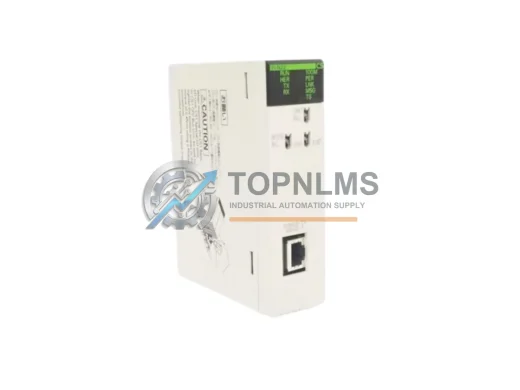
Omron CS1W-FLN22 Replacement for CS1 Series FL-net
CS1W-FLN22Omron CS1W-FLN22 FL-net Communication Unit — direct replacement & upgrade solution for CS1 Series PLCs. Wiring-compatible, 12-month warranty, fast global shipping.
Request availability, condition, lead time and export shipping details for OPIC1.
Send this exact part number, quantity and destination country. TOPNLMS will confirm availability, condition and export lead time before quotation.
The OMRON OPIC1 is a genuine fiber optic amplifier controller from OMRON’s proven E3X series — a critical sensing component widely deployed across discrete manufacturing, automotive assembly, food & beverage processing, semiconductor fabrication, and general industrial automation environments. When a fiber optic amplifier controller fails or degrades, the consequences extend far beyond a single sensor: entire detection circuits go blind, conveyor lines halt, and quality inspection systems lose their verification capability. Sourcing an original OPIC1 replacement unit ensures your E3X sensing infrastructure is restored to factory-specified performance without recalibration risk or compatibility compromise.
For maintenance engineers managing aging control systems, the OPIC1 represents one of the most cost-effective interventions available. Rather than replacing an entire sensor assembly or upgrading to a newer platform — which may require PLC program modifications, wiring changes, and extended commissioning time — a direct OPIC1 swap restores full functionality within minutes. This is the core value proposition of stocking original spare parts: maximum uptime recovery at minimum intervention cost.
| Parameter | Specification |
|---|---|
| Model / SKU | OPIC1 |
| Brand | OMRON |
| Series | E3X Fiber Optic Amplifier Series |
| Product Type | Fiber Optic Amplifier Controller |
| Country of Origin | Japan |
| Compatible Systems | E3X-series fiber optic sensors; OMRON photoelectric sensing networks |
| Typical Application | Object detection, position sensing, color mark detection, transparent object sensing |
| Installation | DIN rail or panel mount; compatible with standard E3X mounting hardware |
| Operating Environment | Industrial automation; suitable for dusty, vibration-prone, and high-cycle environments |
| Maintenance Recommendation | Inspect fiber cable connections and amplifier sensitivity settings during scheduled PM cycles |
| Warranty | 12 Months from date of shipment |
| Condition | Original / Genuine — New or Tested Surplus |
A fiber optic amplifier controller like the OPIC1 does not operate in isolation — it is one node in a broader sensing and control architecture. During any scheduled maintenance window involving the OPIC1, experienced maintenance teams treat the inspection as an opportunity to audit the entire detection circuit and adjacent control components.
Begin with the fiber optic cables themselves: E3X-series fiber units such as the E32-T11 or E32-D21L are subject to bending fatigue and connector wear over time. A degraded fiber cable will cause erratic output even from a healthy amplifier — replacing the OPIC1 without inspecting the fiber is a common source of repeat failures. Next, verify the integrity of the I/O wiring back to the PLC input module. OMRON’s CJ1W-ID211 or CS1W-ID211 digital input modules are frequently found in the same control cabinet and should be checked for loose terminal connections and input LED status during the same visit.
Power supply stability is another critical factor. The OPIC1 and its associated sensors draw from the 24VDC rail — inspect the S8VS or S8VK series OMRON power supply unit for output voltage drift, capacitor aging, and load capacity margin. A marginal power supply is a silent killer of sensor reliability. While the cabinet is open, check the terminal blocks (such as OMRON’s XW5T series) for corrosion, loose screws, and wire insulation condition.
If the OPIC1 is part of a multi-channel sensing array, consider whether adjacent amplifier units — such as the E3X-DA11-S or E3X-NA11 — are approaching end-of-life based on installation date and cycle count. Replacing a single failed unit while leaving aging neighbors in place often leads to a second unplanned outage within weeks. A proactive batch replacement of the full amplifier bank during a planned shutdown is almost always more economical than repeated emergency callouts.
For systems where the OPIC1 feeds detection signals into a safety relay or interlock circuit, also inspect the G9SA or G9SB series safety relay modules for contact wear and response time drift. Finally, if the sensing data is processed through an OMRON NX1P2 or CP1H PLC, verify that the CPU module’s I/O refresh cycle and filter time settings remain appropriate for the detection speed requirements of the application.
The OMRON OPIC1 is a legacy-compatible component that bridges older E3X sensing installations with current maintenance realities. Many factories running E3X-series fiber optic systems installed them a decade or more ago — the control logic, wiring infrastructure, and mechanical mounting are all optimized for this platform. Migrating to a newer sensing architecture would require engineering time, PLC program revisions, and mechanical rework that far exceeds the cost of maintaining the existing system with original spare parts.
By stocking the OPIC1 as a designated spare, maintenance managers eliminate the most dangerous phase of any unplanned outage: the sourcing delay. When a fiber optic amplifier fails mid-shift, every hour of downtime carries a measurable production cost. Having a verified original unit on the shelf — tested, documented, and ready to install — compresses the mean time to repair (MTTR) from days to minutes.
The OPIC1 also serves as a direct replacement for degraded units that have not yet failed outright but are showing signs of sensitivity drift, unstable output, or increased false-trigger rates. Proactive replacement during a planned maintenance window, rather than waiting for a hard failure, is the hallmark of a mature industrial maintenance program. This approach is particularly valuable in high-OEE environments where unplanned stops carry significant financial and contractual consequences.
For facilities managing multi-site or multi-line operations, centralizing OPIC1 inventory at a regional spare parts hub — rather than maintaining individual site stocks — reduces total inventory carrying cost while preserving rapid deployment capability. A single hub stock of 3–5 units can typically cover multiple production lines with a same-day dispatch protocol.
Q1: Is the OPIC1 a genuine OMRON original part, and how is it tested before shipment?
Yes. Every OPIC1 unit supplied by TOPNLMS is sourced as original OMRON product — either factory-new or verified tested surplus. Prior to shipment, units undergo functional verification including power-on testing, output signal confirmation, and visual inspection for physical integrity. A 12-month warranty is provided from the date of shipment, covering defects in materials and workmanship under normal operating conditions.
Q2: Will the OPIC1 be compatible with my existing E3X fiber optic cables and PLC input wiring?
The OPIC1 is designed for use within the OMRON E3X series ecosystem and is compatible with standard E3X-series fiber units and 24VDC NPN/PNP wiring configurations. If you are replacing a failed OPIC1 in an existing installation, the replacement is typically a direct swap with no wiring or program changes required. For non-standard configurations or mixed-brand fiber cables, contact our technical team with your wiring diagram for compatibility confirmation before ordering.
Q3: What is the recommended inventory strategy for the OPIC1 in a multi-line facility?
For facilities with 5 or more E3X sensing points, we recommend maintaining a minimum of 2 OPIC1 units as on-hand critical spares, with a reorder trigger at 1 unit remaining. For high-cycle or mission-critical lines (e.g., automotive body welding, pharmaceutical packaging), a dedicated per-line spare is advisable. Annual spare parts audits should cross-reference installation dates against expected service life to schedule proactive replacements before failure probability increases significantly.
Q4: How quickly can the OPIC1 be shipped, and what documentation is provided?
In-stock OPIC1 units are typically dispatched within 1–2 business days of order confirmation. International shipments are supported with full commercial invoice, packing list, and country-of-origin documentation (Japan). Express courier options are available for urgent maintenance requirements. For orders requiring material traceability documentation or incoming inspection support, please specify at the time of inquiry.
Omron CS1W-FLN22 FL-net Communication Unit — direct replacement & upgrade solution for CS1 Series PLCs. Wiring-compatible, 12-month warranty, fast global shipping.
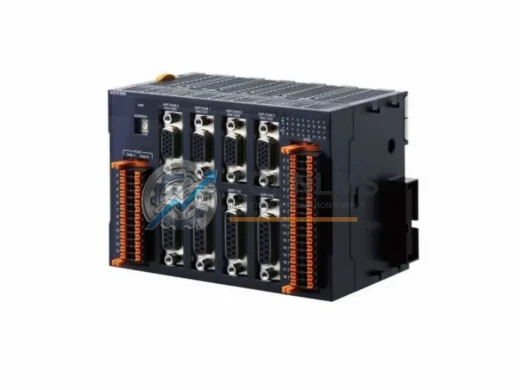
OMRON CK3W-AX1111N ruggedized servo axis interface module for harsh industrial environments. In stock, tested, 12-month warranty. Fast global shipping.
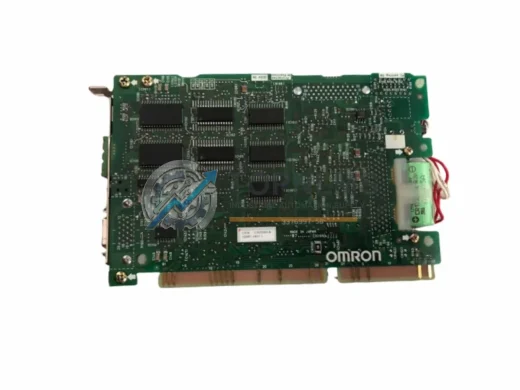
Omron C200PC-ISA13-SRM-E Serial Remote Master Module for SYSMAC C200H. Rugged, reliable PLC comms for harsh industrial environments. 12-month warranty. In stock.
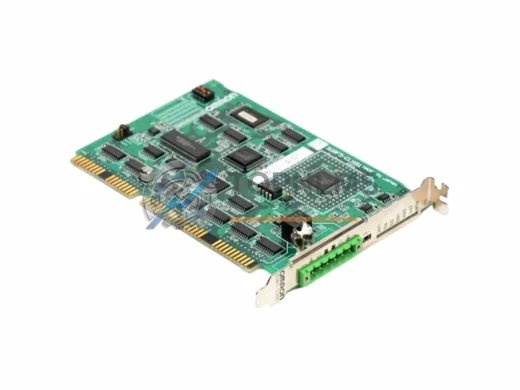
OMRON 3G8F5-CLK01 Controller Link Support Board replacement for CS/CJ Series PLCs. Drop-in upgrade, 12-month warranty, fast global shipping from Xiamen.
Click Quote This Model and the Part Number field will auto-fill with OPIC1.