Product Overview
Motorola MVME162-433 Replacement/Upgrade for MVME Series: Seamless Transition from Legacy VMEbus Systems
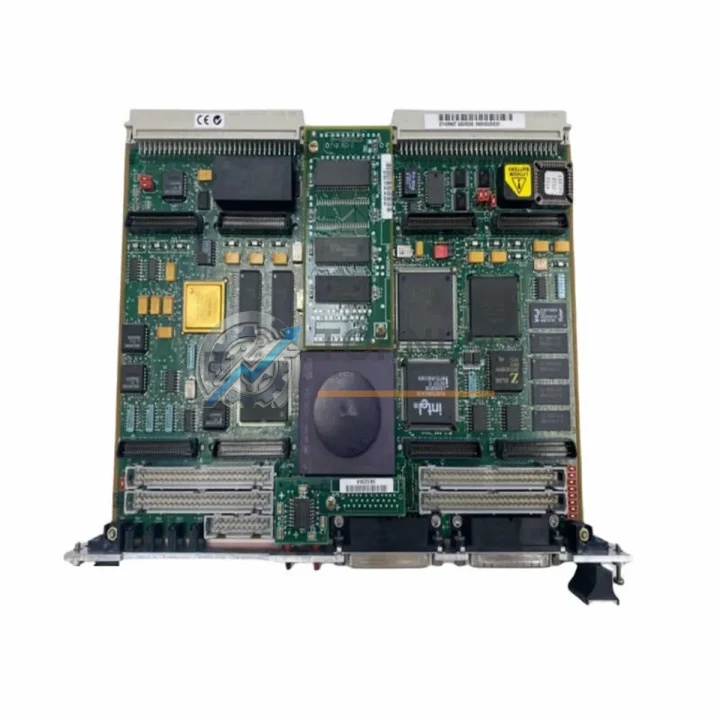
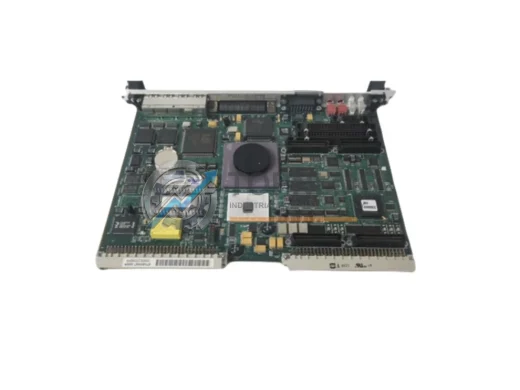
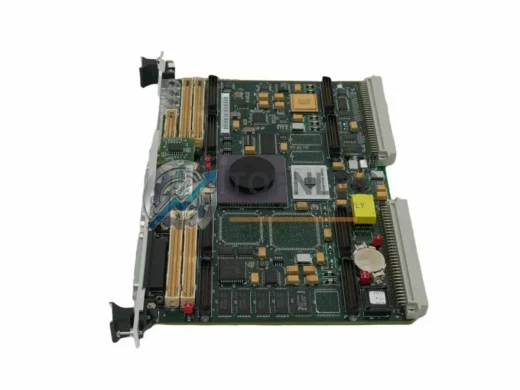
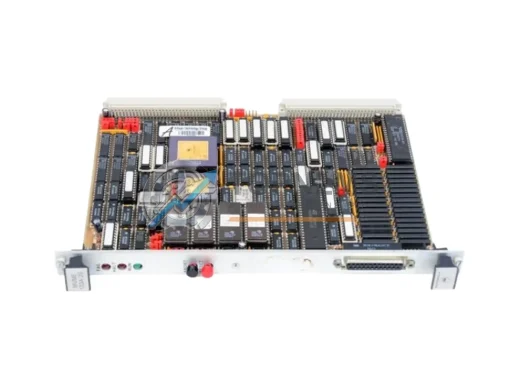
Migrating away from an aging VMEbus control architecture is one of the most critical decisions a plant engineer or automation manager will face. The Motorola MVME162-433 (SKU: MVME162-433) is a high-performance VMEbus Single-Board Computer built on the Motorola 68040 processor platform, designed to serve as a direct replacement or a structured upgrade path for legacy MVME Series boards including discontinued models such as the MVME162-010, MVME162-020, MVME162-023, and MVME162-030. Whether your facility is running a legacy VMEbus rack-based control system, a distributed DCS architecture, or a hybrid PLC/SBC environment, the MVME162-433 provides a technically sound, field-proven migration target that minimizes engineering rework, reduces downtime risk, and preserves your existing wiring and backplane infrastructure.
The MVME162-433 operates at 33 MHz with the MC68040 CPU, offering substantial processing headroom over earlier MVME162 sub-variants. It supports the VMEbus J1/J2 connector standard, meaning physical installation into an existing MVME712M transition module or compatible VMEbus chassis requires no mechanical modification. The board’s memory architecture supports up to 4 MB of DRAM and 512 KB of SRAM, with battery-backed SRAM for retaining critical process parameters across power cycles — a key requirement in continuous-process industries such as petrochemical, power generation, and water treatment.
For facilities currently operating with a MVME147 or MVME167 as the primary CPU board, the MVME162-433 represents a compatible upgrade within the same VMEbus slot form factor. The transition preserves the existing backplane wiring, I/O module assignments, and VMEbus arbitration logic. Engineers familiar with Motorola’s VxWorks or OS-9 real-time operating environments will find the MVME162-433 supports the same software toolchain, significantly reducing re-commissioning time. If your system uses a MVME712A or MVME712M transition module for front-panel I/O routing — including serial ports, Ethernet, and SCSI — these remain fully compatible with the MVME162-433 without rewiring.
In multi-board VMEbus systems, the MVME162-433 coexists with standard I/O expansion boards such as the MVME162-220 memory expansion module, MVME374 Ethernet interface, and MVME332XT serial I/O board. This means your existing communication infrastructure — whether RS-232, RS-422, or Ethernet TCP/IP — remains intact during the migration. For systems that rely on the MVME761 transition module or similar VMEbus transition hardware for field wiring termination, no changes to the terminal block layout are required.
Power supply compatibility is another critical factor in VMEbus migrations. The MVME162-433 draws standard VMEbus +5V and ±12V rails, consistent with the power budget of legacy MVME Series boards. If your system uses a MVME945 or equivalent VMEbus power supply chassis, no power system modifications are needed. This is particularly important in retrofit scenarios where the control cabinet has limited space and replacing the power supply would require significant panel re-engineering.
For systems that include a MVME050 or MVME162-010 as a co-processor or secondary CPU, the MVME162-433 can assume the primary CPU role while retaining the existing inter-board communication via the VMEbus shared memory or mailbox registers. This architecture is common in legacy SCADA and DCS front-end processor configurations where the primary CPU handles real-time control loops and a secondary board manages HMI or historian communication.
From a communications protocol perspective, the MVME162-433 supports standard VMEbus data transfer modes including BLT (Block Transfer) and MBLT (Multiplexed Block Transfer), ensuring compatibility with existing VMEbus master/slave I/O modules. If your system communicates with field devices via Modbus RTU over RS-485, the existing serial port configuration on the MVME712M transition module remains usable without driver changes. For facilities that have already partially migrated to Ethernet-based protocols such as Modbus TCP or PROFINET, the MVME162-433’s onboard Ethernet port supports these protocols with appropriate software configuration.
Installation and commissioning of the MVME162-433 in a replacement scenario typically follows a structured procedure: power down the VMEbus chassis, extract the failed or end-of-life board, insert the MVME162-433 into the same slot, restore power, and verify boot sequence via the front-panel serial console. In most cases, the existing EPROM or Flash-resident firmware can be transferred to the replacement board, eliminating the need for a full software reload. This is a significant advantage over cross-platform migrations that require complete re-engineering of the control program.
TOPNLMS maintains verified stock of the MVME162-433 with full pre-shipment functional testing. Each unit undergoes power-on self-test (POST) verification, memory integrity check, and serial port communication validation before dispatch. Units are shipped in ESD-protective packaging with anti-static foam inserts, suitable for air freight or express courier delivery to minimize plant downtime. Standard lead time from order confirmation to dispatch is 1–3 business days for in-stock units.
Compatibility Comparison Table
| Parameter |
Legacy Models (MVME162-010 / -020 / -023 / -030) |
MVME162-433 (This Unit) |
Replacement Notes |
| CPU |
MC68030 / MC68040 (lower clock) |
MC68040 @ 33 MHz |
Direct upgrade; same ISA |
| VMEbus Connector |
J1/J2 (P1/P2) |
J1/J2 (P1/P2) |
No backplane modification needed |
| DRAM |
Up to 4 MB |
Up to 4 MB |
Compatible memory map |
| SRAM (Battery-Backed) |
128 KB – 512 KB |
512 KB |
Retains process parameters on power loss |
| Serial Ports |
2× RS-232 (via transition module) |
2× RS-232 (via MVME712M) |
No rewiring required |
| Ethernet |
Optional (via MVME374) |
Onboard 10BASE-T |
Reduces need for separate Ethernet board |
| SCSI |
Via transition module |
Onboard SCSI-2 |
Compatible with existing SCSI peripherals |
| OS Support |
VxWorks, OS-9, pSOS |
VxWorks, OS-9, pSOS |
No OS re-porting required |
| Power Requirements |
+5V, ±12V VMEbus standard |
+5V, ±12V VMEbus standard |
No power supply changes needed |
| Form Factor |
6U VMEbus single-slot |
6U VMEbus single-slot |
Drop-in physical fit |
| Warranty |
N/A (discontinued) |
12-Month Warranty |
Covered by TOPNLMS warranty program |
Seamless Upgrade Solutions
A successful MVME162-433 migration rarely involves the CPU board alone. In practice, the replacement process touches several interconnected components within the VMEbus chassis and the broader control system architecture. The MVME712M transition module is the most commonly paired accessory, providing the physical interface between the MVME162-433’s P2 connector and the field wiring terminal blocks for serial, Ethernet, and SCSI connections. If the existing MVME712M shows signs of connector wear or corrosion, replacing it alongside the CPU board is strongly recommended to avoid intermittent faults post-commissioning.
In systems where the MVME162-433 replaces a board that relied on an external MVME374 Ethernet interface board, the onboard 10BASE-T port of the MVME162-433 can absorb this function, freeing a VMEbus slot for other I/O expansion. Similarly, if the legacy system used a MVME332XT serial I/O board for additional RS-232 or RS-422 ports, this board remains compatible in the same chassis and can continue to serve auxiliary communication channels such as barcode readers, weighing systems, or legacy HMI terminals.
For facilities that use a MVME162-220 memory expansion module to extend the address space of the primary CPU, this module is compatible with the MVME162-433 and can be retained in the chassis without modification. In DCS environments where the VMEbus chassis interfaces with field I/O via a MVME761 transition module, the existing terminal block wiring for analog and digital I/O signals remains valid, as the MVME162-433 does not alter the VMEbus I/O address map used by these modules.
Power integrity is often overlooked in VMEbus migrations. If the chassis power supply — such as a MVME945 power system — has not been serviced recently, it is advisable to verify output voltage stability under load before installing the replacement CPU board. Capacitor aging in legacy VMEbus power supplies can cause voltage droop under the transient load of a faster CPU, leading to spurious resets or memory corruption. TOPNLMS can advise on compatible replacement power supply options if required.
Finally, for systems that communicate with a supervisory SCADA or historian via a MVME147 co-processor board handling Modbus or DNP3 protocol conversion, this board can remain in service alongside the MVME162-433 without software changes, provided the VMEbus shared memory interface addresses are preserved in the firmware configuration.
Retrofit Guidance FAQ
Q: Can the MVME162-433 use the same firmware image as my existing MVME162-010 or MVME162-023?
A: In most cases, yes. The MVME162-433 uses the same MC68040 instruction set architecture as later MVME162 sub-variants. Firmware images compiled for the MC68040 are directly executable. Images compiled for the MC68030 (used in early MVME162-010 units) require recompilation for the MC68040, but the source code and build environment are typically unchanged.
Q: Will my existing VMEbus backplane wiring need to be modified?
A: No. The MVME162-433 uses the standard VMEbus J1/J2 (P1/P2) connector pinout. It installs into any standard 6U VMEbus slot without backplane modification. All existing inter-board signal routing via the VMEbus remains intact.
Q: What serial communication protocols are supported?
A: The MVME162-433 supports RS-232 via the MVME712M transition module. RS-422 and RS-485 can be supported with appropriate line driver hardware on the transition module. Modbus RTU over RS-485 is a common application and is supported with standard driver software.
Q: How do I handle the physical space constraints in my existing control cabinet?
A: The MVME162-433 is a standard 6U single-slot VMEbus board. It occupies exactly the same physical space as the board it replaces. No cabinet re-engineering or DIN rail modification is required. The front panel dimensions and handle position are consistent with the MVME Series standard.
Q: Can I retain my existing SCSI peripherals (tape drives, disk arrays)?
A: Yes. The MVME162-433 includes an onboard SCSI-2 controller compatible with standard SCSI-1 and SCSI-2 peripherals. Existing SCSI cabling and termination can be reused without modification in most configurations.
Q: What is the recommended procedure for system commissioning after board replacement?
A: Power down the VMEbus chassis, extract the failed board, insert the MVME162-433 into the same slot, restore power, and monitor the boot sequence via the front-panel serial console (115200 baud, 8N1). Verify POST completion, memory test pass, and network interface initialization before restoring the control program. Total commissioning time for a like-for-like replacement is typically under 2 hours for an experienced engineer.
Warranty Assurance
Every MVME162-433 unit supplied by TOPNLMS is covered by a 12-month warranty from the date of shipment. This warranty covers hardware defects, functional failures under normal operating conditions, and DOA (Dead on Arrival) replacement. The warranty does not cover damage resulting from incorrect installation, overvoltage, ESD mishandling, or unauthorized modification.
Pre-Shipment Testing: Each unit undergoes a structured functional test protocol including power-on self-test (POST) verification, DRAM and SRAM integrity check, serial port loopback test, and Ethernet link verification. Test results are logged and available upon request for quality audit purposes.
DOA Policy: If a unit is found to be non-functional upon receipt, TOPNLMS will arrange priority replacement shipment within 3 business days of receiving the returned unit and confirming the defect. Return shipping costs for DOA units are covered by TOPNLMS.
After-Sales Support: Our technical team is available via email and phone to assist with installation questions, firmware compatibility queries, and commissioning support. Response time for technical inquiries is within 1 business day.
Procurement Assurance: All units are sourced from verified supply channels. Certificates of conformance and test reports are available for regulated industries. Export documentation including commercial invoice, packing list, and HS code declaration is provided for all international shipments.