
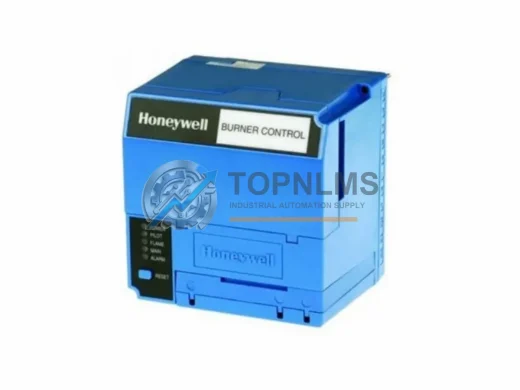
Honeywell
Honeywell RM7850A1027 Ruggedized Burner Management Relay Module
RM7850A1027Honeywell RM7850A1027 ruggedized flame safeguard relay module. RM7850 Series. Harsh-environment certified. 12-month warranty. In stock — fast global shipping.
Request availability, condition, lead time and export shipping details for RM7823A1016.
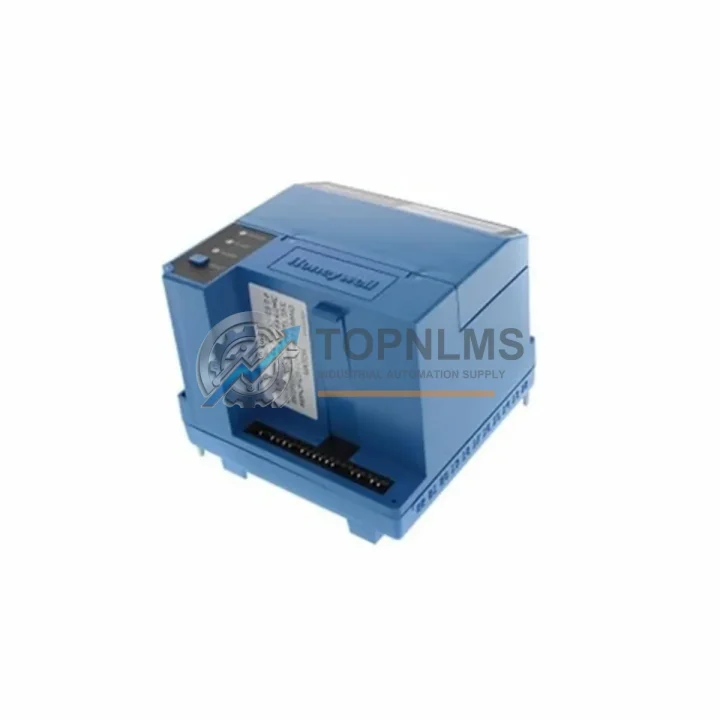
Send this exact part number, quantity and destination country. TOPNLMS will confirm availability, condition and export lead time before quotation.
The Honeywell RM7823A1016 is a programmable burner relay module belonging to the RM7800 Series — one of the most widely deployed combustion management platforms in industrial boiler, burner, and thermal processing systems worldwide. For maintenance engineers and plant managers responsible for keeping continuous-process facilities operational, having a verified original spare of the RM7823A1016 on hand is a foundational element of any credible preventive maintenance strategy. Unplanned burner shutdowns caused by relay module failure can cascade into full production line stoppages, with downtime costs that far exceed the cost of maintaining a ready spare inventory.
The RM7823A1016 integrates directly into Honeywell’s RM7800 Series burner management architecture, providing programmable flame supervision, ignition sequencing, and safety interlock logic. Its compatibility with the broader RM7800 platform means it can serve as a direct replacement for aging or failed units without requiring control cabinet rewiring or PLC reprogramming — a critical advantage in legacy system maintenance scenarios where minimizing intervention scope is essential to restoring uptime quickly.
| Parameter | Specification |
|---|---|
| Part Number / SKU | RM7823A1016 |
| Brand | Honeywell |
| Series | RM7800 Series |
| Product Type | Programmable Burner Relay Module |
| Supply Voltage | 120 VAC / 60 Hz (nominal) |
| Flame Detector Compatibility | UV, IR, and UV/IR combination detectors (RM7800 Series compatible) |
| Ignition Trial Time | Programmable via Keyboard Display Module (KDM) |
| Safety Classification | IEC 61508 SIL 2 capable (system-level) |
| Operating Temperature | -40°C to +60°C |
| Mounting | Plug-in base mount, RM7800 Series wiring subbase |
| Communication | RS-485 / Modbus compatible (with optional interface module) |
| Application Environment | Industrial boilers, process burners, thermal oxidizers, kilns |
| Maintenance Recommendation | Inspect every 12 months or per OEM service interval; replace on first sign of lockout anomaly |
| Origin | United States |
| Warranty | 12-Month Quality Warranty |
A burner relay module does not operate in isolation. The RM7823A1016 sits at the center of a combustion control circuit that depends on the reliable performance of multiple upstream and downstream components. When scheduling a planned maintenance window or responding to an unplanned shutdown, experienced maintenance teams know that replacing only the failed module while leaving adjacent components uninspected is a common source of repeat failures within weeks.
During any RM7823A1016 replacement or inspection cycle, it is strongly recommended to simultaneously evaluate the condition of the Honeywell C7027A1023 UV Flame Detector and its associated detector cable, as flame signal degradation is frequently misdiagnosed as relay module failure. The Honeywell Q7800A1005 Wiring Subbase should be inspected for terminal corrosion, loose connections, and heat stress — a compromised subbase will cause intermittent lockouts even with a new relay module installed.
The Honeywell S7800A1142 Keyboard Display Module (KDM) is the primary interface for reading fault history and reprogramming trial times on the RM7823A1016; if the KDM shows communication errors or display anomalies, it should be replaced as part of the same service event. For facilities running multiple burner lines, maintaining a spare Honeywell RM7838A1010 or RM7840L1018 alongside the RM7823A1016 ensures cross-coverage across different burner configurations within the same RM7800 platform.
Power supply integrity is equally critical. The 24 VDC auxiliary power supply feeding the burner management panel — often a Phoenix Contact QUINT-PS or equivalent DIN-rail power supply module — should be load-tested during the same maintenance window. A sagging supply voltage is a known cause of spurious RM7800 Series lockouts that are incorrectly attributed to the relay module itself. Similarly, the terminal blocks and DIN-rail mounted fuse modules within the control cabinet should be torque-checked and visually inspected for discoloration indicating thermal stress.
For facilities with Modbus or BACnet integration, the Honeywell R7847 or R7849 Amplifier Module connected to the RM7823A1016 should be verified for correct gain settings and clean signal output. In older installations, the Honeywell R4343 or R4348 Series cad cell relay may be present in parallel circuits and should be assessed for end-of-life replacement as part of a broader combustion system modernization plan.
The RM7823A1016 is a direct plug-in replacement for earlier RM7800 Series relay modules installed on compatible wiring subbases. This means facilities running legacy Honeywell burner management systems — some of which have been in continuous service for 15 to 20 years — can restore full OEM-specified functionality without any cabinet modification, conduit rerouting, or PLC logic changes. The plug-in architecture of the RM7800 platform was specifically designed to support rapid field replacement, reducing mean time to repair (MTTR) to under 30 minutes for a trained technician.
For plant engineers managing aging combustion systems, the RM7823A1016 represents a cost-effective alternative to full burner management system upgrades. Replacing a failed or end-of-life relay module with an original Honeywell spare preserves the existing safety interlock logic, maintains insurance and regulatory compliance documentation continuity, and avoids the engineering hours associated with system redesign. In facilities where multiple identical burner lines are installed, standardizing on the RM7823A1016 as the site spare reduces training burden and simplifies spare parts inventory management.
Procurement teams should note that sourcing original Honeywell RM7800 Series modules from verified industrial distributors — rather than grey-market or refurbished sources — is essential for maintaining SIL 2 system integrity documentation and warranty coverage. Each RM7823A1016 unit shipped from TOPNLMS is tested prior to dispatch and covered by a 12-month quality warranty, providing procurement confidence for both emergency replacement and planned inventory replenishment scenarios.
Q1: Is the RM7823A1016 a direct drop-in replacement for other RM7800 Series modules?
Yes. The RM7823A1016 is designed for plug-in installation on Honeywell RM7800 Series wiring subbases (Q7800 Series). It is compatible with the same subbase footprint used by other RM7800 Series relay modules, making it a direct field replacement without cabinet modification. Always verify the subbase model and flame detector type before installation to confirm full system compatibility.
Q2: What is the recommended spare inventory strategy for the RM7823A1016?
For facilities with 1–3 burner lines, maintaining one on-shelf spare is standard practice. Facilities with 4 or more identical burner lines, or those operating in remote locations with extended lead times, should maintain a minimum of two units. Given the critical safety function of the burner relay module, spare inventory should be refreshed every 5–7 years regardless of usage to ensure firmware and component currency.
Q3: How is each unit tested before shipment?
Every RM7823A1016 unit is functionally tested prior to dispatch to verify power-up sequencing, flame signal response, and lockout/reset behavior. Units are shipped in anti-static protective packaging with inspection documentation. The 12-month warranty covers manufacturing defects and functional failures under normal operating conditions.
Q4: Can the RM7823A1016 be used in systems outside of its original design specification?
The RM7823A1016 is designed and certified for use within Honeywell RM7800 Series burner management systems. Application outside of the specified voltage range, flame detector type, or subbase configuration is not recommended and may void warranty coverage. For non-standard applications or system integration questions, consult your controls engineer or contact TOPNLMS technical support before installation.
Honeywell RM7850A1027 ruggedized flame safeguard relay module. RM7850 Series. Harsh-environment certified. 12-month warranty. In stock — fast global shipping.
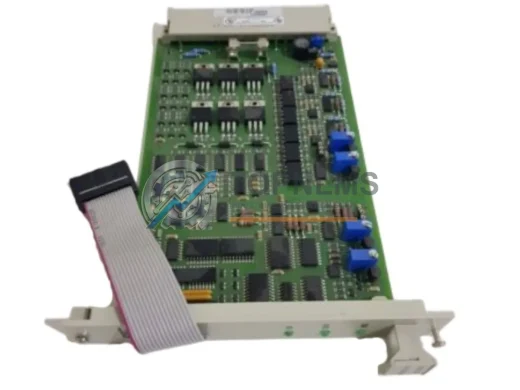
Honeywell 10302/2/1 Watchdog Repeater Module – drop-in replacement & upgrade solution. Compatible with Safety & Control Systems series. 12-month warranty, fast ship.
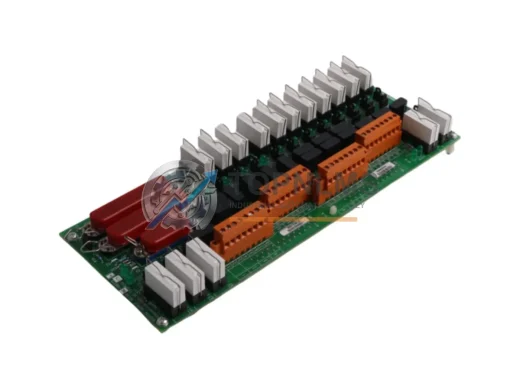
Original Honeywell MC-TDOY23 51204166-175 C300 Experion PKS digital output relay module. Industrial spare, 12-month warranty, fast shipping. Replace legacy DCS I/O.
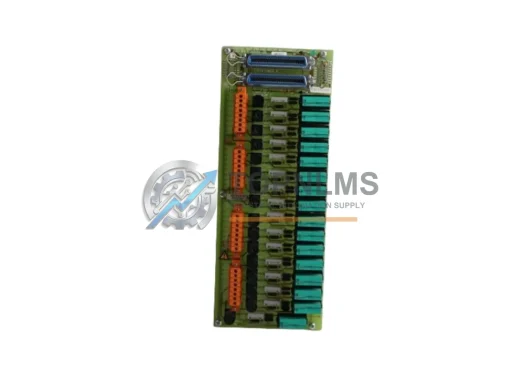
Honeywell MC-TSTX13 51309142-175 original digital output relay module for TPS DCS. Industrial spare, fast ship, 12-month warranty. Replace legacy I/O reliably.
Click Quote This Model and the Part Number field will auto-fill with RM7823A1016.