
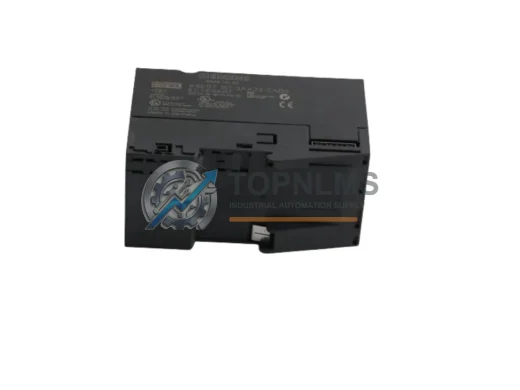
Honeywell
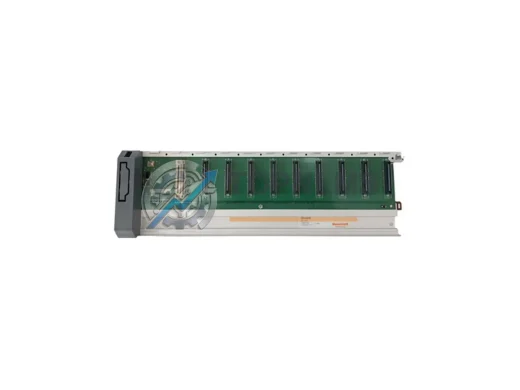
HONEYWELL 51304538-100 Ruggedized Safety Processor Module
51304538-100HONEYWELL 51304538-100 FSC Safety Manager Processor Module. SIL2/SIL3-rated, ruggedized for harsh industrial environments. In stock. 12-month warranty.
Request availability, condition, lead time and export shipping details for 2MLR-CPUH/F-CC.
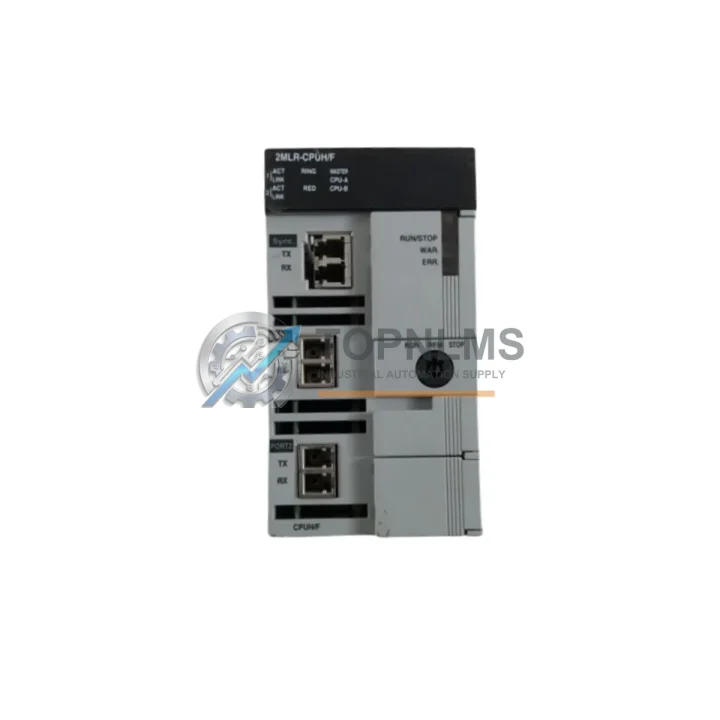
Send this exact part number, quantity and destination country. TOPNLMS will confirm availability, condition and export lead time before quotation.
The Honeywell 2MLR-CPUH/F-CC is a redundant, fail-safe CPU module designed for the MasterLogic ML200 Distributed Control System (DCS). As Honeywell progressively phases out legacy ML200 series hardware, many process plants, chemical facilities, and power generation sites are facing urgent replacement decisions. Whether your existing 2MLR-CPUH/F-CC has failed, is approaching end-of-life, or your facility is executing a planned control system modernization, TOPNLMS maintains verified stock of this module to support your migration with minimal disruption to production.
This module operates as the primary and redundant controller within the ML200 rack architecture, managing I/O scanning, program execution, and inter-controller communication. Its fail-safe design ensures bumpless switchover between primary and standby CPUs, a critical requirement in safety-instrumented environments. When replacing a failed or obsolete 2MLR-CPUH/F-CC, engineers must verify firmware revision compatibility with the existing 2MLR-RACK backplane and confirm that the redundancy link cable — typically a dedicated fiber or copper sync cable — is intact and properly seated. The module’s communication interface supports the ML200 proprietary network protocol, and any replacement unit must be initialized with the same node address and redundancy configuration as the outgoing module to avoid process interruption.
In many retrofit projects, the 2MLR-CPUH/F-CC replacement is performed alongside upgrades to adjacent modules. The 2MLR-AIIM analog input module and 2MLR-AOIM analog output module share the same rack and are frequently replaced as a set when the CPU is upgraded, since aging I/O modules can introduce signal drift that masks the true performance of a new CPU. Similarly, the 2MLR-DIIM digital input module and 2MLR-DOIM digital output module should be inspected for contact wear and firmware compatibility before commissioning the replacement CPU. Replacing only the CPU while leaving degraded I/O modules in service is a common cause of post-migration instability.
Power supply integrity is equally critical. The 2MLR-PSIM power supply module must deliver stable, within-spec DC voltage to the backplane before the new CPU is powered on. A marginal power supply that was previously masked by the old CPU’s lower power draw can cause intermittent faults or prevent the redundant pair from achieving synchronization. TOPNLMS recommends verifying the power supply output under load before completing the CPU swap.
For facilities migrating from an older, non-redundant ML200 configuration — such as a single 2ML-CPUM controller — to a fully redundant 2MLR-CPUH/F-CC pair, the upgrade requires a compatible redundant rack (2MLR-RACK), a redundancy synchronization cable, and a firmware update to the I/O modules to enable redundancy mode. The application program itself typically requires no modification, as the ML200 runtime environment handles redundancy transparently at the operating system level. This makes the migration from a simplex to a redundant architecture significantly less disruptive than a full platform migration.
Communication module compatibility is another key consideration. If your ML200 system uses a 2MLR-CNIM control network interface module for Ethernet-based supervisory communication with a Honeywell Experion PKS or third-party SCADA system, the replacement CPU must be configured with the same network parameters and security certificates. In systems using legacy serial communication via a 2MLR-SCIM serial communication interface module, the baud rate, parity, and protocol settings must be documented before the swap and restored afterward. TOPNLMS can provide pre-shipment configuration support to reduce on-site commissioning time.
Physical installation is straightforward for qualified DCS engineers. The 2MLR-CPUH/F-CC is a hot-swappable module in a running redundant system — the standby CPU can be replaced while the primary remains in control, eliminating the need for a planned shutdown in most cases. However, in simplex configurations or during initial commissioning, a controlled shutdown is required. The module occupies a fixed slot in the 2MLR-RACK backplane and is secured with a standard front-panel locking mechanism. No special tools are required beyond standard ESD precautions.
TOPNLMS maintains inventory of the 2MLR-CPUH/F-CC sourced from verified industrial surplus channels and authorized distributors. Each unit undergoes functional testing prior to shipment, including power-on self-test verification, redundancy link handshake testing, and I/O bus communication checks. Units are shipped in anti-static packaging with full documentation. Standard lead time is 3–7 business days from Xiamen, with expedited options available for emergency shutdowns.
| Parameter | Legacy / Outgoing | Replacement: 2MLR-CPUH/F-CC |
|---|---|---|
| Model | 2ML-CPUM (simplex) / Aged 2MLR-CPUH/F-CC | 2MLR-CPUH/F-CC (Redundant Fail-Safe CPU) |
| Platform | Honeywell MasterLogic ML200 DCS | Honeywell MasterLogic ML200 DCS |
| Redundancy | Simplex or degraded redundant pair | Full hot-standby redundancy with bumpless switchover |
| Backplane Compatibility | 2MLR-RACK | 2MLR-RACK (direct drop-in) |
| Communication Protocol | ML200 proprietary network / Ethernet (CNIM) | ML200 proprietary network / Ethernet (CNIM) — fully compatible |
| I/O Module Compatibility | 2MLR-AIIM, 2MLR-AOIM, 2MLR-DIIM, 2MLR-DOIM | All ML200 I/O modules — no rewiring required |
| Power Supply | 2MLR-PSIM (24 VDC backplane) | 2MLR-PSIM — same power supply, no modification |
| Hot-Swap Support | Depends on configuration | Yes — in redundant mode, no shutdown required |
| Firmware | Varies by revision | Must match existing rack firmware revision |
| Installation Space | Standard ML200 rack slot | Same slot — no cabinet modification required |
| Warranty | — | 12-Month Warranty from TOPNLMS |
A successful 2MLR-CPUH/F-CC migration rarely involves the CPU alone. In practice, the following components are commonly evaluated or replaced as part of the same project:
The 2MLR-RACK backplane is the foundation of the ML200 redundant architecture. If the existing rack shows signs of backplane bus degradation — evidenced by intermittent I/O faults or CPU-to-I/O communication errors — replacing the rack in conjunction with the CPU eliminates a common source of post-migration instability. The 2MLR-PSIM power supply module should be load-tested before the new CPU is commissioned; a power supply that is marginal under the current load may fail under the slightly different power profile of a new CPU revision. The 2MLR-CNIM control network interface module governs all Ethernet-based communication between the ML200 controller and the supervisory layer, including Honeywell Experion PKS historian and operator stations; its configuration must be preserved and verified after the CPU swap. For facilities using serial SCADA integration, the 2MLR-SCIM serial communication interface module handles Modbus RTU or proprietary serial protocols and must be reconfigured if the CPU node address changes. On the I/O side, the 2MLR-AIIM analog input module and 2MLR-AOIM analog output module handle 4–20 mA process signals and are frequently replaced alongside the CPU in aging systems to restore signal accuracy. The 2MLR-DIIM digital input module and 2MLR-DOIM digital output module manage discrete field signals and relay outputs; worn contacts or degraded optocouplers in these modules can produce false diagnostics that complicate CPU commissioning. For facilities that also operate Honeywell Safety Manager or Safety Builder environments, the 2MLR-CPUH/F-CC integrates with the broader Honeywell safety architecture, and the safety application program should be validated against the replacement CPU before returning the system to automatic mode.
Q: Can I replace the 2MLR-CPUH/F-CC without shutting down the process?
A: In a properly functioning redundant pair, yes. The standby CPU can be replaced while the primary remains in control. The new module will synchronize automatically once inserted and powered. A controlled shutdown is only required in simplex configurations or if both CPUs have failed.
Q: Do I need to reload the application program after replacing the CPU?
A: In most cases, no. The ML200 architecture stores the application program in the I/O modules and backplane memory. However, if the replacement CPU has a different firmware revision, a program download from the engineering workstation may be required. TOPNLMS recommends confirming the firmware revision before shipment.
Q: Is the 2MLR-CPUH/F-CC compatible with all ML200 I/O modules?
A: Yes. The module is designed for the ML200 platform and is compatible with all standard ML200 I/O modules, including analog, digital, and communication modules. No rewiring is required.
Q: What communication protocols does the 2MLR-CPUH/F-CC support?
A: The module supports the ML200 proprietary control network protocol natively. Ethernet-based supervisory communication is handled via the 2MLR-CNIM module. Serial protocols including Modbus RTU are supported via the 2MLR-SCIM module.
Q: How much physical space does the replacement module require?
A: The 2MLR-CPUH/F-CC occupies the same slot as the original module in the 2MLR-RACK backplane. No cabinet modification, additional DIN rail space, or wiring changes are required.
Q: What if my existing rack firmware is older than the replacement CPU firmware?
A: A firmware mismatch can prevent the redundant pair from synchronizing. TOPNLMS can supply units matched to your existing firmware revision upon request. Please provide your current firmware version when ordering.
Every 2MLR-CPUH/F-CC shipped by TOPNLMS is covered by a 12-month warranty from the date of shipment. Prior to dispatch, each unit undergoes a structured pre-shipment test protocol: power-on self-test, redundancy link handshake verification, backplane bus communication check, and visual inspection for physical damage or component degradation. Units that do not pass all test criteria are quarantined and not shipped.
In the event of a warranty claim, TOPNLMS provides a replacement unit or full refund within the warranty period. Our after-sales response target is 24 hours for initial acknowledgment and 72 hours for resolution proposal. For emergency shutdown situations, expedited replacement shipping is available at no additional charge within the warranty period.
TOPNLMS maintains a documented chain of custody for all inventory, including sourcing records, test logs, and shipping manifests. This documentation is available to customers upon request and supports your internal quality management and audit requirements.
We understand that unplanned downtime in a DCS environment carries significant operational and financial consequences. Our procurement guarantee is simple: if the module does not perform as specified in your ML200 system, we will make it right — no bureaucratic delays, no ambiguous terms.
HONEYWELL 51304538-100 FSC Safety Manager Processor Module. SIL2/SIL3-rated, ruggedized for harsh industrial environments. In stock. 12-month warranty.
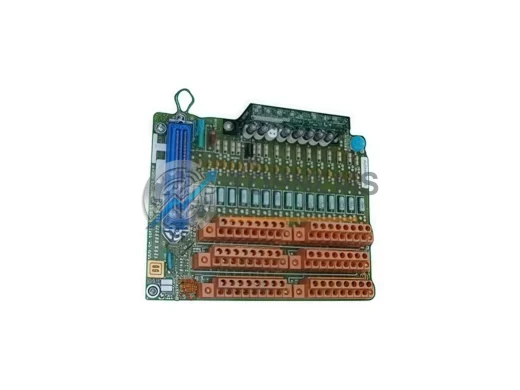
Honeywell 38001680-100 TDC 3000 ruggedized PLC control module. In-stock, tested, 12-month warranty. Fast global shipping. Reliable DCS replacement.
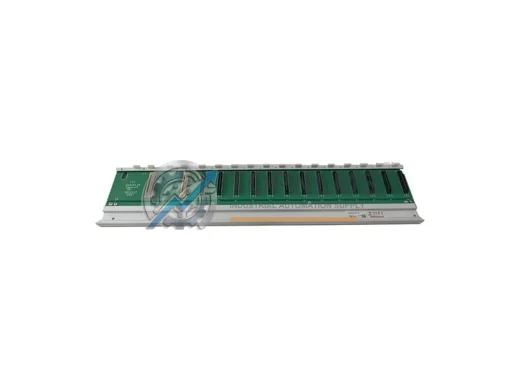
Honeywell 2MLR-E12P 12-slot modular I/O expansion base for MLR control systems. Rugged, reliable, in-stock. 12-month warranty. Fast shipping. Contact TOPNLMS.
Original Honeywell 2MLR-E08P-CC / 2MLR-E12P-CC / 2MLR-E12H-CC CC-Link PLC module. 2MLR Series industrial spare, verified compatible, 12-month warranty, fast global shipping.
Click Quote This Model and the Part Number field will auto-fill with 2MLR-CPUH/F-CC.