
Honeywell
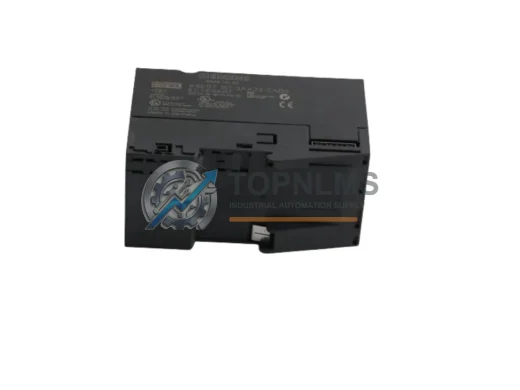
HONEYWELL 51304538-100 Ruggedized Safety Processor Module
51304538-100HONEYWELL 51304538-100 FSC Safety Manager Processor Module. SIL2/SIL3-rated, ruggedized for harsh industrial environments. In stock. 12-month warranty.
Request availability, condition, lead time and export shipping details for 900C50-0460.
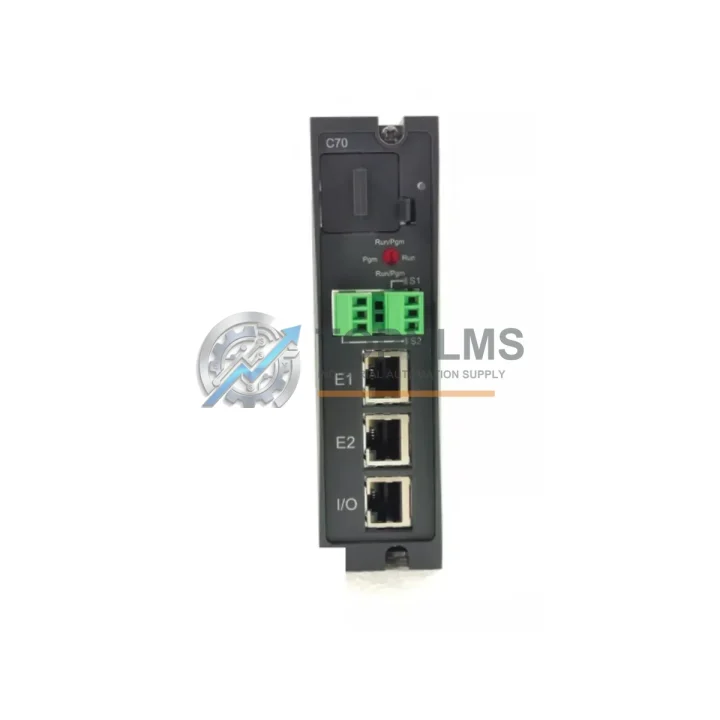
Send this exact part number, quantity and destination country. TOPNLMS will confirm availability, condition and export lead time before quotation.
In modern process automation environments, the CPU controller is the nerve center of every control loop. The Honeywell 900C50-0460 — the C50 CPU module for the HC900 Hybrid Controller platform — is a mission-critical component found in refineries, chemical plants, power generation facilities, and continuous manufacturing lines worldwide. When this module fails or degrades, the entire control system is at risk of unplanned downtime. Stocking a verified original spare is not optional; it is a fundamental pillar of any responsible preventive maintenance strategy.
The HC900 platform was designed by Honeywell for hybrid process control, combining the flexibility of PLC-style discrete I/O management with the precision of DCS-grade analog loop control. The 900C50-0460 C50 CPU sits at the heart of this architecture, executing control strategies, managing communications with I/O racks, and maintaining real-time data exchange with SCADA and HMI systems. Its role in sustaining system stability cannot be overstated — a degraded or failed CPU module will cascade into process upsets, safety shutdowns, and costly production losses.
| Parameter | Specification |
|---|---|
| Part Number | 900C50-0460 |
| Series | Honeywell HC900 Hybrid Controller |
| Module Type | C50 CPU Controller Module |
| Processor | 32-bit RISC CPU |
| Control Loops | Up to 50 PID control loops |
| I/O Capacity | Up to 2,000 I/O points (with expansion racks) |
| Communication Ports | Ethernet (10/100 Mbps), RS-485 Modbus |
| Program Memory | Non-volatile flash memory |
| Power Supply Compatibility | HC900 rack-mounted power supply modules (e.g., 900P01-0001) |
| Operating Temperature | 0°C to 60°C (32°F to 140°F) |
| Humidity | 5% to 95% RH, non-condensing |
| Mounting | HC900 controller rack (C30/C50/C70/C75 compatible chassis) |
| Certifications | CE, UL, cUL |
| Country of Origin | United States |
| Condition | Original, tested before shipment |
| Warranty | 12-Month Warranty |
Experienced maintenance engineers know that replacing a CPU module in isolation rarely tells the full story of a control cabinet’s health. When scheduling a planned replacement or inspection of the Honeywell 900C50-0460, a comprehensive cabinet audit is strongly recommended to avoid repeat callouts and secondary failures.
Begin with the HC900 power supply module (such as the 900P01-0001). CPU instability is frequently traced back to marginal power delivery — voltage ripple, aging capacitors, or thermal stress on the PSU can cause intermittent CPU resets that are misdiagnosed as CPU faults. Replacing or bench-testing the power supply in parallel with the CPU module eliminates this variable entirely.
Next, inspect the HC900 I/O modules — analog input modules (e.g., 900G32-0101 for 4–20 mA loops), digital input/output modules, and thermocouple input modules. These modules communicate directly with the C50 CPU over the rack backplane. A degraded I/O module can generate spurious alarms, corrupt process values, and trigger unnecessary safety shutdowns. During any CPU replacement window, it is cost-effective to verify the calibration and signal integrity of all connected I/O cards.
The HC900 communication modules — including Ethernet gateway modules and Modbus RTU interface cards — should also be inspected. The C50 CPU relies on these modules for real-time data exchange with SCADA systems, historian servers, and remote HMI panels. A failing communication module can cause the CPU to log excessive communication errors, degrading overall system performance even when the CPU itself is healthy.
Do not overlook the terminal blocks and field wiring connections on the I/O rack. Loose or corroded terminals are a leading cause of intermittent field signal faults that are incorrectly attributed to CPU or I/O module failures. During a planned maintenance window, re-torque all terminal connections and inspect for signs of oxidation or insulation breakdown.
For facilities running the HC900 alongside other Honeywell systems — such as the Honeywell ControlEdge PLC or legacy Honeywell TDC 3000 DCS nodes — it is advisable to audit the signal isolators and barriers connecting field instruments to the control system. These devices protect the CPU and I/O modules from voltage spikes and ground loops originating in the field, and they degrade silently over years of service.
Finally, review the status of UPS (Uninterruptible Power Supply) modules and surge protection devices in the control panel. The HC900 CPU is sensitive to power quality events; a single voltage transient can corrupt program memory or damage the CPU’s internal clock circuitry. Ensuring robust power conditioning upstream of the controller rack is a low-cost, high-impact preventive measure.
A well-executed preventive maintenance cycle — covering the CPU, power supply, I/O modules, communication cards, terminal connections, signal isolators, and power conditioning — dramatically extends the operational life of the HC900 system and reduces the probability of unplanned shutdowns to near zero.
The Honeywell HC900 platform has been in active deployment for over two decades, and many facilities are operating systems that are no longer covered by OEM support contracts. In this environment, sourcing a verified original 900C50-0460 spare is the most reliable path to maintaining system continuity without the cost and risk of a full DCS migration.
Unlike third-party or refurbished alternatives, an original 900C50-0460 module retains full compatibility with HC900 Designer configuration software, supports all existing function block libraries, and requires no firmware re-flashing or parameter reconfiguration. The replacement process is straightforward: power down the rack, swap the CPU module, restore power, and verify communication with the I/O subsystem and SCADA layer. In most installations, this procedure can be completed within a single maintenance shift, minimizing production impact.
For facilities transitioning from the older Honeywell HC900 C30 CPU (900C30-0460) to the C50 platform, the 900C50-0460 offers expanded loop capacity and enhanced Ethernet connectivity while maintaining backward compatibility with existing HC900 I/O racks and field wiring. This makes it an ideal upgrade path for aging systems that require increased control capacity without a full hardware overhaul.
Every unit shipped from TOPNLMS undergoes functional testing and visual inspection prior to dispatch. Shipment is accompanied by documentation confirming the module’s tested status, and all units are covered by a 12-month warranty against manufacturing defects and functional failures. For time-critical maintenance scenarios, expedited shipping options are available to minimize plant downtime.
Q1: Is the 900C50-0460 compatible with all HC900 rack configurations?
The 900C50-0460 C50 CPU is designed for use in HC900 controller racks and is compatible with HC900 C30, C50, C70, and C75 chassis configurations. It supports all standard HC900 I/O modules and communication cards. Always verify your rack model and firmware version against Honeywell’s compatibility matrix before installation.
Q2: How is the module tested before shipment?
Each 900C50-0460 unit undergoes a functional power-on test and communication verification prior to dispatch. Units that fail any test parameter are quarantined and not shipped. A test report is available upon request for quality-critical procurement processes.
Q3: What is the recommended spare inventory strategy for HC900 CPU modules?
For facilities with a single HC900 system, maintaining one cold-standby CPU spare is the minimum recommended posture. For multi-system or multi-rack installations, a ratio of one spare per three to five installed CPUs is a common industry benchmark. Given the long lead times for legacy DCS components, early procurement is strongly advised.
Q4: What does the 12-month warranty cover?
The 12-month warranty covers functional failures and manufacturing defects under normal operating conditions. It does not cover damage resulting from incorrect installation, overvoltage events, or physical mishandling. Warranty claims are processed promptly — contact our support team with your order number and a description of the fault for rapid resolution.
HONEYWELL 51304538-100 FSC Safety Manager Processor Module. SIL2/SIL3-rated, ruggedized for harsh industrial environments. In stock. 12-month warranty.
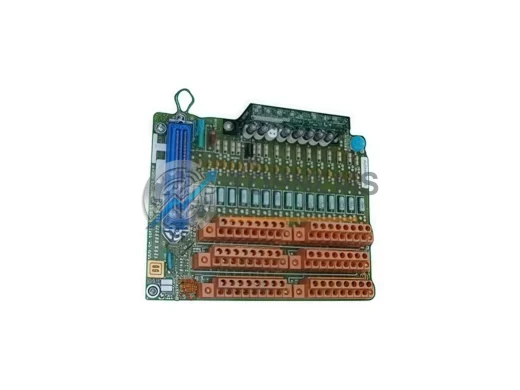
Honeywell 38001680-100 TDC 3000 ruggedized PLC control module. In-stock, tested, 12-month warranty. Fast global shipping. Reliable DCS replacement.
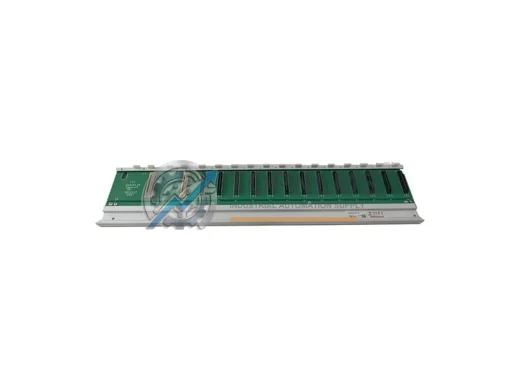
Honeywell 2MLR-E12P 12-slot modular I/O expansion base for MLR control systems. Rugged, reliable, in-stock. 12-month warranty. Fast shipping. Contact TOPNLMS.
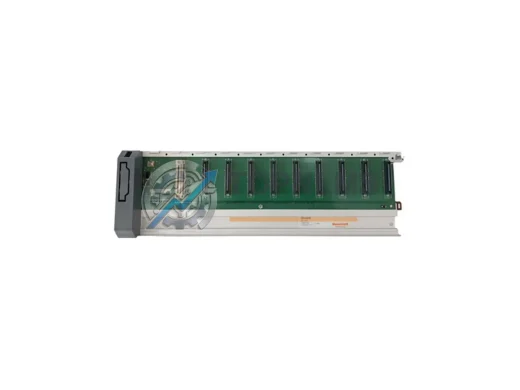
Original Honeywell 2MLR-E08P-CC / 2MLR-E12P-CC / 2MLR-E12H-CC CC-Link PLC module. 2MLR Series industrial spare, verified compatible, 12-month warranty, fast global shipping.
Click Quote This Model and the Part Number field will auto-fill with 900C50-0460.