
Honeywell
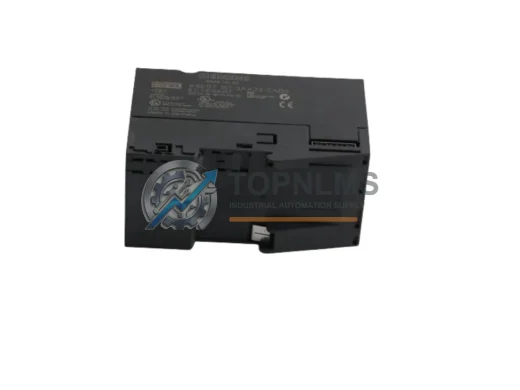
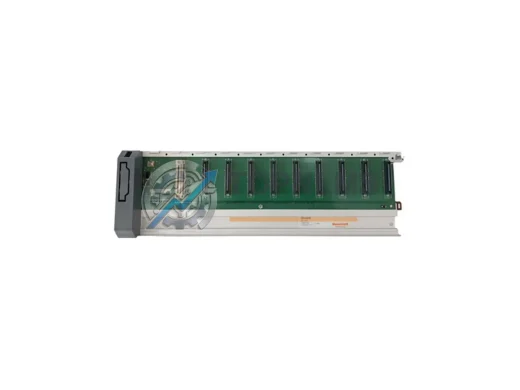
HONEYWELL 51304538-100 Ruggedized Safety Processor Module
51304538-100HONEYWELL 51304538-100 FSC Safety Manager Processor Module. SIL2/SIL3-rated, ruggedized for harsh industrial environments. In stock. 12-month warranty.
Request availability, condition, lead time and export shipping details for 2MLI-CPUH-CC.
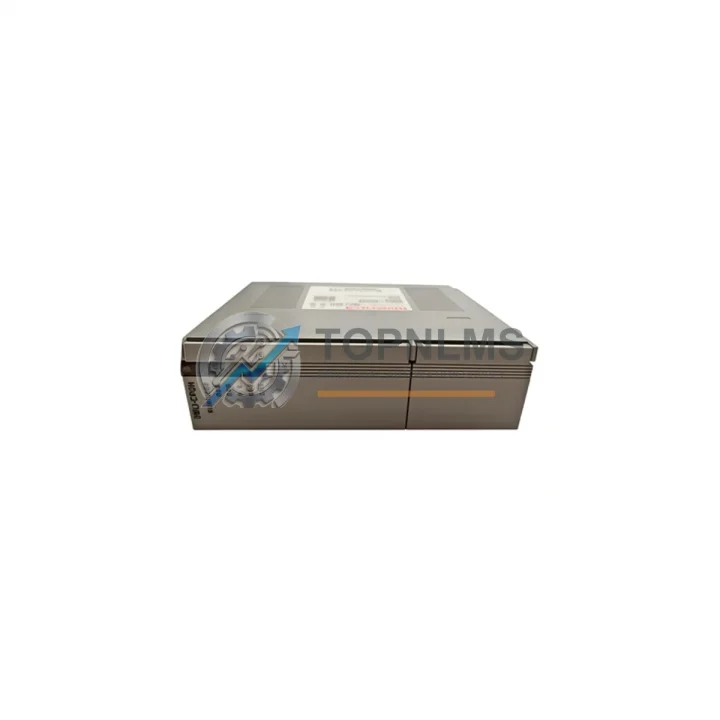
Send this exact part number, quantity and destination country. TOPNLMS will confirm availability, condition and export lead time before quotation.
The Honeywell 2MLI-CPUH-CC is the central processing unit of the Honeywell Safety Manager platform — a SIL 3 certified safety PLC controller widely deployed across oil & gas, petrochemical, power generation, and advanced manufacturing facilities worldwide. As a mission-critical component in functional safety architectures, the 2MLI-CPUH-CC governs the execution of safety logic, manages I/O communication, and maintains the integrity of emergency shutdown (ESD) and process safety management (PSM) systems. When this module fails or degrades, the consequences extend far beyond a single controller — they can compromise an entire safety instrumented system (SIS) and trigger unplanned plant shutdowns.
Sourcing a verified original spare for the 2MLI-CPUH-CC is not merely a procurement decision — it is a plant reliability strategy. TOPNLMS maintains ready stock of this module, fully tested prior to shipment, backed by a 12-month warranty, and available for rapid worldwide dispatch to minimize your mean time to repair (MTTR).
| Parameter | Specification |
|---|---|
| Part Number / SKU | 2MLI-CPUH-CC |
| Manufacturer | Honeywell Process Solutions |
| Product Series | Safety Manager (SM) |
| Module Type | Safety PLC CPU / Central Processing Unit |
| Safety Integrity Level | SIL 3 (IEC 61508 certified) |
| Architecture | Dual-redundant, fault-tolerant processing |
| Communication Interface | Ethernet (Safety Manager network), proprietary backplane bus |
| Operating Voltage | 24 VDC (via Safety Manager chassis backplane) |
| Operating Temperature | 0°C to +60°C |
| Humidity | 5% to 95% RH, non-condensing |
| Mounting | Safety Manager chassis / rack-mount backplane |
| Compatibility | Honeywell Safety Manager SM series chassis and I/O modules |
| Certifications | IEC 61508 SIL 3, TÜV certified |
| Country of Origin | United States |
| Condition | Original, new or refurbished-to-spec, pre-shipment tested |
| Warranty | 12 Months — covers manufacturing defects and functional failure |
| Application Environment | ESD, F&G, PSM, Burner Management, Turbine Control |
In any Safety Manager installation, the 2MLI-CPUH-CC does not operate in isolation. It is the nerve center of a tightly integrated safety architecture, and its reliable operation depends on the health of every module in the chassis. Experienced maintenance engineers know that when a CPU module is flagged for replacement, it is the ideal moment to conduct a comprehensive inspection of the entire safety cabinet.
During a scheduled CPU replacement or emergency swap of the 2MLI-CPUH-CC, maintenance teams should simultaneously inspect and — where service life is approaching — proactively replace the Safety Manager power supply module (such as the 2MLI-PS24-CC), which provides regulated DC power to the entire chassis backplane. A degraded power supply is one of the most common root causes of intermittent CPU faults and spurious trips. Alongside the power supply, the Safety Manager communication module (e.g., 2MLI-CNET-CC or equivalent Ethernet gateway card) should be verified for firmware currency and connector integrity, as communication faults can mask CPU diagnostics.
The Safety Manager I/O modules — including digital input modules (2MLI-DI16-CC), digital output modules (2MLI-DO8-CC), and analog input modules (2MLI-AI8-CC) — should be inspected for terminal corrosion, loose field wiring, and LED fault indicators. These modules interface directly with field instruments such as pressure transmitters, solenoid valves, and flame detectors; any degradation here can generate nuisance alarms that burden the CPU’s diagnostic processing. While the cabinet is open, inspect the Safety Manager chassis backplane and module retention latches for mechanical wear, and verify that all module seating is secure.
For facilities running Honeywell’s broader control architecture, the 2MLI-CPUH-CC often operates in conjunction with Experion PKS controllers or C300 process controllers via the Safety Builder engineering environment. If your site uses a Honeywell FTEB (Fault-Tolerant Ethernet Bridge) or FSC (Fail-Safe Controller) modules for legacy integration, these should be included in the inspection scope. Additionally, terminal blocks and marshalling panels connected to the Safety Manager I/O should be checked for tightening torque and insulation resistance — loose terminations are a leading cause of field-side faults that are incorrectly attributed to CPU or I/O module failures.
Finally, if your plant operates a Honeywell Safety Builder workstation or uses a dedicated engineering laptop with Safety Manager configuration software, ensure the project backup is current before any module swap. A verified, timestamped configuration backup is the single most important document in a CPU replacement workflow — without it, recommissioning time can multiply significantly.
The Honeywell Safety Manager platform has been in active deployment since the early 2000s, and many installations are now operating well beyond their original design lifecycle. OEM support for legacy Safety Manager hardware is increasingly constrained, with extended lead times for factory-new modules and limited availability of older firmware-compatible variants. The 2MLI-CPUH-CC represents one of the most frequently requested spare modules in this ecosystem precisely because it is the component most sensitive to aging — capacitor degradation, battery backup depletion, and firmware obsolescence all manifest first at the CPU level.
TOPNLMS specializes in sourcing original, tested 2MLI-CPUH-CC units that are firmware-compatible with existing Safety Manager chassis without requiring a full system upgrade. This approach allows facilities to extend the operational life of their safety systems by 5–10 years while maintaining SIL 3 certification compliance — a critical consideration for sites where a full SIS migration would require extensive re-validation, HAZOP review, and regulatory approval.
Our replacement units are functionally tested against Honeywell Safety Manager diagnostic protocols prior to shipment. Each unit is verified for backplane communication integrity, CPU self-test pass status, and I/O bus handshake confirmation. This pre-shipment validation process significantly reduces the risk of a failed replacement during a live maintenance window — a scenario that can extend an unplanned outage by 24–72 hours in facilities without a pre-qualified spare on the shelf.
For procurement teams managing multi-site safety system inventories, we recommend maintaining a minimum of one 2MLI-CPUH-CC per Safety Manager chassis as a cold standby spare. Given the criticality of this module and the extended lead times associated with factory-new procurement, a pre-tested spare held at site represents a measurable reduction in operational risk and insurance liability.
Q1: Is the 2MLI-CPUH-CC compatible with all Safety Manager chassis variants?
The 2MLI-CPUH-CC is designed for the Honeywell Safety Manager SM series chassis. Compatibility depends on the chassis generation and firmware revision in use at your site. We recommend providing your existing chassis part number and current firmware version when ordering so our technical team can confirm compatibility before shipment. In most cases, units supplied by TOPNLMS are tested against the most widely deployed firmware baselines.
Q2: What does the 12-month warranty cover?
Our 12-month warranty covers manufacturing defects and functional failures under normal operating conditions as specified in the Honeywell Safety Manager installation guidelines. It does not cover damage resulting from incorrect installation, overvoltage events, or physical mishandling. In the event of a warranty claim, we provide a replacement unit or full refund following return and inspection of the original module.
Q3: How is the module tested before shipment?
Every 2MLI-CPUH-CC unit undergoes a pre-shipment functional test that includes power-on self-test (POST) verification, backplane communication handshake, CPU diagnostic pass confirmation, and visual inspection for physical defects. Units that do not pass all test criteria are not shipped. A test report summary is available upon request for quality assurance documentation purposes.
Q4: What is the recommended spare inventory strategy for Safety Manager CPU modules?
For facilities with a single Safety Manager chassis, we recommend maintaining one 2MLI-CPUH-CC as a cold standby spare. For multi-chassis or multi-site installations, a centralized spare pool of two to three units is advisable, with annual rotation to ensure firmware currency. Given that unplanned CPU failures in safety systems can trigger mandatory plant shutdowns under regulatory frameworks such as IEC 61511, the cost of holding a spare is negligible compared to the cost of a single unplanned outage event.
HONEYWELL 51304538-100 FSC Safety Manager Processor Module. SIL2/SIL3-rated, ruggedized for harsh industrial environments. In stock. 12-month warranty.
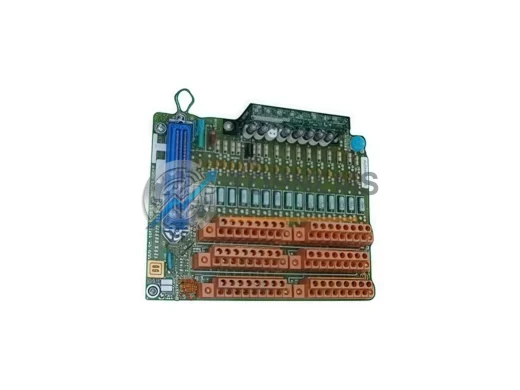
Honeywell 38001680-100 TDC 3000 ruggedized PLC control module. In-stock, tested, 12-month warranty. Fast global shipping. Reliable DCS replacement.
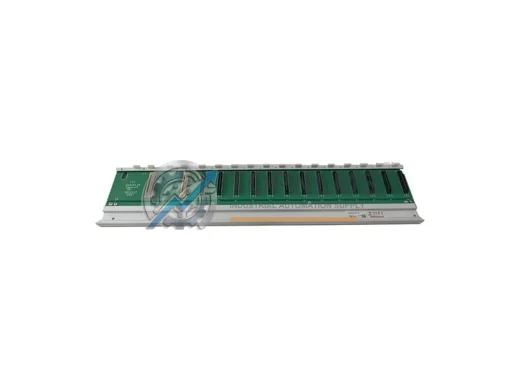
Honeywell 2MLR-E12P 12-slot modular I/O expansion base for MLR control systems. Rugged, reliable, in-stock. 12-month warranty. Fast shipping. Contact TOPNLMS.
Original Honeywell 2MLR-E08P-CC / 2MLR-E12P-CC / 2MLR-E12H-CC CC-Link PLC module. 2MLR Series industrial spare, verified compatible, 12-month warranty, fast global shipping.
Click Quote This Model and the Part Number field will auto-fill with 2MLI-CPUH-CC.