
Honeywell
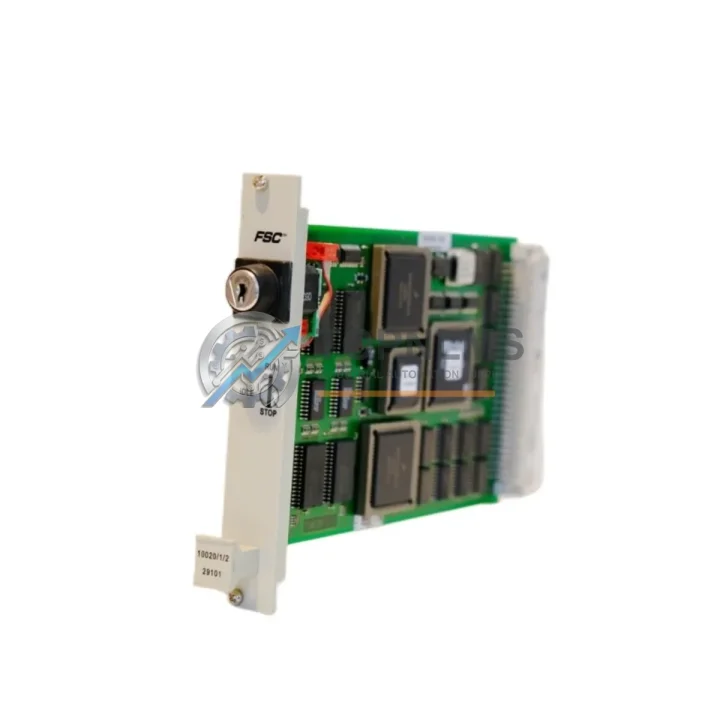
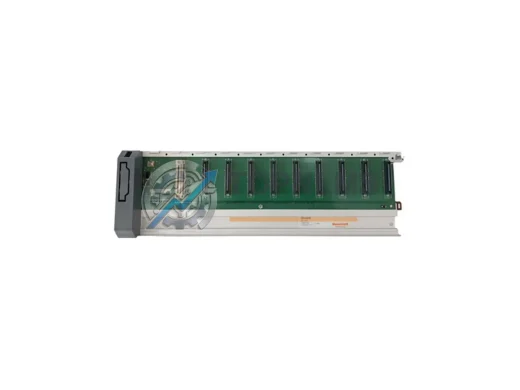
HONEYWELL 51304538-100 Ruggedized Safety Processor Module
51304538-100HONEYWELL 51304538-100 FSC Safety Manager Processor Module. SIL2/SIL3-rated, ruggedized for harsh industrial environments. In stock. 12-month warranty.
Request availability, condition, lead time and export shipping details for 10020/1/2.
Send this exact part number, quantity and destination country. TOPNLMS will confirm availability, condition and export lead time before quotation.
The Honeywell 10020/1/2 is a genuine DCS CPU module engineered for continuous-process industries where system uptime is non-negotiable. Deployed across petrochemical plants, power generation facilities, pulp-and-paper mills, and large-scale manufacturing operations, this module serves as the computational core of Honeywell’s TotalPlant Solution (TPS) and TDC 3000 distributed control architectures. Sourcing an original, tested replacement unit is the single most effective action a maintenance team can take to eliminate unplanned downtime caused by CPU-level failures in legacy DCS cabinets.
Industrial facilities running TDC 3000 or TPS platforms frequently face the challenge of sustaining aging control infrastructure while deferring full system migration. The 10020/1/2 addresses this directly: it slots into existing backplane assemblies without firmware re-engineering, preserves all existing I/O mappings, and restores full process-control capability within the time it takes a qualified technician to perform a hot-swap procedure. For maintenance planners, holding one or two units in bonded inventory is a proven strategy for reducing mean time to repair (MTTR) from days to hours.
| Parameter | Specification |
|---|---|
| Part Number | 10020/1/2 |
| Manufacturer | Honeywell |
| Module Type | DCS CPU / Process Controller Module |
| Compatible Platform | TotalPlant Solution (TPS), TDC 3000, TDC 2000 |
| Country of Origin | United States |
| Form Factor | Card / Rack-mount module |
| Operating Temperature | 0 °C to 60 °C (typical industrial DCS range) |
| Humidity | 5 % – 95 % RH, non-condensing |
| Power Supply Compatibility | TDC 3000 / TPS standard backplane power rail |
| Communication Interface | Local Control Network (LCN) / Universal Control Network (UCN) |
| Installation | Direct backplane insertion; no special tooling required |
| Condition | Original / Genuine; fully tested prior to shipment |
| Warranty | 12 Months from date of shipment |
| Weight (approx.) | 200 g |
A CPU module failure rarely occurs in isolation. In a TDC 3000 or TPS control cabinet, the CPU module works in close coordination with several other components, and a thorough preventive maintenance inspection should address the entire assembly. When scheduling a planned shutdown or responding to a CPU fault alarm, experienced maintenance engineers use the opportunity to inspect and — where necessary — replace adjacent modules that share the same thermal and electrical environment.
Begin with the power supply module (such as the Honeywell 10020/1/1 or equivalent TPS power conditioner): a degraded power rail is one of the leading causes of premature CPU module failure, and replacing a marginal PSU at the same time as the CPU eliminates the risk of a repeat fault within weeks. Next, inspect the communication gateway module responsible for LCN or UCN traffic — intermittent network faults are frequently misdiagnosed as CPU failures, and a clean swap of both components resolves ambiguity quickly.
The I/O link interface module connecting the CPU to field I/O cards deserves close attention: connector oxidation and backplane pin wear are common in cabinets that have operated for more than a decade. Similarly, analog input modules and digital output modules in the same rack should be visually inspected for capacitor bulge, burn marks, or corrosion — conditions that accelerate under the thermal load of a failing CPU. If the facility uses redundant CPU configurations, the standby CPU module (a second 10020/1/2 or compatible unit) should be tested and confirmed healthy before the primary is returned to service.
For facilities with Honeywell History Module (HM) or Application Module (AM) cards installed in adjacent slots, verify that firmware revision levels remain compatible after the CPU replacement. Termination assemblies and field terminal boards connected downstream of the I/O modules are another common failure point: loose screw terminals and degraded cable shields introduce noise that can manifest as spurious process alarms after a CPU swap. Finally, review the condition of the cabinet cooling fans and filter mats — thermal management is the most cost-effective form of preventive maintenance for any DCS enclosure, and a clean airflow path directly extends the service life of every module inside.
Maintaining a small, curated spare-parts inventory — covering the CPU module, power supply, one I/O link interface card, and a representative set of analog and digital I/O modules — gives operations teams the confidence to commit to aggressive MTTR targets and supports the business case for deferring costly full-system migrations.
Many process facilities operate TDC 3000 and TPS platforms well beyond their original design horizon because the cost and risk of full DCS migration outweigh the benefits on a five-to-ten-year planning horizon. The Honeywell 10020/1/2 is a direct, drop-in replacement for failed or end-of-life CPU modules in these environments, requiring no changes to control strategy databases, historian configurations, or operator interface graphics.
Sourcing original spare parts — rather than refurbished or counterfeit alternatives — is critical in this context. Original modules carry traceable manufacturing provenance, pass factory-equivalent functional testing, and are covered by a documented warranty. For maintenance managers preparing capital expenditure justifications, the per-unit cost of a genuine spare module is typically a fraction of one hour of unplanned process downtime in a continuous-production environment.
When planning a replacement campaign across multiple control cabinets, prioritize modules showing elevated error counts in the DCS diagnostic logs, modules with visible thermal discoloration, and any unit that has already been repaired in the field. Replacing these proactively — during a scheduled turnaround rather than in response to an emergency — eliminates the overtime labor, expedited freight, and production-loss costs associated with reactive maintenance.
All units supplied by TOPNLMS are tested under simulated operating conditions before shipment, packaged in anti-static enclosures, and accompanied by a test report. Standard lead time is 3–7 business days for in-stock units, with express options available for critical shutdowns.
Q1: Is the 10020/1/2 compatible with both TDC 3000 and TPS platforms?
Yes. The 10020/1/2 is designed for Honeywell’s TDC 3000 architecture and is also compatible with TotalPlant Solution (TPS) environments that share the same backplane and network infrastructure. If you are uncertain about compatibility with a specific cabinet revision, contact our technical team with your cabinet model and firmware version.
Q2: What does the 12-month warranty cover?
The warranty covers manufacturing defects and functional failures under normal operating conditions for 12 months from the date of shipment. Each unit is tested prior to dispatch; the test report is available on request. Warranty claims are processed with a replacement-first policy to minimize your downtime.
Q3: Can this module be installed without taking the entire DCS system offline?
In redundant CPU configurations, the 10020/1/2 can typically be replaced on the standby channel without interrupting process control, subject to your site’s hot-swap procedures and safety protocols. For simplex (non-redundant) installations, a controlled process hold or safe-state procedure is required. Always follow your site’s management-of-change (MOC) and permit-to-work (PTW) procedures.
Q4: How should I verify the module is functioning correctly after installation?
After seating the module and restoring power, monitor the DCS diagnostic console for fault codes and confirm that all I/O points return to their pre-fault states. Run a full I/O scan and compare process variable readings against field instrumentation. For redundant systems, perform a manual switchover test to confirm that the new module assumes control correctly. TOPNLMS can provide a pre-shipment test report to serve as a baseline reference.
HONEYWELL 51304538-100 FSC Safety Manager Processor Module. SIL2/SIL3-rated, ruggedized for harsh industrial environments. In stock. 12-month warranty.
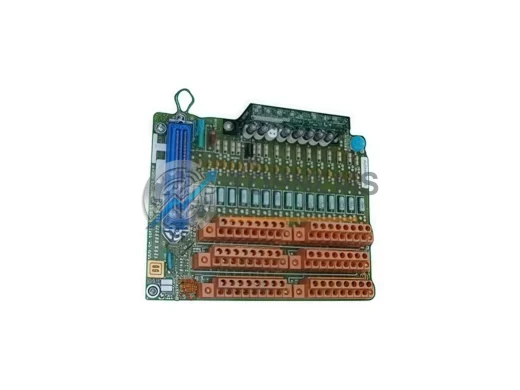
Honeywell 38001680-100 TDC 3000 ruggedized PLC control module. In-stock, tested, 12-month warranty. Fast global shipping. Reliable DCS replacement.
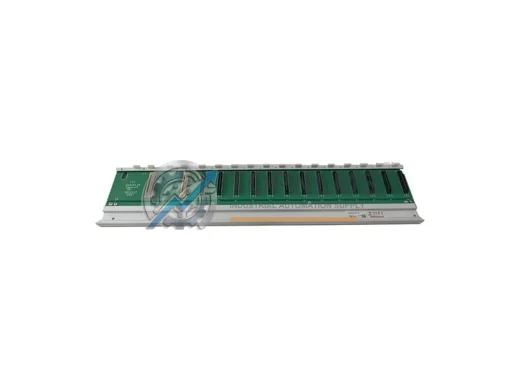
Honeywell 2MLR-E12P 12-slot modular I/O expansion base for MLR control systems. Rugged, reliable, in-stock. 12-month warranty. Fast shipping. Contact TOPNLMS.
Original Honeywell 2MLR-E08P-CC / 2MLR-E12P-CC / 2MLR-E12H-CC CC-Link PLC module. 2MLR Series industrial spare, verified compatible, 12-month warranty, fast global shipping.
Click Quote This Model and the Part Number field will auto-fill with 10020/1/2.