
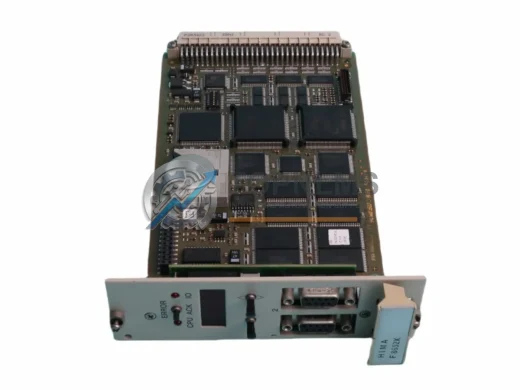
HIMA
Hima F8652X Replacement/Upgrade Solution for HIMax
F8652XHima F8652X HIMax SIL 3 Safety PLC CPU replacement & upgrade. Drop-in compatible, 12-month warranty, fast global shipping from Xiamen. Minimize downtime.
Request availability, condition, lead time and export shipping details for 52100.
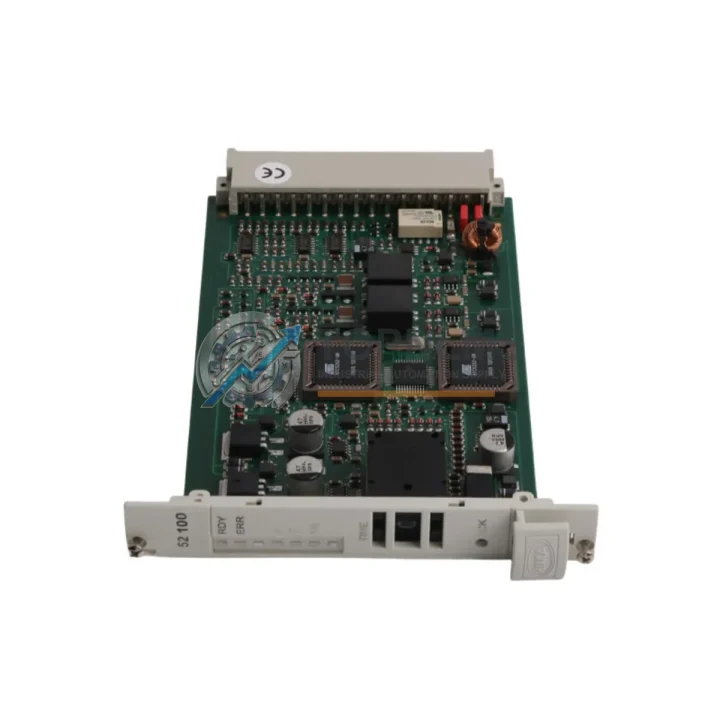
Send this exact part number, quantity and destination country. TOPNLMS will confirm availability, condition and export lead time before quotation.
The HIMA 52100 Time Delay Module is a core functional component of the HIMAX F3 Safety PLC platform — one of HIMA’s most widely deployed safety-rated control architectures across oil & gas, chemical processing, power generation, and offshore installations. As aging F3 systems approach end-of-service milestones or face discontinued spare part availability, plant engineers and procurement teams are increasingly seeking verified replacement and upgrade pathways that preserve system integrity while minimizing retrofit risk and unplanned downtime.
At TOPNLMS, we specialize in sourcing, testing, and supplying hard-to-find safety PLC modules including the HIMA 52100. Every unit we ship undergoes pre-delivery functional verification and is backed by a 12-month replacement warranty. Our inventory is stocked in Xiamen, China, enabling rapid dispatch to global destinations with full export documentation.
This product page is designed to support engineers and procurement specialists evaluating a direct replacement of a failed or end-of-life HIMA 52100, or a controlled upgrade from an older F3 rack configuration to a modernized safety architecture. The guidance below covers wiring compatibility, communication protocol continuity, physical installation constraints, and system-level integration considerations.
| Parameter | HIMA 52100 (Original / Legacy) | HIMA 52100 (TOPNLMS Replacement) |
|---|---|---|
| Module Type | Time Delay Module | Time Delay Module (identical function) |
| Compatible Platform | HIMAX F3 Safety PLC | HIMAX F3 Safety PLC (drop-in compatible) |
| Safety Integrity Level | SIL 2 / SIL 3 capable | SIL 2 / SIL 3 capable |
| Rack / Backplane Interface | F3 standard backplane connector | F3 standard backplane connector — no modification required |
| Wiring Compatibility | Original field wiring retained | No rewiring required — direct slot replacement |
| Communication Protocol | Internal F3 bus (HIMA proprietary) | Fully compatible with internal F3 bus |
| Programming / Configuration | ELOP II / ELOP II NT | No program changes required for direct replacement |
| Physical Dimensions | Standard F3 module form factor | Identical form factor — fits existing control cabinet slot |
| Power Supply Requirement | Supplied via F3 backplane (24 VDC) | Supplied via F3 backplane (24 VDC) — no external PSU change |
| Replacement Recommendation | — | Direct slot-for-slot replacement; no system reconfiguration needed |
| Warranty | OEM warranty (expired on legacy units) | 12-Month Replacement Warranty from TOPNLMS |
| Origin / Dispatch | Germany (OEM) | Sourced & verified in China; ships from Xiamen |
A successful HIMA 52100 replacement rarely occurs in isolation. In most F3-based safety systems, the time delay module works in close coordination with other platform components. During a planned maintenance window or emergency swap, engineers typically assess the condition of adjacent modules in the same rack. Common co-replacement candidates include the HIMA F3 DIO 20/8 01 digital I/O module, which handles discrete field signals feeding into the time delay logic, and the HIMA F3 AIO 8/4 01 analog input/output module used in process variable monitoring loops.
For systems where the F3 CPU itself is approaching end-of-life, the HIMA F3 CPU 01 or its successor variants are frequently evaluated alongside the 52100 replacement. The CPU module communicates with all function modules — including the time delay module — over the proprietary F3 internal bus, and a degraded CPU can cause false time delay faults that are misdiagnosed as 52100 failures. Addressing the CPU as part of the same upgrade scope eliminates this diagnostic ambiguity and reduces the risk of repeat maintenance interventions.
Power integrity is another critical factor in any F3 retrofit. The HIMA F3 PS 24 VDC power supply module feeds the backplane rail that powers the 52100 and all co-located modules. If the power supply module shows signs of ripple or voltage sag, replacing it in the same maintenance cycle as the 52100 eliminates a common root cause of intermittent time delay faults. Similarly, the HIMA F3 base rack (chassis and backplane assembly) should be inspected for connector wear, particularly in high-vibration environments such as offshore platforms or compressor stations where mechanical fatigue accelerates contact degradation.
For systems that interface the HIMAX F3 with a distributed control system (DCS) or SCADA layer, the HIMA F3 COM module — supporting PROFIBUS-DP or Modbus RTU/TCP depending on variant — is often part of the same upgrade scope. Ensuring the communication module firmware is current prevents protocol handshake issues after the 52100 is replaced and the safety controller is restarted. In some retrofit projects, engineers also replace the HIMA ELOP II programming cable to ensure reliable re-commissioning communication between the engineering workstation and the F3 CPU during post-replacement functional testing. A degraded or intermittent programming cable can cause configuration upload failures that delay return-to-service.
Where the F3 system interfaces with field instruments through signal conditioning, HIMA-compatible signal isolators and Zener barrier assemblies in the marshalling cabinet should be verified for continuity and calibration. These passive components sit between the field wiring and the F3 I/O modules, and their degradation can produce timing anomalies that appear as 52100 malfunctions. Addressing them as part of a holistic upgrade reduces repeat call-outs and extends the service interval of the modernized safety system. For sites migrating from older HIMA HIMAX or H41q-series architectures to the F3 platform, the HIMA F3 DP master module provides the PROFIBUS backbone connectivity needed to integrate legacy field devices without replacing the entire instrument loop.
Q: Can I replace the HIMA 52100 without modifying my existing field wiring?
A: Yes. The 52100 connects to the F3 backplane via the standard module connector — there is no direct field wiring to the module itself. Field signals are routed through the I/O modules in the same rack. A direct slot replacement of the 52100 requires no wiring changes.
Q: Do I need to update my ELOP II safety program after replacing the 52100?
A: For a like-for-like replacement (same part number, same firmware generation), no program changes are required. The F3 CPU will recognize the replacement module on the next power cycle. If you are upgrading to a revised hardware revision, consult the HIMA hardware release notes for any configuration parameter differences.
Q: Is the HIMA 52100 compatible with both ELOP II and ELOP II NT engineering environments?
A: The 52100 is designed for the HIMAX F3 platform, which is primarily programmed using ELOP II. Compatibility with ELOP II NT depends on the specific F3 CPU variant and firmware version in your system. We recommend confirming your CPU part number and firmware revision before ordering.
Q: What communication protocols does the F3 system support after replacing the 52100?
A: The 52100 is an internal function module and does not directly handle external communication protocols. External protocols — including PROFIBUS-DP, Modbus RTU/TCP, and OPC — are managed by the F3 COM module. Replacing the 52100 has no impact on external communication configuration.
Q: Will the replacement module fit in the existing control cabinet without physical modification?
A: Yes. The HIMA 52100 uses the standard F3 module form factor and slots directly into the existing F3 base rack. No cabinet modifications, DIN rail changes, or additional mounting hardware are required.
Q: How do I verify the replacement module is functioning correctly after installation?
A: After inserting the replacement 52100 and powering up the F3 rack, use ELOP II to perform a module status check. The CPU should report the module as healthy with no diagnostic faults. A functional test of the time delay logic — triggering the input condition and verifying the output delay timing against the configured setpoint — should be performed before returning the safety system to service.
Q: What is the lead time and shipping arrangement from TOPNLMS?
A: Stock units ship from Xiamen within 1–3 business days of order confirmation. International express delivery (DHL, FedEx, UPS) typically reaches most destinations within 3–7 business days. Full export documentation including commercial invoice, packing list, and certificate of origin is provided with every shipment.
Every HIMA 52100 supplied by TOPNLMS is covered by a 12-month replacement warranty from the date of shipment. Our warranty process is straightforward: if the module fails under normal operating conditions within the warranty period, we will ship a replacement unit at no additional cost. There are no complex RMA procedures or extended diagnostic requirements — we prioritize getting your system back online with minimum delay.
Prior to dispatch, each unit undergoes a pre-shipment functional check covering power-up behavior, backplane interface continuity, and basic timing function verification. Units that do not pass this check are not shipped. This process significantly reduces the risk of receiving a non-functional module and eliminates the cost and delay of a return shipment.
Our after-sales support team is reachable via email at [email protected] or by phone at +86 18359293191. We respond to warranty claims and technical inquiries within one business day. For urgent plant situations, we offer priority processing to expedite replacement dispatch.
Procurement teams can request a formal quotation, proforma invoice, or product certification documentation directly through our contact channels. We support standard B2B payment terms and can provide supplier qualification documentation upon request.
Hima F8652X HIMax SIL 3 Safety PLC CPU replacement & upgrade. Drop-in compatible, 12-month warranty, fast global shipping from Xiamen. Minimize downtime.
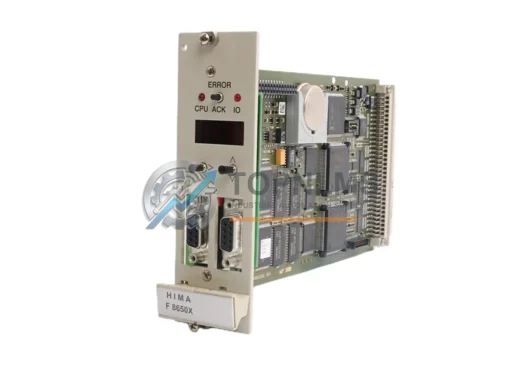
HIMA F8650X original HIMax SIL 3 CPU safety module. Genuine spare for industrial safety systems. 12-month warranty, tested, fast worldwide shipping.
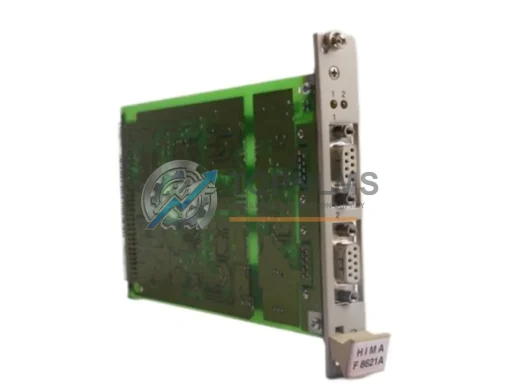
HIMA F8641 original safety PLC CPU module for HIMatrix systems. Genuine industrial spare, 12-month warranty, fast worldwide shipping. Replace aging controllers now.
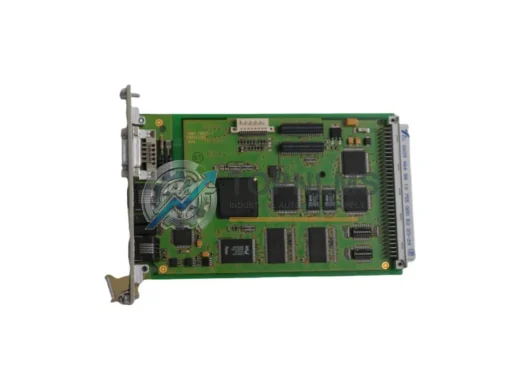
HIMA F8627X HIMax Safety CPU Module, SIL 3 certified, ruggedized for harsh industrial environments. In stock, tested, 12-month warranty. Fast global shipping.
Click Quote This Model and the Part Number field will auto-fill with 52100.