
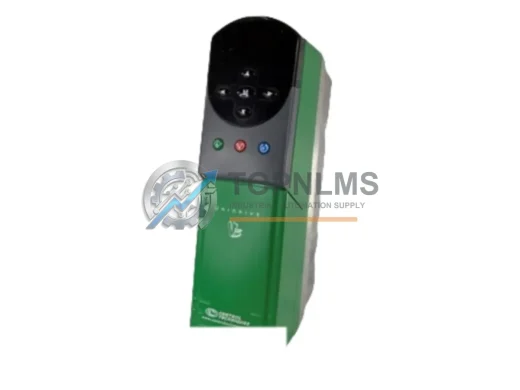
Emerson
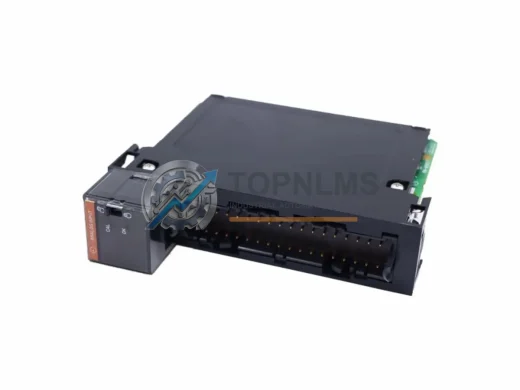
Emerson UNI1401 Ruggedized Digital Output Module
UNI1401Emerson UNI1401 16-Ch Digital Output Module for Ovation DCS. Ruggedized for harsh environments. In stock, tested, 12-month warranty. Ships from TOPNLMS.
Request availability, condition, lead time and export shipping details for CFP-AI-100.
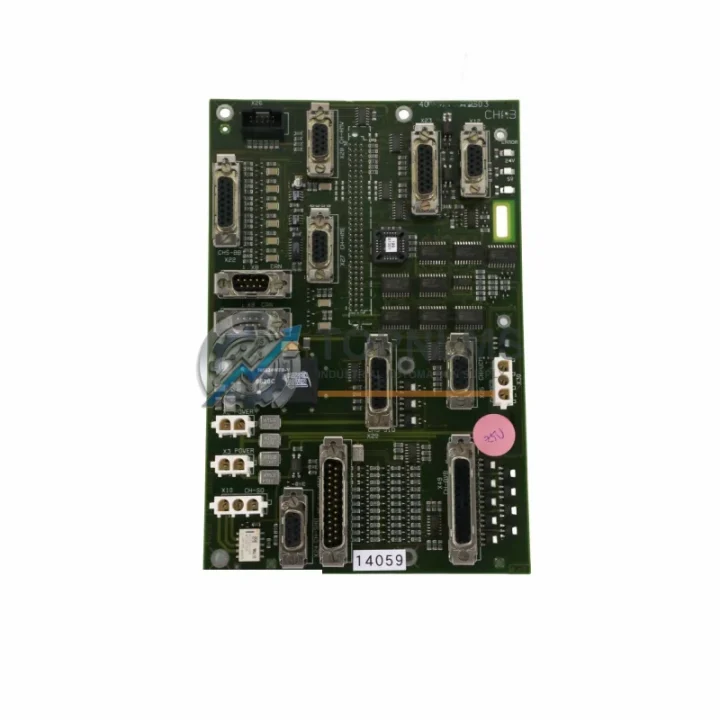
Send this exact part number, quantity and destination country. TOPNLMS will confirm availability, condition and export lead time before quotation.
The FEI EXPIDA CFP-AI-100 (part numbers: CHAB 4022 192 9603 / E15002453 / E15002451) is an original analog input PCB module engineered for the EXPIDA CFP control platform. In process industries where continuous analog signal acquisition is mission-critical — temperature loops, pressure transmitters, flow meters, and level sensors — a failed or degraded analog input card can cascade into unplanned shutdowns, product loss, and costly emergency maintenance windows. Stocking a verified original CFP-AI-100 spare eliminates that risk entirely, keeping your control system stable and your maintenance team in control.
| Parameter | Specification |
|---|---|
| Part Number | CFP-AI-100 |
| Cross-Reference SKUs | CHAB 4022 192 9603 / E15002453 / E15002451 |
| Brand / Manufacturer | FEI EXPIDA |
| Module Series | CFP (EXPIDA Control Field Platform) |
| Module Type | Analog Input PCB Module |
| Signal Types Supported | 4–20 mA / 0–10 V (standard industrial analog) |
| Input Channels | Multi-channel analog input (per CFP-AI series standard) |
| Resolution | 12-bit / 16-bit (series-dependent) |
| Isolation | Channel-to-channel and channel-to-bus galvanic isolation |
| Operating Voltage | 24 VDC (backplane powered) |
| Operating Temperature | 0°C to +60°C |
| Mounting | CFP backplane / rack-mount, DIN-rail compatible carrier |
| Communication Interface | CFP internal bus (EXPIDA platform) |
| Country of Origin | China (CN) |
| Condition | Original, New / Refurbished-Tested |
| Warranty | 12 Months — functional guarantee from shipment date |
| Certifications | CE / RoHS compliant (per EXPIDA platform standard) |
| Shipping | Worldwide express; ESD-safe packaging; insured |
A disciplined preventive maintenance (PM) program for any EXPIDA CFP-based control system goes well beyond replacing a single analog input card. When a CFP-AI-100 is flagged during a scheduled inspection or shows drift in signal accuracy, experienced maintenance engineers treat it as a trigger for a broader cabinet audit — because analog input degradation rarely occurs in isolation.
During the same maintenance window, it is standard practice to inspect and, where necessary, replace the CFP power supply module that feeds the backplane. A marginal power rail is one of the most common root causes of intermittent analog signal errors and false diagnostics. Alongside the power supply, the CFP-DO (digital output) and CFP-DI (digital input) modules sharing the same rack should be visually inspected for burn marks, loose connectors, or firmware version mismatches — particularly in high-cycle applications such as valve control or motor starter interlocks.
Signal integrity on the field side depends heavily on the condition of shielded twisted-pair field wiring and terminal blocks. Corroded or loose terminal connections at the marshalling cabinet introduce noise that mimics module failure. Replacing worn terminal strips and verifying cable shield grounding at a single point is a low-cost step that protects the investment in a new CFP-AI-100. Similarly, signal isolators and loop-powered barriers installed between field transmitters and the analog input card should be tested for leakage current and isolation resistance — a degraded isolator will corrupt readings even from a brand-new input module.
For systems running HART-enabled transmitters, the HART multiplexer or HART communication module in the same cabinet should be verified for firmware compatibility with the replacement CFP-AI-100. Incompatible HART versions can prevent asset management software from reading device diagnostics, undermining the value of the new module. If the control system communicates upstream via PROFIBUS DP or Modbus RTU communication modules, their termination resistors and cable impedance should be checked at the same time — a poorly terminated fieldbus segment causes cyclic data errors that are often misattributed to the analog input card.
Fuse modules and circuit breakers protecting the 24 VDC loop supply are frequently overlooked. Replacing fuse terminal blocks with fresh fuses rated to the original specification ensures that a future field short circuit does not damage the new CFP-AI-100. Finally, if the system includes an HMI panel or operator workstation displaying analog process values, this is an ideal time to verify that tag scaling, engineering unit conversion, and alarm setpoints are correctly configured for the replacement module — preventing nuisance alarms on first power-up after the swap.
A complete PM kit for a CFP-AI-100 replacement typically includes: the CFP-AI-100 module itself, a spare CFP power supply module, a set of terminal block inserts, signal isolators for critical loops, and a HART test adapter. Sourcing these components together from a single supplier reduces lead time risk and ensures cross-compatibility.
The CFP-AI-100 is a direct original replacement for aging EXPIDA CFP analog input cards that have reached end-of-service life or are no longer supported under the original OEM maintenance contract. Many plants operating legacy EXPIDA CFP systems face a common dilemma: the DCS vendor has discontinued active support for older CFP-series hardware, yet a full platform migration is not economically justified for systems with 5–10 years of remaining process life.
Stocking original CFP-AI-100 modules is the most cost-effective strategy to extend system life without re-engineering the I/O architecture. Because the CFP-AI-100 is a plug-compatible replacement — same backplane connector, same bus protocol, same configuration parameters — field engineers can complete a hot-swap or cold-swap replacement in under 30 minutes with no software changes required. This dramatically reduces mean time to repair (MTTR) compared to sourcing a substitute module that requires re-parameterization or wiring adaptation.
For plants managing multiple CFP racks across different process units, a centralized spare parts strategy — holding 2–3 CFP-AI-100 units per site — is recommended by reliability engineers as the minimum buffer to survive a simultaneous dual-failure scenario during peak production. The 12-month warranty on each unit means that rotating stock through a first-in, first-out (FIFO) inventory system keeps all spares within their warranty coverage window, providing both financial protection and quality assurance.
Cross-referencing the CFP-AI-100 against its alternate part numbers (CHAB 4022 192 9603, E15002453, E15002451) is essential when sourcing from multiple suppliers or verifying against legacy BOM documentation. All three references identify the same physical module and are interchangeable for procurement purposes.
Q1: Is the CFP-AI-100 covered by a warranty, and what does it include?
Yes. Every CFP-AI-100 unit shipped by TOPNLMS carries a 12-month functional warranty from the date of shipment. Each module undergoes pre-shipment functional testing to verify analog input accuracy, channel isolation, and bus communication. If a unit fails under normal operating conditions within the warranty period, we provide a replacement or full refund — no questions asked.
Q2: How do I verify compatibility before installing the CFP-AI-100 in my existing EXPIDA CFP rack?
Compatibility verification requires confirming three parameters: (1) backplane slot type matches the CFP-AI series footprint, (2) firmware version of the CFP controller supports the CFP-AI-100 hardware revision, and (3) the analog input signal type (current or voltage) matches your field transmitter wiring. Our technical team can assist with compatibility checks — contact us with your existing module part number and controller firmware version before ordering if you have any uncertainty.
Q3: What is the recommended inventory strategy for CFP-AI-100 spares?
For a single-site installation with 1–4 CFP racks, we recommend holding a minimum of 2 CFP-AI-100 spares on-site. For multi-unit or multi-site operations, a centralized regional spare pool of 4–6 units is more cost-efficient. Modules should be stored in ESD-safe packaging in a climate-controlled environment (10°C–40°C, <85% RH non-condensing) and rotated on a FIFO basis to maintain warranty coverage.
Q4: Can the CFP-AI-100 be replaced in the field without a system shutdown?
In most EXPIDA CFP configurations, the CFP-AI-100 supports hot-swap replacement when the rack is designed for redundant I/O operation. For non-redundant configurations, a controlled cold-swap during a planned maintenance window is required. In either case, no software re-configuration is needed — the replacement module inherits the slot configuration from the controller automatically upon power-up. Always follow your site’s Management of Change (MOC) procedure before performing any module swap in a live process environment.
Emerson UNI1401 16-Ch Digital Output Module for Ovation DCS. Ruggedized for harsh environments. In stock, tested, 12-month warranty. Ships from TOPNLMS.
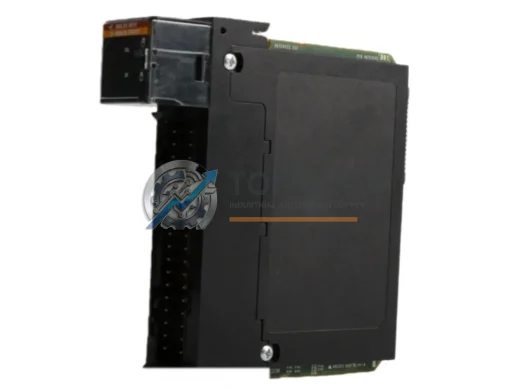
Allen-Bradley 1756-IF4FXOF2F HART analog I/O replacement for ControlLogix 1756 series. Drop-in upgrade, wiring compatible, 12-month warranty. Ships from stock.
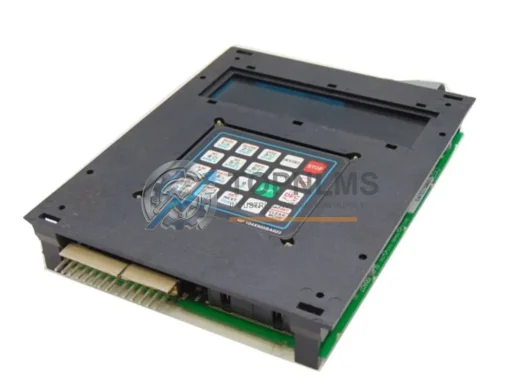
GE NP 104X905BA603 ruggedized membrane keypad panel for Mark IV/V turbine control. EMI-resistant, industrial-grade. In stock, tested, 12-month warranty.
Allen-Bradley 1756-IF16K ControlLogix 16-Ch 16-Bit isolated analog input module. Drop-in replacement & upgrade solution. 12-month warranty. Ships from Xiamen.
Click Quote This Model and the Part Number field will auto-fill with CFP-AI-100.