Product Overview
Brooks Instrument 5964-EP CF4 Original Industrial Spare 5964 — System Stability & Maintenance Value
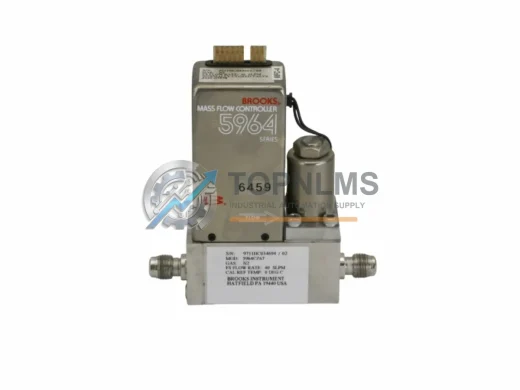
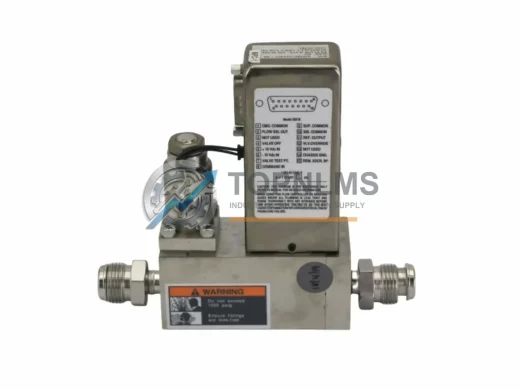
In semiconductor fabrication, chemical vapor deposition (CVD), and precision gas delivery systems, the Brooks Instrument 5964-EP Mass Flow Controller (MFC) — part number 0040-39138 / 2305144-B, configured for CF4 (Carbon Tetrafluoride) gas service — is a mission-critical component. When this controller drifts, fails, or requires scheduled replacement, every minute of unplanned downtime translates directly into production loss. Maintaining a verified original spare on the shelf is not optional — it is a fundamental pillar of any serious preventive maintenance program.
This listing covers the original Brooks Instrument 5964-EP series MFC, factory-configured for CF4 gas, with full calibration traceability. Each unit is inspected, function-tested, and shipped with documentation. A 12-month warranty is included from the date of shipment.
Critical Technical Specs
| Parameter |
Specification |
| Model / SKU |
Brooks Instrument 5964-EP | GAS CF4 0040-39138 2305144-B |
| Series |
5964 Series |
| Gas Service |
CF4 (Carbon Tetrafluoride) |
| Controller Type |
Thermal Mass Flow Controller (MFC) |
| Communication Interface |
Analog (0–5 VDC / 4–20 mA) | RS-485 optional per config |
| Flow Range |
Per factory calibration (contact for full-scale range) |
| Inlet / Outlet Fittings |
VCR / Swagelok compatible (verify per unit config) |
| Operating Pressure |
Up to 500 psig inlet (typical) |
| Operating Temperature |
0°C to 50°C ambient |
| Accuracy |
±1% of full scale (factory calibrated) |
| Repeatability |
±0.2% of full scale |
| Power Supply |
±15 VDC (typical Brooks 5964 series) |
| Compatibility |
Direct replacement for Brooks 5964-EP series installations |
| Origin |
United States (Brooks Instrument) |
| Condition |
Original / New-surplus / Tested (specify at order) |
| Warranty |
12 Months from shipment date |
| Application Environment |
Semiconductor fab, CVD, etch, clean room gas panels |
| Maintenance Interval |
Inspect every 12–18 months; replace per process drift data |
Preventive Maintenance Strategy
A mass flow controller does not fail in isolation. In any CF4 gas delivery circuit — whether feeding an etch chamber, a CVD reactor, or a clean room gas panel — the 5964-EP MFC operates as part of an interconnected system. When scheduling a replacement or inspection of this unit, experienced maintenance engineers know to audit the entire gas delivery loop simultaneously to avoid repeat shutdowns.
Begin with the upstream gas supply components: verify the condition of the Brooks Instrument 5850S or 5851S pressure regulators and upstream isolation valves. A degraded regulator delivering unstable inlet pressure will cause the replacement MFC to exhibit the same drift symptoms as the failed unit — a common and costly diagnostic error. At the same time, inspect the VCR face-seal fittings and Swagelok compression fittings throughout the gas line; CF4 is a highly stable but corrosive gas under certain conditions, and any micro-leak at a fitting will compromise both measurement accuracy and process safety.
Move downstream to the gas panel manifold and pneumatic shut-off valves — typically Fujikin or Swagelok diaphragm valves in semiconductor-grade installations. These valves cycle thousands of times per year and their seats and diaphragms wear independently of the MFC. A valve that fails to fully close will introduce cross-contamination between process gases, rendering the newly calibrated MFC data meaningless. While the panel is open, check the MFC signal conditioning board or flow ratio controller (FRC) — units such as the Brooks Instrument 0254 or 0152 series multi-channel MFC controllers — for firmware currency and calibration date.
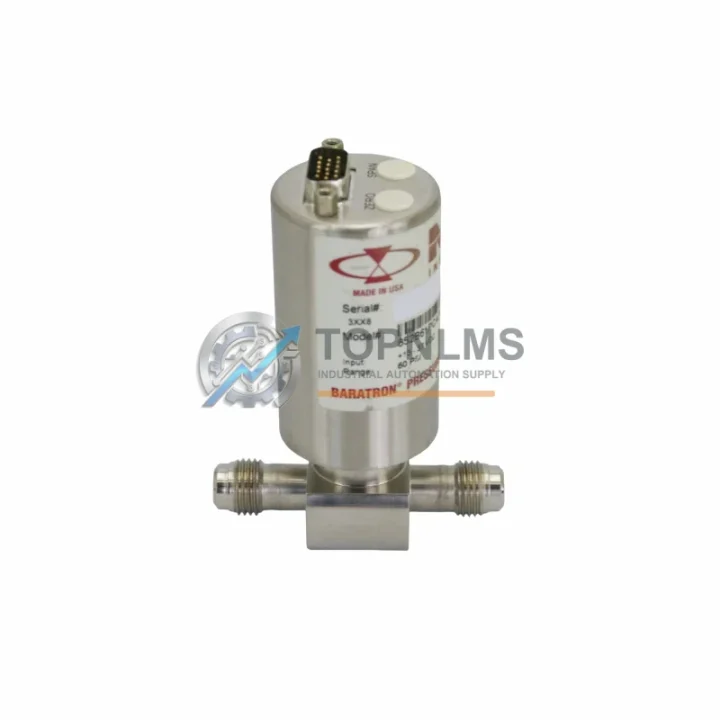
On the electrical side, inspect the D-sub 15-pin or 25-pin signal harness connecting the MFC to the process tool’s gas box controller. Connector corrosion and pin fretting are leading causes of intermittent MFC faults that are frequently misdiagnosed as MFC hardware failure. Replacing the connector or reseating the harness costs minutes; replacing an MFC unnecessarily costs thousands. Also verify the ±15 VDC power supply rail feeding the MFC — a sagging supply voltage will cause setpoint tracking errors that mimic sensor drift. If the power supply is a shared rail, check adjacent pressure transducers and capacitance manometers (such as MKS Baratron 627 or 628 series) on the same supply for similar symptoms.
Finally, review the process tool’s MFC calibration log and compare actual flow versus setpoint over the past 90 days. If multiple MFCs in the same tool are showing simultaneous drift, the root cause is almost certainly upstream — a contaminated gas source, a failing regulator, or a compromised purge sequence — rather than individual MFC hardware failure. In that scenario, a Brooks Instrument 5964-EP spare is still the correct procurement decision, but the maintenance strategy must address the systemic cause before installation.
Strategic Replacement Solutions
The Brooks Instrument 5964-EP is a mature, field-proven platform that has been deployed in semiconductor fabs worldwide for over two decades. Many facilities running legacy process tools — particularly older Applied Materials, Lam Research, or Novellus CVD and etch platforms — depend on the 5964 series because the tool’s gas box was designed around its specific form factor, connector pinout, and analog signal protocol.
Migrating to a newer MFC platform (such as the Brooks GF135 or Alicat MC series) requires gas box wiring modifications, software reconfiguration, and requalification of the process recipe — a project measured in weeks, not hours. For facilities prioritizing uptime and process stability, the correct strategy is to maintain a qualified 5964-EP spare inventory sized to cover the mean time between replacements (MTBR) for each gas species in the tool fleet. CF4 service MFCs typically require replacement every 3–5 years under normal operating conditions, though aggressive etch chemistries and high-cycle processes can shorten this interval significantly.
Sourcing original Brooks Instrument 5964-EP units — rather than third-party rebuilt or uncertified surplus — ensures that the replacement unit arrives with a known calibration baseline, eliminating the process qualification risk associated with unknown-history components. Each unit shipped from TOPNLMS is function-tested prior to dispatch and covered by a 12-month warranty, providing the procurement confidence required for critical process tool maintenance.
Support FAQ
Q1: Is this unit a direct drop-in replacement for my existing Brooks 5964-EP installation?
Yes, provided your existing installation uses the same gas species (CF4), the same full-scale flow range, and the same connector and fitting configuration. Please confirm the part number suffix (2305144-B) matches your tool’s gas box specification before ordering. If you are unsure, contact us with your tool model and gas box drawing number for verification.
Q2: What pre-shipment testing is performed on each unit?
Each 5964-EP unit undergoes electrical continuity verification, power-on functional test, valve actuation check, and analog signal output verification across the 0–100% setpoint range before shipment. A test report is available upon request. Units are shipped in anti-static packaging with desiccant to prevent moisture ingress during transit.
Q3: What does the 12-month warranty cover?
The warranty covers manufacturing defects and functional failures under normal operating conditions for 12 months from the shipment date. It does not cover damage resulting from incorrect installation, exposure to incompatible gas species, over-pressure events, or physical damage in transit (transit damage claims must be filed within 48 hours of receipt). Warranty service is handled directly by TOPNLMS — contact [email protected] to initiate a claim.
Q4: How should I manage my MFC spare inventory to minimize downtime risk?
For facilities operating more than three tools with CF4 MFC installations, we recommend maintaining a minimum of one qualified 5964-EP spare per gas species per tool cluster. For high-utilization tools running 24/7, a two-unit buffer is advisable. Spares should be stored in a clean, dry environment at 15–25°C, inspected annually for seal integrity, and rotated into service on a first-in, first-out basis to prevent long-term storage degradation.