Product Overview
APTECH AP1510S 5PWCS MV4 UHP Regulator Replacement: Seamless Transition & Legacy System Upgrade
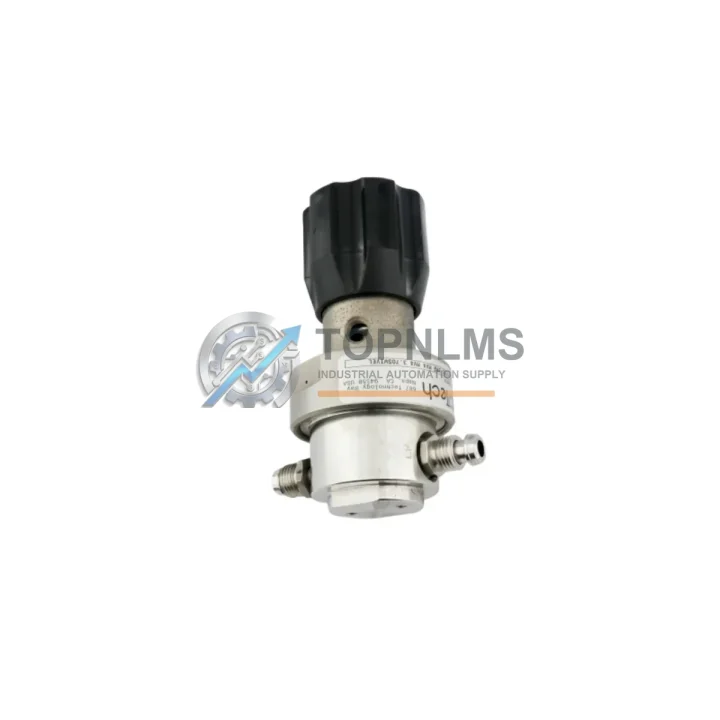
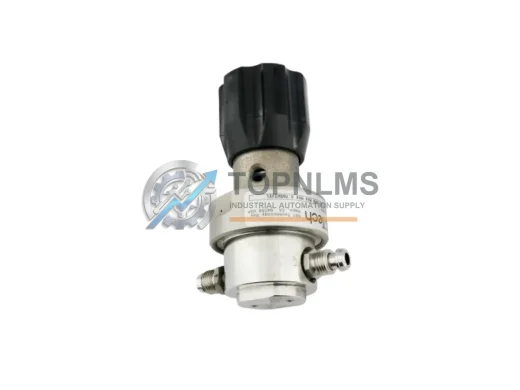
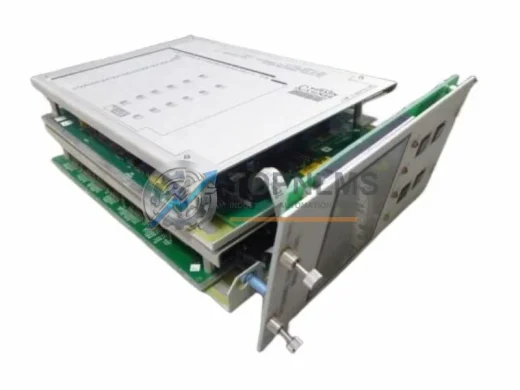
The APTECH AP1510S 5PWCS MV4 MV4FV4FV4FV4 (cross-reference: 02-007356D03 / 0050-26108 / 852B12TBB2GC) is a precision ultra-high purity (UHP) tied diaphragm pressure regulator engineered for semiconductor fabrication, specialty gas distribution, and high-purity process systems. As legacy AP1510 and AP1500 series regulators reach end-of-life or become increasingly difficult to source, facilities are migrating their gas panel assemblies, purge systems, and process gas cabinets to the current AP1510S platform. This listing provides a verified, in-stock replacement unit with full compatibility documentation to support your retrofit or emergency swap-out with minimal process interruption.
Whether you are replacing a failed unit on a CVD tool, upgrading a gas stick assembly on an etch system, or standardizing your spare-parts inventory across multiple fab bays, the AP1510S 5PWCS MV4 delivers the same wetted-surface geometry, inlet/outlet port configuration, and diaphragm actuation characteristics as the predecessor models it replaces. The 5PWCS surface finish designation ensures compatibility with corrosive and reactive specialty gases including HCl, HF, WF₆, and NF₃, making it a direct fit for existing gas panel manifolds without modification to tubing, fittings, or support brackets.
Compatibility Comparison Table
| Parameter |
Legacy / Predecessor Models |
AP1510S 5PWCS MV4 (This Unit) |
| Series |
AP1500, AP1510 (non-S) |
AP1510S (current production) |
| Diaphragm Type |
Tied Diaphragm |
Tied Diaphragm (identical actuation) |
| Surface Finish |
PWCS / electropolished |
5PWCS (enhanced electropolish, Ra ≤ 5 µin) |
| Inlet / Outlet Ports |
¼” VCR / VCO face-seal |
¼” VCR / VCO face-seal (direct fit) |
| Valve Configuration |
MV4 (manual valve, 4-port) |
MV4FV4FV4FV4 (manual + flow valves) |
| Inlet Pressure Range |
Up to 3000 psig |
Up to 3000 psig |
| Outlet Pressure Range |
0–250 psig (typical) |
0–250 psig |
| Body Material |
316L SS |
316L SS (same alloy) |
| Mounting / Bracket |
Standard gas panel rail |
Same footprint — no bracket modification |
| Cross-Reference P/N |
02-007356D03, 0050-26108 |
852B12TBB2GC (current OEM P/N) |
| Replacement Recommendation |
Direct drop-in for AP1510 MV4 variants |
✔ Confirmed compatible |
| Warranty |
— |
12-Month Warranty (see below) |
Seamless Upgrade Solutions
A successful AP1510S migration rarely involves a single component. In practice, gas panel retrofits and process gas cabinet upgrades require coordinated replacement of several interconnected components to maintain system integrity and avoid introducing leak points or flow restrictions. When upgrading from legacy AP1510 or AP1500 series regulators, engineers typically address the following alongside the AP1510S 5PWCS MV4:
Inlet isolation and purge valves — The AP1510S is commonly paired with APTECH AP6000 series high-purity diaphragm valves or equivalent ¼” VCR manual valves mounted upstream on the gas stick. Replacing aged inlet valves at the same time eliminates a common source of post-maintenance leaks and avoids the need to re-enter the gas cabinet for a second intervention.
Outlet flow control and shutoff — Downstream of the regulator, APTECH AP3000 series flow control valves or compatible ¼” VCR needle valves regulate delivery pressure to the process tool. If the existing outlet valve seats show wear or the Cv rating no longer matches the updated process recipe, replacement during the same maintenance window is strongly recommended.
VCR face-seal fittings and gaskets — All wetted connections on the AP1510S use ¼” VCR face-seal geometry. Swagelok SS-4-VCR-2 or equivalent 316L stainless steel VCR gaskets must be replaced any time a fitting is broken and remade. Reusing gaskets on UHP connections is not acceptable practice and will void leak-test certification.
Purge and vent manifold blocks — Gas sticks built around the AP1510 platform often incorporate APTECH or equivalent UHP manifold blocks for purge-and-pressurize sequences. If the manifold block body shows corrosion pitting or the internal check valves are suspect, replacing the manifold block concurrent with the regulator avoids a second system shutdown.
Pressure transducers and gauges — Inlet and outlet pressure monitoring is typically provided by UHP-rated pressure transducers (e.g., MKS Baratron or equivalent capacitance manometers) or stainless-steel Bourdon tube gauges with ¼” VCR connections. Calibration drift in aging transducers can mask regulator performance issues; replacing or recalibrating transducers during the AP1510S swap ensures accurate post-installation verification.
Gas panel support rails and mounting hardware — Where the existing gas panel rail is corroded or dimensionally incompatible with updated component spacing, APTECH-compatible 80/20 aluminum extrusion rails or stainless steel mounting channels provide a clean foundation for the upgraded gas stick assembly.
Tubing and compression fittings — ¼” OD 316L electropolished seamless tubing connecting the AP1510S to upstream cylinders and downstream process tools should be inspected for surface contamination, work hardening at bends, and fitting condition. Replacing short tubing runs during the regulator swap eliminates hidden contamination sources that can compromise process purity after restart.
Cylinder connection hardware — High-pressure cylinder pigtails, CGA adapters, and inlet filters (e.g., APTECH or Mott 0.5 µm sintered SS inline filters) upstream of the AP1510S protect the regulator diaphragm from particulate contamination. Replacing the inlet filter element and inspecting the pigtail assembly is standard practice during any regulator changeout.
Sourcing these components together from a single supplier reduces lead time, simplifies receiving inspection, and ensures all wetted materials share the same surface finish specification — a critical requirement for mixed-gas and corrosive-gas applications where cross-contamination between component lots can affect process yield.
Retrofit Guidance FAQ
Q: Is the AP1510S 5PWCS MV4 a direct mechanical replacement for the AP1510 MV4?
A: Yes. The AP1510S shares the same body envelope, port locations, and mounting footprint as the AP1510 series. No modification to the gas panel rail, bracket, or tubing runs is required for a standard swap-out. Verify inlet and outlet port orientation before installation if the original unit was installed in a non-standard orientation.
Q: Do I need to re-program any flow controllers or process recipes after replacing the regulator?
A: The AP1510S is a passive pressure-reducing device with no electronic components. It does not interface with PLC, DCS, or MFC control loops directly. However, if outlet set-point pressure has drifted on the legacy unit, the replacement regulator will deliver the correct set-point, which may require minor MFC recipe adjustments to maintain the same mass flow rate at the process tool.
Q: What leak-test procedure is required after installation?
A: All VCR connections must be leak-tested to ≤ 1×10⁻⁹ std cc/sec He using a calibrated helium mass spectrometer leak detector before returning the gas line to service. Pressure-decay testing with nitrogen is acceptable for initial gross-leak screening but does not substitute for helium leak testing on UHP gas systems.
Q: Can this regulator be used with corrosive specialty gases such as HF, Cl₂, or WF₆?
A: The 5PWCS surface finish and 316L SS wetted materials are compatible with a broad range of corrosive and reactive specialty gases. Confirm compatibility with your specific gas and concentration against APTECH’s published chemical compatibility data before installation. For highly aggressive gases, consult your process gas supplier for additional guidance on diaphragm material selection.
Q: What is the physical installation space requirement?
A: The AP1510S body dimensions are identical to the AP1510 series. No additional clearance is required. Ensure adequate access for torque wrench operation on VCR fittings (minimum 2″ clearance around each fitting recommended).
Q: How do I verify the outlet pressure set-point after installation?
A: Connect a calibrated UHP-rated pressure gauge or transducer to the outlet port. Slowly open the inlet valve and adjust the regulator handwheel to the required set-point. Allow 5–10 minutes for pressure stabilization before recording the final set-point value in the maintenance log.
Warranty Assurance
Every AP1510S 5PWCS MV4 unit shipped from TOPNLMS is covered by a 12-month warranty against manufacturing defects and functional failure under normal operating conditions. Our pre-shipment inspection protocol includes:
- Visual inspection of all wetted surfaces and external body for damage or contamination
- Functional pressure test to verify set-point accuracy and diaphragm integrity
- Packaging in cleanroom-compatible sealed bags with nitrogen purge where applicable
- Documentation of cross-reference part numbers (02-007356D03 / 0050-26108 / 852B12TBB2GC) for receiving inspection
In the event of a warranty claim, TOPNLMS provides replacement unit dispatch within 3 business days of claim confirmation. Our after-sales team responds to technical inquiries within 24 hours on business days. We maintain buffer stock of AP1510S series regulators to support emergency replacement orders with same-day or next-day dispatch for in-stock configurations.
For volume procurement, blanket orders, and consignment stock arrangements, contact our sales team directly to discuss lead-time guarantees and pricing structures appropriate for your maintenance program.