
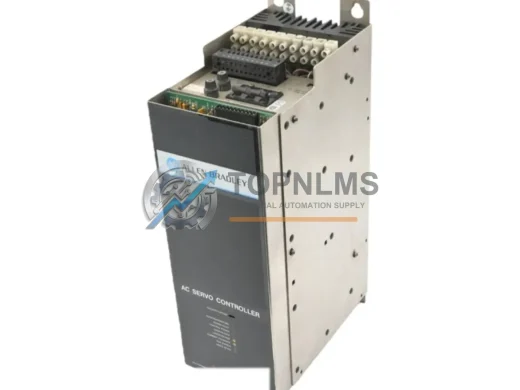
Allen-Bradley
Allen-Bradley 1391B-AA45 Ruggedized AC Servo Drive Module
1391B-AA45Allen-Bradley 1391B-AA45 ruggedized AC servo drive for harsh industrial environments. In stock, tested, 12-month warranty. Fast global shipping from TOPNLMS.
Request availability, condition, lead time and export shipping details for 1794-IJ2.
Send this exact part number, quantity and destination country. TOPNLMS will confirm availability, condition and export lead time before quotation.
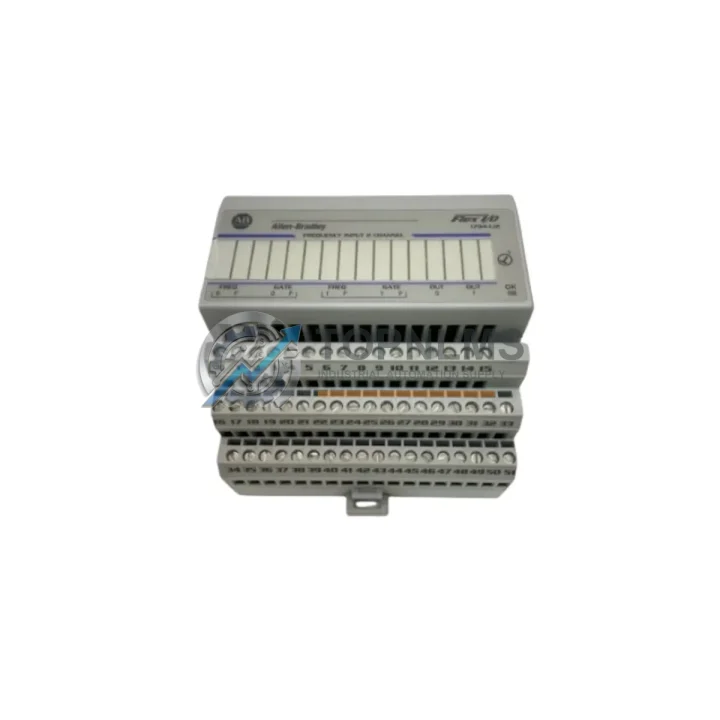
The Allen-Bradley 1794-IJ2 is a 2-channel, 250 kHz encoder/counter input module designed for the Rockwell Automation FLEX I/O platform. As this module approaches end-of-life and becomes increasingly difficult to source through standard distribution channels, many industrial facilities operating legacy control architectures are actively seeking verified replacement units or compatible upgrade paths that preserve existing wiring infrastructure, minimize programming changes, and reduce unplanned downtime.
TOPNLMS maintains ready stock of the 1794-IJ2 and compatible FLEX I/O encoder modules, sourced from verified supply chains and fully tested prior to shipment. Whether your facility is executing a like-for-like spare replacement or planning a phased migration away from an aging FLEX I/O rack, our technical team can support your procurement and commissioning process from initial inquiry through post-installation verification.
| Parameter | 1794-IJ2 (Original) | Replacement / Upgrade Notes |
|---|---|---|
| Module Type | 2-Channel Encoder/Counter Input | Direct replacement; same channel count and function |
| Input Frequency | 250 kHz max per channel | Verify replacement unit matches 250 kHz rating |
| Platform | FLEX I/O (1794 series rack) | Mounts on existing 1794-TB3, 1794-TB3S, or 1794-TB32 terminal bases |
| Communication | Via FLEX I/O adapter (DeviceNet, ControlNet, EtherNet/IP) | Protocol determined by installed adapter (e.g., 1794-ADN, 1794-ACN15, 1794-AENT) |
| Wiring Interface | Terminal base (field-side wiring retained) | No rewiring required when swapping module on same terminal base |
| Programming | RSLogix 5000 / Studio 5000 (Add-On Profile) | Existing program and AOP configuration fully reusable |
| Power Supply | Backplane-powered via FLEX I/O rack | No separate field power required for module logic |
| Physical Dimensions | Standard FLEX I/O module form factor | Drop-in fit; no panel or DIN rail modification needed |
| Lifecycle Status | Discontinued / End-of-Life | Verified replacement stock available; 12-month warranty included |
| Warranty | — | 12-Month Warranty | Pre-shipment functional test | Replacement support |
A successful 1794-IJ2 replacement or FLEX I/O system migration rarely involves a single module in isolation. In practice, field engineers replacing a failed or discontinued encoder counter module must also account for the surrounding system architecture. The 1794-IJ2 operates within a FLEX I/O rack that typically includes a communication adapter such as the 1794-AENT (EtherNet/IP adapter) or 1794-ADN (DeviceNet adapter), which bridges the I/O rack to the main controller backplane. If the adapter itself is aging or showing intermittent faults, it is advisable to evaluate its condition during the same maintenance window.
The module seats on a terminal base — commonly the 1794-TB3 or 1794-TB32 — which retains all field-side wiring. This design means that in most replacement scenarios, the encoder signal cables from incremental rotary encoders or linear position sensors remain undisturbed, significantly reducing the risk of wiring errors during hot-swap maintenance. Engineers should confirm that the terminal base is in good condition and that the locking tab mechanism is functioning correctly before inserting the replacement module.
For facilities running a ControlLogix or CompactLogix controller as the host PLC, the 1794-IJ2 data is mapped through the FLEX I/O adapter into the controller’s I/O tree. The existing RSLogix 5000 or Studio 5000 program, including any encoder position scaling, preset values, and counter rollover logic, does not require modification when performing a like-for-like module swap. This is a critical advantage for facilities where program change management procedures are time-consuming or require formal validation.
In cases where the broader FLEX I/O rack is being decommissioned as part of a larger control system modernization project, the encoder feedback function can be migrated to a 1769-HSC high-speed counter module within a CompactLogix rack, or to a 1756-HSC module in a ControlLogix chassis. Both alternatives support quadrature encoder inputs and offer a migration path that preserves the encoder wiring while transitioning to a currently supported hardware platform. The 1756-L85E or 1756-L84E ControlLogix controllers are commonly specified in such modernization projects, providing the processing headroom and EtherNet/IP connectivity required for contemporary SCADA and MES integration.
Power distribution within the control cabinet should also be reviewed. FLEX I/O racks are typically powered by a dedicated 24 VDC supply; if the existing 1794-PS13 or equivalent power supply is original equipment, its capacitors and output regulation should be verified before commissioning a new encoder module. A marginal power supply is a common root cause of intermittent module faults that are incorrectly attributed to the I/O module itself.
For facilities that require signal conditioning between the encoder and the FLEX I/O rack — for example, where long cable runs introduce noise or where the encoder output voltage does not match the module’s input specification — a signal isolator or line driver amplifier may be inserted in the signal path without any changes to the 1794-IJ2 module configuration or the PLC program. This is a practical solution in retrofit projects where replacing the encoder itself is not feasible.
Q: Can I replace the 1794-IJ2 without rewiring the encoder cables?
A: Yes. The FLEX I/O architecture separates the module from the field wiring via the terminal base. Remove the old module, insert the replacement, and the encoder wiring on the terminal base remains intact. No rewiring is required in a standard like-for-like swap.
Q: Do I need to modify my RSLogix 5000 / Studio 5000 program?
A: No program changes are required for a direct replacement. The module’s I/O data structure and Add-On Profile (AOP) are identical. Simply download the existing program after the hardware swap and verify encoder counts in online mode.
Q: Which communication protocols does the 1794-IJ2 support?
A: The module itself is protocol-agnostic; communication is determined by the FLEX I/O adapter installed in the rack. Common adapters include the 1794-AENT (EtherNet/IP), 1794-ADN (DeviceNet), and 1794-ACN15 (ControlNet). The replacement module is fully compatible with all standard FLEX I/O adapters.
Q: Is there a physical space concern when installing the replacement module?
A: No. The 1794-IJ2 replacement uses the identical FLEX I/O module form factor and mounts on the same terminal base slot. No panel cutout modification, DIN rail adjustment, or cabinet re-layout is required.
Q: What if my facility is migrating away from FLEX I/O entirely?
A: For full platform migration, the encoder counter function can be replicated using the 1769-HSC (CompactLogix) or 1756-HSC (ControlLogix) modules. TOPNLMS can supply both the interim replacement 1794-IJ2 for immediate continuity and the target migration hardware for the planned cutover.
Q: How do I verify the replacement module is functioning correctly after installation?
A: Go online with Studio 5000, navigate to the module’s I/O data in the controller tags, and manually rotate the encoder shaft. Verify that the accumulated count increments correctly and that the module status indicator shows a solid green Run light. Check the adapter’s module status bits for any fault codes before releasing the system to production.
Every 1794-IJ2 unit shipped by TOPNLMS is covered by a 12-month warranty from the date of delivery. Prior to shipment, each module undergoes a functional pre-shipment test to verify encoder input response, channel isolation, and backplane communication integrity. Units that do not pass functional verification are not shipped.
In the event of a warranty claim, TOPNLMS provides a replacement unit or full refund based on the customer’s preference and the nature of the fault. Our after-sales response target is within 24 business hours of claim submission. Warranty coverage applies to manufacturing defects and functional failures under normal operating conditions; it does not cover damage resulting from incorrect installation, overvoltage, or physical impact.
For time-critical procurement — including emergency breakdown situations where production continuity depends on rapid module replacement — TOPNLMS offers expedited shipping from our Xiamen warehouse to destinations worldwide. Lead times and shipping options are confirmed at the time of order. Customers are encouraged to contact our technical sales team directly to discuss quantity requirements, inspection documentation, and any project-specific procurement conditions.
We supply both single units for immediate breakdown replacement and bulk quantities for planned maintenance stock programs. Volume pricing is available for orders of 5 units or more.
Allen-Bradley 1391B-AA45 ruggedized AC servo drive for harsh industrial environments. In stock, tested, 12-month warranty. Fast global shipping from TOPNLMS.

Allen-Bradley 1326AB-B515E-21 ruggedized AC brushless servo motor. In stock, tested, 12-month warranty. Fast global shipping. Contact TOPNLMS.

Allen-Bradley 845H-SJDZ24FWY2C heavy-duty incremental encoder. Original spare, 845H series compatible, tested & shipped with 12-month warranty. Industrial replacement.
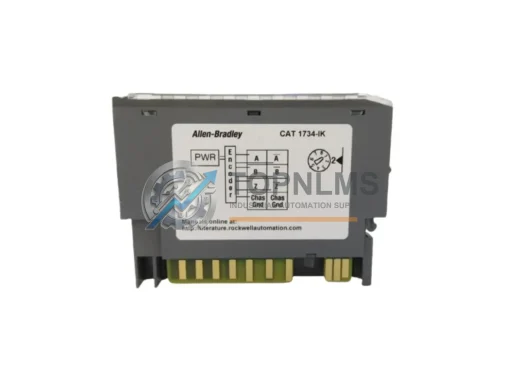
Allen-Bradley 1734-IK/C POINT I/O Series C incremental encoder module. Drop-in replacement, wiring-compatible, 12-month warranty. Ships from stock.
Click Quote This Model and the Part Number field will auto-fill with 1794-IJ2.