
Allen-Bradley
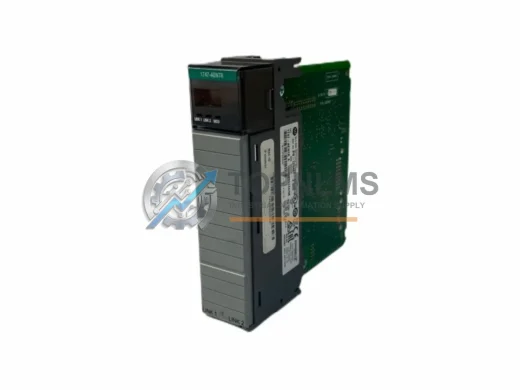
Allen-Bradley 1747-AENTR Replacement for SLC 500
1747-AENTRAllen-Bradley 1747-AENTR EtherNet/IP adapter for SLC 500. Drop-in replacement, wiring-compatible, 12-month warranty. Ships from Xiamen. Contact: [email protected]
Request availability, condition, lead time and export shipping details for 1771-SDN.
Send this exact part number, quantity and destination country. TOPNLMS will confirm availability, condition and export lead time before quotation.
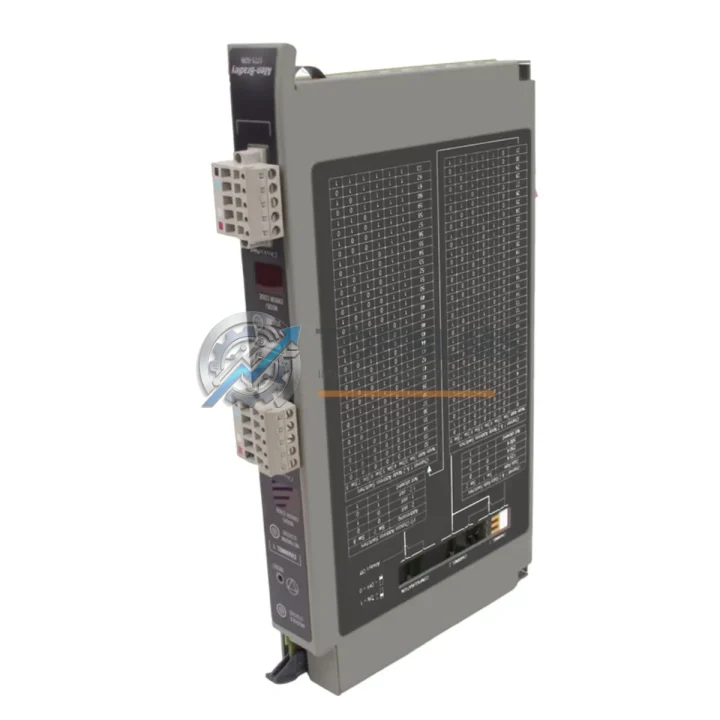
The Allen-Bradley 1771-SDN DeviceNet Scanner Module is a mission-critical original spare part for facilities operating PLC-5 controllers and the 1771 I/O Platform. In industrial environments where unplanned downtime translates directly into production loss, having a verified, tested 1771-SDN on the shelf is one of the most cost-effective risk mitigation strategies available to maintenance engineers and plant managers alike.
The 1771-SDN serves as the communication bridge between the PLC-5 processor and DeviceNet field devices — including variable frequency drives, smart sensors, motor starters, and distributed I/O nodes. When this module fails or degrades, the entire DeviceNet network segment goes offline, halting automated processes that depend on real-time device communication. Sourcing a genuine replacement quickly is not optional; it is operationally essential.
At TOPNLMS, every 1771-SDN unit is sourced from verified supply channels, individually inspected, and function-tested prior to dispatch. Each module ships with a 12-month warranty, providing procurement teams and maintenance planners with the confidence needed to approve emergency and scheduled spare purchases alike.
| Parameter | Specification |
|---|---|
| Part Number / SKU | 1771-SDN |
| Manufacturer | Allen-Bradley (Rockwell Automation) |
| Module Type | DeviceNet Scanner Module |
| Compatible Platform | PLC-5 Processor, 1771 I/O Chassis |
| Network Protocol | DeviceNet (CAN-based, IEC 62026-3) |
| Max DeviceNet Nodes | 64 nodes per scanner |
| I/O Data Table Size | Up to 512 bytes input / 512 bytes output |
| Backplane Communication | 1771 I/O Chassis backplane |
| Power Consumption | Supplied via 1771 I/O chassis backplane |
| Operating Temperature | 0°C to 60°C (32°F to 140°F) |
| Storage Temperature | -40°C to 85°C |
| Relative Humidity | 5% to 95% non-condensing |
| Mounting | 1771 I/O chassis slot (single-slot) |
| Certifications | UL, CE, DeviceNet Conformance Tested |
| Origin | United States |
| Condition | Original, tested before shipment |
| Warranty | 12 Months |
A scheduled inspection of the 1771-SDN should be integrated into every quarterly control cabinet audit for PLC-5-based systems. During a planned maintenance window, technicians should verify DeviceNet network health using the module’s diagnostic LEDs — checking for node faults, communication errors, and bus-off conditions. If the 1771-SDN is flagged for replacement, the maintenance window should simultaneously address adjacent components to maximize uptime recovery.
When replacing the 1771-SDN, it is best practice to inspect the 1771 I/O chassis backplane for corrosion or connector wear, as backplane degradation is a common secondary cause of scanner module failures. The 1771-P4S or 1771-P7 power supply module should also be load-tested at this stage — an aging power supply delivering marginal voltage is frequently the root cause of intermittent DeviceNet communication faults that are misdiagnosed as scanner failures.
Technicians should also audit the DeviceNet trunk cable and drop cable assemblies (per DeviceNet specification: thick trunk, thin drop), termination resistors at both ends of the network, and the DeviceNet power tap supplying 24VDC to the network. A degraded network power supply or missing termination is a leading cause of node dropouts that trigger 1771-SDN fault codes.
For facilities running mixed I/O architectures, the 1771-IFE analog input module and 1771-OFE analog output module in the same chassis should be inspected for firmware compatibility and calibration drift. Similarly, the 1771-ASB remote I/O adapter module — if present in satellite racks — should be verified for communication integrity, as remote I/O faults can cascade into DeviceNet scanner errors.
Where the PLC-5 processor itself (such as the 1785-L40B or 1785-L80B) is approaching end-of-service life, procurement teams should consider stocking a replacement processor alongside the 1771-SDN. The 1784-PCIDS DeviceNet interface card used for programming and diagnostics from a workstation should also be confirmed operational before any live network reconfiguration. Rounding out the control cabinet review, the 1771-WB wiring arm and terminal block assemblies should be checked for loose connections that can introduce intermittent faults indistinguishable from module failures.
The 1771-SDN is a legacy module within the Allen-Bradley 1771 I/O Platform ecosystem — a platform that, while no longer in active production, remains deeply embedded in thousands of manufacturing facilities, water treatment plants, oil & gas installations, and automotive assembly lines worldwide. Rockwell Automation’s migration path points toward the ControlLogix and CompactLogix platforms, but the capital cost and engineering effort of a full system migration is prohibitive for many operations.
For these facilities, sourcing a genuine original 1771-SDN replacement is the most operationally sound and cost-effective strategy. A verified original module maintains full compatibility with existing PLC-5 ladder logic programs, DeviceNet EDS files, and RSNetWorx for DeviceNet configuration databases — eliminating the risk of re-commissioning errors that accompany third-party substitutes or refurbished units of uncertain provenance.
TOPNLMS supplies the 1771-SDN as a direct drop-in replacement: same form factor, same backplane pinout, same firmware behavior. Maintenance teams can complete a module swap within a single planned shutdown window — typically under two hours — without requiring PLC program modifications or DeviceNet network reconfiguration, provided the replacement unit is configured to match the original node address and scan list settings.
For facilities managing aging PLC-5 infrastructure, we recommend maintaining a minimum of one 1771-SDN as a cold standby spare. Given the module’s role as a single point of failure for the entire DeviceNet segment, the cost of one spare unit is negligible compared to the cost of a single unplanned production stoppage while awaiting emergency procurement.
Q1: Is the 1771-SDN you supply an original Allen-Bradley module or a third-party compatible?
All 1771-SDN units supplied by TOPNLMS are original Allen-Bradley (Rockwell Automation) modules. We do not supply third-party clones or unauthorized reproductions. Each unit is individually inspected and function-tested before shipment to verify backplane communication, DeviceNet port integrity, and LED diagnostic behavior.
Q2: What does the 12-month warranty cover, and how is it claimed?
The 12-month warranty covers manufacturing defects and functional failures under normal operating conditions. If a module fails within the warranty period, contact us at [email protected] with your order number and a description of the fault. We will arrange a replacement or refund after technical review. Warranty does not cover damage caused by incorrect installation, overvoltage, or physical impact.
Q3: How do I verify compatibility between the 1771-SDN and my existing PLC-5 system before installation?
The 1771-SDN is compatible with all PLC-5 processors that support the 1771 I/O chassis backplane and have DeviceNet scanner capability enabled in the processor’s I/O configuration. Verify your PLC-5 firmware revision supports the 1771-SDN scan list size you require. Configuration is performed via RSNetWorx for DeviceNet software. If you need compatibility verification support, contact our technical team with your PLC-5 catalog number and firmware revision.
Q4: What is the recommended inventory strategy for 1771-SDN spares in a multi-line facility?
For facilities with multiple DeviceNet segments each served by a dedicated 1771-SDN, we recommend a minimum spare ratio of one unit per three installed scanners, with at least one unit always on-shelf regardless of installed count. For critical production lines where DeviceNet downtime directly halts output, a one-to-one hot standby ratio is advisable. Bulk procurement orders qualify for priority allocation and volume pricing — contact [email protected] for a formal quotation.
Allen-Bradley 1747-AENTR EtherNet/IP adapter for SLC 500. Drop-in replacement, wiring-compatible, 12-month warranty. Ships from Xiamen. Contact: [email protected]
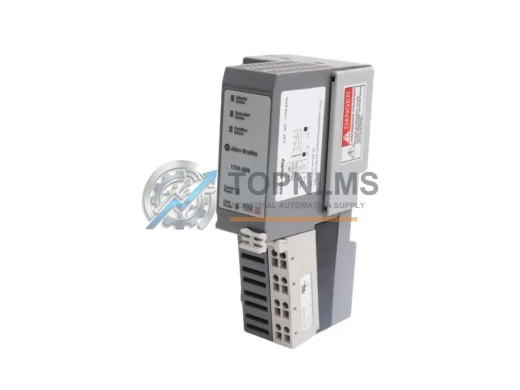
Allen-Bradley 1734-ADN Point I/O DeviceNet Adapter upgrade & replacement. Compatible with ControlLogix, CompactLogix. In stock, tested, 12-month warranty.
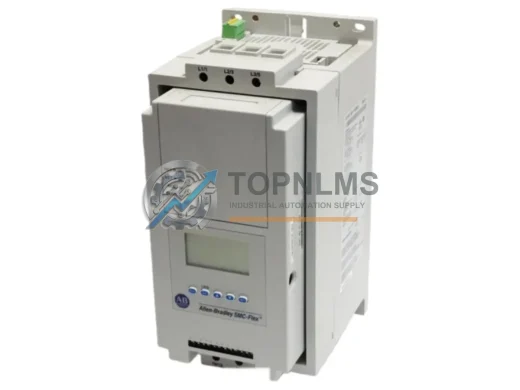
Allen-Bradley 150-F43NBDD SMC Flex 43A 480V smart motor controller. Rugged, reliable, in-stock. 12-month warranty. Fast shipping. Contact TOPNLMS.
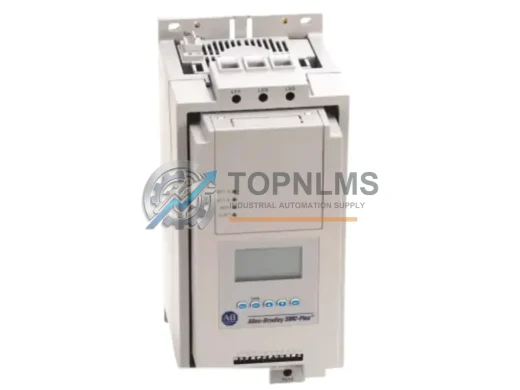
Allen-Bradley 150-F251NZD SMC Flex Motor Controller 251A 200-480V 3-Phase. Original industrial spare, verified compatible, 12-month warranty. Fast worldwide shipping.
Click Quote This Model and the Part Number field will auto-fill with 1771-SDN.