Product Overview
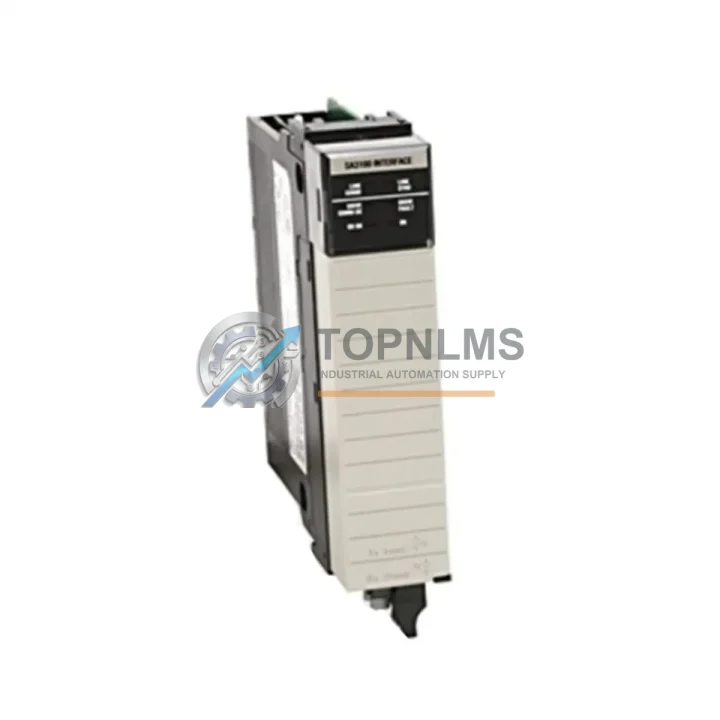
Allen-Bradley 1756-DMF30 Ruggedized Drive Module for Harsh Environments
The Allen-Bradley 1756-DMF30 is a high-performance ControlLogix Drive Module engineered for industrial resilience. Designed to operate reliably in the most demanding environments — including high-temperature foundries, high-humidity coastal processing plants, dust-laden mining operations, and vibration-intensive heavy manufacturing lines — the 1756-DMF30 delivers consistent axis coordination and backplane integration without compromise. Its ruggedized architecture ensures that motion control remains stable even when electromagnetic interference, voltage transients, and mechanical shock are constant operational realities.
In continuous production environments where downtime is measured in thousands of dollars per minute, the 1756-DMF30 serves as the backbone of multi-axis drive coordination within the ControlLogix platform. It communicates seamlessly over the ControlLogix backplane, enabling tight synchronization between the 1756-L8x series controllers and downstream drive systems. Whether deployed in a steel rolling mill, an offshore oil platform, a municipal water treatment facility, or a high-voltage power substation, this module maintains deterministic control performance that safety-critical applications demand.
The 1756-DMF30 integrates directly with Rockwell Automation’s Studio 5000 Logix Designer environment, allowing engineers to configure, tune, and monitor drive axes without leaving the unified control architecture. Its backplane communication protocol ensures low-latency data exchange with adjacent I/O modules such as the 1756-IB16 digital input module and 1756-OB16E digital output module, enabling real-time feedback loops that protect both equipment and personnel.
Rugged Specifications Table
| Parameter |
Specification |
| Model / SKU |
1756-DMF30 |
| Brand |
Allen-Bradley (Rockwell Automation) |
| Series |
ControlLogix 1756 |
| Product Type |
Drive Module (Motion / Axis Coordination) |
| Backplane Interface |
ControlLogix 1756 Backplane |
| Supported Axes |
Up to 30 axes (coordinated motion) |
| Operating Temperature |
0°C to 60°C (32°F to 140°F) |
| Storage Temperature |
-40°C to 85°C |
| Relative Humidity |
5% to 95% non-condensing |
| Vibration Resistance |
IEC 60068-2-6 compliant |
| EMI/EMC Protection |
CE marked; IEC 61000-4 series compliant |
| Enclosure / IP Rating |
IP20 (panel-mount, control cabinet installation) |
| Power Consumption |
Backplane powered; refer to chassis power budget |
| Communication Protocol |
EtherNet/IP, ControlNet (via 1756 backplane) |
| Compatible Controllers |
1756-L71, 1756-L72, 1756-L73, 1756-L74, 1756-L75, 1756-L8x series |
| Compatible Software |
Studio 5000 Logix Designer v21+ |
| Certifications |
UL, CE, RCM; SIL 2 capable architecture |
| Application Scenarios |
Oil & Gas, Mining, Power Generation, Water Treatment, Metallurgy, Heavy Manufacturing |
| Origin |
United States (Rockwell Automation) |
| Warranty |
12 Months — Tested, Inspected, Guaranteed |
Comprehensive Protection Solutions
The 1756-DMF30 does not operate in isolation — it is the coordinating intelligence within a broader, layered protection architecture. In a typical heavy-industry control cabinet, it works in concert with the 1756-EN2T EtherNet/IP communication module to maintain real-time network connectivity even under high electromagnetic load. The 1756-PA75 power supply module provides stable, filtered backplane power, ensuring that voltage fluctuations from large motor starts do not propagate into the control logic layer.
For safety-critical applications, the 1756-DMF30 is commonly paired with the 1756-L73S GuardLogix safety controller, which enforces SIL 2 safety functions across the motion system. The 1756-OBV8S safety output module then translates those safety commands into physical actuator signals, creating a complete safety loop from controller to field device. On the input side, the 1756-IB32 high-density digital input module aggregates sensor feedback from proximity switches, encoders, and limit switches mounted throughout the machine.
In variable-speed drive applications, the 1756-DMF30 coordinates with PowerFlex 755 and PowerFlex 527 AC drives over the integrated motion on EtherNet/IP (IME) architecture, enabling precise torque and velocity control across multi-axis systems. The 1492-AIFM8-F-5 analog interface module bridges legacy 4–20 mA field instruments into the ControlLogix environment, while the 1756-TBCH terminal base chassis provides secure, vibration-resistant field wiring termination points within the control cabinet. For installations requiring functional safety at the relay level, the MSR127RP safety relay module from the Allen-Bradley Guardmaster series provides emergency-stop and safety-gate monitoring that integrates with the overall ControlLogix safety architecture.
Application in Critical Infrastructure
In the oil and gas sector, the 1756-DMF30 is deployed in wellhead automation panels and pipeline compressor stations where continuous, unattended operation is mandatory. Its ability to coordinate multiple drive axes simultaneously makes it indispensable in gas compression trains where reciprocating compressors, booster pumps, and separator control valves must operate in precise sequence. The module’s EMI hardening ensures reliable backplane communication even in the presence of high-power variable frequency drives and large transformer installations common on offshore platforms.
In mining operations, the 1756-DMF30 controls conveyor drive systems, crusher motor coordination, and hoisting equipment in environments where coal dust, silica particulate, and mechanical vibration are constant. Its deterministic scan time ensures that overload protection responses are executed within milliseconds, preventing costly mechanical failures and protecting personnel in hazardous zones classified under ATEX or NEC Class I/II standards.
Power generation facilities — including thermal, hydroelectric, and wind farms — rely on the 1756-DMF30 for turbine governor control, generator excitation coordination, and auxiliary system management. In water treatment and municipal infrastructure, the module manages pump station drive arrays, ensuring consistent flow rates and pressure regulation across distributed SCADA networks. Metallurgical plants use it to synchronize rolling mill drives, ladle transfer cars, and continuous casting line motors, where microsecond-level timing between axes directly determines product quality and yield.
Security & Quality FAQ
Q1: What warranty coverage is provided with the 1756-DMF30?
Every 1756-DMF30 unit supplied by TOPNLMS carries a 12-month warranty covering manufacturing defects and functional failures under normal operating conditions. Each unit undergoes pre-shipment functional testing and visual inspection to verify backplane connector integrity, module identification, and firmware version compatibility before dispatch.
Q2: How is compatibility with existing ControlLogix systems verified?
The 1756-DMF30 is compatible with all 1756 ControlLogix chassis variants (4-slot through 17-slot) and is supported by Studio 5000 Logix Designer version 21 and above. TOPNLMS technical staff can assist with firmware revision matching and controller compatibility verification prior to order confirmation, ensuring seamless integration into your existing control architecture without requiring chassis or software upgrades.
Q3: What is the typical lead time and shipping arrangement?
In-stock units are dispatched within 1–3 business days of order confirmation. TOPNLMS ships globally via DHL Express, FedEx International Priority, and sea freight for bulk orders. All shipments include commercial invoices, packing lists, and test certificates. Expedited shipping is available for emergency plant maintenance situations — contact our team directly for priority handling.
Q4: Can TOPNLMS support long-term spare parts planning for the 1756 ControlLogix platform?
Yes. TOPNLMS maintains ongoing inventory of ControlLogix platform components to support multi-year spare parts agreements for critical infrastructure operators. We provide substitution guidance for discontinued SKUs, cross-reference support for equivalent modules, and can source hard-to-find legacy components to extend the operational life of existing control systems without requiring full platform migration.