
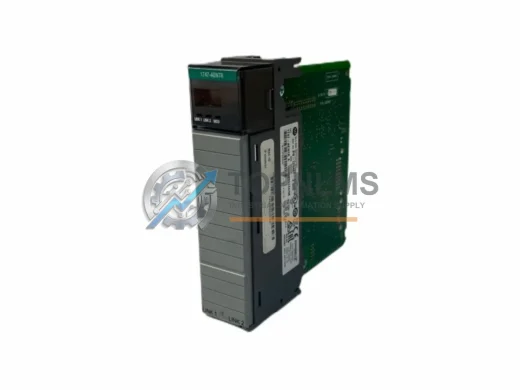
Allen-Bradley
Allen-Bradley 1747-AENTR Replacement for SLC 500
1747-AENTRAllen-Bradley 1747-AENTR EtherNet/IP adapter for SLC 500. Drop-in replacement, wiring-compatible, 12-month warranty. Ships from Xiamen. Contact: [email protected]
Request availability, condition, lead time and export shipping details for 1747-SN.
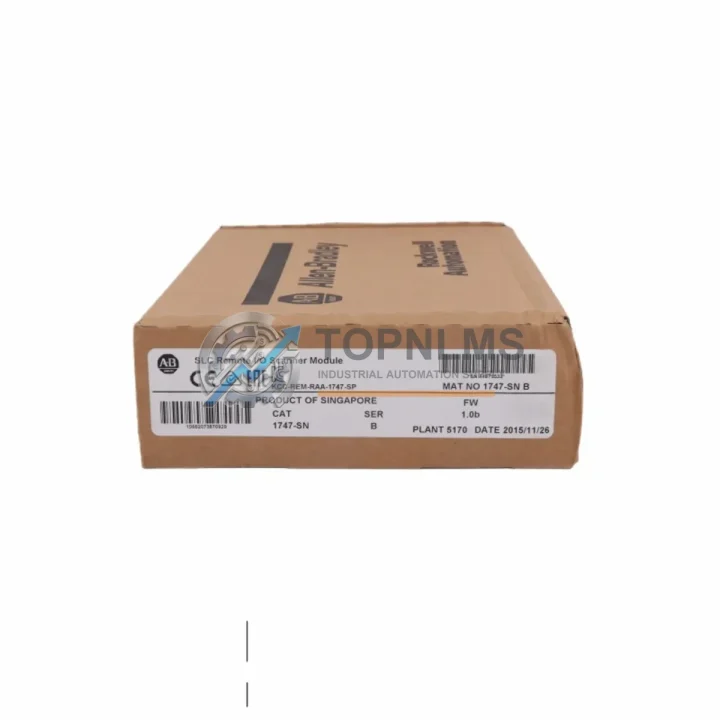
Send this exact part number, quantity and destination country. TOPNLMS will confirm availability, condition and export lead time before quotation.
The Allen-Bradley 1747-SN DeviceNet Scanner Module is a mission-critical communication interface designed for the SLC 500 programmable controller platform. As a master node on the DeviceNet network, the 1747-SN enables deterministic, real-time I/O communication between the SLC 500 CPU and field-level devices including drives, sensors, actuators, and distributed I/O blocks. In industrial environments where production continuity is non-negotiable, maintaining a verified original 1747-SN spare in your parts inventory is one of the most effective strategies for reducing unplanned downtime and protecting long-term system stability.
Whether you are managing a legacy SLC 500 control cabinet, executing a scheduled shutdown inspection, or responding to an unplanned network fault, the 1747-SN is a component that demands immediate availability. DeviceNet communication failures can cascade rapidly across an entire production line, triggering safety shutdowns, halting conveyor systems, and disabling remote I/O racks. Having a tested, ready-to-install 1747-SN on the shelf eliminates the most dangerous variable in emergency maintenance: lead time.
| Parameter | Specification |
|---|---|
| Part Number / SKU | 1747-SN |
| Series | SLC 500 |
| Manufacturer | Allen-Bradley / Rockwell Automation |
| Module Type | DeviceNet Scanner Module (Master Node) |
| Network Protocol | DeviceNet (CAN-based, ISO 11898) |
| Backplane Interface | SLC 500 I/O chassis (1746 series) |
| Max DeviceNet Nodes | 63 nodes per network |
| Max I/O Data | Up to 248 bytes input / 248 bytes output |
| Baud Rates Supported | 125 Kbps, 250 Kbps, 500 Kbps |
| Power Consumption | Backplane powered via SLC 500 chassis |
| Operating Temperature | 0°C to 60°C (32°F to 140°F) |
| Storage Temperature | -40°C to 85°C |
| Relative Humidity | 5% to 95% non-condensing |
| Enclosure Rating | Open type — requires installation in rated enclosure |
| Compatibility | SLC 5/03, SLC 5/04, SLC 5/05 processors; 1746 chassis |
| Configuration Software | RSNetWorx for DeviceNet; RSLogix 500 |
| Origin | United States |
| Warranty | 12 Months — Tested before shipment |
A DeviceNet scanner module does not operate in isolation. The 1747-SN sits at the center of a communication ecosystem that spans the SLC 500 backplane, the DeviceNet trunk cable, and every slave device on the network. A comprehensive preventive maintenance program for any SLC 500 control cabinet should treat the 1747-SN as part of a broader inspection and spare-parts strategy.
During scheduled shutdowns, technicians replacing or inspecting the 1747-SN should simultaneously verify the condition of the 1746-A4 or 1746-A7 I/O chassis that houses the module. Chassis backplane connectors are subject to vibration fatigue and oxidation over years of operation, and a degraded backplane can cause intermittent communication faults that are difficult to diagnose without swapping the chassis itself. Keeping a spare chassis in inventory alongside the 1747-SN is a prudent strategy for facilities running legacy SLC 500 systems.
The DeviceNet network trunk and drop cables connected to the 1747-SN should be inspected for insulation wear, connector corrosion, and proper termination resistance. The network requires 121-ohm terminating resistors at both ends of the trunk; missing or failed terminators are a leading cause of intermittent node dropouts. At the same time, the 1787-DNPS DeviceNet Power Supply tap and associated network power supply should be checked for output voltage stability — DeviceNet devices require a stable 24 VDC network supply, and a degraded power supply can cause random node faults that mimic scanner module failures.
For facilities managing distributed I/O on the DeviceNet network, components such as the 1794-ADN FLEX I/O DeviceNet Adapter and associated 1794-series I/O modules should be included in the spare-parts plan. These adapters are slave nodes that communicate directly with the 1747-SN, and their failure will appear as a node loss event in the scanner’s fault table. Maintaining at least one spare 1794-ADN adapter per production line significantly reduces diagnostic time during fault events.
The SLC 500 processor itself — whether a 1747-L531, 1747-L541, or 1747-L551 — should be part of the same inspection cycle. Processor battery replacement (using the 1747-BA battery) is a routine task that is often overlooked until a power interruption causes program loss. Pairing a processor battery replacement with a 1747-SN inspection creates a natural maintenance checkpoint for the entire SLC 500 rack.
For facilities that use 1746-series analog I/O modules such as the 1746-NI4 or 1746-NO4I alongside DeviceNet I/O, a coordinated inspection of both the backplane-connected modules and the DeviceNet slave devices ensures that no single point of failure is overlooked. Signal isolators and surge protection devices installed on field wiring should also be checked during the same maintenance window, as transient damage to field wiring can propagate back to the scanner module’s DeviceNet port.
Finally, the 1747-PIC or 1747-UIC programming cable used for RSLogix 500 access should be kept in working condition and stored with the spare parts kit. During an emergency replacement of the 1747-SN, the ability to immediately connect a laptop and verify the scanner’s node configuration via RSNetWorx for DeviceNet is critical to minimizing restart time.
The Allen-Bradley 1747-SN has been in service across global manufacturing facilities for decades. Many SLC 500 systems installed in the 1990s and 2000s remain in active production, and the 1747-SN continues to be the only native DeviceNet scanner solution for the SLC 500 platform. Unlike migration to a ControlLogix or CompactLogix architecture — which requires significant engineering effort, new I/O infrastructure, and revalidation of control logic — replacing a failed 1747-SN with an original spare is a direct, zero-engineering swap that restores full system functionality within minutes of installation.
For maintenance teams managing aging SLC 500 systems, the strategic value of stocking an original 1747-SN cannot be overstated. The module is configured via RSNetWorx for DeviceNet, and its scanlist — the table of DeviceNet slave devices and their I/O mapping — is stored in the module’s non-volatile memory. A replacement module can be pre-configured offline using a backup of the original scanlist, allowing a technician to perform a hot-swap replacement during a brief production pause rather than a full shutdown.
For facilities planning a phased migration away from SLC 500, maintaining a 1747-SN spare extends the operational life of the existing system without committing to a full platform upgrade. This approach allows engineering teams to schedule migrations during planned capital expenditure cycles rather than being forced into emergency upgrades by component unavailability. The 1747-SN is a cost-effective bridge that protects production continuity while long-term modernization plans are developed and funded.
Every 1747-SN unit supplied by TOPNLMS is sourced from verified industrial supply channels, inspected for physical integrity, and functionally tested prior to shipment. Units are shipped with appropriate anti-static packaging and documentation. A 12-month warranty covers all units against defects in materials and workmanship, providing procurement teams with the confidence needed to approve spare-parts purchases for critical infrastructure.
Q1: What is the expected service life of the 1747-SN, and when should I plan for replacement?
The 1747-SN is a mature product with no published end-of-life date for spare parts availability, but as with all legacy industrial components, supply availability will decrease over time. Facilities running SLC 500 systems should maintain at least one spare 1747-SN per production line. For systems with more than five years of continuous operation, a proactive replacement during the next scheduled shutdown is recommended, even if the existing module shows no fault indicators.
Q2: Can the 1747-SN be replaced without reprogramming the DeviceNet network?
Yes, provided you have a backup of the original scanlist configuration. The 1747-SN stores its DeviceNet scanlist in non-volatile memory. Using RSNetWorx for DeviceNet, you can export the scanlist from the original module (if still functional) or restore it from a previously saved backup file. A replacement module loaded with the original scanlist will resume normal network operation after the SLC 500 processor is restarted. Always verify node addresses and I/O mapping after replacement before returning the system to automatic mode.
Q3: How do I verify compatibility between the 1747-SN and my existing SLC 500 processor?
The 1747-SN is compatible with SLC 5/03 (1747-L531/L532/L533), SLC 5/04 (1747-L541/L542/L543), and SLC 5/05 (1747-L551/L552/L553) processors installed in a 1746-series I/O chassis. It is not compatible with SLC 5/01 or SLC 5/02 processors. Verify your processor catalog number before ordering. If you are unsure of compatibility, contact TOPNLMS with your full system configuration and we will confirm suitability before shipment.
Q4: What pre-shipment testing is performed on 1747-SN units, and what does the 12-month warranty cover?
All 1747-SN units supplied by TOPNLMS undergo visual inspection for physical damage, connector integrity verification, and functional testing to confirm backplane communication and DeviceNet port operation. The 12-month warranty covers defects in materials and workmanship under normal operating conditions. It does not cover damage resulting from incorrect installation, overvoltage events, or physical mishandling after delivery. Warranty claims are processed promptly — contact [email protected] with your order number and a description of the fault.
Allen-Bradley 1747-AENTR EtherNet/IP adapter for SLC 500. Drop-in replacement, wiring-compatible, 12-month warranty. Ships from Xiamen. Contact: [email protected]
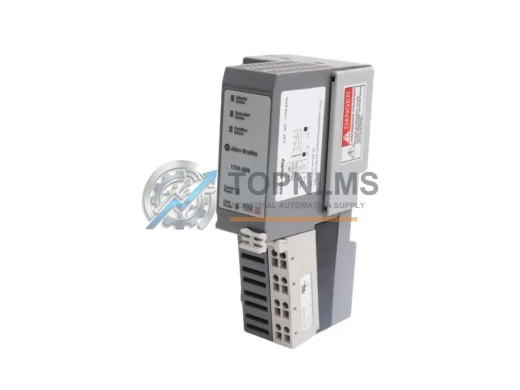
Allen-Bradley 1734-ADN Point I/O DeviceNet Adapter upgrade & replacement. Compatible with ControlLogix, CompactLogix. In stock, tested, 12-month warranty.
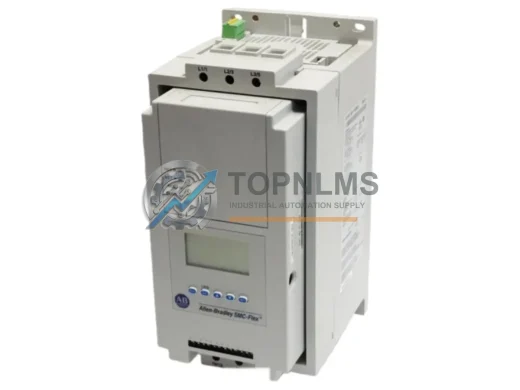
Allen-Bradley 150-F43NBDD SMC Flex 43A 480V smart motor controller. Rugged, reliable, in-stock. 12-month warranty. Fast shipping. Contact TOPNLMS.
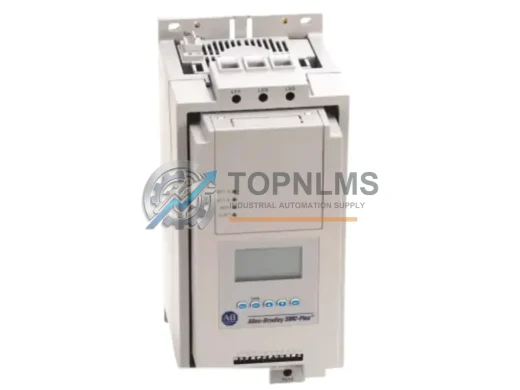
Allen-Bradley 150-F251NZD SMC Flex Motor Controller 251A 200-480V 3-Phase. Original industrial spare, verified compatible, 12-month warranty. Fast worldwide shipping.
Click Quote This Model and the Part Number field will auto-fill with 1747-SN.