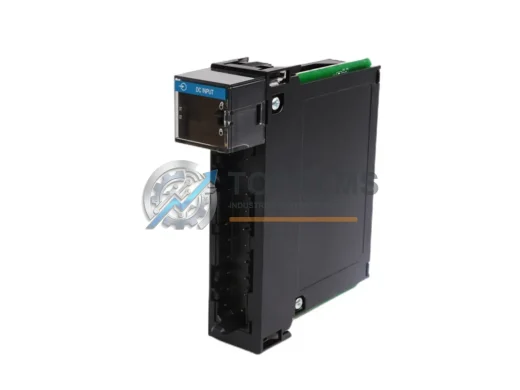
Product Overview
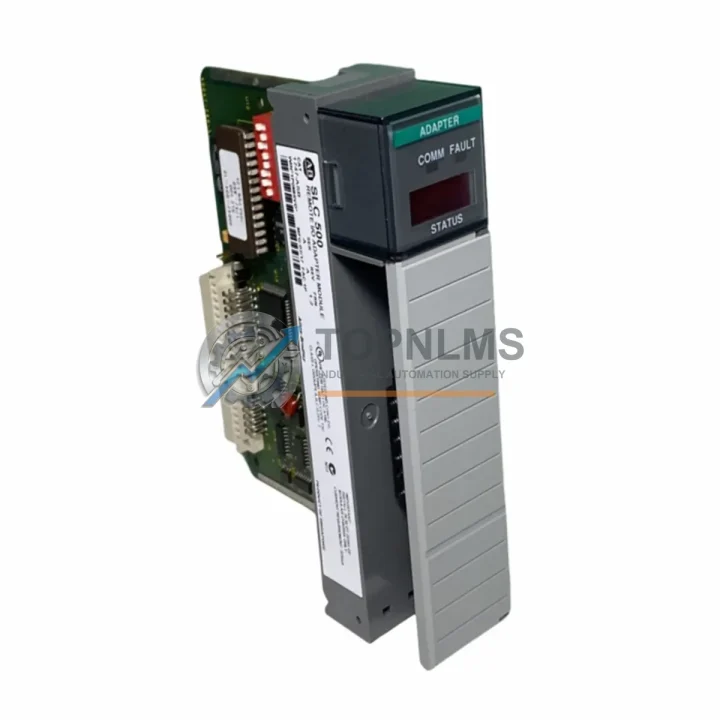
Allen-Bradley 1747-ASB Original Industrial Spare SLC 500 Compatible: System Stability & Maintenance Value
The Allen-Bradley 1747-ASB Remote I/O Adapter Module is a mission-critical spare part for facilities running SLC 500-based control architectures. In industrial environments where unplanned downtime translates directly into production loss, having a verified, original-source 1747-ASB in your maintenance inventory is one of the most cost-effective risk mitigation strategies available. This module enables SLC 500 chassis to communicate with remote I/O racks across the plant floor, making it a linchpin component in distributed control topologies found in automotive assembly, food and beverage processing, water treatment, and discrete manufacturing.
Whether you are managing a scheduled turnaround, responding to an unplanned fault, or building a strategic spare parts buffer for aging SLC 500 infrastructure, the 1747-ASB delivers the original firmware compatibility and electrical performance that third-party alternatives cannot guarantee. Every unit shipped from TOPNLMS is functionally tested, clearly labeled, and backed by a 12-month warranty — giving your maintenance team the confidence to install and commission without hesitation.
Critical Technical Specs
| Parameter |
Specification |
| Part Number |
1747-ASB |
| Brand |
Allen-Bradley (Rockwell Automation) |
| Series |
SLC 500 |
| Module Type |
Remote I/O Adapter Module |
| Communication |
Remote I/O (RIO) — 57.6K / 115.2K / 230.4K baud |
| Backplane Current Draw |
800 mA @ 5 VDC |
| Operating Temperature |
0 °C to 60 °C (32 °F to 140 °F) |
| Storage Temperature |
-40 °C to 85 °C |
| Relative Humidity |
5% to 95% non-condensing |
| Chassis Compatibility |
SLC 500 modular chassis (1746 series) |
| Installation |
Single slot, SLC 500 backplane |
| Certifications |
UL, CE, CSA |
| Origin |
USA |
| Warranty |
12 Months — TOPNLMS Verified |
Preventive Maintenance Strategy
A Remote I/O adapter failure rarely occurs in isolation. When the 1747-ASB is flagged during a fault diagnostic or scheduled inspection, experienced maintenance engineers know to treat it as a signal to audit the broader SLC 500 control cabinet. The adapter’s role — bridging the SLC 500 processor to remote I/O racks — means that degraded performance can cascade into I/O communication faults, scanner timeouts, and ultimately unplanned line stops.
During any 1747-ASB replacement or inspection cycle, it is best practice to simultaneously verify the condition of the 1747-SN Remote I/O Scanner Module, which pairs directly with the ASB in distributed I/O architectures. If the scanner module shows elevated error counts or intermittent communication drops, replacing both units during the same maintenance window eliminates a second shutdown event. Similarly, the 1746-P4 Power Supply Module should be load-tested — an aging power supply delivering marginal 5 VDC backplane voltage is a common root cause of adapter module faults that are misdiagnosed as module failures.
For facilities with multiple remote I/O drops, the 1771-ASB Remote I/O Adapter (used in PLC-5 legacy racks that may coexist on the same RIO network) should be inspected at the same time. Baud rate mismatches between 1747-ASB and 1771-ASB nodes are a known source of intermittent network faults. While in the cabinet, technicians should also check the 1747-L553 SLC 5/05 Processor battery status and firmware revision — an out-of-date processor firmware can cause compatibility issues with replacement adapter modules.
I/O module integrity is equally important. The 1746-IB16 Digital Input Module and 1746-OB16 Digital Output Module installed in the remote chassis should be inspected for terminal corrosion, blown fuses, and LED fault indicators. Replacing the 1747-ASB while leaving degraded I/O modules in service will not restore full system reliability. For analog signal loops, the 1746-NI4 Analog Input Module should be calibrated and verified against field transmitter readings during the same maintenance event.
Communication infrastructure supporting the RIO network — including Belden 9463 Twinaxial Cable and associated termination resistors — should be visually inspected for insulation damage, connector oxidation, and proper 82-ohm termination at both ends of the RIO trunk. A degraded cable plant is frequently the actual cause of 1747-ASB communication faults. Finally, the 1746-A13 SLC 500 Chassis backplane connectors should be cleaned and inspected for bent pins before the replacement module is seated.
Strategic Replacement Solutions
The 1747-ASB has been in service across global manufacturing facilities for decades, and Rockwell Automation’s migration path toward ControlLogix and CompactLogix platforms means that original SLC 500 spare parts are becoming progressively harder to source through standard distribution channels. TOPNLMS specializes in exactly this gap — providing verified original-source modules for legacy systems that must remain operational while capital investment in new control platforms is planned and budgeted.
Replacing a failed 1747-ASB with a verified original unit is always preferable to attempting a platform migration under production pressure. Original modules retain full compatibility with existing SLC 500 ladder logic programs, require no I/O mapping changes, and can be installed and commissioned by any technician familiar with the SLC 500 platform — typically within 30 to 60 minutes including functional verification. This compares favorably to a migration project that may require weeks of engineering, programming, and commissioning time.
For facilities managing multiple SLC 500 systems, a strategic inventory of 1747-ASB units — typically one to two units per production line — provides insurance against extended lead times from standard distributors. TOPNLMS maintains ready stock with same-day or next-business-day dispatch capability, supporting both emergency replacement and planned maintenance procurement workflows.
Support FAQ
Q1: Is the 1747-ASB compatible with all SLC 500 chassis and processor revisions?
The 1747-ASB is designed for use with SLC 500 modular chassis (1746 series) and is compatible with SLC 5/02, 5/03, 5/04, and 5/05 processors. Compatibility with specific firmware revisions should be verified against the Rockwell Automation product compatibility matrix. TOPNLMS technical support can assist with compatibility verification prior to purchase.
Q2: What pre-shipment testing is performed on each unit?
Every 1747-ASB unit undergoes functional power-on testing and visual inspection before dispatch. Units are verified for backplane communication integrity and shipped with anti-static packaging. A test report summary is available upon request for quality-critical procurement processes.
Q3: What does the 12-month warranty cover?
The 12-month warranty covers manufacturing defects and functional failures under normal operating conditions. It does not cover damage resulting from incorrect installation, overvoltage events, or physical mishandling. Warranty claims are processed with a target response time of 48 business hours, with replacement or refund options available.
Q4: Can I return the unit if it does not resolve my system fault?
Yes. TOPNLMS supports a structured returns process for units that do not resolve the diagnosed fault, provided the module is returned in its original condition within the warranty period. We recommend performing a full system diagnostic — including cable integrity, power supply output, and processor fault logs — before concluding that the adapter module is the root cause, as RIO communication faults are frequently caused by upstream or downstream components.