
Allen-Bradley
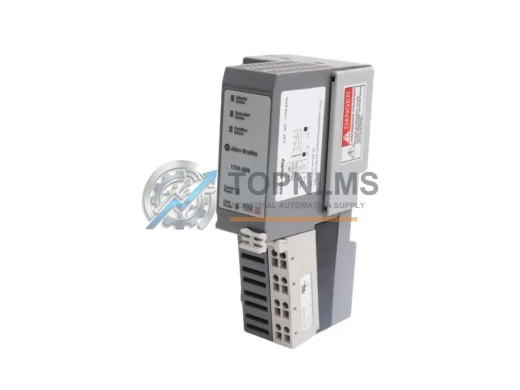
Allen-Bradley 1734-ADN Upgrade Solution for Point I/O
1734-ADNAllen-Bradley 1734-ADN Point I/O DeviceNet Adapter upgrade & replacement. Compatible with ControlLogix, CompactLogix. In stock, tested, 12-month warranty.
Request availability, condition, lead time and export shipping details for 1747-AENTR.
Send this exact part number, quantity and destination country. TOPNLMS will confirm availability, condition and export lead time before quotation.
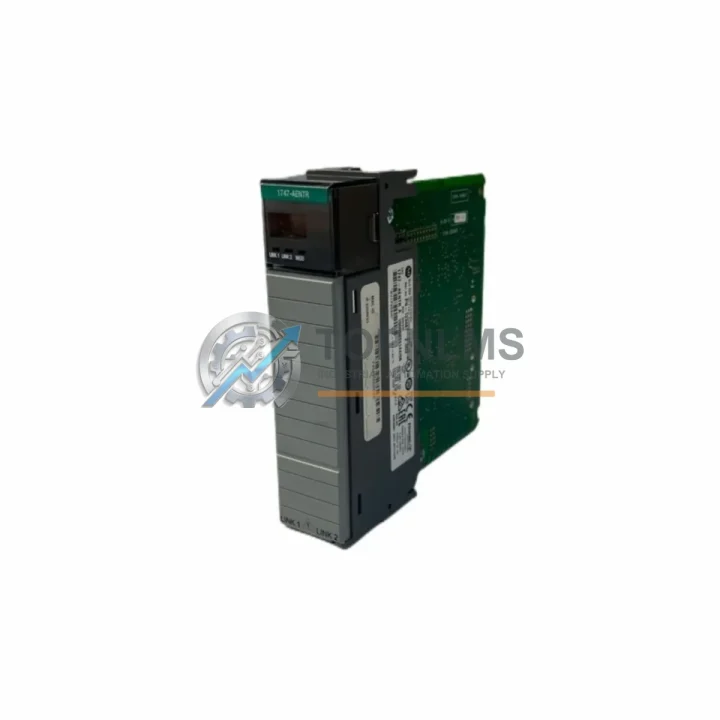
The Allen-Bradley 1747-AENTR is a dedicated EtherNet/IP adapter module designed for the SLC 500 modular chassis platform. As legacy SLC 500 systems approach end-of-life and original 1747-AENTR units become increasingly difficult to source through standard distribution channels, plant engineers and procurement teams face mounting pressure to maintain network connectivity between their SLC 500 racks and modern EtherNet/IP-based supervisory systems. TOPNLMS supplies verified 1747-AENTR units — tested, serialized, and shipped with a 12-month warranty — to support your retrofit, replacement, or emergency standby inventory requirements.
The 1747-AENTR occupies a single slot in the SLC 500 modular chassis (1746 series backplane) and provides a 10/100 Mbps EtherNet/IP port that allows the SLC 500 processor — such as the 1747-L551, 1747-L552, or 1747-L553 — to communicate as an adapter node on an EtherNet/IP network. This is particularly relevant in facilities where a ControlLogix or CompactLogix controller (e.g., 1756-L71 or 1769-L33ER) acts as the EtherNet/IP scanner, polling I/O data from the SLC 500 rack as part of a hybrid or transitional control architecture. The 1747-AENTR eliminates the need for a full PLC migration by extending the productive life of existing SLC 500 hardware while enabling integration with modern SCADA, DCS, or MES layers over standard Ethernet infrastructure.
From a wiring and installation standpoint, the 1747-AENTR installs directly into any open slot of a 1746-A4, 1746-A7, 1746-A10, or 1746-A13 chassis without modification to existing field wiring or I/O modules. The module draws power from the chassis backplane via the 1746-P series power supply (such as the 1746-P2 or 1746-P4), so no additional external power connections are required. The RJ-45 EtherNet/IP port connects to your plant network switch using standard Cat5e or Cat6 cabling. IP address assignment is handled via BOOTP/DHCP or static configuration through RSLinx Classic or Studio 5000 Logix Designer, depending on your site’s network management policy.
For facilities running RSLogix 500 ladder logic programs, no program changes are required on the SLC 500 processor side when replacing a failed 1747-AENTR with a new unit of the same firmware revision. The replacement module inherits the same I/O connection parameters, EtherNet/IP instance numbers, and data table mappings configured in the original installation. If the replacement unit carries a different firmware version, a brief firmware update via ControlFLASH may be required before the module is recognized correctly by the scanner controller. TOPNLMS recommends verifying the firmware revision of your existing unit before ordering to ensure a zero-programming-change swap.
In multi-rack SLC 500 installations, the 1747-AENTR is often deployed alongside the 1747-SDN DeviceNet Scanner or the 1747-SN Remote I/O Scanner to maintain parallel communication paths during phased migration projects. When a facility is transitioning from a legacy Remote I/O (RIO) network to EtherNet/IP, the 1747-AENTR serves as the bridge that allows the SLC 500 rack to participate in the new network topology without requiring immediate replacement of the processor or I/O modules. This approach significantly reduces migration risk and capital expenditure by allowing engineers to decommission RIO segments incrementally while keeping production running.
Physical installation space is a common concern in retrofit projects. The 1747-AENTR is a single-slot module with standard SLC 500 form factor dimensions, making it compatible with all standard 1746 series chassis configurations. In control cabinets where space is constrained, the module’s compact profile and rear-panel RJ-45 connector orientation simplify cable routing without requiring additional DIN rail space or external adapter brackets. For applications where the control cabinet houses both the SLC 500 rack and a separate 1756 ControlLogix rack (connected via 1756-ENBT or 1756-EN2T EtherNet/IP bridge modules), the 1747-AENTR enables direct peer-to-peer messaging between the two platforms using MSG instructions, supporting produced/consumed tag architectures across the migration boundary.
TOPNLMS maintains ready stock of the 1747-AENTR at our Xiamen warehouse. Each unit undergoes functional verification prior to shipment, including power-on self-test, backplane communication check, and EtherNet/IP port link verification. Units are shipped in anti-static packaging with full documentation. Standard lead time is 3–7 business days for international express delivery. For urgent plant-down situations, expedited same-day dispatch is available upon request.
| Parameter | 1747-AENTR (This Unit) | Legacy / Replaced Models |
|---|---|---|
| Network Protocol | EtherNet/IP (CIP) | Remote I/O (1747-SN), DeviceNet (1747-SDN) |
| Physical Interface | RJ-45, 10/100 Mbps | Coax / Trunkline (RIO), 5-pin Open Style (DeviceNet) |
| Chassis Compatibility | 1746-A4 / A7 / A10 / A13 | Same 1746 series chassis |
| Slot Requirement | 1 slot | 1 slot (1747-SN, 1747-SDN) |
| Power Source | Backplane (1746-P2 / P4) | Backplane (same) |
| Programming Tool | RSLinx Classic / Studio 5000 | RSLinx Classic / RSLogix 500 |
| IP Configuration | BOOTP / DHCP / Static | Node address via rotary switch (RIO/DeviceNet) |
| Scanner Compatibility | 1756-EN2T, 1769-L33ER, 1756-L71 | 1747-SN (RIO scanner), 1747-SDN (DeviceNet scanner) |
| Wiring Change Required | Cat5e/Cat6 Ethernet only | Coax or DeviceNet trunk replacement needed |
| Program Change Required | None (same firmware rev) | MSG instruction update may be required |
| Warranty | 12 Months — TOPNLMS Verified | |
A successful 1747-AENTR migration rarely involves a single module swap. In practice, the transition from a legacy RIO or DeviceNet network to EtherNet/IP requires coordinated changes across several components in the control cabinet and field network. The 1746-P4 power supply is frequently evaluated during this process, as adding the 1747-AENTR increases backplane current draw and may require upgrading from a 1746-P2 to a higher-capacity supply. Similarly, if the SLC 500 processor is a 1747-L40 or 1747-L541 running at its memory limit, engineers often take the opportunity to upgrade to a 1747-L553 with expanded data table capacity to accommodate the additional I/O connection data generated by EtherNet/IP communications.
On the network infrastructure side, the 1747-AENTR requires a managed Ethernet switch with IGMP snooping support for multicast traffic management — a common requirement when multiple EtherNet/IP devices share the same network segment. In facilities where the existing plant network uses unmanaged switches, this infrastructure upgrade is typically scoped alongside the 1747-AENTR installation. For programming and commissioning, a 1747-CP3 serial programming cable or a 1747-UIC USB-to-DH485 interface cable is required to access the SLC 500 processor for any ladder logic verification tasks during the migration, as the 1747-AENTR itself does not provide a programming port.
In hybrid architectures where the SLC 500 rack coexists with a newer CompactLogix system, the 1769-ECR end cap and 1769-IQ16 or 1769-OB16 I/O modules on the CompactLogix side are often part of the same project scope, as engineers consolidate I/O from decommissioned RIO drops into the new EtherNet/IP network. For HMI connectivity, PanelView Plus terminals (such as the 2711P-T10C4D8) configured with EtherNet/IP communication drivers can directly access SLC 500 data tables through the 1747-AENTR, eliminating the need for a separate DH-485 or DH+ communication module on the HMI side. Signal isolators and terminal blocks from the 1492 series are commonly specified during the physical rewiring phase to maintain signal integrity when field wiring is re-terminated to the new network infrastructure.
Q: Can I replace a failed 1747-AENTR without modifying my RSLogix 500 program?
A: Yes, provided the replacement unit has the same firmware revision as the original. The EtherNet/IP connection parameters, instance numbers, and data table mappings are stored in the scanner controller (e.g., ControlLogix or CompactLogix), not in the 1747-AENTR itself. A same-revision swap requires only a power cycle and IP address assignment on the new module.
Q: What IP address configuration method does the 1747-AENTR support?
A: The module supports BOOTP, DHCP, and static IP assignment. For production environments, static IP assignment is recommended to prevent address conflicts during network maintenance windows. Configuration is performed via RSLinx Classic or the Rockwell BOOTP/DHCP Server utility.
Q: Is the 1747-AENTR compatible with all SLC 500 chassis sizes?
A: Yes. The module is compatible with all 1746 series modular chassis: 1746-A4 (4-slot), 1746-A7 (7-slot), 1746-A10 (10-slot), and 1746-A13 (13-slot). It occupies one slot and draws power from the chassis backplane via the installed 1746-P series power supply.
Q: Can the 1747-AENTR coexist with a 1747-SN Remote I/O Scanner in the same chassis during a phased migration?
A: Yes. Both modules can occupy separate slots in the same chassis simultaneously, allowing the SLC 500 system to maintain RIO connectivity to legacy field devices while establishing new EtherNet/IP connections to the supervisory network. This dual-network configuration is a standard approach for phased migration projects that cannot tolerate a full cutover outage.
Q: What are the physical space requirements for installing the 1747-AENTR in an existing control cabinet?
A: The 1747-AENTR has the standard SLC 500 single-slot form factor. No additional DIN rail space or external mounting hardware is required. The RJ-45 Ethernet port is located on the front face of the module, and standard Cat5e/Cat6 patch cables route directly to the cabinet’s Ethernet patch panel or managed switch.
Q: Does the 1747-AENTR support explicit messaging (MSG instructions) from a ControlLogix scanner?
A: Yes. The module supports both implicit I/O messaging (cyclic data exchange) and explicit messaging (MSG instructions) over EtherNet/IP. This allows ControlLogix programs to read and write SLC 500 data table files directly using CIP Read/Write services, supporting both monitoring and control use cases across the migration boundary.
Every 1747-AENTR unit supplied by TOPNLMS is covered by a 12-month warranty from the date of shipment. Our pre-shipment verification process includes power-on self-test, backplane communication verification, EtherNet/IP port link-up confirmation, and visual inspection for physical damage or counterfeit indicators. Units that do not pass all verification steps are quarantined and not shipped.
In the event of a warranty claim, TOPNLMS provides replacement dispatch within 5 business days of claim confirmation. Our after-sales team is reachable via email at [email protected] and by phone at +86 18359293191 during business hours (CST, Monday–Friday). For plant-down emergencies, priority handling is available — contact us directly to initiate an expedited replacement process.
Procurement teams can request a Certificate of Conformance, packing list, and commercial invoice with each shipment for customs clearance and internal audit purposes. We support T/T bank transfer, PayPal, and trade assurance payment terms. Volume pricing is available for orders of 3 or more units of the same SKU.
© 2026 TOPNLMS. All rights reserved.
Original Source: https://topnlms.com
Contact: [email protected] | +86 18359293191
Allen-Bradley 1734-ADN Point I/O DeviceNet Adapter upgrade & replacement. Compatible with ControlLogix, CompactLogix. In stock, tested, 12-month warranty.
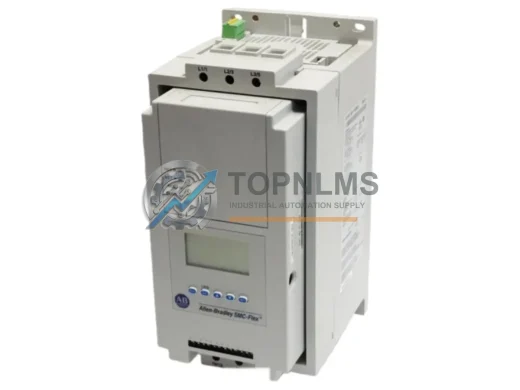
Allen-Bradley 150-F43NBDD SMC Flex 43A 480V smart motor controller. Rugged, reliable, in-stock. 12-month warranty. Fast shipping. Contact TOPNLMS.
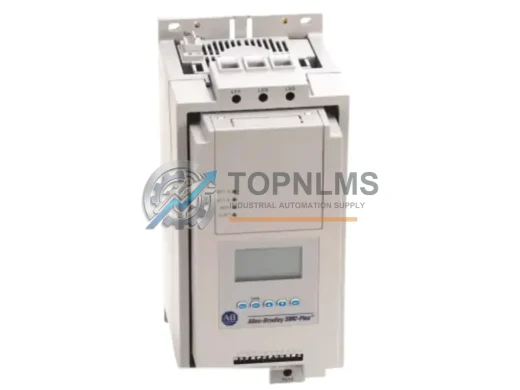
Allen-Bradley 150-F251NZD SMC Flex Motor Controller 251A 200-480V 3-Phase. Original industrial spare, verified compatible, 12-month warranty. Fast worldwide shipping.
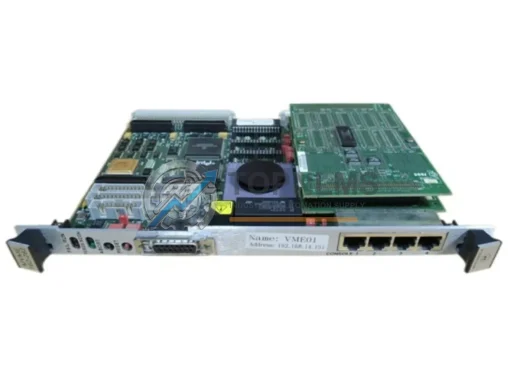
Allen-Bradley MVME162-262 VMEbus embedded controller replacement. Compatible MVME162 series upgrade. Original spare, tested, 12-month warranty. Fast global shipping.
Click Quote This Model and the Part Number field will auto-fill with 1747-AENTR.