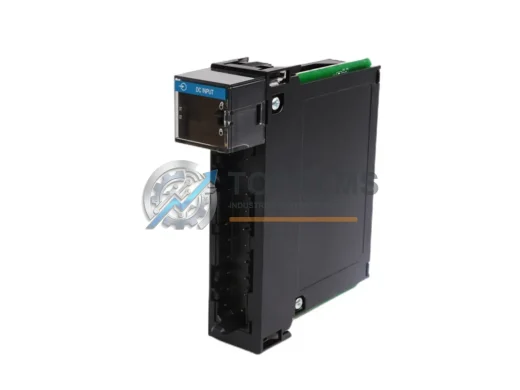
Product Overview
Allen-Bradley 1746SC-CTR4 Original Industrial Spare SLC 500 Compatible: System Stability & Industrial Spare Parts Maintenance Value
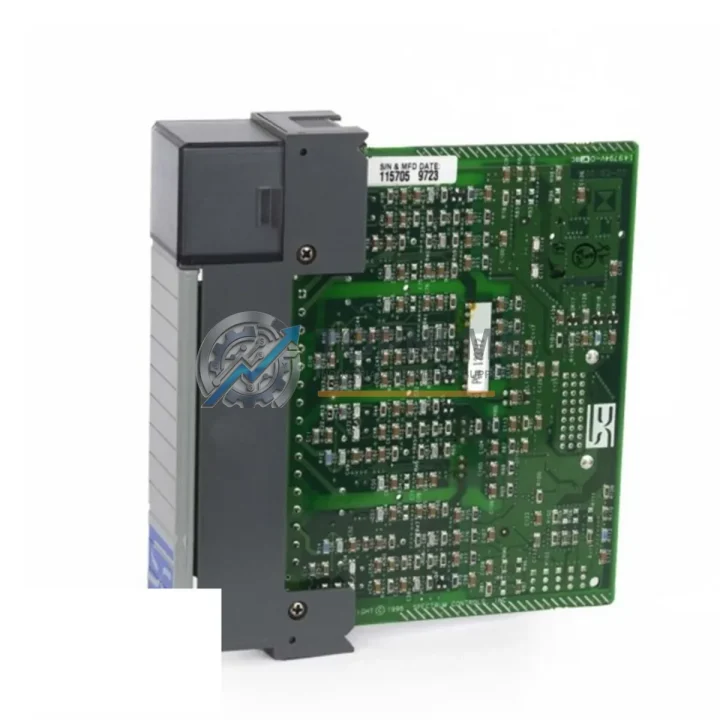
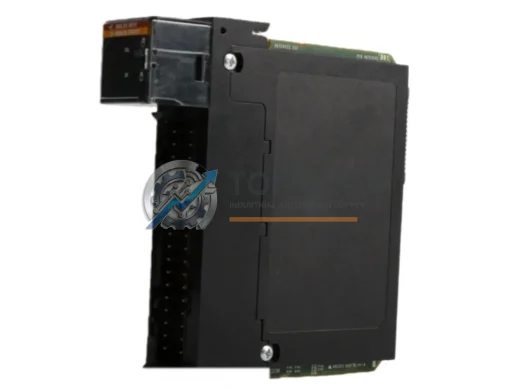
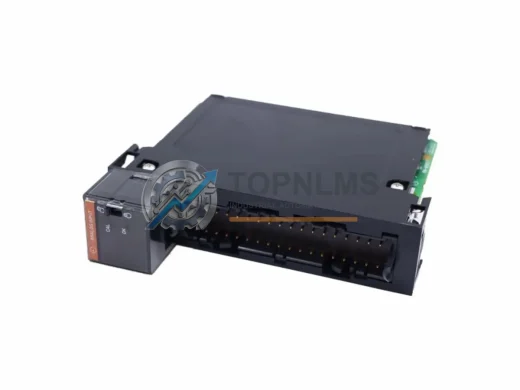
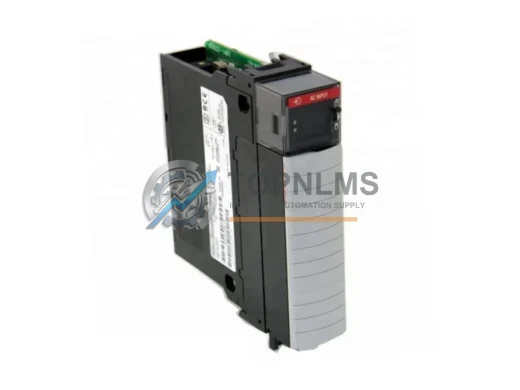
The Allen-Bradley 1746SC-CTR4 is a high-speed counter and flow meter input module designed for the SLC 500 programmable controller platform. As a purpose-built specialty I/O module, it provides four independent counter/flow meter input channels capable of accepting encoder, pulse, or frequency signals from field devices such as flow meters, encoders, and proximity sensors. In industrial environments where process continuity is non-negotiable, maintaining a verified original spare of the 1746SC-CTR4 is a cornerstone of any responsible maintenance strategy.
Whether your facility operates continuous process lines, batch manufacturing cells, or discrete assembly systems, the SLC 500 platform remains deeply embedded in legacy control architectures worldwide. The 1746SC-CTR4 occupies a critical position in these systems — any failure of this module can immediately halt production, corrupt flow measurement data, or trigger safety shutdowns. Sourcing a tested, original replacement unit before failure occurs is the most cost-effective insurance against unplanned downtime.
Critical Technical Specs Table
| Parameter |
Specification |
| Part Number / SKU |
1746SC-CTR4 |
| Brand |
Allen-Bradley (Rockwell Automation) |
| Series |
SLC 500 |
| Module Type |
Counter & Flow Meter Input Module |
| Number of Channels |
4 independent counter/flow meter input channels |
| Input Signal Types |
Encoder (quadrature), pulse, frequency / flow meter signals |
| Maximum Count Frequency |
Up to 100 kHz per channel (signal dependent) |
| Backplane Compatibility |
SLC 500 fixed and modular chassis (1746 series backplane) |
| Compatible Controllers |
SLC 5/01, 5/02, 5/03, 5/04, 5/05 |
| Power Consumption |
Supplied via SLC 500 backplane (5 VDC) |
| Operating Temperature |
0°C to 60°C (32°F to 140°F) |
| Storage Temperature |
-40°C to 85°C |
| Relative Humidity |
5% to 95% non-condensing |
| Mounting |
SLC 500 modular chassis slot (1746 series) |
| Product Origin |
United States |
| Condition |
Original / Genuine — tested before shipment |
| Warranty |
12 Months from date of purchase |
| Application Environment |
Industrial automation, process control, flow measurement, motion feedback |
Preventive Maintenance Strategy
When scheduling a planned maintenance window for a control cabinet housing the 1746SC-CTR4, experienced maintenance engineers treat the inspection as an opportunity to audit the entire SLC 500 rack. The counter module does not operate in isolation — its performance depends on the integrity of the surrounding system components. A thorough inspection should begin with the 1746-P4 or 1746-P7 power supply module, as voltage instability is a leading cause of premature I/O module failure. Confirm output voltage rails are within specification before drawing any conclusions about module health.
Next, inspect the 1746-A7 or 1746-A10 chassis backplane for signs of corrosion, bent connector pins, or heat discoloration. A compromised backplane can cause intermittent communication faults that are frequently misdiagnosed as module failures. While the chassis is open, verify that all 1746-IB16 or 1746-OB16 digital I/O modules in adjacent slots are seated firmly and that their status LEDs indicate normal operation.
The field wiring connected to the 1746SC-CTR4 deserves equal attention. Inspect the 1492-CABLE series wiring harnesses and terminal blocks for insulation wear, loose terminations, or signal interference from adjacent power cables. High-frequency counter inputs are particularly susceptible to noise coupling — shielded cable with proper grounding at a single point is essential. If the system uses 1746-NI4 or 1746-NI8 analog input modules alongside the counter module for process variable monitoring, verify that analog signal cables are routed away from high-current conductors.
For facilities using flow meters with RS-232 or RS-485 serial output, check the condition of any 1747-KE or 1747-SDN communication modules in the rack. These modules handle protocol conversion and network connectivity; a degraded communication module can cause the SLC processor to log false faults against the counter module. Similarly, if the SLC 500 system communicates upstream to a SCADA or DCS via 1747-SCNR ControlNet scanner modules, confirm that network traffic loads are within rated limits.
Finally, document the current firmware revision of the SLC 5/04 or 5/05 processor module and cross-reference it against Rockwell Automation’s compatibility matrix for the 1746SC-CTR4. Firmware mismatches between the processor and specialty I/O modules are a known source of configuration errors that surface only under specific operating conditions. Keeping a spare processor module — particularly the 1747-L543 or 1747-L553 — alongside the counter module spare ensures that a complete rack restoration can be performed within a single maintenance shift if required.
Strategic Replacement Solutions
The 1746SC-CTR4 was designed for long service life, but as SLC 500 systems age beyond 15–20 years, the risk of module failure increases significantly. Capacitor degradation, EEPROM wear, and connector fatigue are the primary failure modes observed in field-returned units. When a 1746SC-CTR4 fails in service, the immediate priority is restoring production — not sourcing a replacement through a weeks-long procurement cycle.
Stocking a verified original 1746SC-CTR4 spare eliminates this risk entirely. Unlike third-party or refurbished alternatives, an original module retains full compatibility with RSLogix 500 programming software, requires no re-configuration of the I/O image table, and slots directly into the existing chassis without any wiring modifications. The replacement process — remove the failed module, insert the spare, cycle power, and verify operation — can typically be completed in under 30 minutes by a qualified technician.
For facilities managing multiple SLC 500 racks across a plant floor, a tiered spare parts strategy is recommended: one hot spare per critical production line, and one pooled spare per facility for lower-criticality applications. This approach balances inventory carrying costs against the financial exposure of unplanned downtime. Given that a single hour of production loss in most manufacturing environments exceeds the cost of a spare module by a factor of ten or more, the investment case is straightforward.
For sites considering a longer-term migration path, the 1746SC-CTR4 can coexist with newer ControlLogix or CompactLogix systems during a phased modernization. The SLC 500 rack can be retained as a remote I/O subsystem while higher-level control is migrated to a 1756-L8x ControlLogix processor, preserving the existing field wiring investment while extending the operational life of the counter module infrastructure.
Support FAQ
Q1: Is this 1746SC-CTR4 an original Allen-Bradley module, and how is it tested before shipment?
Yes. Every 1746SC-CTR4 unit supplied by TOPNLMS is an original Allen-Bradley (Rockwell Automation) module. Prior to shipment, each unit undergoes functional verification including backplane communication checks, channel input response testing, and visual inspection for physical damage. A 12-month warranty is provided from the date of purchase, covering manufacturing defects and functional failures under normal operating conditions.
Q2: What is the recommended inventory strategy for the 1746SC-CTR4 in a multi-line facility?
For facilities with two or more SLC 500 systems using the 1746SC-CTR4, we recommend maintaining at least one dedicated hot spare per critical production line and one pooled spare for non-critical applications. Given the module’s role in flow measurement and high-speed counting, its failure directly impacts process data integrity. Procurement lead times for specialty I/O modules can extend to several weeks through standard channels; holding a pre-tested spare eliminates this exposure entirely.
Q3: Can the 1746SC-CTR4 be installed as a direct drop-in replacement without reprogramming?
In most cases, yes. The 1746SC-CTR4 is a slot-addressed module within the SLC 500 I/O image table. Provided the replacement module is installed in the same chassis slot as the failed unit, the existing RSLogix 500 program will recognize it without modification. However, if the module’s configuration data was stored in the processor’s memory (as is standard practice), the processor will automatically download the configuration to the new module on the first power cycle. Always verify channel configuration parameters after replacement before returning the system to automatic operation.
Q4: What compatibility verification should be performed before installing the 1746SC-CTR4 in an existing SLC 500 system?
Confirm that the target chassis is a 1746 series modular chassis (not a fixed SLC 500 unit), that the power supply has sufficient current capacity to support the additional module load, and that the SLC processor firmware revision is compatible with the 1746SC-CTR4 per Rockwell Automation’s product compatibility documentation. For systems running RSLogix 500 version 8.0 or later, full configuration support is standard. If any uncertainty exists, contact TOPNLMS technical support with your processor catalog number and firmware revision for pre-purchase compatibility confirmation.