Product Overview
ABB REA101-AA Replacement/Upgrade Solution for REA100 Series: Seamless Transition for Legacy MV Switchgear Protection Systems
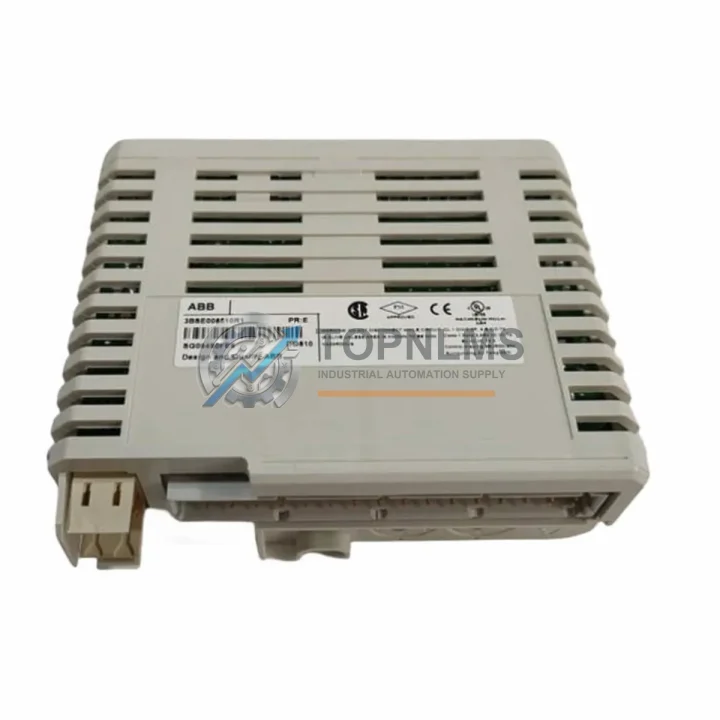
When your medium-voltage switchgear protection infrastructure relies on the ABB REA101-AA arc flash detection relay, any unplanned failure or end-of-life notification from ABB can trigger urgent procurement decisions. The REA101-AA is a core component of the ABB REA100 Series arc flash detection platform, widely deployed in industrial substations, utility distribution panels, and process-critical MV switchgear cabinets across manufacturing, oil & gas, water treatment, and power generation facilities. TOPNLMS maintains verified stock of the REA101-AA and its compatible ecosystem components to support both emergency replacement and planned system modernization projects.
The REA101-AA operates as a dedicated arc flash detection relay, designed to detect the intense light emitted during an arc flash event and issue a trip signal within milliseconds to upstream circuit breakers or protection devices. Its integration into the REA100 Series architecture means it works in close coordination with arc flash sensors, I/O expansion modules, and the facility’s existing protection coordination scheme. When replacing a failed or aging REA101-AA, engineers must verify that the replacement unit matches the original firmware baseline, terminal wiring layout, and communication interface configuration to avoid re-commissioning delays.
Compatibility Comparison Table
| Parameter |
Legacy / Outgoing Unit |
ABB REA101-AA (Replacement) |
| Model / SKU |
REA100 Series (earlier variants) |
REA101-AA |
| Detection Method |
Light-based arc flash detection |
Light-based arc flash detection (point & arc sensors) |
| Sensor Inputs |
Varies by variant (2–4 sensor ports) |
Up to 3 arc flash sensor inputs |
| Trip Output |
Relay output (NO/NC) |
Fast trip relay output, <1 ms response |
| Auxiliary Supply |
24–250 V DC / 100–240 V AC |
24–250 V DC / 100–240 V AC (wide range) |
| Communication Interface |
None / optional RS-485 |
Optional MODBUS RTU via RS-485 |
| Mounting |
DIN rail / panel mount |
DIN rail / panel mount (same footprint) |
| Terminal Wiring |
Screw terminal block |
Screw terminal block (compatible layout) |
| Installation Space |
Standard 35 mm DIN rail |
Standard 35 mm DIN rail (no cabinet modification) |
| Replacement Recommendation |
Direct drop-in for REA100 Series variants |
Verify sensor cable type and trip wiring before energizing |
| Warranty |
— |
12-Month Warranty (TOPNLMS) |
Seamless Upgrade Solutions
A successful REA101-AA migration rarely involves the relay alone. In most MV switchgear retrofit projects, the arc flash detection relay is one node in a broader protection architecture. During the upgrade process, engineers typically audit and often replace the arc flash point sensors and arc flash arc sensors connected to the REA101-AA’s sensor input ports — these fiber-optic or light-sensitive sensor elements degrade over time and should be replaced alongside the relay to ensure detection sensitivity meets IEC 62271 and IEEE 1584 requirements.
The REA101-AA’s trip output connects directly to the shunt trip coil or under-voltage release of the upstream ABB SACE Emax or Tmax series circuit breakers, or to compatible third-party MV breakers via an interposing relay. If the existing interposing relay or auxiliary relay module in the switchgear panel is aged, replacing it concurrently eliminates a common source of nuisance trips or failed trip operations during commissioning. For facilities using ABB’s REX640 or REF615 feeder protection relays in the same switchgear lineup, the REA101-AA integrates into the same protection coordination scheme without requiring changes to the REX640 or REF615 settings files.
Power supply integrity is critical for arc flash protection systems. The REA101-AA’s wide auxiliary supply range (24–250 V DC) makes it compatible with most existing switchgear DC battery-backed power supplies, including 110 V DC and 125 V DC substation battery systems. If the existing DC power distribution module or MCB feeding the protection relay panel is due for replacement, this is the optimal time to address it. Similarly, if the switchgear cabinet uses an ABB CP series or Phoenix Contact QUINT series DIN rail power supply for 24 V DC auxiliary circuits, these can continue to power the REA101-AA without modification.
For facilities that use MODBUS RTU communication to integrate protection relay status into a SCADA or DCS platform — such as ABB System 800xA, Siemens PCS 7, or Honeywell Experion — the REA101-AA’s optional RS-485 port allows direct integration using the existing communication cable infrastructure. The MODBUS register map for the REA101-AA is compatible with standard ABB protection relay SCADA templates, reducing engineering time for re-integration. If the RS-485 segment also carries data from other devices such as ABB REM615 motor protection relays or REJ601 feeder relays, the REA101-AA can be added to the existing daisy-chain without requiring a separate communication converter.
Terminal block and wiring compatibility is one of the most time-sensitive aspects of a relay replacement. The REA101-AA uses a standard screw terminal block layout consistent with the REA100 Series, meaning existing ferrule-terminated control cables can typically be reconnected without re-labeling or re-routing. Engineers should photograph the existing terminal connections before removal and cross-reference against the REA101-AA wiring diagram supplied with the unit. TOPNLMS provides the original ABB technical documentation with every shipment to support on-site commissioning teams.
Retrofit Guidance FAQ
Q: Can the REA101-AA directly replace an earlier REA100 Series variant without cabinet modification?
A: In most cases, yes. The REA101-AA shares the same DIN rail mounting footprint and screw terminal layout as earlier REA100 Series units. Physical cabinet modification is generally not required. However, engineers should verify the number of sensor inputs required and confirm the auxiliary supply voltage matches the existing wiring before installation.
Q: Do existing arc flash sensors need to be replaced when installing the REA101-AA?
A: Not necessarily. If the existing point sensors or arc sensors are within their service life and pass a functional test, they can be reused. TOPNLMS recommends testing sensor response time and light sensitivity before re-commissioning. Replacement sensors compatible with the REA101-AA are available if needed.
Q: Is the REA101-AA compatible with MODBUS RTU SCADA integration?
A: Yes, the REA101-AA supports optional MODBUS RTU communication via RS-485. The register map is consistent with ABB’s standard protection relay SCADA integration templates. Existing RS-485 wiring and SCADA configuration can typically be reused with minor address mapping updates.
Q: What is the typical commissioning procedure after installing the REA101-AA?
A: After physical installation and terminal reconnection, engineers should perform a sensor function test by simulating an arc flash light pulse, verify the trip output operates the upstream breaker correctly, and confirm SCADA communication if applicable. ABB’s commissioning checklist for the REA100 Series applies directly to the REA101-AA.
Q: How does the REA101-AA handle the transition from a system with no communication interface to one with MODBUS RTU?
A: The MODBUS RTU interface on the REA101-AA is optional and does not need to be activated if the existing system does not use it. The relay operates in standalone protection mode by default, with no impact on trip performance if the communication port is unused.
Q: What auxiliary supply voltages are supported?
A: The REA101-AA supports a wide auxiliary supply range of 24–250 V DC and 100–240 V AC, making it compatible with virtually all standard substation and industrial switchgear auxiliary power systems, including 24 V DC, 48 V DC, 110 V DC, 125 V DC, and 230 V AC supplies.
Warranty Assurance
Every ABB REA101-AA unit shipped by TOPNLMS is covered by a 12-month warranty from the date of delivery. Prior to shipment, each unit undergoes a pre-delivery functional inspection to verify auxiliary supply operation, sensor input response, and trip relay output continuity. Units are shipped in original or equivalent protective packaging with full technical documentation including the ABB product datasheet and wiring diagram.
In the event of a warranty claim, TOPNLMS provides a replacement unit or full refund within the warranty period. Our after-sales response team is available via email and phone to support on-site commissioning engineers with technical queries, wiring verification, and SCADA integration guidance. For urgent replacement requirements, expedited shipping from our Xiamen warehouse is available to minimize switchgear downtime.
TOPNLMS maintains inventory of the REA101-AA and related REA100 Series ecosystem components to support both emergency procurement and planned maintenance schedules. All units are sourced through verified supply channels and are subject to incoming inspection before entering our warehouse stock.
For procurement inquiries, technical pre-sales support, or bulk order pricing, contact our industrial automation team directly.