
Yokogawa
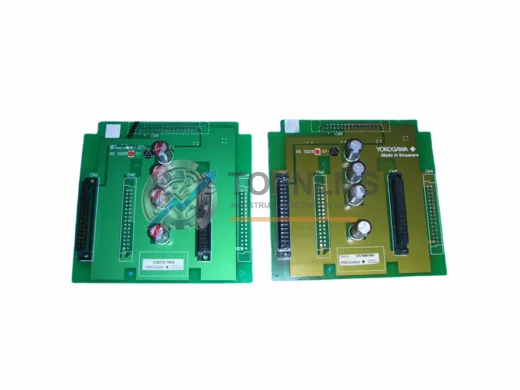
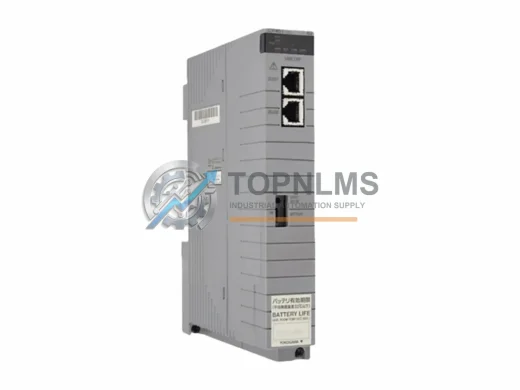
YOKOGAWA ASS9262AT-1 Replacement for CENTUM CS3000
ASS9262AT-1YOKOGAWA ASS9262AT-1 DCS communication board replacement for CENTUM CS3000. Compatible upgrade solution. 12-month warranty. Fast global shipping from stock.
Request availability, condition, lead time and export shipping details for SNT401-13.
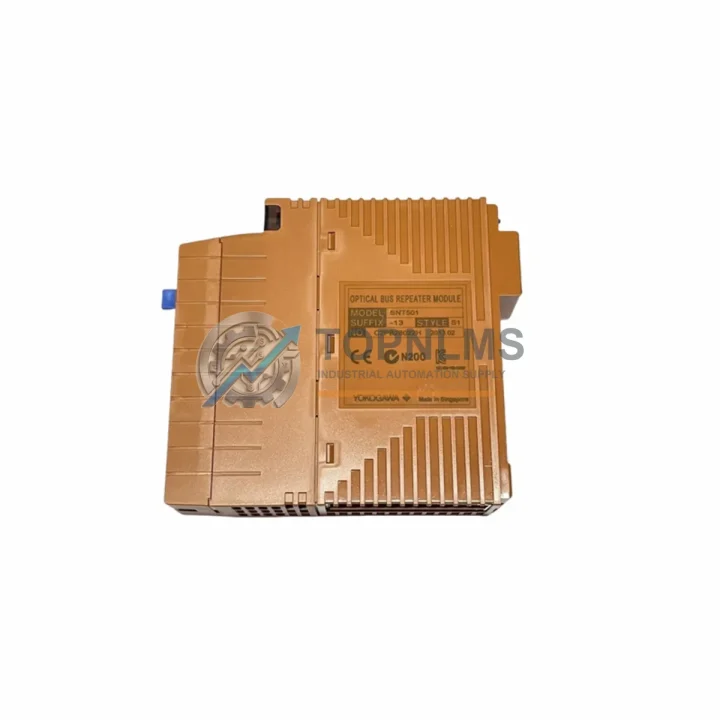
Send this exact part number, quantity and destination country. TOPNLMS will confirm availability, condition and export lead time before quotation.
The YOKOGAWA SNT401-13 is a Bus Repeater Slave Module designed for use within the CENTUM CS and CENTUM VP Distributed Control System (DCS) platforms. As a critical signal relay and bus extension component, the SNT401-13 maintains communication integrity across field control stations, ensuring stable data transmission between I/O modules, controllers, and the supervisory network. For plant maintenance teams managing aging CENTUM CS installations or actively operating CENTUM VP systems, maintaining a verified stock of the SNT401-13 is a fundamental element of any responsible spare parts strategy.
In industrial environments where continuous operation is non-negotiable — petrochemical plants, power generation facilities, pulp and paper mills, and pharmaceutical manufacturing — the failure of a bus repeater module can cascade into partial or full loss of field visibility. The SNT401-13 serves as the backbone of the V-net/ER bus architecture, and its timely replacement during scheduled maintenance windows or emergency shutdowns directly determines how quickly a control loop can be restored to full operation.
| Parameter | Specification |
|---|---|
| Model | SNT401-13 |
| Manufacturer | YOKOGAWA Electric Corporation |
| Module Type | Bus Repeater Slave Module |
| Compatible Platform | CENTUM CS, CENTUM VP (V-net/ER Bus) |
| Bus Interface | V-net/ER (Ethernet-based control bus) |
| Installation | Field Control Station (FCS) node bus slot |
| Power Supply | Supplied via FCS backplane (24 VDC internal) |
| Operating Temperature | 0°C to 55°C |
| Humidity | 10% to 90% RH (non-condensing) |
| Country of Origin | Japan |
| Condition | Original / Genuine |
| Warranty | 12 Months from date of shipment |
| Shipping | Global express shipping; DHL / FedEx / EMS available |
| Pre-shipment Testing | Full functional verification before dispatch |
A well-structured preventive maintenance program for CENTUM CS/VP systems goes well beyond replacing a single module in isolation. When a maintenance team schedules a planned shutdown to inspect or replace the SNT401-13 Bus Repeater Slave Module, it is operationally efficient — and strongly advisable — to simultaneously audit the surrounding components that share the same field control station, bus segment, or power distribution circuit.
The SNT401-13 operates in close coordination with the SNT401-53 Bus Repeater Master Module, which governs the upstream bus segment. If the slave module shows signs of degradation — intermittent communication errors, CRC faults, or bus timeout alarms — the master module should be inspected concurrently, as both units share the same V-net/ER bus segment and a fault in one often stresses the other. Stocking both the SNT401-13 and SNT401-53 as a paired spare set is a recognized best practice in CENTUM CS/VP maintenance planning.
Within the same FCS node, the ACM11 Node Interface Module manages the communication handshake between the bus repeater layer and the controller. A degraded ACM11 can produce symptoms that mimic bus repeater failure, making it a logical candidate for simultaneous inspection. Similarly, the CP451 Field Control Unit — the primary controller in many CENTUM CS installations — should be verified for firmware integrity and communication health whenever bus-layer maintenance is performed.
Power stability is equally critical. The SNT401-13 relies on clean, regulated 24 VDC supplied through the FCS backplane. Maintenance teams should verify the condition of the associated PW481 Power Supply Module and its redundant counterpart during the same maintenance window. Capacitor aging and output ripple in power supply modules are leading causes of intermittent bus communication faults that are frequently misdiagnosed as repeater module failures.
On the I/O side, AAI141 Analog Input Modules and ADV151 Digital Output Modules connected to the same FCS node should be inspected for terminal corrosion, loose wiring, and LED status anomalies. These modules share the node bus with the SNT401-13, and their health directly affects the overall reliability of the control loop. Replacing worn terminal blocks and verifying signal isolation on connected signal isolator modules is a low-cost, high-value step that significantly extends system uptime between major overhauls.
For sites that have not yet migrated to CENTUM VP, maintaining a stock of the SB401 Bus Coupler Module alongside the SNT401-13 provides additional resilience for the legacy CENTUM CS bus architecture. Procurement teams should treat these as a coordinated inventory unit rather than individual line items, as their failure modes are interdependent and their lead times from standard distributors can be unpredictable for discontinued or slow-moving SKUs.
The SNT401-13 is a mature component within the YOKOGAWA CENTUM product family. While CENTUM VP continues to receive active support, many plants operating original CENTUM CS hardware face increasing difficulty sourcing genuine spare parts through standard distribution channels. TOPNLMS maintains verified stock of the SNT401-13 specifically to address this supply gap, enabling maintenance teams to execute planned replacements without the extended lead times associated with factory-direct orders or regional distributor backorders.
Replacing the SNT401-13 does not require reprogramming of the FCS controller or reconfiguration of the V-net/ER bus topology. The module is hot-swappable in redundant bus configurations, meaning that in systems where dual bus repeater paths are installed, replacement can be performed without interrupting the active control loop. For non-redundant installations, replacement should be scheduled during a planned shutdown window, with the new module pre-tested and verified before installation to minimize the time the bus segment is offline.
Physical installation is straightforward: the SNT401-13 mounts directly into the designated slot within the FCS node unit, with no additional wiring or jumper configuration required. The module draws power from the backplane and initializes automatically upon insertion, with bus communication status confirmed via the front-panel LED indicators within seconds of power-up. Maintenance engineers familiar with CENTUM CS/VP hardware will find the replacement procedure consistent with standard YOKOGAWA FCS module swap protocols.
For plants considering a phased migration from CENTUM CS to CENTUM VP, maintaining a buffer stock of the SNT401-13 provides operational continuity during the transition period, ensuring that legacy FCS nodes remain fully functional while new VP hardware is commissioned in parallel. This approach eliminates the risk of a forced emergency migration triggered by an unplanned bus repeater failure.
Q1: Is the SNT401-13 compatible with both CENTUM CS and CENTUM VP systems?
Yes. The SNT401-13 Bus Repeater Slave Module is designed for use across the CENTUM CS and CENTUM VP platforms, both of which utilize the V-net/ER bus architecture. Compatibility should be verified against your specific FCS node configuration and YOKOGAWA system documentation prior to installation.
Q2: What pre-shipment testing is performed on the SNT401-13?
Every SNT401-13 unit shipped by TOPNLMS undergoes full functional verification prior to dispatch, including power-on testing, bus communication initialization checks, and visual inspection for physical integrity. A test report is available upon request for quality-critical procurement processes.
Q3: What does the 12-month warranty cover?
The 12-month warranty covers manufacturing defects and functional failures under normal operating conditions from the date of shipment. In the event of a warranty claim, TOPNLMS provides replacement support with priority processing. Warranty claims resulting from improper installation, electrical overstress, or physical damage are evaluated on a case-by-case basis.
Q4: How should the SNT401-13 be stored as a long-term spare?
For long-term spare storage, the SNT401-13 should be kept in its original anti-static packaging in a climate-controlled environment with temperature between 0°C and 40°C and relative humidity below 75% non-condensing. Periodic inspection every 12–18 months is recommended to verify physical condition and confirm the module remains within its operational specification before deployment.
© 2026 TOPNLMS. All rights reserved.
Original Source: https://topnlms.com
Contact: [email protected] | +86 18359293191
YOKOGAWA ASS9262AT-1 DCS communication board replacement for CENTUM CS3000. Compatible upgrade solution. 12-month warranty. Fast global shipping from stock.
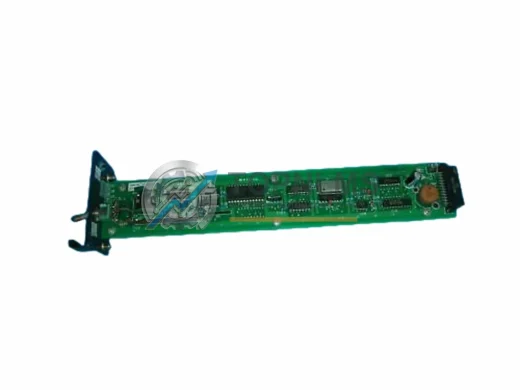
YOKOGAWA AS S9491BJ-0 Bus Coupler Module replacement for CENTUM VP DCS. Compatible upgrade solution. 12-month warranty. Fast global shipping from Xiamen.
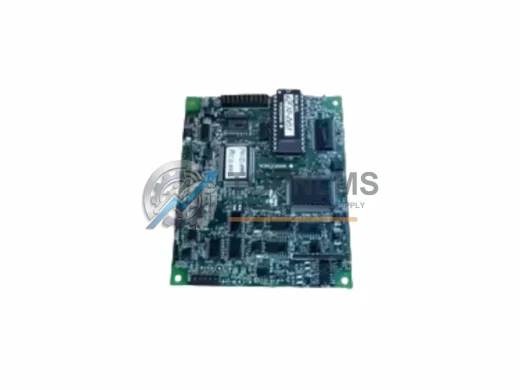
Yokogawa ASF9553EA-02 F9553ET-02 ruggedized DCS control card for CENTUM CS 3000. In stock, tested, 12-month warranty. Fast global shipping from TOPNLMS.
Yokogawa ANT421-50 S1 FF-H1 Bus Repeater replacement for CENTUM VP. Drop-in upgrade, wiring-compatible, 12-month warranty. Ships from Xiamen.
Click Quote This Model and the Part Number field will auto-fill with SNT401-13.