Product Overview
YOKOGAWA SEC402-51 S1 Replacement for CENTUM CS3000: Smooth Migration & Legacy System Upgrade
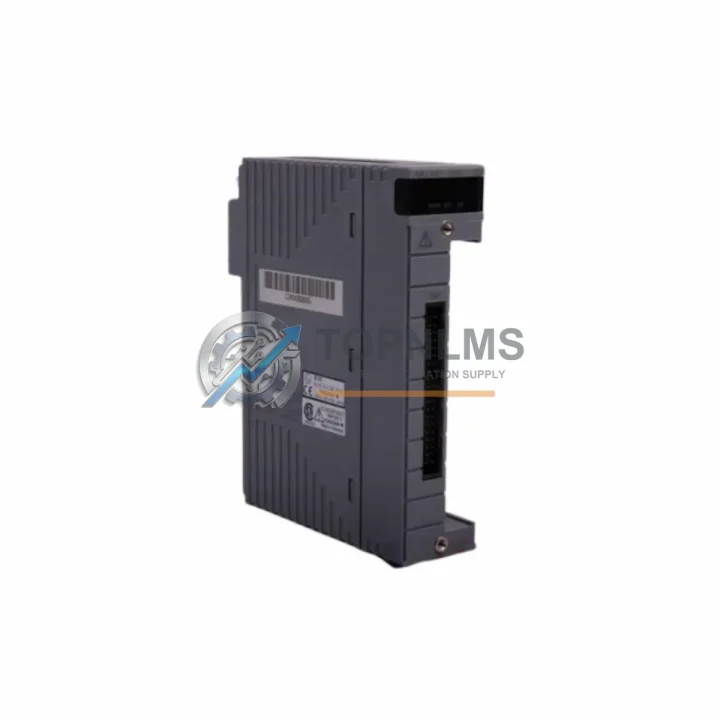
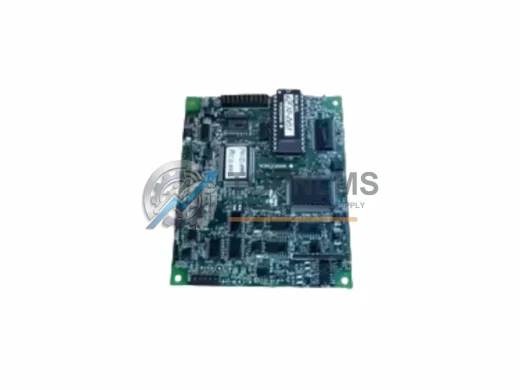
The YOKOGAWA SEC402-51 S1 ESB Bus Coupler Module is a critical interface component within the CENTUM CS3000 Distributed Control System architecture. As YOKOGAWA progressively transitions its installed base toward the CENTUM VP platform, many facilities operating legacy CS3000 systems face the challenge of sourcing verified, drop-in compatible replacements for discontinued or end-of-life modules such as the SEC402-51 S1. This product page is designed to support engineers, procurement teams, and maintenance planners who need a reliable, specification-accurate replacement with minimal disruption to ongoing operations.
The SEC402-51 S1 functions as an ESB (Enhanced Serial Backplane) Bus Coupler, providing the communication bridge between the Field Control Station (FCS) processor cards and the I/O modules mounted on the ESB bus. In a typical CENTUM CS3000 FCS cabinet, the SEC402-51 S1 works in conjunction with components such as the SCP401 or SCP451 processor modules, the SEB401 ESB bus interface cards, and the AFV10D or AFV30D I/O modules. Replacing a failed or aging SEC402-51 S1 without disrupting the ESB bus topology requires careful attention to firmware revision compatibility, backplane slot assignment, and bus termination settings — all of which are addressed in the compatibility guidance below.
For facilities migrating from CENTUM CS3000 to CENTUM VP, the SEC402-51 S1 replacement is often part of a phased hardware refresh that also involves upgrading the HIS (Human Interface Station) workstations, replacing legacy SCP processor cards with the newer SFCS processor units, and reconfiguring the Vnet/IP communication network. During this transition, maintaining a verified stock of SEC402-51 S1 units ensures that the legacy CS3000 FCS nodes remain operational while the new VP nodes are commissioned in parallel — a common brownfield migration strategy that minimizes production downtime.
From a wiring and installation perspective, the SEC402-51 S1 is a direct slot-in replacement within the existing ESB bus rack. No rewiring of field terminals is required. The module draws power from the rack’s internal 24 VDC bus, supplied by the PW481 or PW482 power supply modules. Engineers should verify that the rack’s power budget accommodates the SEC402-51 S1’s current draw alongside other installed I/O modules such as the AAI141 analog input cards or the ADV151 digital input modules. Physical installation requires only a standard flat-head screwdriver for the module latch — no special tooling is needed.
Communication protocol compatibility is a key consideration for any ESB bus coupler replacement. The SEC402-51 S1 operates on YOKOGAWA’s proprietary ESB bus protocol, which is fully backward compatible across all CENTUM CS3000 FCS generations. There is no requirement to modify the FCS configuration database (CENTUM Engineering Environment, or CEW) when performing a like-for-like SEC402-51 S1 swap. However, if the replacement is being performed as part of a broader migration that includes upgrading the SCP processor firmware, engineers should confirm that the new firmware version supports the SEC402-51 S1 hardware revision installed in the rack.
For sites that have already partially migrated to CENTUM VP and are running a hybrid CS3000/VP architecture, the SEC402-51 S1 continues to serve the legacy FCS nodes connected via the existing Vnet (V-net coaxial or optical fiber) backbone. The module does not require any configuration changes to coexist with VP nodes on the same Vnet segment, provided that the Vnet domain and station address assignments remain consistent with the original CS3000 system configuration.
Procurement teams should note that the SEC402-51 S1 is classified as a discontinued YOKOGAWA part. Sourcing from verified aftermarket suppliers with documented testing procedures is the recommended approach for facilities that cannot wait for OEM lead times. All SEC402-51 S1 units supplied by TOPNLMS are subject to functional verification testing prior to dispatch, covering ESB bus communication integrity, power rail stability, and module identification handshake with the FCS processor. Each unit ships with a test report and is covered by a 12-month replacement warranty.
Compatibility Comparison Table
| Parameter |
SEC402-51 S1 (This Unit) |
Legacy / Predecessor |
Notes |
| Module Type |
ESB Bus Coupler |
SEC401 / SEC402 (earlier revisions) |
Direct slot-in replacement; same form factor |
| Compatible System |
CENTUM CS3000 / CS3000 R3 |
CENTUM CS / CENTUM XL (via adapter) |
Verify FCS generation before ordering |
| Bus Protocol |
ESB (Enhanced Serial Backplane) |
SB (Standard Backplane, older FCS) |
ESB and SB racks are not interchangeable |
| Power Supply |
24 VDC (from rack bus) |
24 VDC (from rack bus) |
Compatible with PW481 / PW482 power modules |
| Physical Interface |
Backplane connector (ESB rack) |
Backplane connector (ESB rack) |
No field wiring changes required |
| Communication |
YOKOGAWA ESB proprietary protocol |
YOKOGAWA ESB proprietary protocol |
Fully backward compatible |
| FCS Processor Compatibility |
SCP401, SCP451, SCP461 |
SCP401 (original) |
Confirm firmware revision if upgrading SCP |
| CEW Configuration Change |
Not required (like-for-like swap) |
N/A |
No database rebuild needed for direct replacement |
| Installation Tool |
Flat-head screwdriver (module latch) |
Same |
No special tooling required |
| Warranty |
12 Months (TOPNLMS) |
OEM warranty (expired / discontinued) |
Includes functional test report |
Seamless Upgrade Solutions
A successful CENTUM CS3000 ESB bus coupler replacement rarely involves a single module in isolation. In most field scenarios, the SEC402-51 S1 swap is part of a broader maintenance or migration activity that touches several interconnected components. During the replacement procedure, maintenance engineers typically inspect and may also replace the SEB401 ESB bus interface card, which connects the FCS processor backplane to the ESB I/O bus. If the SEB401 shows signs of connector wear or communication errors in the FCS diagnostic log, replacing it alongside the SEC402-51 S1 eliminates a common source of intermittent bus faults.
The I/O modules connected downstream of the SEC402-51 S1 — such as the AAI141-S00 4-channel analog input module, the AAI543-H analog output module, or the ADV151-P16 16-channel digital input module — should be verified for firmware compatibility with the replacement coupler. In aging CS3000 installations, it is not uncommon to find I/O modules running early firmware revisions that may exhibit handshake delays with newer coupler hardware. A firmware audit of the I/O module population is recommended as part of the pre-replacement planning process.
Power integrity is another critical factor. The PW481 or PW482 rack power supply modules should be load-tested before the SEC402-51 S1 is installed, particularly in racks that are fully populated with I/O modules. A degraded power supply can cause the new coupler to report bus errors that are incorrectly attributed to the module itself. If the PW481 is approaching end of service life, replacing it concurrently with the SEC402-51 S1 is a cost-effective approach that avoids a second maintenance window.
For sites that use YOKOGAWA’s ALF111 or ALR121 fieldbus interface modules alongside the ESB bus infrastructure, the SEC402-51 S1 replacement should be coordinated with the fieldbus segment health check to ensure that the FOUNDATION Fieldbus or PROFIBUS DP segments connected to the FCS remain stable during the bus coupler swap. The ALF111 fieldbus coupler communicates with the FCS processor independently of the ESB bus, but a momentary FCS restart during the SEC402-51 S1 hot-swap procedure can trigger fieldbus segment re-initialization, which should be accounted for in the maintenance plan.
Finally, for facilities that are using the YOKOGAWA CENTUM VP Engineering Environment (CVPEE) to manage a hybrid CS3000/VP installation, the SEC402-51 S1 replacement can be performed without any changes to the VP-side configuration. The CS3000 FCS node hosting the replaced coupler will re-establish its Vnet communication link automatically after the module is seated and the FCS is restarted, provided that the Vnet station address and domain settings are preserved in the FCS configuration database.
Retrofit Guidance FAQ
Q: Can I replace the SEC402-51 S1 without shutting down the entire FCS?
A: The SEC402-51 S1 is not a hot-swappable module in standard CS3000 configurations. A controlled FCS shutdown is required before removing the coupler. Plan the replacement during a scheduled maintenance window and notify the control room in advance. The FCS restart sequence after module replacement typically takes 3–5 minutes.
Q: Do I need to reconfigure the CENTUM Engineering Environment (CEW) after replacing the SEC402-51 S1?
A: For a direct like-for-like replacement (same part number and hardware revision), no CEW reconfiguration is required. The FCS will recognize the new module automatically during the startup self-test. If the replacement unit has a different hardware revision suffix, consult the YOKOGAWA CS3000 hardware compatibility matrix before proceeding.
Q: What communication protocol does the SEC402-51 S1 use, and is it compatible with my existing I/O modules?
A: The SEC402-51 S1 uses YOKOGAWA’s proprietary ESB (Enhanced Serial Backplane) bus protocol. It is compatible with all ESB-addressed I/O modules in the CENTUM CS3000 catalog, including analog input/output, digital input/output, and pulse input modules. It is not compatible with standard backplane (SB) racks used in older CENTUM CS or CENTUM XL systems.
Q: How do I verify that the replacement SEC402-51 S1 is functioning correctly after installation?
A: After FCS restart, check the FCS diagnostic display in the CENTUM HIS for any bus error or module fault alarms. The SEC402-51 S1 has a front-panel LED status indicator — a steady green LED confirms normal ESB bus communication. Any flashing or red LED condition should be investigated using the FCS self-diagnostic log before returning the unit to service.
Q: Can the SEC402-51 S1 be used in a CENTUM VP system?
A: The SEC402-51 S1 is designed for CENTUM CS3000 ESB bus racks and is not directly compatible with CENTUM VP I/O bus architecture. For VP systems, the equivalent function is provided by the YOKOGAWA SB401 or SB811 I/O bus coupler modules. If you are migrating from CS3000 to VP, the SEC402-51 S1 will continue to serve the legacy CS3000 FCS nodes during the transition period.
Q: What is the physical installation space requirement for the SEC402-51 S1?
A: The SEC402-51 S1 occupies a single slot in the CENTUM CS3000 ESB bus rack. It is compatible with all standard CS3000 FCS cabinet rack configurations, including the AFB10D, AFB20D, and AFB30D rack types. No additional mounting hardware or DIN rail adapters are required.
Warranty Assurance
Every YOKOGAWA SEC402-51 S1 ESB Bus Coupler Module supplied by TOPNLMS is covered by a 12-month replacement warranty from the date of shipment. Our warranty program is designed to meet the procurement and risk management requirements of industrial facilities operating critical control systems, where component reliability directly impacts production continuity.
Pre-Shipment Testing: Each SEC402-51 S1 unit undergoes functional verification testing before dispatch. The test procedure covers ESB bus communication integrity, power rail voltage stability (24 VDC ±5%), module identification handshake with a reference FCS processor, and front-panel LED status verification. A signed test report is included with every shipment.
Packaging & Dispatch: Units are packaged in anti-static foam-lined boxes with moisture barrier protection, suitable for international air freight and sea freight. Same-day dispatch is available for orders confirmed before 14:00 CST on business days. Express courier options (DHL, FedEx, UPS) are available for urgent replacement requirements.
Warranty Claims: In the event of a warranty claim, TOPNLMS will arrange a replacement unit shipment within 3 business days of receiving the returned defective module and confirming the fault. Return shipping costs for warranty claims are covered by TOPNLMS for orders within mainland China. International warranty return logistics are handled on a case-by-case basis.
After-Sales Support: Our technical team is available to assist with installation guidance, compatibility verification, and FCS diagnostic interpretation. Contact us at [email protected] or +86 18359293191 for pre-purchase compatibility checks or post-installation support.
Procurement Assurance: TOPNLMS maintains a standing inventory of CENTUM CS3000 replacement modules to support urgent and planned maintenance requirements. Bulk order pricing and consignment stock arrangements are available for facilities with ongoing CS3000 maintenance programs. All transactions are supported by a formal commercial invoice and packing list for customs clearance purposes.