Product Overview
YOKOGAWA NP53*A Replacement Solution for CS3000: Seamless Transition from Legacy MFCU Processor
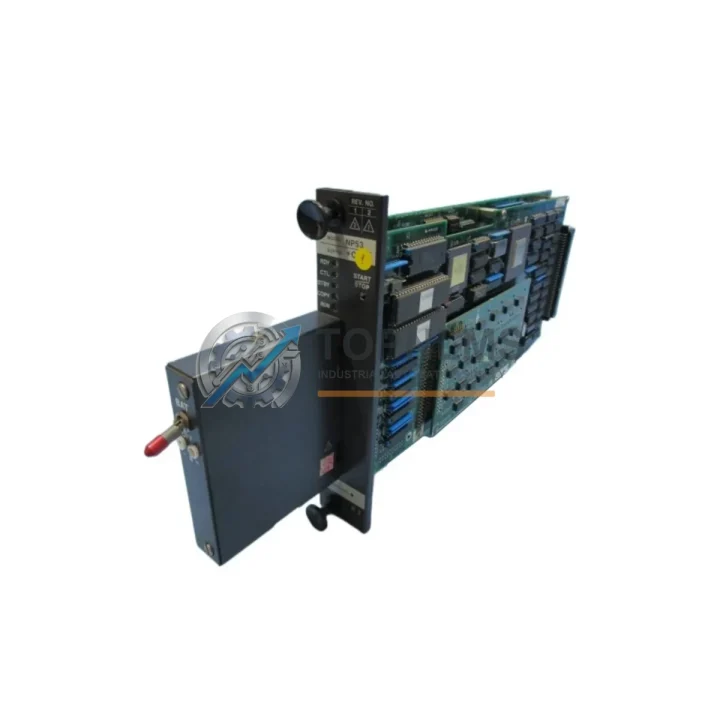
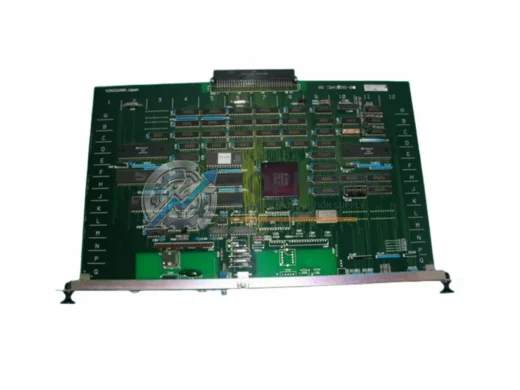
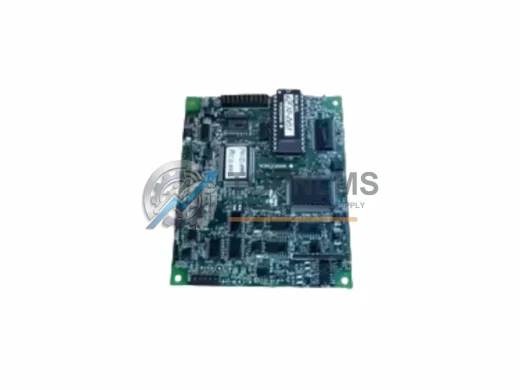
The YOKOGAWA NP53*A is the Multi-Function Control Unit (MFCU) processor card at the heart of the CS3000 Distributed Control System. As CS3000 installations age and original NP53*A units approach end-of-life or become unavailable through standard channels, plant engineers and procurement teams face a critical challenge: how to maintain system continuity without triggering a full DCS migration. This page is designed to guide you through a structured, low-risk replacement and upgrade path for the NP53*A processor card, covering wiring compatibility, communication protocols, rack installation, power supply considerations, and field commissioning — so your facility can restore full control capability with minimal downtime.
The NP53*A functions as the central processing element within the CS3000 MFCU station, executing control logic, managing I/O communication via the V-net/IP or ESB bus, and coordinating with field devices through connected I/O modules such as the AAI141, AAI143, AAV141, and ADV151 series. When replacing a failed or end-of-life NP53*A, it is essential to verify that the replacement unit carries the same hardware revision suffix and firmware compatibility level as the original, since CS3000 employs a tightly coupled hardware-software architecture. A mismatch in revision can prevent the MFCU from loading the resident control database or communicating correctly with the SCS (Safety Control Station) if one is present in the same cabinet.
From a physical installation standpoint, the NP53*A slots directly into the MFCU base unit — typically the AFV10S or AFV30S chassis — using the standard CS3000 card-edge connector. No mechanical modification to the rack or cabinet is required. The card draws power from the CS3000 redundant power supply modules (e.g., the APW11S or APW12S), and the existing 24 VDC bus within the MFCU chassis is fully compatible. Engineers performing the swap should follow the CS3000 hot-standby switchover procedure if a redundant NP53*A pair is installed: force the standby card to active, remove the failed primary, insert the replacement, and allow the system to synchronize the control database automatically before returning to redundant operation.
Communication compatibility is a primary concern during any CS3000 processor replacement. The NP53*A communicates upstream to the HIS (Human Interface Station) and ENG (Engineering Station) via V-net, Yokogawa’s proprietary token-ring control network. Downstream, it manages field I/O through the ESB (Extended SB) bus connecting to remote I/O nodes. Both communication paths are preserved when replacing like-for-like NP53*A units, and no changes to the V-net coaxial cabling, BNC terminators, or ESB trunk cables are necessary. If your site is also upgrading from CS3000 to CENTUM VP as part of a broader modernization initiative, the NP53*A replacement can serve as an interim measure while the migration project is planned, allowing continued production without interruption.
For sites considering a partial migration — retaining the CS3000 field wiring and I/O infrastructure while upgrading the controller layer — the NP53*A replacement is often the most cost-effective first step. Existing marshalling cabinets, field junction boxes, and instrument loops connected to AAI, AAV, and ADV series I/O cards remain fully operational. The control logic resident in the FCS (Field Control Station) database does not require modification when performing a processor card swap within the same hardware generation. This dramatically reduces the engineering hours and validation effort compared to a full system replacement.
Compatibility Comparison Table
| Parameter |
Original NP53*A |
Replacement NP53*A (TOPNLMS Supply) |
| Part Number |
NP53*A (suffix varies by revision) |
NP53*A (matched revision supplied) |
| Compatible DCS Platform |
YOKOGAWA CS3000 / CS1000 |
YOKOGAWA CS3000 / CS1000 |
| Card Function |
MFCU Processor (Multi-Function Control Unit) |
MFCU Processor (Multi-Function Control Unit) |
| Chassis Compatibility |
AFV10S / AFV30S MFCU Base Unit |
AFV10S / AFV30S MFCU Base Unit |
| Communication Protocol |
V-net (token ring), ESB bus |
V-net (token ring), ESB bus |
| Power Supply Compatibility |
APW11S / APW12S (24 VDC bus) |
APW11S / APW12S (24 VDC bus) |
| I/O Module Compatibility |
AAI, AAV, ADV, ADA series I/O cards |
AAI, AAV, ADV, ADA series I/O cards |
| Redundancy Support |
Hot-standby dual processor |
Hot-standby dual processor |
| Installation Method |
Direct card-edge insertion, no tools |
Direct card-edge insertion, no tools |
| Wiring Changes Required |
None |
None |
| Control Database Reload |
Auto-sync from active processor |
Auto-sync from active processor |
| Warranty |
OEM (expired for legacy units) |
12-Month Warranty (TOPNLMS) |
Seamless Upgrade Solutions
A successful NP53*A replacement rarely occurs in isolation. In most CS3000 modernization projects, the processor card swap is accompanied by inspection and, where necessary, replacement of adjacent components that share the same operational lifecycle. The AFV10S or AFV30S MFCU base unit chassis should be inspected for backplane connector wear before inserting a new NP53*A, as a degraded backplane can cause intermittent communication faults that are difficult to distinguish from processor card failures. Similarly, the APW11S redundant power supply modules that feed the MFCU chassis are often replaced concurrently, since power supply degradation is a leading cause of processor card stress and premature failure in aging CS3000 installations.
On the I/O side, AAI141 and AAI143 analog input modules connected to the MFCU via the ESB bus should be verified for firmware compatibility with the replacement NP53*A revision. In many sites, AAV141 analog output modules and ADV151 digital I/O modules have been in continuous service for over a decade and may benefit from replacement as part of the same maintenance window. Replacing these I/O cards while the MFCU is already offline for the processor swap eliminates the need for a second planned outage.
For sites that rely on the NL10W or NL20W V-net interface cards installed in the HIS engineering workstation to communicate with the CS3000 FCS, it is advisable to verify that the V-net driver software version on the HIS is compatible with the replacement NP53*A firmware. In some revision combinations, a firmware delta between the processor card and the HIS V-net interface can cause intermittent tag update delays. The AIP829 programming cable and associated CS3000 Builder software are required for any post-replacement firmware verification or control logic audit, and TOPNLMS can advise on sourcing these accessories if needed.
Where the CS3000 installation interfaces with a third-party SCADA or historian system via Modbus TCP or OPC DA, the communication gateway module — often a Yokogawa ALE111 Ethernet communication module or a third-party protocol converter — should be tested after the NP53*A replacement to confirm that tag mapping and data polling rates are unaffected. This is particularly important in refinery and petrochemical applications where the historian data continuity is subject to regulatory audit requirements.
Retrofit Guidance FAQ
Q: Do I need to rewire any field cables when replacing the NP53*A?
No. The NP53*A is an internal processor card within the MFCU chassis. All field wiring terminates at the I/O module terminal blocks (AAI, AAV, ADV series), which are not disturbed during a processor card replacement. The only connections involved are the card-edge backplane connector and, if applicable, the V-net coaxial cable attached to the MFCU station’s V-net interface port.
Q: Will my existing CS3000 control logic (FCS database) need to be reloaded?
In a redundant MFCU configuration, the replacement NP53*A will automatically synchronize its control database from the active processor after insertion. In a simplex (non-redundant) configuration, the FCS database must be downloaded from the ENG station using CS3000 Builder after the replacement card is installed and powered. This download procedure typically takes 5–15 minutes depending on database size.
Q: Is the NP53*A compatible with both CS3000 and CS1000 systems?
The NP53*A is primarily designed for CS3000 MFCU stations. Compatibility with CS1000 depends on the specific hardware revision and firmware version. Please provide your system generation and existing card revision suffix when placing an order so TOPNLMS can confirm the correct match.
Q: What communication protocols does the replacement NP53*A support?
The NP53*A communicates via Yokogawa’s proprietary V-net token-ring protocol (upstream to HIS/ENG) and the ESB bus (downstream to remote I/O nodes). It does not natively support Ethernet-based protocols such as Modbus TCP or PROFINET; those functions are handled by dedicated communication modules installed separately in the CS3000 architecture.
Q: How much physical space does the replacement require in the control cabinet?
The NP53*A occupies a single card slot in the AFV10S or AFV30S MFCU base unit. No additional cabinet space is required. The card dimensions and mounting mechanism are identical to the original, ensuring a direct drop-in fit without any mechanical modification to the existing cabinet layout.
Q: Can the replacement be performed while the plant is running?
In a redundant MFCU configuration, the replacement can be performed online using the CS3000 hot-standby switchover procedure, with no interruption to control output. In a simplex configuration, a planned shutdown of the affected FCS station is required. TOPNLMS recommends coordinating the replacement with your site’s planned maintenance window to minimize production impact.
Warranty Assurance
Every NP53*A processor card supplied by TOPNLMS is covered by a 12-month warranty from the date of shipment. Prior to dispatch, each unit undergoes a multi-point outgoing inspection that includes visual examination of the PCB, connector integrity check, and functional power-on verification where test equipment permits. Units that do not pass inspection are quarantined and not shipped.
In the event of a warranty claim, TOPNLMS provides a replacement unit or full refund within the warranty period, subject to inspection of the returned item. Our after-sales response target is 24 hours for initial acknowledgment and 72 hours for resolution proposal. Shipping for warranty replacements is coordinated on a case-by-case basis depending on destination and urgency.
For procurement teams requiring documentation, TOPNLMS can provide a packing list, commercial invoice, and certificate of conformance with each shipment. Export from Xiamen, China is handled via DHL, FedEx, or UPS Express, with typical transit times of 3–7 business days to most international destinations. Expedited shipping options are available for emergency breakdown situations.
TOPNLMS maintains a standing inventory of CS3000 legacy components to support long-term plant maintenance programs. If your facility operates multiple CS3000 FCS stations and requires a framework agreement for ongoing spare parts supply, please contact our technical sales team to discuss volume pricing and reserved stock arrangements.