
Yokogawa
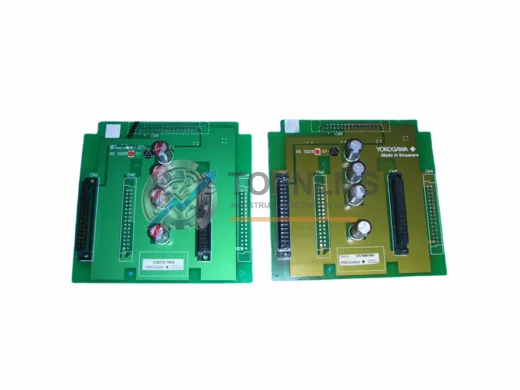
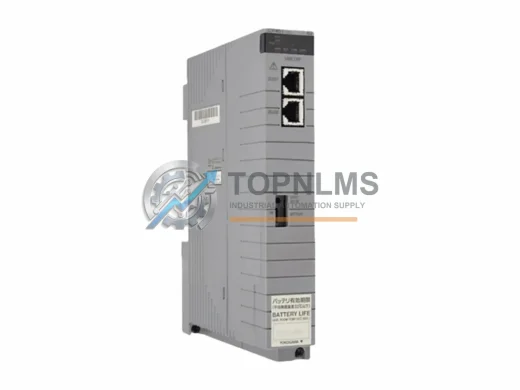
YOKOGAWA ASS9262AT-1 Replacement for CENTUM CS3000
ASS9262AT-1YOKOGAWA ASS9262AT-1 DCS communication board replacement for CENTUM CS3000. Compatible upgrade solution. 12-month warranty. Fast global shipping from stock.
Request availability, condition, lead time and export shipping details for NFBU200-S01 S1.
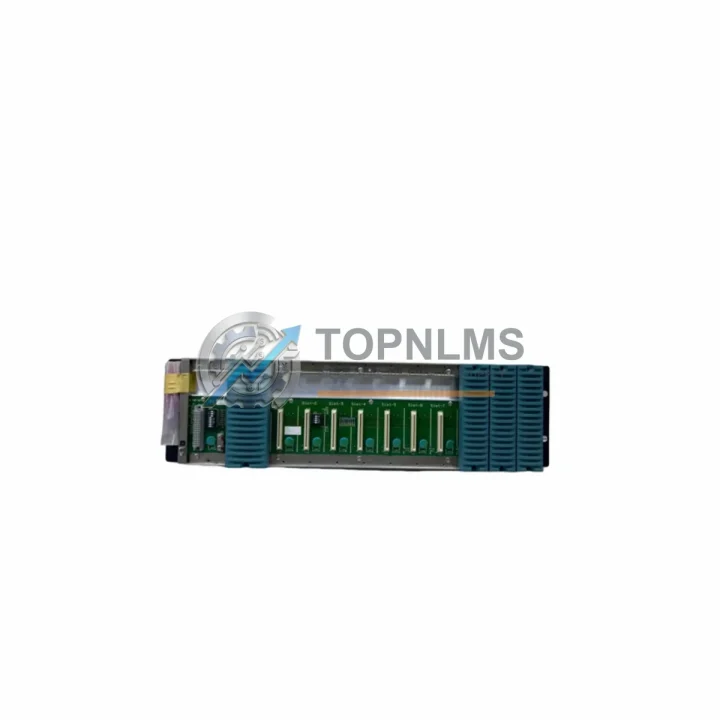
Send this exact part number, quantity and destination country. TOPNLMS will confirm availability, condition and export lead time before quotation.
When a CENTUM VP or ProSafe-RS distributed control system reaches end-of-life on its fieldbus infrastructure, the Yokogawa NFBU200-S01 S1 Fieldbus Node Base Unit is the authoritative drop-in replacement that restores full FOUNDATION Fieldbus H1 segment integrity without forcing a wholesale controller overhaul. Facilities running legacy NFBU100 or first-generation NFBU200 variants frequently encounter discontinued firmware support, degraded segment communication, and unavailable spare parts — all of which translate directly into unplanned downtime and production loss. The NFBU200-S01 S1 addresses every one of those failure modes while preserving the existing wiring infrastructure, cabinet footprint, and CENTUM VP engineering database.
The unit mounts on the standard Yokogawa node base rail and connects to the existing FOUNDATION Fieldbus H1 trunk cable without re-termination. Engineers who have previously worked with the NFBU100 series will find the DIN-rail profile and terminal block pitch identical, meaning no cabinet modification is required. Power draw is supplied through the existing FCS (Field Control Station) power bus, and the unit is fully compatible with the KFCS, LFCS2, and PFCS controller families that form the backbone of most CENTUM VP installations. Where a site also operates ProSafe-RS safety instrumented systems, the NFBU200-S01 S1 can coexist on the same fieldbus segment without protocol conflict, provided the segment load calculation is verified against the updated device descriptor files.
From a programming perspective, the migration path is non-disruptive. The CENTUM VP engineering environment recognizes the NFBU200-S01 S1 under the same device class as its predecessor, so existing function block assignments, PID loop configurations, and alarm setpoints are retained in the project database. Technicians do not need to rebuild the fieldbus segment from scratch; a device replacement procedure within the CENTUM VP builder tool re-links the physical node to the existing logical address. This dramatically reduces the engineering hours required for a hot-standby cutover and allows the replacement to be scheduled within a standard maintenance window rather than a full plant shutdown.
Sites that are simultaneously upgrading their I/O infrastructure will often pair the NFBU200-S01 S1 with Yokogawa’s ALF111 FOUNDATION Fieldbus interface module and the AAI141 or AAI543 analog input modules to consolidate legacy 4–20 mA field instruments onto the digital fieldbus backbone. Where intrinsic safety barriers are in use, the existing MTL or P+F IS barriers remain compatible with the H1 segment topology supported by the NFBU200-S01 S1. For sites that have already migrated their HMI layer to FAST/TOOLS or Exaquantum, the fieldbus node replacement is transparent at the historian and reporting level — tag names and engineering units carry over without reconfiguration.
Cabinet space is a frequent constraint in brownfield retrofit projects. The NFBU200-S01 S1 occupies the same physical envelope as the units it replaces, so no additional DIN rail space or cable tray rerouting is needed. Where a site is also replacing the FCS power supply module — commonly the PW481 or PW482 — the combined replacement can be executed in a single outage window. Similarly, if the project scope includes refreshing the ESB (Enhanced Signal Bus) coupler or the VL-net communication card within the FCS cabinet, the NFBU200-S01 S1 installation can be sequenced to follow those upstream changes without creating a dependency conflict.
For facilities managing a phased migration from an older Yokogawa YEWPACK or MICRO-XL system toward a full CENTUM VP architecture, the NFBU200-S01 S1 serves as a stable interim component that supports the fieldbus segment while the controller migration proceeds loop by loop. This approach minimizes capital expenditure by allowing the fieldbus infrastructure to be upgraded independently of the controller hardware refresh cycle.
| Attribute | Legacy NFBU100 / Early NFBU200 | NFBU200-S01 S1 (This Unit) |
|---|---|---|
| Fieldbus Protocol | FOUNDATION Fieldbus H1 | FOUNDATION Fieldbus H1 ✓ |
| Compatible Controllers | KFCS, LFCS (limited) | KFCS, LFCS2, PFCS, SFCS ✓ |
| Mounting | Node base rail (proprietary) | Same node base rail ✓ (no modification) |
| Terminal Block Pitch | Standard Yokogawa pitch | Identical pitch ✓ (no rewiring) |
| Power Supply | FCS power bus | FCS power bus ✓ (PW481/PW482 compatible) |
| ProSafe-RS Coexistence | Limited / not supported | Supported ✓ (verify segment load) |
| CENTUM VP Engineering DB | Partial compatibility | Full compatibility ✓ (same device class) |
| Firmware Support Status | Discontinued | Current ✓ |
| Replacement Recommendation | Immediate replacement advised | Direct drop-in replacement ✓ |
| Warranty | N/A (EOL) | 12-Month Warranty ✓ |
A complete fieldbus node migration rarely involves a single component. In practice, the NFBU200-S01 S1 replacement is most effective when coordinated with the surrounding system elements. The ALF111 FOUNDATION Fieldbus interface module is the most common companion upgrade, providing the H1 link between the FCS and the node base. Where the existing ALF111 units are approaching their recommended service interval, replacing them in the same outage window eliminates a second planned shutdown. On the I/O side, AAI141 analog input modules and ADV151 digital input modules are frequently refreshed alongside the node base to ensure the entire fieldbus segment benefits from current firmware and extended MTBF ratings.
Sites that rely on the Yokogawa AIP588 or AIP829 intrinsic safety power conditioner for hazardous-area field instruments should verify conditioner compatibility with the updated segment configuration before commissioning. For communication infrastructure, the VL-net interface card within the FCS cabinet and the ESB coupler module are worth inspecting during the same maintenance window — both are common single points of failure in aging CENTUM VP installations. Where the project also involves HMI refresh, the Yokogawa FAST/TOOLS OPC server configuration requires no changes when the fieldbus node is replaced with the NFBU200-S01 S1, as the tag structure is preserved at the FCS level. Finally, for sites that use a dedicated fieldbus segment power supply conditioner such as the Relcom FPS-1 or equivalent, the NFBU200-S01 S1 operates within the standard H1 power budget and requires no conditioner resizing in most single-segment configurations.
Q: Do I need to rewire the H1 trunk cable when replacing the node base unit?
A: No. The NFBU200-S01 S1 uses the same terminal block pitch and connector layout as the NFBU100 and early NFBU200 units. The existing trunk cable and spur wiring connect directly without modification.
Q: Will my existing CENTUM VP project database recognize the new unit?
A: Yes. The NFBU200-S01 S1 is registered under the same device class in the CENTUM VP engineering environment. Use the device replacement function in the builder tool to re-link the physical node to the existing logical address — no function block rebuild is required.
Q: Is the unit compatible with ProSafe-RS safety segments on the same fieldbus trunk?
A: Coexistence is supported, but a segment load calculation must be performed using the updated device descriptor files to confirm that the total H1 segment current budget is not exceeded.
Q: What communication protocols does the NFBU200-S01 S1 support?
A: FOUNDATION Fieldbus H1 is the primary protocol. The unit does not natively support HART or PROFIBUS; those field instruments require separate interface modules within the FCS cabinet.
Q: How much physical space does the replacement require?
A: The NFBU200-S01 S1 occupies the same DIN-rail footprint as the units it replaces. No additional cabinet space, cable tray modification, or panel cutout is required.
Q: Can the replacement be performed during a hot-standby cutover without a full plant shutdown?
A: In redundant FCS configurations, the node base replacement can typically be scheduled within a standard maintenance window. Consult the CENTUM VP maintenance manual for the specific hot-standby cutover procedure applicable to your FCS model.
Every NFBU200-S01 S1 unit shipped by TOPNLMS carries a 12-month warranty covering manufacturing defects and functional failures under normal operating conditions. Prior to dispatch, each unit undergoes a pre-shipment functional check to verify communication integrity, power draw within specification, and physical condition of all connectors and terminal blocks. Units that do not pass the outgoing inspection are not shipped.
In the event of a warranty claim, TOPNLMS provides a replacement unit or full refund within the warranty period. Our after-sales response target is one business day for initial acknowledgment and three business days for resolution confirmation. Replacement units are dispatched from our Xiamen warehouse with tracked international shipping, and expedited freight options are available for critical production environments where downtime cost is high.
For procurement teams managing approved vendor lists or requiring documentation packages, TOPNLMS can provide a test report, packing list, and commercial invoice with each shipment. Bulk orders for MRO stocking programs are accommodated with lead-time commitments confirmed at the time of purchase order.
Contact our technical sales team before placing your order if you require cross-reference confirmation, compatibility verification against your specific FCS model, or a formal quotation for a multi-unit retrofit project.
YOKOGAWA ASS9262AT-1 DCS communication board replacement for CENTUM CS3000. Compatible upgrade solution. 12-month warranty. Fast global shipping from stock.
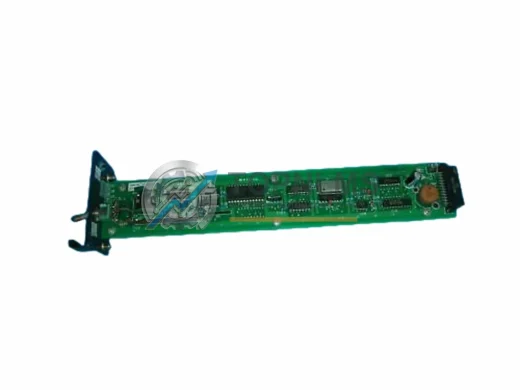
YOKOGAWA AS S9491BJ-0 Bus Coupler Module replacement for CENTUM VP DCS. Compatible upgrade solution. 12-month warranty. Fast global shipping from Xiamen.
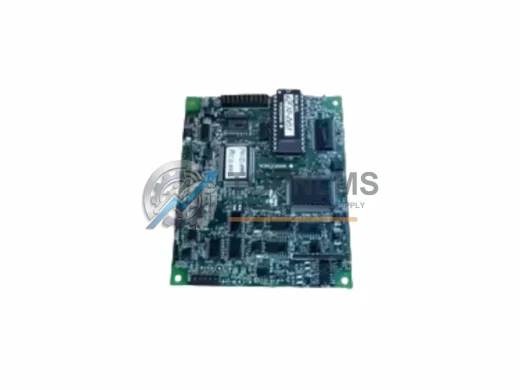
Yokogawa ASF9553EA-02 F9553ET-02 ruggedized DCS control card for CENTUM CS 3000. In stock, tested, 12-month warranty. Fast global shipping from TOPNLMS.
Yokogawa ANT421-50 S1 FF-H1 Bus Repeater replacement for CENTUM VP. Drop-in upgrade, wiring-compatible, 12-month warranty. Ships from Xiamen.
Click Quote This Model and the Part Number field will auto-fill with NFBU200-S01 S1.