Product Overview
YOKOGAWA DP97*B Original Industrial Spare — CENTUM CS3000 System Stability & Maintenance Value
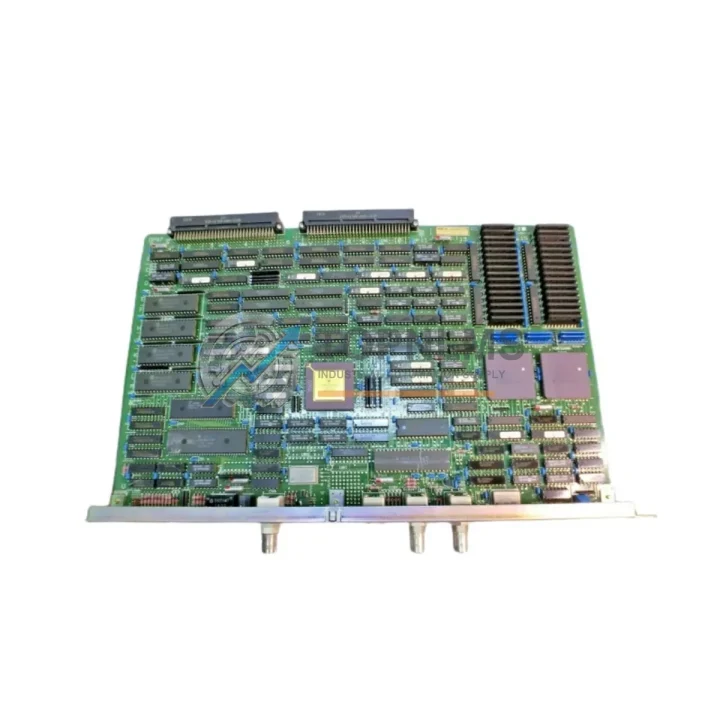
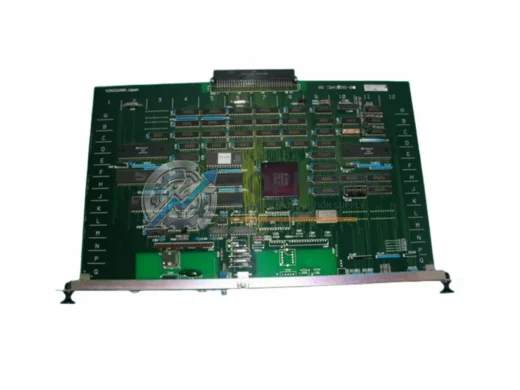
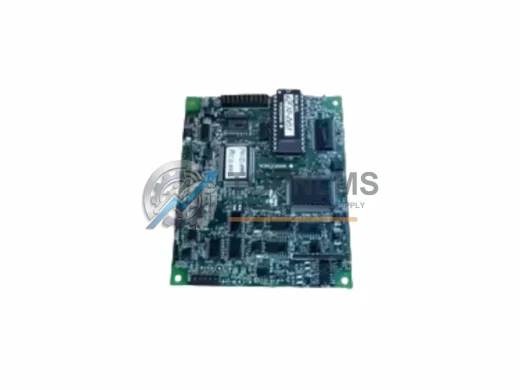
The YOKOGAWA DP97*B is an original display processor card engineered for the CENTUM CS3000 Distributed Control System (DCS) platform — one of the most widely deployed process automation architectures in refining, petrochemical, power generation, and pharmaceutical manufacturing. As a critical HMI interface component, the DP97*B governs real-time operator display rendering, alarm visualization, and process data presentation at the human-machine interface layer. When this card fails or degrades, operators lose visibility into live process conditions — a scenario that can escalate rapidly from a nuisance fault to a full production shutdown.
Maintaining a verified, tested spare of the DP97*B in your on-site inventory is one of the highest-value decisions a maintenance engineer or reliability manager can make for any facility running CENTUM CS3000. This page provides full technical specifications, a preventive maintenance framework, and strategic replacement guidance to help your team plan confidently.
Critical Technical Specs
| Part Number / SKU |
DP97*B |
| Manufacturer |
YOKOGAWA Electric Corporation |
| Series / Platform |
CENTUM CS3000 DCS |
| Module Function |
DCS Display Processor Card — HMI rendering, operator station interface |
| Product Type |
DCS Display Processor Card |
| Country of Origin |
Japan |
| Compatible Systems |
CENTUM CS3000, CENTUM CS3000 R3, compatible HIS (Human Interface Station) operator consoles |
| Installation |
Card-slot insertion into CENTUM CS3000 HIS chassis; follows standard YOKOGAWA card extraction/insertion procedure |
| Operating Environment |
Industrial control room environment; temperature and humidity per YOKOGAWA CENTUM CS3000 system specifications |
| Condition |
Original / Genuine — sourced from authorized supply channels |
| Pre-shipment Testing |
Functional verification performed prior to dispatch |
| Warranty |
12 Months from date of shipment |
| Shipping |
Worldwide; ESD-safe anti-static packaging; tracked express freight available |
| Lead Time |
Typically in stock; contact for availability confirmation |
Preventive Maintenance Strategy for CENTUM CS3000 HMI Systems
A display processor card failure rarely occurs in isolation. In most CENTUM CS3000 installations, the HIS operator station is a tightly integrated assembly of interdependent hardware. When scheduling a planned maintenance window or responding to an unplanned HMI fault, experienced maintenance teams use the DP97*B replacement as a trigger to inspect and refresh the surrounding subsystem.
During a CENTUM CS3000 HIS chassis inspection, it is standard practice to simultaneously verify the condition of the YOKOGAWA CP345 or CP451 field control unit — the upstream controller whose process data feeds the display processor. A degraded field controller will produce erratic display behavior that can be misdiagnosed as a DP97*B failure. Alongside the controller, the EB401 or EB501 ESB bus interface module should be inspected for connector wear and firmware currency, as bus communication errors are a common upstream cause of display anomalies.
Power integrity is equally critical. The YOKOGAWA PW481 or equivalent power supply module feeding the HIS chassis should be load-tested during any planned outage. A power supply operating near end-of-life will cause intermittent card resets that are difficult to trace without a spare DP97*B available for swap testing. Similarly, the ALM111 or ALM121 alarm management module should be checked — alarm flooding caused by a failing display processor can mask real process deviations.
For facilities running extended CENTUM CS3000 installations, the BCV0103 or BCV0104 V-net/Vnet-IP communication module is a high-priority inspection item. Network communication degradation between the field control domain and the HIS layer is a leading cause of display lag and screen freeze events that operators often attribute to the display card itself. Confirming the health of the communication backbone before replacing the DP97*B can save significant diagnostic time.
Maintenance teams should also audit the YOKOGAWA RIO (Remote I/O) node modules connected to the same control loop — particularly AAI141 analog input modules and ADV151 digital input modules — since signal integrity issues at the I/O layer propagate upstream and manifest as display anomalies at the HIS. Keeping one spare of each critical I/O module type alongside the DP97*B creates a comprehensive rapid-response spare kit that covers the most common failure modes in a single maintenance event.
Finally, do not overlook the physical layer: YOKOGAWA-compatible ESB bus cables and Vnet coaxial or fiber patch cables are consumable items that degrade with thermal cycling and vibration. Replacing aged cables during a planned DP97*B swap eliminates a common source of post-maintenance intermittent faults that are costly to diagnose after the maintenance window closes.
Strategic Replacement Solutions
The YOKOGAWA DP97*B has been in service across global process industries for over two decades. Many facilities operating legacy CENTUM CS3000 systems face a common challenge: the original equipment manufacturer has transitioned support resources toward newer CENTUM VP and CENTUM VP Integrated platforms, making genuine DP97*B cards increasingly difficult to source through standard distribution channels.
Sourcing a verified original DP97*B from a specialist industrial spare parts supplier — rather than attempting a cross-platform substitution — is the lowest-risk path to restoring HMI functionality. Cross-platform substitution with non-original cards risks firmware incompatibility, display rendering errors, and potential loss of alarm acknowledgment functionality, all of which carry serious process safety implications in regulated industries.
For facilities managing a planned migration from CENTUM CS3000 to CENTUM VP, maintaining a buffer stock of DP97*B cards extends the operational life of the legacy system through the transition period without requiring an accelerated and costly platform upgrade. A single verified spare can bridge a 12–24 month migration timeline, protecting capital expenditure planning and avoiding emergency procurement premiums that can reach 3–5× standard pricing during unplanned outages.
Our pre-shipment functional verification process ensures every DP97*B dispatched has been tested for display output integrity, card communication handshake, and physical connector condition. Combined with ESD-safe packaging and tracked express freight, this means your spare arrives ready for immediate installation — not requiring additional bench testing before deployment.
Support FAQ
Q1: Is the DP97*B compatible with all CENTUM CS3000 revisions?
The DP97*B is designed for the CENTUM CS3000 HIS platform. Compatibility with specific hardware revisions (R2, R3) should be confirmed against your existing HIS chassis part number and system software version. Contact us with your chassis model and we will confirm compatibility before shipment.
Q2: What does the 12-month warranty cover?
The 12-month warranty covers functional failure under normal operating conditions from the date of shipment. It includes return shipping support and replacement or refund at our discretion. Damage caused by incorrect installation, overvoltage, or physical mishandling is excluded. All warranty claims are processed within 5 business days of receipt of the returned unit.
Q3: How is the card tested before shipment?
Each DP97*B undergoes a functional verification procedure that includes power-on self-test confirmation, communication handshake verification, and physical inspection of all edge connectors and board components. A test record is maintained for each unit. Units that do not pass verification are not dispatched.
Q4: Can I keep this as a long-term inventory spare without degradation?
Yes. When stored in a climate-controlled environment (temperature 15–30°C, relative humidity below 70% non-condensing) in the original ESD-safe packaging, the DP97*B can be held as a shelf spare for 3–5 years without significant component degradation. We recommend an annual visual inspection of stored spares and a power-on test every 24 months to confirm readiness.