
Yokogawa
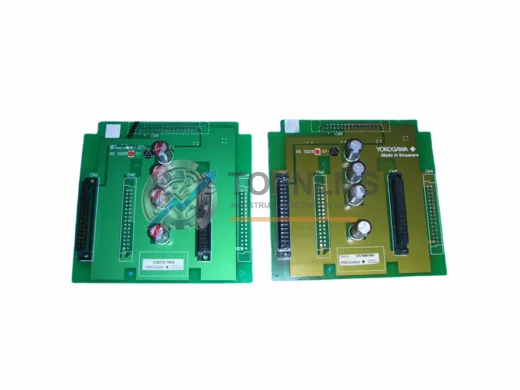
YOKOGAWA ASS9262AT-1 Replacement for CENTUM CS3000
ASS9262AT-1YOKOGAWA ASS9262AT-1 DCS communication board replacement for CENTUM CS3000. Compatible upgrade solution. 12-month warranty. Fast global shipping from stock.
Request availability, condition, lead time and export shipping details for ANB10D-425/CU2N/NDEL.
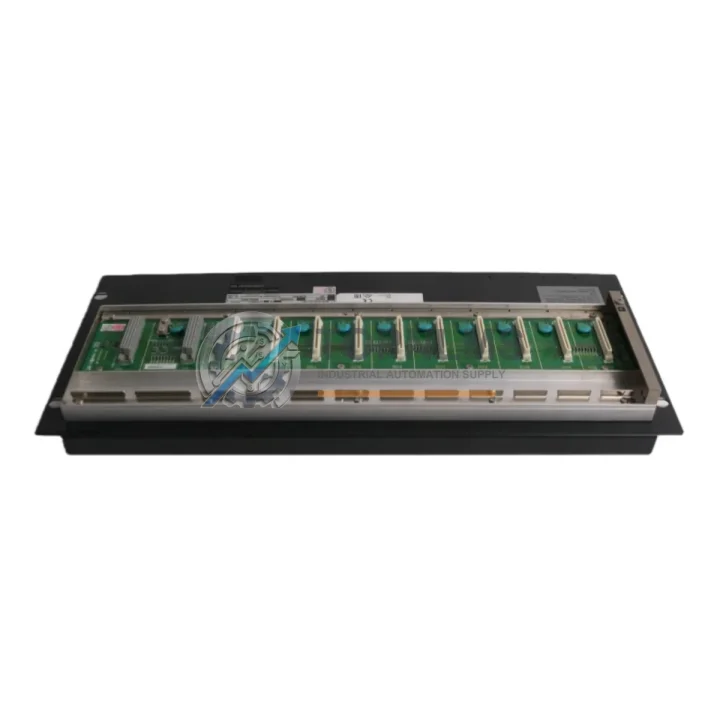
Send this exact part number, quantity and destination country. TOPNLMS will confirm availability, condition and export lead time before quotation.
In modern process industries — petrochemical, power generation, pharmaceutical, and pulp & paper — the Yokogawa CENTUM VP Distributed Control System (DCS) remains one of the most trusted and widely deployed control platforms in the world. At the heart of its field communication architecture sits the ESB (Enhanced Signal Bus) Bus Node Unit, and the Yokogawa ANB10D-425/CU2N/NDEL is a critical original spare component that ensures uninterrupted data exchange between field stations, I/O modules, and the central control domain.
Sourced as an original Yokogawa component, the ANB10D-425/CU2N/NDEL is designed for direct drop-in replacement within CENTUM VP and compatible CENTUM CS 3000 installations. Every unit dispatched from TOPNLMS undergoes functional verification and is backed by a 12-month warranty, giving maintenance engineers and procurement teams the confidence to stock this module as a long-term strategic spare.
| Parameter | Specification |
|---|---|
| Model / SKU | ANB10D-425/CU2N/NDEL |
| Manufacturer | Yokogawa Electric Corporation |
| Series / Platform | CENTUM VP / CENTUM CS 3000 (ESB Architecture) |
| Module Function | ESB Bus Node Unit — field bus communication node for DCS I/O expansion |
| Suffix Code: 425 | Power supply specification variant (24 VDC input) |
| Suffix Code: CU2N | Communication unit type, dual-redundant ESB bus interface |
| Suffix Code: NDEL | Non-incendive / standard installation, no explosion-proof certification |
| Bus Interface | ESB (Enhanced Signal Bus), high-speed deterministic fieldbus |
| Operating Voltage | 24 VDC (nominal), ±10% tolerance |
| Operating Temperature | 0°C to +55°C (storage: -20°C to +70°C) |
| Humidity | 5% to 95% RH, non-condensing |
| Weight | Approx. 2,480 g (with mounting hardware) |
| Country of Origin | Japan |
| Compatibility | CENTUM VP R4.x / R5.x / R6.x; CENTUM CS 3000 R3.x (ESB node-compatible cabinets) |
| Installation | DIN rail or dedicated Yokogawa field control station cabinet slot |
| Maintenance Recommendation | Inspect bus connectors and termination resistors every 12 months; replace if bus error rate exceeds threshold |
| Warranty | 12 Months — functional test verified prior to shipment |
A scheduled shutdown or turnaround inspection on a CENTUM VP system is never limited to a single module. The ESB Bus Node Unit (ANB10D-425/CU2N/NDEL) sits at the intersection of multiple subsystems, and experienced maintenance engineers know that replacing or inspecting this node in isolation misses the broader picture of system health.
When performing a bus node replacement or inspection, the ESB bus cable assemblies and termination resistor modules should be checked simultaneously — degraded cable shielding or a failed termination resistor is a common root cause of intermittent bus communication errors that are often misdiagnosed as node failures. Alongside the bus infrastructure, the Yokogawa AFV10S or AFV30S field control station power supply modules should be verified for output voltage stability, as undervoltage conditions accelerate bus node wear and can cause spurious resets.
Within the same field control station cabinet, the ANT1 or ANT2 series I/O modules — including analog input modules such as the AAI141 and AAI143, and digital output modules such as the ADO141 — should be inspected for connector oxidation and firmware version alignment. A bus node operating correctly but paired with I/O modules running outdated firmware can introduce latency and data integrity issues that are difficult to trace without systematic inspection.
For installations where the CENTUM VP system interfaces with safety instrumented systems (SIS), the Yokogawa ProSafe-RS communication interface modules and their associated gateway cards should be included in the inspection scope. Communication between the DCS and SIS layers depends on reliable bus node operation, and a degraded ANB10D can silently compromise safety loop response times.
Preventive maintenance planning should also account for the Yokogawa KFCS2 or LFCS2 field control station base units, which house the bus node and define the physical backplane environment. Backplane connector pins should be cleaned and inspected for mechanical stress during any bus node swap. Additionally, Yokogawa RIO (Remote I/O) bus extender modules used in distributed cabinet configurations should be tested for signal integrity whenever a bus node is replaced, as bus topology changes can affect remote node addressing.
Finally, for sites running long-term CENTUM VP installations, maintaining a strategic stock of Yokogawa SCP401 or SCP451 sequence control processors alongside ESB bus node units ensures that a single component failure does not cascade into a full station outage. Pairing bus node spares with processor module spares is a recognized best practice in DCS lifecycle management for aging plant infrastructure.
The ANB10D-425/CU2N/NDEL is a direct original replacement for aging or failed ESB bus node units in CENTUM VP and CENTUM CS 3000 systems. Unlike third-party alternatives, this original Yokogawa component requires no firmware reconfiguration, no bus address remapping, and no compatibility validation — it slots into the existing cabinet position and resumes operation within the standard CENTUM VP commissioning procedure.
For plants managing the transition from CENTUM CS 3000 to CENTUM VP, the ANB10D series bus nodes provide backward-compatible ESB communication, allowing maintenance teams to replace failed CS 3000 nodes with VP-generation hardware without requiring a full system migration. This significantly reduces the capital expenditure associated with legacy system support and extends the operational life of existing field control station infrastructure by 5–10 years.
Procurement teams sourcing this module for strategic inventory should note that lead times for original Yokogawa DCS components from authorized distribution channels can range from 8 to 20 weeks. Maintaining a minimum of one spare ANB10D-425/CU2N/NDEL per field control station cluster is a widely adopted practice in continuous process industries where unplanned downtime costs exceed the carrying cost of spare inventory by orders of magnitude. TOPNLMS maintains ready stock of this module, enabling same-week dispatch for urgent maintenance requirements.
Q1: Is the ANB10D-425/CU2N/NDEL compatible with both CENTUM VP and CENTUM CS 3000 systems?
Yes. The ANB10D series ESB Bus Node Unit is compatible with CENTUM VP (R4.x through R6.x) and CENTUM CS 3000 (R3.x) installations that use the ESB bus architecture. Confirm your field control station model (KFCS2, LFCS2, or equivalent) before ordering to ensure cabinet slot compatibility.
Q2: What testing is performed before shipment?
Every ANB10D-425/CU2N/NDEL unit dispatched by TOPNLMS undergoes a functional power-on verification and bus communication self-test. Units that fail any test parameter are quarantined and not shipped. A test report is available upon request for quality-critical procurement processes.
Q3: What does the 12-month warranty cover?
The 12-month warranty covers manufacturing defects and functional failures under normal operating conditions as specified in the Yokogawa ANB10D product documentation. It does not cover damage resulting from incorrect installation, overvoltage events, or physical mishandling. Warranty claims are processed within 5 business days of receipt of the returned unit.
Q4: How should I validate compatibility before installing a replacement bus node on a live system?
Before installation, verify the existing bus node’s suffix codes (425/CU2N/NDEL) match the replacement unit exactly. Cross-reference the field control station model and CENTUM VP software revision in your system engineering documentation. For redundant bus configurations, the replacement node should be installed in the standby position first and monitored for one full scan cycle before switching over from the active node. Contact your Yokogawa system integrator or TOPNLMS technical support if you require pre-installation compatibility confirmation.
YOKOGAWA ASS9262AT-1 DCS communication board replacement for CENTUM CS3000. Compatible upgrade solution. 12-month warranty. Fast global shipping from stock.
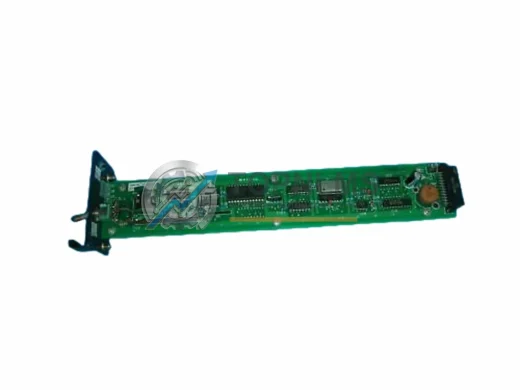
YOKOGAWA AS S9491BJ-0 Bus Coupler Module replacement for CENTUM VP DCS. Compatible upgrade solution. 12-month warranty. Fast global shipping from Xiamen.
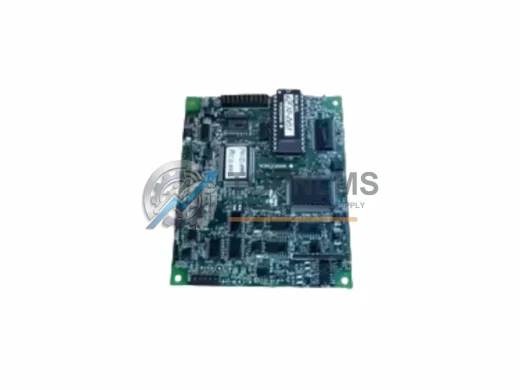
Yokogawa ASF9553EA-02 F9553ET-02 ruggedized DCS control card for CENTUM CS 3000. In stock, tested, 12-month warranty. Fast global shipping from TOPNLMS.
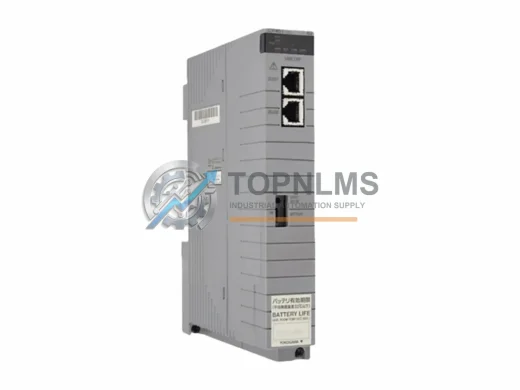
Yokogawa ANT421-50 S1 FF-H1 Bus Repeater replacement for CENTUM VP. Drop-in upgrade, wiring-compatible, 12-month warranty. Ships from Xiamen.
Click Quote This Model and the Part Number field will auto-fill with ANB10D-425/CU2N/NDEL.