
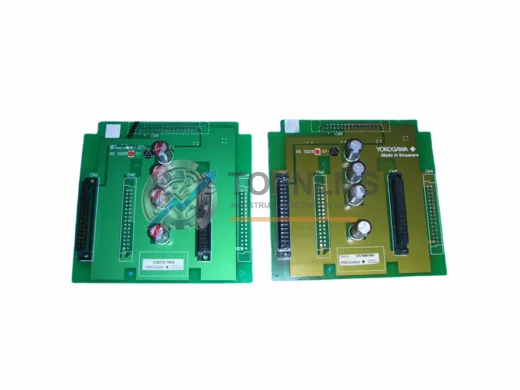
Yokogawa
YOKOGAWA ASS9262AT-1 Replacement for CENTUM CS3000
ASS9262AT-1YOKOGAWA ASS9262AT-1 DCS communication board replacement for CENTUM CS3000. Compatible upgrade solution. 12-month warranty. Fast global shipping from stock.
Request availability, condition, lead time and export shipping details for AER4D.
Send this exact part number, quantity and destination country. TOPNLMS will confirm availability, condition and export lead time before quotation.
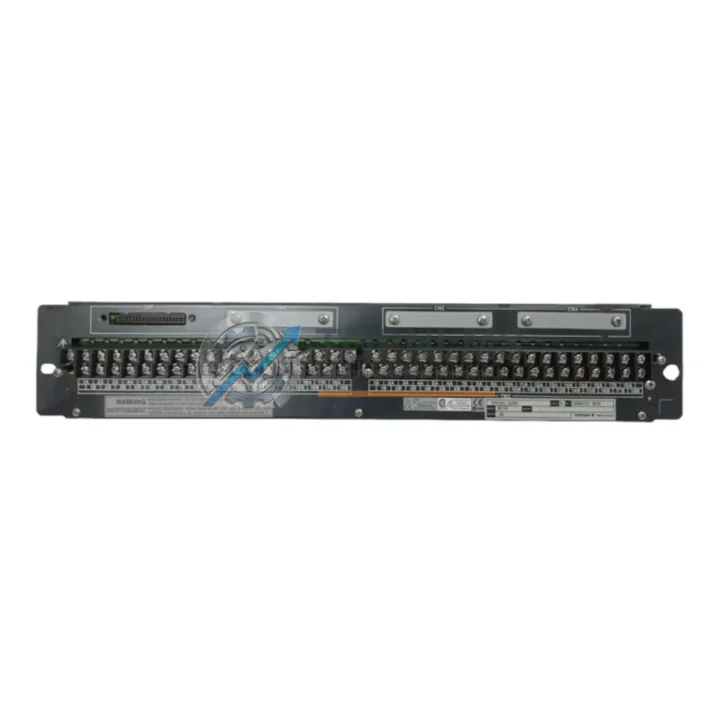
The YOKOGAWA AER4D is a field wiring terminal board designed for use within the CENTUM VP and CS 3000 Distributed Control System (DCS) platforms. As legacy CS 3000 installations age and YOKOGAWA transitions its installed base toward CENTUM VP and beyond, many facilities face the challenge of sourcing reliable AER4D replacements to maintain system continuity without triggering a full-scale control system overhaul. This product page is specifically designed to support engineers and procurement teams executing a controlled migration — whether replacing a failed unit, building a critical spare inventory, or planning a phased upgrade from CS 3000 to CENTUM VP architecture.
The AER4D terminal board serves as the physical interface between field instrument wiring and the I/O modules mounted in the YOKOGAWA FCS (Field Control Station) cabinet. It provides screw-terminal connectivity for analog and digital field signals, enabling technicians to disconnect and reconnect field wiring without disturbing the I/O module itself — a critical feature during live-system maintenance windows. When replacing an AER4D in an existing CS 3000 or CENTUM VP installation, the terminal board must match the original wiring configuration, connector type, and mounting rail specification to ensure a zero-modification swap.
For sites running the CENTUM CS 3000 platform, the AER4D is commonly paired with I/O modules such as the AAI141, AAI143, AAI841, and AAI543 analog input/output cards, as well as digital I/O modules including the ADV151 and ADV161. These modules mount directly to the FCS node unit and connect to the AER4D terminal board via a dedicated cable assembly. During a migration from CS 3000 to CENTUM VP, the AER4D terminal board can often be retained in place, with only the I/O module and FCS node requiring replacement — significantly reducing field rewiring labor and minimizing process downtime.
In CENTUM VP installations, the AER4D integrates within the AFV10D or AFV30D Field Control Units (FCUs), which replace the older FCS hardware while maintaining backward compatibility with existing field wiring infrastructure. Engineers migrating from CS 3000 to CENTUM VP should verify the terminal board revision level and cable harness compatibility before proceeding. In most documented migration projects, the AER4D terminal board, along with associated components such as the AIP588 power supply module and the ACM12 communication module, can be carried forward into the new CENTUM VP architecture without modification.
For facilities operating in hazardous or intrinsically safe environments, the AER4D is often used in conjunction with Zener barrier or galvanic isolator assemblies mounted in the marshalling cabinet. When replacing the AER4D in these configurations, it is essential to verify that the terminal numbering and signal polarity are preserved to avoid loop calibration errors during recommissioning. The AER4D’s robust screw-terminal design supports standard 0.5–2.5 mm² field wiring, compatible with the majority of existing CS 3000 and CENTUM VP marshalling cabinet layouts.
Procurement teams sourcing AER4D units for critical spare inventory should note that YOKOGAWA has progressively reduced availability of CS 3000-era components through official channels. TOPNLMS maintains verified stock of the AER4D and related CENTUM VP / CS 3000 spare parts, including terminal boards, I/O modules, and FCS node components, sourced from authorized distribution channels and subject to pre-shipment functional inspection. All units are shipped with full documentation and are covered by a 12-month warranty against manufacturing defects and functional failure.
| Parameter | Legacy: CS 3000 Configuration | Upgrade Target: CENTUM VP Configuration |
|---|---|---|
| Terminal Board Model | AER4D (CS 3000) | AER4D (CENTUM VP compatible) |
| Compatible I/O Modules | AAI141, AAI143, ADV151, ADV161 | AAI141-S00, AAI543-H00, ADV151-P00 |
| FCS / FCU Platform | KFCS, LFCS (CS 3000) | AFV10D, AFV30D (CENTUM VP) |
| Field Wiring Interface | Screw terminal, 0.5–2.5 mm² | Screw terminal, 0.5–2.5 mm² (unchanged) |
| Communication Protocol | Vnet (CS 3000 proprietary) | Vnet/IP (CENTUM VP Ethernet-based) |
| Power Supply Compatibility | AIP588 / AIP587 (24 VDC) | AIP588 / PWR48P (24 VDC, same rail) |
| Mounting Rail | DIN rail / FCS node unit | DIN rail / FCU node unit (same form factor) |
| Installation Space | Standard YOKOGAWA FCS cabinet | Standard YOKOGAWA FCU cabinet (same footprint) |
| Replacement Recommendation | Direct swap; verify cable harness revision | Retain AER4D; replace I/O module and FCU node |
| Warranty (TOPNLMS Supply) | 12-Month Warranty — All Units Pre-Inspected Before Shipment | |
A successful AER4D-based migration rarely involves a single component. In practice, engineers executing a CS 3000 to CENTUM VP transition will typically address several interconnected hardware elements within the same maintenance window. The AER4D terminal board is the anchor point for field wiring, but the surrounding system components determine whether the migration proceeds smoothly or introduces unexpected compatibility issues.
The most common companion replacement is the I/O module itself. AAI141 and AAI143 analog input modules, which connect directly to the AER4D via the standard YOKOGAWA cable harness, are frequently replaced as a matched pair with the terminal board when corrosion, connector wear, or firmware obsolescence is identified. Similarly, the ADV151 digital input module and ADV161 digital output module are often sourced alongside the AER4D when a full I/O node refresh is planned.
For sites upgrading the FCS node to CENTUM VP’s AFV10D Field Control Unit, the ACM12 communication module and the associated Vnet/IP network switch must be evaluated for compatibility with the existing plant network infrastructure. The AIP588 power supply module, which provides 24 VDC to the I/O node, is another component that procurement teams frequently include in the same purchase order as the AER4D to ensure a complete, tested spare kit is available on-site before the maintenance window begins.
In marshalling cabinet configurations, the AER4D is often installed alongside signal isolators and terminal junction assemblies. When the terminal board is replaced, it is good engineering practice to inspect and, if necessary, replace the associated cable harness connecting the AER4D to the I/O module, as connector pin wear is a common source of intermittent signal faults in aging DCS installations. For HART-enabled loops, the HART multiplexer interface card should also be verified for compatibility with the replacement AER4D revision.
TOPNLMS maintains stock of the full range of CENTUM VP and CS 3000 spare components, enabling customers to consolidate their migration procurement into a single order and reduce the logistical complexity of sourcing from multiple suppliers.
Q: Can I replace the AER4D without rewiring the field terminals?
A: Yes. The AER4D is designed as a wiring-retaining terminal board. Field wiring connects to the terminal board and remains in place when the I/O module is removed or replaced. A direct AER4D swap requires only disconnection of the cable harness to the I/O module, physical removal of the terminal board from the DIN rail, and reinstallation of the replacement unit. Field wiring does not need to be disturbed, provided the replacement unit matches the original terminal numbering and connector type.
Q: Is the AER4D compatible with both CS 3000 and CENTUM VP I/O modules?
A: The AER4D terminal board is mechanically and electrically compatible with both CS 3000 and CENTUM VP I/O modules that share the same connector standard. However, customers should verify the specific I/O module part number and revision against the AER4D revision to confirm cable harness compatibility before installation. TOPNLMS technical support can assist with cross-reference verification prior to shipment.
Q: What communication protocol changes should I expect when migrating from CS 3000 to CENTUM VP?
A: CS 3000 uses YOKOGAWA’s proprietary Vnet token-ring communication protocol, while CENTUM VP uses Vnet/IP, which is based on standard Ethernet infrastructure. The AER4D terminal board itself is protocol-agnostic — it handles field signal wiring only. The communication protocol change affects the FCS/FCU node and the plant network infrastructure, not the terminal board. This means the AER4D can be retained during a Vnet to Vnet/IP migration without modification.
Q: How much physical space does the AER4D require in the control cabinet?
A: The AER4D mounts on a standard DIN rail within the YOKOGAWA FCS or FCU node unit. Its physical dimensions are consistent across CS 3000 and CENTUM VP installations, and no additional cabinet space is required for a direct replacement. For new installations or cabinet expansions, standard YOKOGAWA FCS/FCU cabinet dimensions apply.
Q: What is the lead time for AER4D units from TOPNLMS?
A: In-stock units are typically dispatched within 1–3 business days from our Xiamen warehouse. Express international shipping options are available for urgent replacement requirements. Customers are encouraged to contact us directly at [email protected] or +86 18359293191 to confirm current stock availability and shipping timelines before placing an order.
Every AER4D unit supplied by TOPNLMS is covered by a 12-month warranty from the date of shipment. This warranty covers manufacturing defects, functional failure under normal operating conditions, and any discrepancy between the supplied unit and the agreed specification. Prior to shipment, all units undergo a pre-dispatch inspection that includes visual examination, connector integrity verification, and, where applicable, functional testing against YOKOGAWA’s published specifications for the AER4D terminal board.
In the event of a warranty claim, TOPNLMS will arrange for the return of the defective unit and dispatch a replacement from verified stock within the shortest possible timeframe to minimize impact on plant operations. Our after-sales response target is acknowledgment within 24 hours of a warranty claim submission and resolution — either replacement dispatch or confirmed repair — within 5 business days for standard cases.
For procurement teams requiring documentation for vendor qualification or incoming inspection purposes, TOPNLMS can provide a certificate of conformance, packing list, and commercial invoice with each shipment. Customers with specific quality assurance requirements, such as third-party inspection or additional functional test reports, are encouraged to discuss these requirements at the time of order placement.
TOPNLMS is committed to supporting industrial facilities through the full lifecycle of their YOKOGAWA DCS installations — from emergency replacement of failed components to planned migration projects requiring multiple spare kits. Our technical team has direct experience with CENTUM VP and CS 3000 system architecture and is available to provide pre-sales technical consultation at no charge.
© 2026 TOPNLMS. All rights reserved.
Original Source: https://topnlms.com
Contact: [email protected] | +86 18359293191
YOKOGAWA ASS9262AT-1 DCS communication board replacement for CENTUM CS3000. Compatible upgrade solution. 12-month warranty. Fast global shipping from stock.
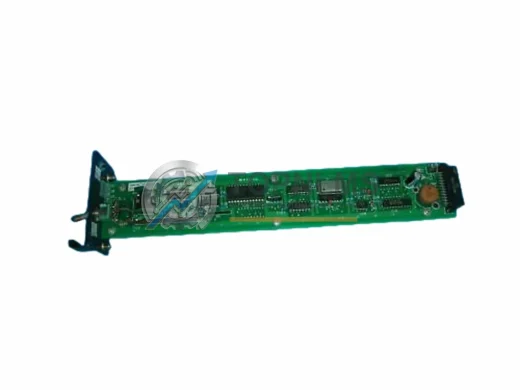
YOKOGAWA AS S9491BJ-0 Bus Coupler Module replacement for CENTUM VP DCS. Compatible upgrade solution. 12-month warranty. Fast global shipping from Xiamen.
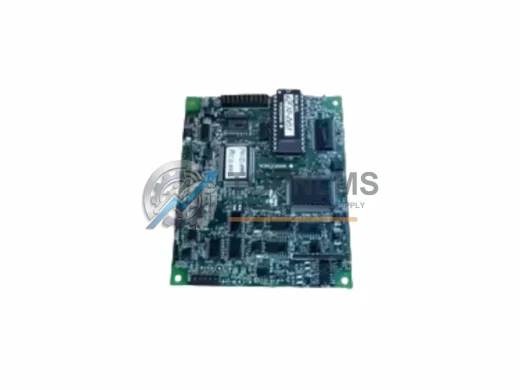
Yokogawa ASF9553EA-02 F9553ET-02 ruggedized DCS control card for CENTUM CS 3000. In stock, tested, 12-month warranty. Fast global shipping from TOPNLMS.
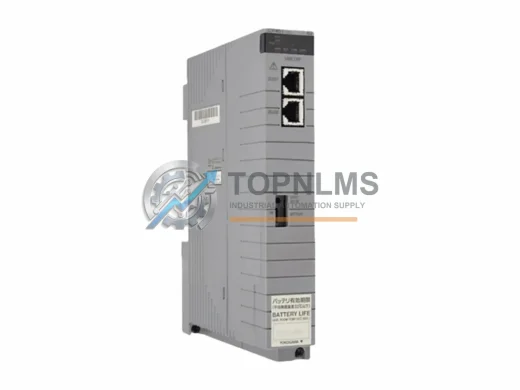
Yokogawa ANT421-50 S1 FF-H1 Bus Repeater replacement for CENTUM VP. Drop-in upgrade, wiring-compatible, 12-month warranty. Ships from Xiamen.
Click Quote This Model and the Part Number field will auto-fill with AER4D.