
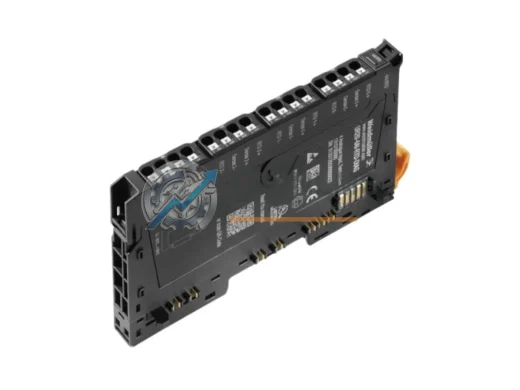
Weidmuller
Weidmuller UR20-4DI-P 1315700000 Upgrade for u-remote I/O
1315700000Weidmuller UR20-4DI-P 1315700000 – 4-Ch PNP digital input module for u-remote I/O. Drop-in replacement, wiring-compatible, 12-month warranty. Ships fast.
Request availability, condition, lead time and export shipping details for UR20-4AI-RTD-DIAG.
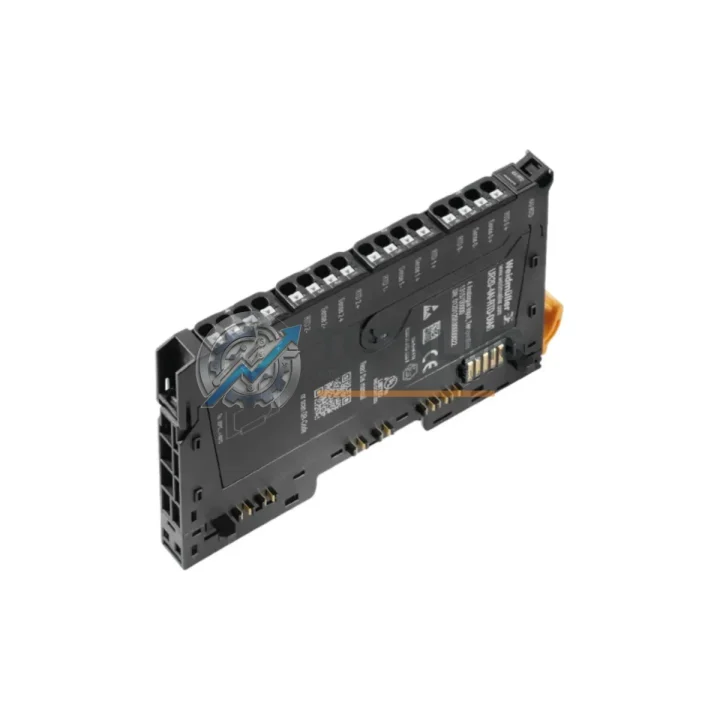
Send this exact part number, quantity and destination country. TOPNLMS will confirm availability, condition and export lead time before quotation.
The Weidmuller UR20-4AI-RTD-DIAG is a 4-channel RTD/thermocouple analog input module engineered for the u-remote UR20 distributed I/O platform. As industrial facilities retire aging PROFIBUS-based control architectures and migrate from legacy Weidmuller UR20 configurations — or from competing platforms such as Phoenix Contact Inline, Beckhoff EtherCAT I/O, or Siemens ET 200SP — this module delivers a technically sound, cost-effective replacement path that minimizes engineering rework and production downtime.
Whether your plant is decommissioning a PROFIBUS DP control cabinet, consolidating scattered I/O nodes onto a unified EtherNet/IP or PROFINET backbone, or replacing a failed end-of-life analog input card, the UR20-4AI-RTD-DIAG integrates directly into the existing UR20 backplane without mechanical modification. Its channel-level diagnostic capability — detecting wire-break and short-circuit faults per channel — makes it especially valuable in critical temperature monitoring loops where undetected sensor failures carry significant process risk.
This listing is maintained by TOPNLMS, an industrial automation component supplier specializing in PLC modules, DCS components, and distributed I/O hardware. All units are sourced from authorized channels, inspected prior to dispatch, and covered by a 12-month replacement warranty.
| Parameter | UR20-4AI-RTD-DIAG (This Unit) | Typical Legacy / Replaced Module |
|---|---|---|
| Manufacturer | Weidmuller | Weidmuller / Third-party |
| Series / Platform | u-remote UR20 | UR20 (earlier firmware), PROFIBUS DP I/O, ET 200S |
| Channel Count | 4 channels | 2–8 channels (varies by legacy module) |
| Sensor Types Supported | RTD (Pt100, Pt1000, Ni100, Ni1000) & Thermocouple (J, K, T, E, N, R, S, B) | Often RTD-only or TC-only; no unified module |
| Diagnostic Function | Channel-level wire-break, short-circuit, over/under-range | Module-level fault only (no channel diagnostics) |
| Communication Protocol | PROFINET, EtherNet/IP, Modbus TCP (via UR20 coupler) | PROFIBUS DP, DeviceNet, or proprietary bus |
| Backplane / Rack Compatibility | UR20 DIN-rail snap-fit backplane (direct plug-in) | Dedicated rack or terminal block wiring required |
| Wiring Interface | Push-in spring-clamp terminals (tool-free) | Screw terminals (rewiring adapter may be needed) |
| Power Supply | Powered via UR20 system bus (no separate 24 VDC feed) | Often requires dedicated 24 VDC module power |
| Physical Dimensions | Compact UR20 form factor (~22.5 mm width) | Varies; may require cabinet space reallocation |
| Installation Method | DIN-rail, tool-free module swap | Panel mount or dedicated rack slot |
| Replacement Recommendation | Direct drop-in for same UR20 slot; firmware update recommended | Requires coupler upgrade if migrating from PROFIBUS |
| Warranty | 12 Months (TOPNLMS) | N/A (end-of-life / no support) |
A successful migration to the UR20-4AI-RTD-DIAG rarely involves a single module swap. Engineers upgrading from legacy PROFIBUS or DeviceNet architectures must first evaluate the UR20-FBC-PN-IRT PROFINET coupler, which serves as the communication gateway between the UR20 I/O rail and the Ethernet-based controller network. If the existing cabinet uses an older UR20-FBC-PB PROFIBUS field bus coupler, replacing it with a PROFINET or EtherNet/IP variant is typically the first step before any I/O module substitution.
On the power distribution side, the UR20-PF-O-1DI-SIL power feed module and standard UR20-PF-I input power feed modules ensure stable 24 VDC segmentation across the I/O rail — critical when adding diagnostic-capable modules that report channel-level faults back to the controller. For mixed analog and digital I/O retrofits, the UR20-4DI-P digital input module and UR20-4DO-P digital output module are commonly installed alongside the RTD analog input card to complete a temperature-plus-status monitoring loop.
Where the legacy system relied on separate signal conditioning hardware, the UR20-4AI-RTD-DIAG eliminates the need for external RTD transmitters or signal isolators in most standard applications. However, in high-noise environments or where intrinsic safety barriers were previously installed, a Weidmuller WAS4 or ACT20P signal conditioner may still be retained upstream of the module terminals. For programming and commissioning, the Weidmuller u-remote Configuration Tool (u-remote CT) or a standard TIA Portal GSDML import is used to configure channel parameters, filter times, and diagnostic response behavior — no proprietary programmer cable is required beyond a standard RJ45 Ethernet connection to the coupler.
In control cabinets where HMI integration is part of the upgrade scope, the UR20 system communicates natively with Siemens SIMATIC HMI panels, Weintek cMT series, and other PROFINET-compatible operator panels via the coupler’s Ethernet port, eliminating the need for additional protocol converters. For larger retrofit projects involving multiple UR20 rails, the UR20-4AI-UI-16 universal analog input module can complement the RTD-specific UR20-4AI-RTD-DIAG where voltage/current signals are also present in the same cabinet section.
Q: Can I replace a non-diagnostic RTD module (e.g., UR20-4AI-RTD) with the UR20-4AI-RTD-DIAG without changing the coupler firmware?
A: In most cases, yes. The UR20-4AI-RTD-DIAG is backward-compatible with existing UR20 backplanes. However, to enable channel-level diagnostic reporting in the controller, the coupler firmware should be at version 3.x or later, and the GSDML file in TIA Portal or Step 7 must be updated to the diagnostic-capable variant. A firmware update to the UR20 coupler is recommended but not mandatory for basic analog measurement functionality.
Q: Do I need to rewire the RTD sensor cables when swapping modules?
A: No rewiring is required if the existing installation uses the UR20 push-in spring-clamp terminal interface. The channel pin assignment for 2-wire, 3-wire, and 4-wire RTD connections is identical between the standard and DIAG variants. For thermocouple inputs, verify the compensation cable type matches the configured TC type in the module parameters.
Q: We are migrating from a PROFIBUS DP system. What is the migration path?
A: Replace the UR20-FBC-PB PROFIBUS coupler with a UR20-FBC-PN-IRT (PROFINET) or UR20-FBC-EIP (EtherNet/IP) coupler. The I/O modules — including the UR20-4AI-RTD-DIAG — remain physically unchanged. Update the controller’s hardware configuration with the new GSDML/EDS file. PROFIBUS GSD-based address mapping must be remapped to PROFINET slot/subslot addressing, which typically requires 2–4 hours of engineering time per cabinet.
Q: How much DIN-rail space does the UR20-4AI-RTD-DIAG require?
A: The module occupies a single UR20 slot at approximately 22.5 mm width. It is mechanically identical in footprint to all other UR20 I/O modules, so no cabinet space reallocation is needed when replacing an existing UR20 module. If migrating from a larger-format legacy module, additional DIN-rail space will be freed.
Q: Is the module compatible with Siemens S7-300/400 or S7-1500 controllers?
A: Yes. The UR20 system communicates with any PROFINET IO controller, including Siemens S7-1500, S7-300 with CP 343-1, and S7-400 with CP 443-1. Import the Weidmuller GSDML file into TIA Portal, assign the coupler as a PROFINET IO device, and configure the UR20-4AI-RTD-DIAG slot parameters (channel type, filter, diagnostic enable) within the hardware configuration.
Q: What happens if a sensor wire breaks during operation?
A: The UR20-4AI-RTD-DIAG detects wire-break conditions at the channel level and reports a diagnostic alarm to the controller via PROFINET or EtherNet/IP. The affected channel’s process value is set to a configurable substitute value (e.g., maximum range or last valid value), while the remaining three channels continue normal operation. This behavior is configurable via the module parameters in TIA Portal or the u-remote Configuration Tool.
Every UR20-4AI-RTD-DIAG unit dispatched by TOPNLMS is covered by a 12-month replacement warranty from the date of delivery. Prior to shipment, each module undergoes a functional inspection including power-on verification and communication handshake testing with a UR20 coupler. Units are packed in anti-static ESD packaging with foam protection to prevent transit damage.
In the event of a warranty claim, TOPNLMS provides a direct replacement dispatch — no repair loop, no extended RMA wait. Our standard response time for warranty inquiries is within 1 business day. Replacement units are shipped from our Xiamen warehouse via DHL Express or SF International, with typical transit times of 3–7 business days to most destinations.
For procurement teams requiring documentation, we can provide a test report, packing list, and commercial invoice with each shipment. Bulk orders (5+ units) qualify for priority allocation and dedicated account support. For project-based procurement involving multiple UR20 module types, contact our technical sales team to discuss consolidated sourcing, lead time guarantees, and volume pricing.
Stock availability is updated regularly. In-stock units ship within 1–2 business days of order confirmation. For urgent replacement requirements — particularly in unplanned downtime scenarios — please contact us directly to confirm same-day dispatch eligibility.
© 2026 TOPNLMS. All rights reserved.
Original Source: https://topnlms.com
Contact: [email protected] | +86 18359293191
Weidmuller UR20-4DI-P 1315700000 – 4-Ch PNP digital input module for u-remote I/O. Drop-in replacement, wiring-compatible, 12-month warranty. Ships fast.
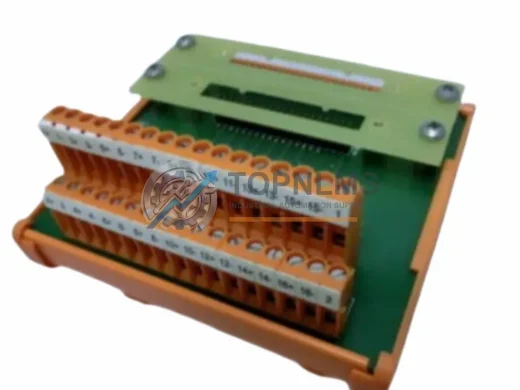
Weidmuller AAI143/543-YG UR20 u-Remote 4-Ch Analog I/O Module. Rugged, EMI-resistant, 12-month warranty. In stock — fast global shipping from TOPNLMS.
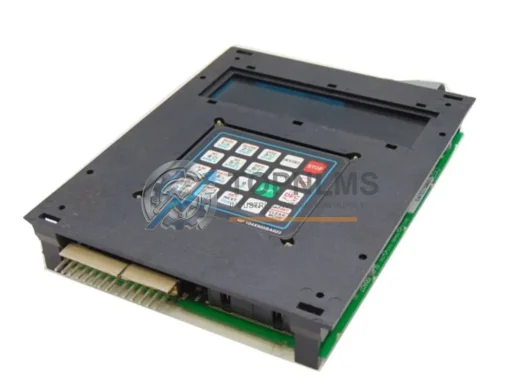
GE NP 104X905BA603 ruggedized membrane keypad panel for Mark IV/V turbine control. EMI-resistant, industrial-grade. In stock, tested, 12-month warranty.
Emerson UNI1401 16-Ch Digital Output Module for Ovation DCS. Ruggedized for harsh environments. In stock, tested, 12-month warranty. Ships from TOPNLMS.
Click Quote This Model and the Part Number field will auto-fill with UR20-4AI-RTD-DIAG.