
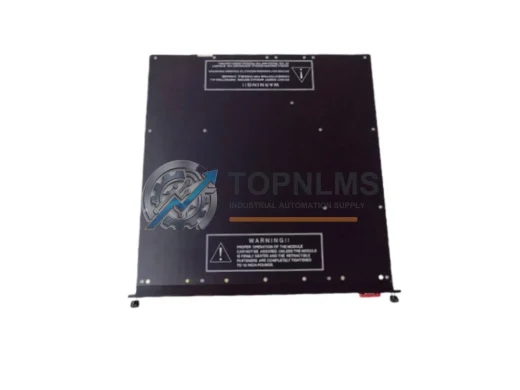
Triconex
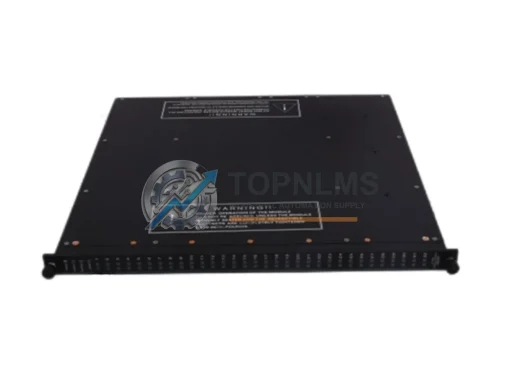
Triconex EPI 3382S2 Ruggedized TMR Safety Processor Module
EPI 3382S2Triconex EPI 3382S2 TMR main processor for Tricon SIS safety systems. Ruggedized for harsh environments. In stock, tested, 12-month warranty. Fast global shipping.
Request availability, condition, lead time and export shipping details for 3003.
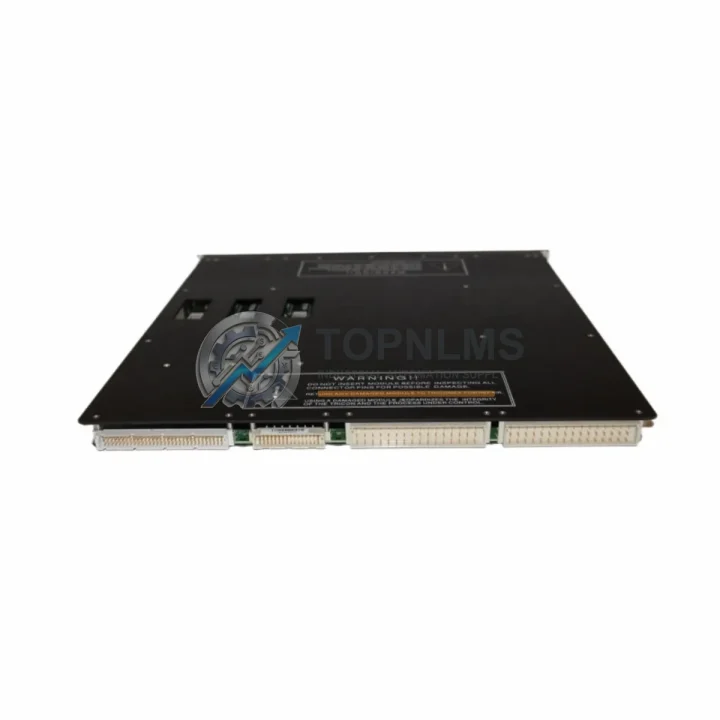
Send this exact part number, quantity and destination country. TOPNLMS will confirm availability, condition and export lead time before quotation.
The TRICONEX 3003 is the main processor module for the Tricon Triple Modular Redundant (TMR) Safety System, one of the most widely deployed SIL 3–certified safety controllers in oil & gas, petrochemical, power generation, and continuous-process manufacturing. As a genuine original spare, the 3003 processor is the cornerstone of any responsible preventive maintenance and emergency-replacement strategy for facilities running Tricon-based safety instrumented systems (SIS).
Sourced directly from authorized supply channels, every TRICONEX 3003 unit stocked by TOPNLMS undergoes pre-shipment functional verification and ships with a 12-month replacement warranty. Whether you are building a critical-spare inventory, responding to an unplanned shutdown, or executing a scheduled turnaround, having a verified 3003 processor on the shelf eliminates the single largest variable in Tricon system recovery time.
| Parameter | Specification |
|---|---|
| Part Number | 3003 |
| Manufacturer | TRICONEX (Schneider Electric) |
| Series / Platform | Tricon TMR (Triple Modular Redundant) |
| Module Function | Main Processor – executes safety application logic across all three TMR legs |
| Safety Integrity Level | SIL 3 (IEC 61508 certified) |
| Supply Voltage | +5 VDC (supplied via Tricon chassis backplane) |
| Communication Ports | Dual RS-232 / RS-485 serial; compatible with TriStation 1131 programming environment |
| Memory | On-board flash and RAM for application program and configuration storage |
| Chassis Compatibility | Tricon 3000 series chassis; compatible with 3006, 3007, 3008 chassis variants |
| Operating Temperature | 0 °C to +60 °C |
| Relative Humidity | 5 % to 95 % non-condensing |
| Dimensions (H × W × D) | Standard Tricon single-slot module form factor |
| Weight | Approx. 500 g |
| Country of Origin | United States |
| Condition | Original / Genuine – pre-shipment tested |
| Warranty | 12 Months (replacement) |
| Shipping | Worldwide; DHL / FedEx express available |
A Tricon TMR safety system is only as reliable as its weakest module. When a scheduled inspection or fault alarm points to the 3003 main processor, experienced maintenance engineers know that a processor swap is rarely an isolated event. The TMR architecture distributes logic execution across three independent legs, meaning that any degradation in one leg’s processor can silently erode the system’s fault-tolerance margin long before a trip occurs.
During a planned processor replacement or annual SIS proof test, it is best practice to simultaneously inspect and, where appropriate, pre-stage spares for the modules that interact most closely with the 3003. The TRICONEX 3000 Power Supply Module (e.g., 8310 or 8312) should be load-tested and its output voltages verified, since a marginal power supply is a common root cause of intermittent processor faults. Alongside the power supply, the Tricon Communication Module (TCM) — such as the 4351B or 4352 — should be inspected for firmware currency and port integrity, as the TCM bridges the 3003 processor to the DCS historian and operator workstation.
I/O health is equally critical. The TRICONEX Digital Input Module (2351, 2353) and Digital Output Module (3501, 3503) connected to field instruments should be checked for channel-level diagnostics and any latent faults flagged in the TriStation event log. Analog I/O modules — particularly the TRICONEX Analog Input Module 3703E and Analog Output Module 3805E — should be calibrated and their signal ranges confirmed against the process safety requirements specification (PSRS).
Terminal assemblies and field wiring termination panels connected to these I/O modules are often overlooked during turnarounds. Loose or corroded terminals on TRICONEX Terminal Assembly (TA) panels can introduce intermittent open-circuit faults that are misdiagnosed as processor or I/O failures. Inspecting and re-torquing terminal connections during the same maintenance window as a 3003 processor swap is a low-cost, high-value step.
For facilities running Tricon alongside a distributed control system, the TRICONEX Enhanced Intelligent Communication Module (EICM) and any Modbus or HART gateway modules in the control cabinet should also be verified for communication integrity. A processor replacement that resets the TMR system clock or communication parameters can cause unexpected timeouts in the DCS interface if these modules are not reconfigured in sequence.
Finally, maintaining a documented critical-spare kit that includes the 3003 main processor, a spare Tricon chassis backplane, at least one power supply module, and representative I/O modules for each signal type in the SIS loop is the industry-standard approach to achieving sub-four-hour mean time to restore (MTTR) for Tricon-based safety systems. TOPNLMS stocks all of these components and can fulfill multi-line spare-part orders with consolidated shipping to minimize logistics complexity.
The TRICONEX 3003 has been in service at many facilities for 15–25 years. As the original equipment manufacturer has transitioned to newer Tricon CX and Tricon 3000 Enhanced platforms, the 3003 processor has moved into end-of-active-production status — making genuine original spares increasingly scarce on the open market. Facilities that have not yet migrated to a newer platform face a clear strategic choice: source verified original 3003 processors now to extend system life through the next planned turnaround cycle, or accelerate a migration project.
For the majority of operating plants, a like-for-like 3003 replacement remains the lowest-risk, lowest-cost path to restoring SIS availability. A genuine original 3003 drops directly into the existing chassis slot, retains the existing application program loaded via TriStation 1131, and requires no re-engineering of the safety logic or I/O mapping. This is in sharp contrast to a platform migration, which typically requires a full HAZOP review update, new SIL verification, and extended commissioning time — all of which translate to extended planned downtime and significant engineering cost.
TOPNLMS sources TRICONEX 3003 processors through verified supply channels, performs incoming inspection and functional testing, and provides full traceability documentation. Each unit ships with a test report and 12-month warranty, giving procurement and reliability teams the confidence needed to approve the purchase under their spare-parts governance framework.
Q1: What is the expected service life of a replacement TRICONEX 3003 processor?
A genuine original 3003 processor, when installed in a properly maintained Tricon chassis with stable power supply and within the specified operating environment, typically delivers 10–15 years of reliable service. TOPNLMS recommends establishing a 5-year planned replacement cycle for processors in continuous SIL 3 duty to maintain full TMR fault-tolerance margins.
Q2: How do I verify compatibility between a replacement 3003 and my existing Tricon system firmware?
The 3003 processor is compatible with all standard Tricon 3000 series chassis and TriStation 1131 application versions. Before installation, confirm the firmware revision of the replacement module matches or is forward-compatible with your existing TCM and I/O module firmware. TOPNLMS can provide the firmware revision of each unit prior to shipment upon request.
Q3: What pre-shipment testing does TOPNLMS perform on the TRICONEX 3003?
Each 3003 unit undergoes power-on functional verification, communication port testing, and visual inspection for physical integrity before shipment. A test record is included with every order. Units that do not pass all test criteria are quarantined and not offered for sale.
Q4: What does the 12-month warranty cover, and how is a warranty claim processed?
The 12-month warranty covers defects in materials and workmanship under normal operating conditions. If a unit fails within the warranty period, TOPNLMS will arrange a replacement shipment after receiving the failed unit and confirming the fault. Contact [email protected] with your order number and a description of the fault to initiate a claim. Typical replacement lead time is 3–5 business days from fault confirmation.
Triconex EPI 3382S2 TMR main processor for Tricon SIS safety systems. Ruggedized for harsh environments. In stock, tested, 12-month warranty. Fast global shipping.
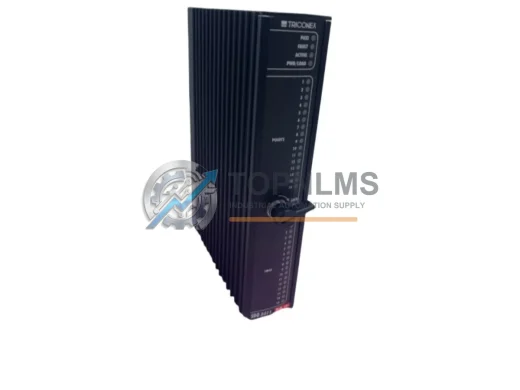
Triconex SDO3411 S2 32-Ch TMR Digital Output Module. Drop-in replacement & upgrade for Tricon safety PLC systems. In stock, 12-month warranty, fast shipping.
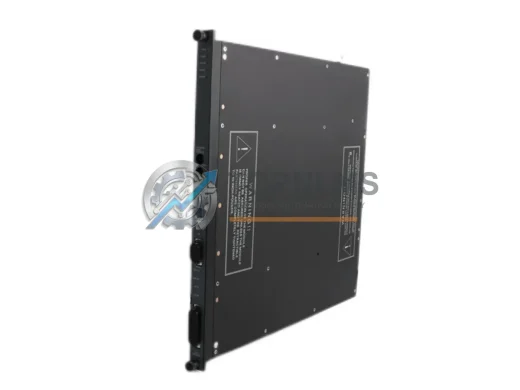
TRICONEX 3008N ruggedized analog input module for Tricon TMR safety systems. In stock, tested, 12-month warranty. Fast shipping from TOPNLMS.
Buy TRICONEX 7400209-010 Main Processor Module for Tricon TMR Safety PLC. Original industrial spare, fast shipping, 12-month warranty. Compatible replacement.
Click Quote This Model and the Part Number field will auto-fill with 3003.