
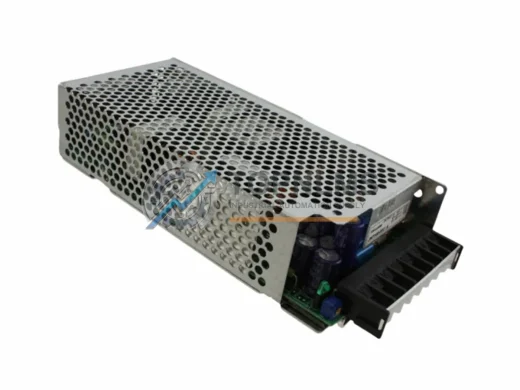
TDK-Lambda
TDK-Lambda JWT100-522/B Original Industrial Spare JWT100
JWT100-522/BTDK-Lambda JWT100-522/B original industrial power supply module. JWT100 Series multi-output PSU for factory automation. 12-month warranty. Fast worldwide shipping.
Request availability, condition, lead time and export shipping details for PFC0750-3AH-N.
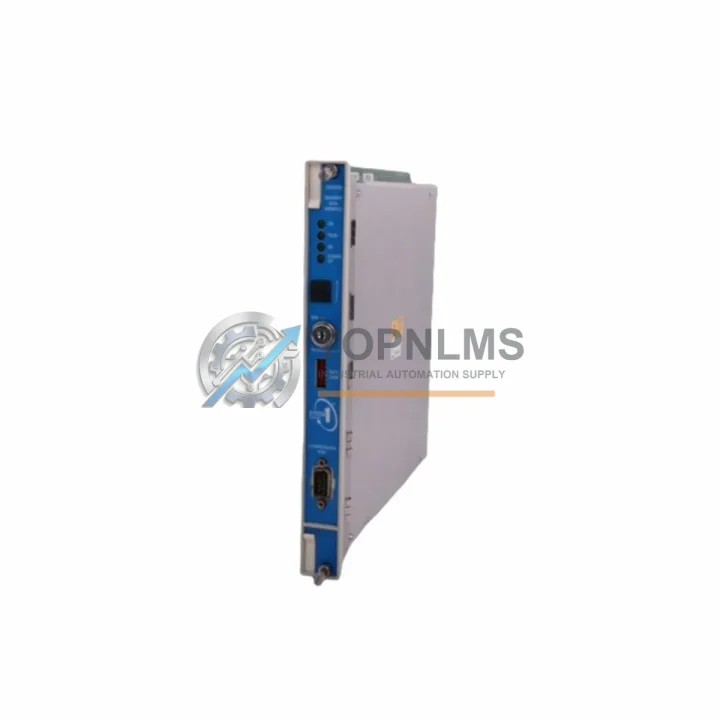
Send this exact part number, quantity and destination country. TOPNLMS will confirm availability, condition and export lead time before quotation.
When your existing power architecture relies on the TDK-Lambda PFC0750-3AH-N — a 750 W, three-phase power factor correction module from the PFC Series — sourcing a verified replacement quickly is critical to keeping production lines running. Whether you are managing a scheduled retrofit, responding to an unexpected failure, or executing a planned migration away from an end-of-life power supply platform, TOPNLMS stocks the PFC0750-3AH-N and its compatible upgrade paths to support your transition with minimal disruption.
The PFC0750-3AH-N is designed for three-phase AC input applications where high power density and active power factor correction are required. It is widely deployed in industrial servo drive cabinets, CNC machine tool power sections, semiconductor process equipment, and large-format printing systems. Its 750 W output capacity, combined with the PFC Series’ standardized form factor, makes it a common building block in multi-axis motion control architectures where several units may share a common DC bus alongside TDK-Lambda front-end rectifier modules and downstream DC/DC converters.
Facilities migrating from older three-phase rectifier assemblies — including legacy uncontrolled bridge rectifier stages paired with passive filter chokes — will find the PFC0750-3AH-N a direct functional upgrade. The active PFC topology reduces harmonic distortion on the supply network, easing compliance with IEC 61000-3-12 for equipment connected to public low-voltage systems. For engineers replacing a failed passive front-end in a legacy servo cabinet, the wiring interface of the PFC0750-3AH-N is straightforward: three-phase line input terminals, DC bus output terminals, and a control signal interface compatible with TDK-Lambda’s standard enable and fault logic. No firmware changes are required on the host controller — the module operates autonomously once powered and enabled.
In multi-axis servo systems, the PFC0750-3AH-N typically operates alongside TDK-Lambda HFE series or EFE series AC/DC front-end modules, sharing a 24 V auxiliary rail for control logic. When retrofitting a cabinet that previously used a different brand’s PFC front-end, engineers should verify DC bus voltage setpoint compatibility with downstream inverter modules and servo amplifiers. The PFC0750-3AH-N’s output voltage is fixed within the PFC Series specification; if your existing servo drives or spindle inverters were calibrated for a slightly different bus voltage, a brief commissioning step to verify bus voltage under load is recommended before returning the machine to production.
For installations where the PFC0750-3AH-N is mounted on a DIN rail or within a 19-inch rack enclosure, the module’s physical footprint follows the PFC Series standard, allowing direct mechanical substitution without panel modifications. Cooling is achieved via the module’s baseplate, which must maintain thermal contact with the cabinet’s heat-sink plate or forced-air cooling channel. When replacing a unit in a high-ambient-temperature environment — common in foundry, glass, or chemical process applications — confirm that the thermal interface material between the module baseplate and the heat sink is renewed during installation to maintain rated thermal performance.
Communication and monitoring integration is handled through the PFC Series’ analog fault and status signals. If your supervisory control system — whether a Siemens S7-300, Allen-Bradley ControlLogix, or Mitsubishi MELSEC Q-series PLC — monitors the power supply status via discrete I/O, the PFC0750-3AH-N’s fault relay output and enable input are directly compatible with standard 24 V DC I/O modules. No protocol conversion or additional signal conditioning is required for basic run/fault monitoring. For more advanced power quality monitoring, the module can be paired with a dedicated power analyzer or energy meter module installed on the same cabinet bus bar.
Procurement teams managing spare-parts inventory for multi-site facilities will find it practical to stock the PFC0750-3AH-N alongside related PFC Series components: the PFC0500-3AH-N (500 W variant for lighter-duty axes), the PFC1000-3AH-N (1000 W variant for high-power spindle drives), and the associated DC bus capacitor bank assemblies that are typically replaced on the same maintenance cycle. Keeping one or two PFC0750-3AH-N units on the shelf eliminates the risk of extended downtime caused by long lead times on specialty power modules.
| Parameter | Legacy / Replaced Unit | TDK-Lambda PFC0750-3AH-N |
|---|---|---|
| Rated Output Power | Varies (passive rectifier or older PFC module) | 750 W |
| Input Phase | 3-Phase AC | 3-Phase AC |
| Power Factor Correction | Passive / None | Active PFC (IEC 61000-3-12 compliant) |
| Form Factor | Varies by OEM | PFC Series standard (direct drop-in for same series) |
| Control Interface | Varies | 24 V DC enable / fault relay (discrete I/O compatible) |
| Communication Protocol | Analog discrete signals | Analog discrete signals (no fieldbus required) |
| Cooling Method | Varies | Baseplate conduction / forced-air compatible |
| Replacement Complexity | — | Low — direct wiring substitution, no firmware change |
| Warranty | — | 12-Month Warranty (TOPNLMS) |
A complete PFC0750-3AH-N retrofit typically involves more than the module itself. In most servo cabinet upgrades, engineers also replace or verify the DC bus capacitor bank, the 24 V auxiliary power supply (such as a TDK-Lambda DRB series or DRL series DIN-rail unit), and the three-phase input EMC filter to ensure the new active PFC stage operates within its specified harmonic environment. If the cabinet also houses a TDK-Lambda HFE750-24 or similar front-end AC/DC module on a shared bus, confirm bus voltage coordination before energizing the system.
For multi-axis systems where the PFC0750-3AH-N feeds multiple servo inverter modules — such as TDK-Lambda’s own inverter front-ends or third-party servo drives from Yaskawa, Panasonic, or Lenze — the DC bus wiring gauge and bus bar cross-section should be verified against the new module’s peak current rating. In cabinets where space is constrained, the PFC Series’ compact footprint allows side-by-side installation with I/O terminal blocks, signal isolators, and 24 V relay modules without requiring panel expansion. If the legacy system used a separate inrush current limiter (NTC thermistor assembly or bypass relay), verify whether the PFC0750-3AH-N’s internal soft-start circuit makes the external limiter redundant — in most cases it does, freeing up cabinet space.
For facilities that also need to upgrade their HMI or operator panel as part of the same modernization project, the PFC0750-3AH-N’s discrete status outputs integrate cleanly with any 24 V-compatible HMI input card, whether the panel runs on a Siemens TP series, Proface GP series, or Weintek cMT series display. No additional signal conditioning module is required for basic power-on and fault indication.
Q: Can I replace my existing passive rectifier front-end with the PFC0750-3AH-N without modifying the downstream servo drives?
A: In most cases, yes. The PFC0750-3AH-N outputs a regulated DC bus voltage within the PFC Series specification. As long as your servo drives accept this bus voltage range, no drive-side changes are needed. Verify the bus voltage setpoint against your drive’s input specification before energizing.
Q: Does the PFC0750-3AH-N require any special programming or configuration?
A: No. The module operates autonomously once the three-phase input is connected and the 24 V enable signal is applied. There is no fieldbus configuration, no parameter download, and no software tool required for basic operation.
Q: Is the wiring interface compatible with my existing cabinet wiring?
A: The PFC0750-3AH-N uses the PFC Series standard terminal layout. If you are replacing a same-series unit, wiring is a direct substitution. If replacing a different brand’s module, map the three-phase input, DC bus output, enable, and fault terminals to the new module’s terminal designations — a process that typically takes under 30 minutes for an experienced panel wirer.
Q: What communication protocol does the PFC0750-3AH-N use?
A: The module uses discrete 24 V DC analog signals for enable and fault — no fieldbus (PROFIBUS, EtherNet/IP, PROFINET, or Modbus) is required. It integrates directly with any standard PLC discrete I/O module.
Q: How much physical space does the module require?
A: The PFC0750-3AH-N follows the PFC Series standard form factor. It is a direct mechanical replacement for same-series units. For cross-brand replacements, measure the available panel depth and width before ordering — contact TOPNLMS for dimensional drawings if needed.
Every TDK-Lambda PFC0750-3AH-N shipped by TOPNLMS is covered by a 12-month warranty from the date of delivery. Prior to shipment, each unit undergoes functional verification including input/output voltage checks and enable/fault signal testing. If a unit exhibits any defect in materials or workmanship within the warranty period, TOPNLMS will arrange replacement or repair at no additional cost to the buyer.
Orders are processed and dispatched from our Xiamen warehouse, with express courier options available for urgent replacement requirements. Typical lead time for in-stock units is 1–3 business days to most destinations. For large-quantity orders or scheduled maintenance contracts requiring multiple units, contact our sales team to discuss volume pricing and reserved stock arrangements.
Our after-sales support team is available to assist with installation queries, compatibility verification, and documentation requests. We maintain traceability records for all shipped units to support your incoming inspection and quality management processes.
📧 [email protected] | 📞 +86 18359293191
© 2026 TOPNLMS. All rights reserved. Original Source: https://topnlms.com | Contact: [email protected] | +86 18359293191
TDK-Lambda JWT100-522/B original industrial power supply module. JWT100 Series multi-output PSU for factory automation. 12-month warranty. Fast worldwide shipping.
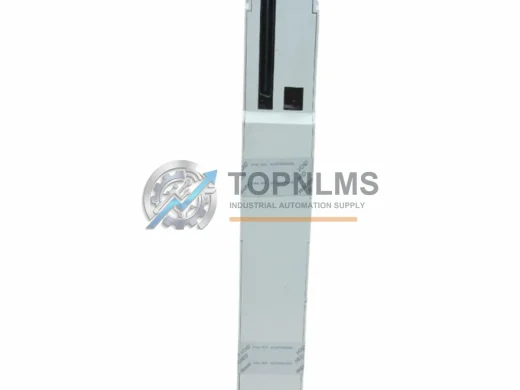
Schneider Electric 140CPS12420C Modicon Quantum 24VDC ruggedized power supply module. In stock, tested, 12-month warranty. Fast global shipping from TOPNLMS.
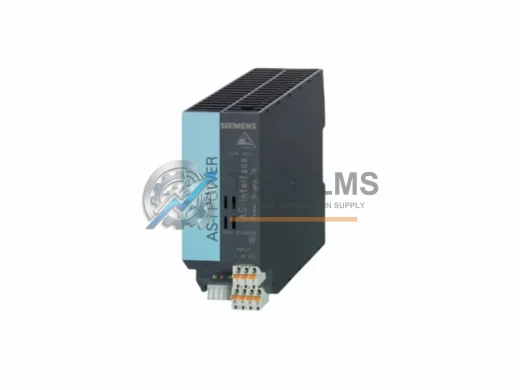
Siemens 3RX9501-0BA00 auxiliary power supply unit for SIRIUS 3RF solid-state relays. Original industrial spare, 12-month warranty, fast global shipping.
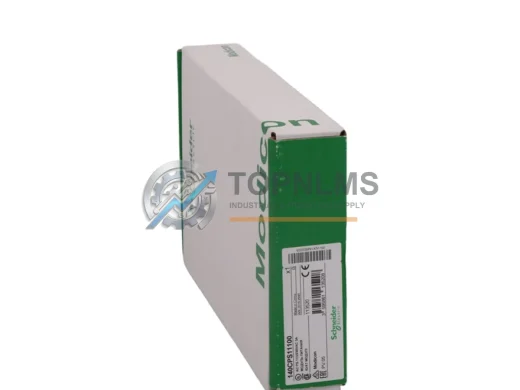
Schneider Electric 140CPS11100 Modicon Quantum AC power supply module. Rugged, reliable, in-stock. 12-month warranty. Fast global shipping from TOPNLMS.
Click Quote This Model and the Part Number field will auto-fill with PFC0750-3AH-N.