
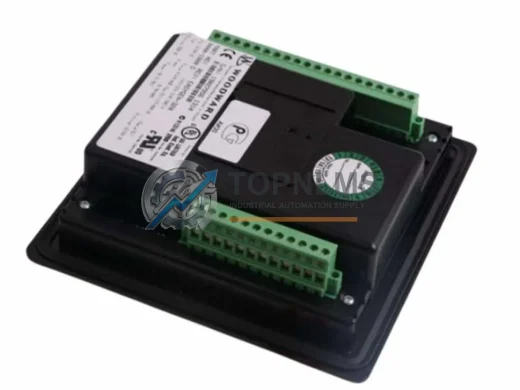
SST
SST SST-PFB-PLC5 Ruggedized PROFIBUS-DP Interface Module
SST-PFB-PLC5SST SST-PFB-PLC5 ruggedized PROFIBUS-DP interface module for Allen-Bradley PLC-5. Harsh-environment rated, 12-month warranty, in-stock. Fast global shipping.
Request availability, condition, lead time and export shipping details for PB3-PCI-e PB3-PCU.
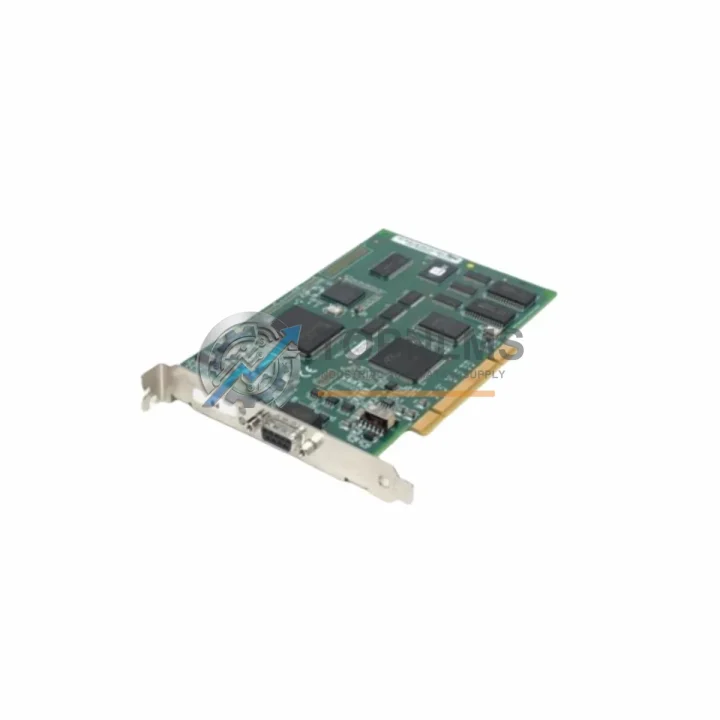
Send this exact part number, quantity and destination country. TOPNLMS will confirm availability, condition and export lead time before quotation.
When your existing PROFIBUS communication infrastructure relies on aging or discontinued interface cards, every day of deferred replacement carries real operational risk. The SST PB3-PCI-e / PB3-PCU PROFIBUS Interface Card is a proven, field-validated replacement and upgrade solution for industrial facilities running legacy SST PROFIBUS Series hardware. Whether your plant is migrating from an older PB3-PCI master card, retiring a Woodhead SST PROFIBUS gateway, or consolidating a multi-drop PROFIBUS DP network onto a modernized host platform, this card delivers the compatibility, throughput, and long-term supportability your control system demands.
The PB3-PCI-e variant is designed for PCIe x1 slots found in contemporary industrial PCs and embedded controllers, while the PB3-PCU variant supports legacy PCI bus architectures still common in older SCADA workstations and DCS operator stations. Both variants operate as PROFIBUS DP Class 1 and Class 2 master or slave, supporting baud rates from 9.6 kbps up to 12 Mbps — fully compatible with the PROFIBUS DP-V0, DP-V1, and DP-V2 protocol layers used across Siemens S7, ABB AC800M, Honeywell Experion, and Yokogawa CENTUM VP distributed control environments.
For facilities transitioning from a Woodhead SST-PB3-PCI or an earlier SST-PBMST-104 ISA-bus master, the PB3-PCI-e provides a direct functional replacement with no changes required to the PROFIBUS DP GSD file library or the existing field device configuration. The DB9 PROFIBUS connector pinout, termination resistor logic, and bus address assignment remain consistent with the legacy SST driver model, allowing your existing SST NETworks software or third-party OPC DA/UA server to recognize the card without re-engineering the communication stack.
In retrofit projects where the host PC is being replaced alongside the interface card, the PB3-PCI-e integrates cleanly into standard 19-inch rack-mount industrial PCs running Windows 10 IoT, Windows Server 2019, or Linux-based SCADA platforms. The card’s onboard microprocessor offloads PROFIBUS token-passing and cyclic data exchange from the host CPU, ensuring deterministic scan times even when the host is simultaneously running historian, HMI, and alarm management processes. This architecture is particularly valuable in high-density I/O environments where the PROFIBUS segment carries 50 or more field devices — including remote I/O stations, variable frequency drives, valve positioners, and intelligent transmitters.
During the physical installation phase of a migration project, engineers frequently need to address not just the interface card itself but the surrounding infrastructure. Termination modules such as the SST-PB-TERM-1 bus terminator, PROFIBUS repeaters for segment extension, and fiber-optic PROFIBUS converters for electrically isolated long-distance runs are common companion components. On the field side, PROFIBUS PA segment couplers and DP/PA link modules — such as those used in Pepperl+Fuchs or Siemens DP/PA coupler families — remain fully compatible with the PB3-PCI-e master, as the card adheres to the IEC 61158 PROFIBUS standard without proprietary extensions.
For plants running Siemens S7-300 or S7-400 PLCs with CP 5611 or CP 5613 PROFIBUS communication processors, the SST PB3-PCI-e serves as a cost-effective alternative host-side master when the Siemens CP card is discontinued or when the SCADA workstation is being migrated to a non-Siemens hardware platform. The GSD files for all connected ET 200M, ET 200S, and ET 200SP remote I/O stations remain valid, and the cyclic DP data exchange configuration can be imported directly into the SST NETworks configuration tool. Similarly, facilities using ABB’s S800 I/O modules over PROFIBUS DP will find that the PB3-PCI-e master correctly handles the ABB-specific DP-V1 acyclic services required for online parameter access and diagnostics.
Power supply compatibility is straightforward: the PB3-PCI-e draws power from the PCIe slot’s 3.3 V and 12 V rails, with a total consumption under 5 W, well within the budget of any standard industrial PC power supply. No external power connection is required. The PB3-PCU variant similarly draws from the PCI 5 V and 12 V rails. Both cards include onboard galvanic isolation on the PROFIBUS port, providing 500 V isolation between the host PC ground and the PROFIBUS cable shield — a critical requirement in environments with significant ground potential differences between control room and field junction boxes.
From a spare parts and lifecycle management perspective, stocking the PB3-PCI-e as a critical spare eliminates the single-point-of-failure risk associated with relying on a single aging PROFIBUS master card. Many facilities operating 24/7 continuous process plants — refineries, chemical plants, power generation facilities, and water treatment works — maintain at least one hot-spare PB3-PCI-e alongside their primary installed card. The card’s compact PCIe x1 form factor means it can be stored in standard ESD-safe packaging without requiring dedicated climate-controlled storage.
| Parameter | Legacy Model (PB3-PCI / SST-PBMST) | Replacement: PB3-PCI-e / PB3-PCU |
|---|---|---|
| Bus Interface | PCI 32-bit / ISA | PCIe x1 (PB3-PCI-e) / PCI 32-bit (PB3-PCU) |
| PROFIBUS Protocol | DP-V0, DP-V1 | DP-V0, DP-V1, DP-V2 |
| Master/Slave Mode | Class 1 Master only | Class 1 & Class 2 Master + Slave |
| Max Baud Rate | 12 Mbps | 12 Mbps |
| Max Nodes per Segment | 126 | 126 |
| Connector | DB9 Female | DB9 Female (pin-compatible) |
| Galvanic Isolation | Optional (external) | Onboard 500 V isolation |
| OS Support | Windows XP / 7 (32-bit) | Windows 7/10/11, Server 2016/2019, Linux |
| Driver Compatibility | SST NETworks v3.x | SST NETworks v4.x (backward compatible) |
| GSD File Reuse | Yes | Yes — no re-configuration required |
| Installation Space | Full-height PCI slot | Low-profile or full-height PCIe x1 bracket included |
| Power Consumption | ~8 W (PCI) | <5 W (PCIe / PCI) |
| Warranty | End-of-life / no support | 12-Month Warranty |
| Replacement Recommendation | Direct drop-in replacement. Retain existing PROFIBUS cable, DB9 connector, and GSD library. | |
A successful PROFIBUS migration rarely involves a single component swap. In practice, the PB3-PCI-e or PB3-PCU card is deployed as part of a broader system modernization that touches multiple layers of the control architecture. During commissioning, engineers typically work alongside the PROFIBUS DP network’s existing field devices — including Siemens ET 200M distributed I/O stations, Phoenix Contact Inline I/O modules, and Beckhoff EtherCAT-to-PROFIBUS gateways — all of which remain fully compatible with the SST master’s standard DP cyclic exchange.
On the host PC side, the migration often coincides with an upgrade of the SCADA or DCS operator station. In these scenarios, the SST NETworks OPC Server running on the new Windows 10 or Windows Server 2019 host communicates with the PB3-PCI-e using the same tag database and I/O mapping previously configured for the legacy card. If the facility also operates a Molex SST DN3-PCI-e DeviceNet interface card or an SST-EIP-MAS EtherNet/IP master on the same host PC, the SST NETworks multi-network architecture allows all three fieldbus networks to be managed from a single software console — significantly reducing the engineering overhead of a multi-protocol migration.
For plants where the PROFIBUS segment runs through a control cabinet shared with a Siemens S7-300 CPU and a CP 342-5 DP master module, the PB3-PCI-e can be configured as a Class 2 master to perform acyclic DP-V1 read/write operations on the same segment without disrupting the S7’s Class 1 cyclic exchange. This dual-master architecture is commonly used during phased migrations where the legacy PLC remains in service while the new SCADA host gradually assumes supervisory control. Companion components in this scenario include PROFIBUS bus connectors with integrated termination (such as Siemens 6ES7 972-0BA52-0XA0 or equivalent), PROFIBUS cable (Type A, 150 Ω characteristic impedance), and a PROFIBUS diagnostic repeater for segment health monitoring.
In applications where the PROFIBUS segment must be extended beyond 1,200 meters or where electrical isolation between segments is required, a fiber-optic PROFIBUS OLM (Optical Link Module) is inserted between the PB3-PCI-e and the field segment. The SST master’s standard DP timing parameters accommodate the additional propagation delay introduced by fiber links without requiring manual baud rate reduction. Similarly, for hazardous area installations, a PROFIBUS PA segment coupler and intrinsically safe field barriers remain fully interoperable with the PB3-PCI-e master operating at the DP layer.
Q: Can I reuse my existing PROFIBUS cable and DB9 connectors?
A: Yes. The PB3-PCI-e and PB3-PCU use a standard DB9 female PROFIBUS connector with the same pin assignment as all legacy SST PROFIBUS cards. No rewiring is required. Ensure the bus termination resistors at both ends of the segment remain active.
Q: Do I need to reconfigure my GSD files or DP slave parameters?
A: No. All GSD files and slave configuration data created for the legacy SST card are fully compatible with the PB3-PCI-e under SST NETworks v4.x. Import your existing project file and the slave configuration will be recognized automatically.
Q: What happens to my OPC server tag database during the migration?
A: The SST NETworks OPC DA/UA server tag structure is preserved across card generations. After installing the new card and updating the driver, the OPC server reconnects to the existing tag database without requiring re-mapping in your SCADA or historian.
Q: Is the PB3-PCI-e compatible with 64-bit operating systems?
A: Yes. SST NETworks v4.x provides certified 64-bit drivers for Windows 7, Windows 10, Windows 11, and Windows Server 2016/2019. Linux kernel module support is also available for Ubuntu LTS and RHEL-based distributions.
Q: How do I handle the physical slot difference when migrating from PCI to PCIe?
A: The PB3-PCI-e requires a PCIe x1 (or larger) slot. If your existing industrial PC only has PCI slots, select the PB3-PCU variant instead. Both cards include both low-profile and full-height mounting brackets to accommodate 1U rack-mount and tower chassis form factors.
Q: Can the card operate as a PROFIBUS slave for connection to a Siemens S7 PLC master?
A: Yes. The PB3-PCI-e supports slave mode operation, allowing the host PC to appear as a standard DP slave on a segment mastered by a Siemens S7-300/400 CP 342-5, S7-1500 CM 1542-5, or any other IEC 61158-compliant DP master.
Q: What is the typical commissioning time for a like-for-like card replacement?
A: For a direct replacement of a failed legacy SST card with an existing NETworks project file, most engineers complete installation, driver update, and network verification within 2–4 hours, minimizing planned maintenance window duration.
Every SST PB3-PCI-e and PB3-PCU PROFIBUS Interface Card supplied by TOPNLMS is covered by a 12-month warranty from the date of shipment. Prior to dispatch, each unit undergoes functional verification including PROFIBUS DP communication testing, slot interface continuity check, and isolation resistance measurement. Units that do not meet SST’s original factory acceptance criteria are not shipped.
In the event of a warranty claim, TOPNLMS provides advance replacement support: a verified replacement unit is dispatched before the defective card is returned, minimizing plant downtime. All warranty claims are processed within 24 business hours of receipt. Shipping is handled from our Xiamen warehouse with DHL Express, FedEx International Priority, and SF International options available for next-day delivery to major industrial hubs across Asia, Europe, and the Americas.
For procurement teams requiring documentation, TOPNLMS provides a certificate of conformity, packing list, and commercial invoice with each shipment. Bulk orders of 5 units or more qualify for priority allocation from bonded stock. Lead time for standard orders is 1–3 business days from payment confirmation.
For technical pre-sales support, compatibility verification, or urgent replacement inquiries, contact our industrial automation team directly.
SST SST-PFB-PLC5 ruggedized PROFIBUS-DP interface module for Allen-Bradley PLC-5. Harsh-environment rated, 12-month warranty, in-stock. Fast global shipping.
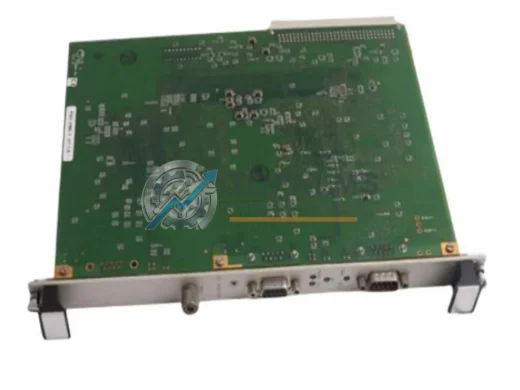
SST SST-PFB-CLX PROFIBUS DP Master Scanner Module for ControlLogix. Rugged, reliable, in stock. 12-month warranty. Fast shipping. Contact topnlms.com.
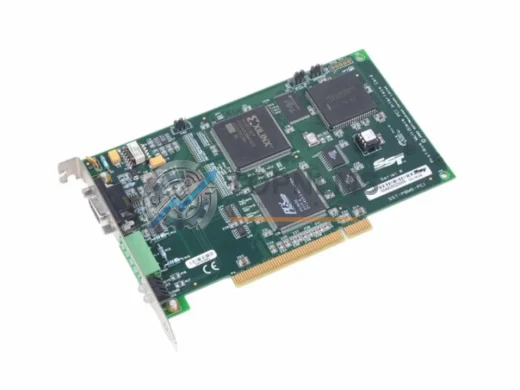
SST SST-PBMS-PCI PROFIBUS Multi-Slave PCI Interface Card. Rugged, EMI-resistant, 12-month warranty. In stock — fast shipping from TOPNLMS.
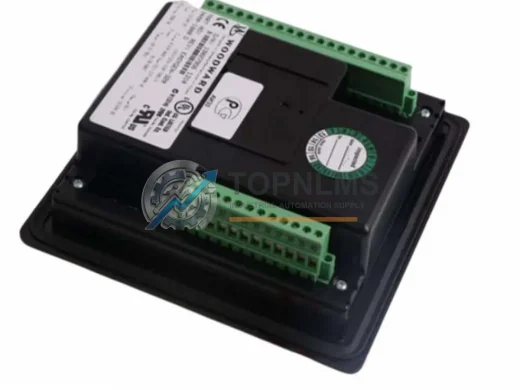
SST ST-PFB--PLC5 ruggedized PROFIBUS-DP interface module for Allen-Bradley PLC5. In stock, tested, 12-month warranty. Fast shipping from TOPNLMS.
Click Quote This Model and the Part Number field will auto-fill with PB3-PCI-e PB3-PCU.