
Siemens
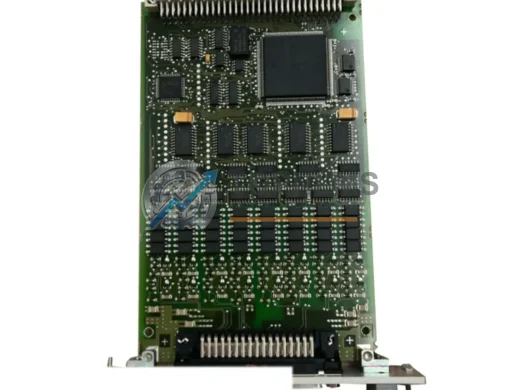
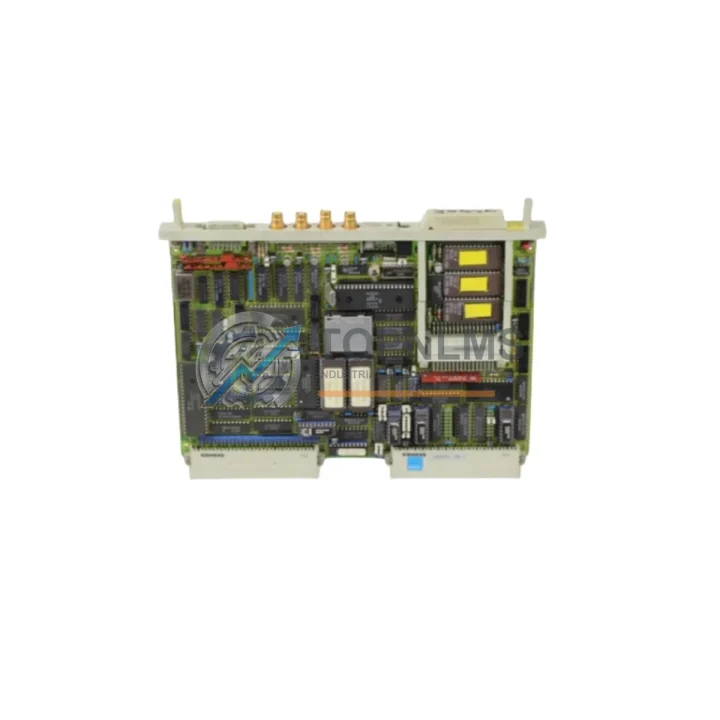
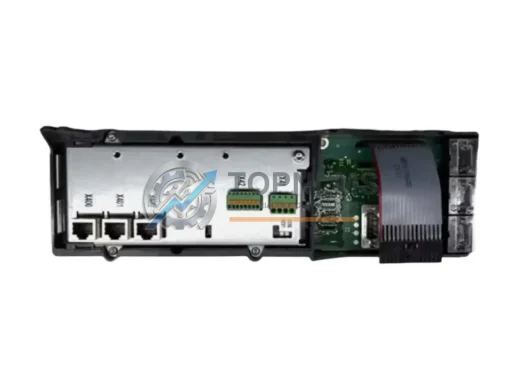
Siemens 6AR1302-0AA00-0AA0 Ruggedized Communication Module
6AR1302-0AA00-0AA0Siemens 6AR1302-0AA00-0AA0 CP51M1 SIMATIC TDC communication processor. Ruggedized for harsh environments. In stock, tested, 12-month warranty. Fast shipping.
Request availability, condition, lead time and export shipping details for RWD62.
Send this exact part number, quantity and destination country. TOPNLMS will confirm availability, condition and export lead time before quotation.
The Siemens RWD62 is a universal room controller within the SYNCO 700 series, designed for HVAC applications including heating, cooling, ventilation, and domestic hot water control in commercial buildings. As building automation systems age, facilities managers and system integrators increasingly face the challenge of replacing discontinued or end-of-life room controllers without triggering a full system overhaul. The RWD62 serves as a direct upgrade path from older Siemens RWD and RWB series controllers, offering backward-compatible wiring layouts, familiar commissioning logic, and support for the same physical installation footprint found in most standard DIN-rail or surface-mount control cabinets.
When migrating from legacy controllers such as the RWD60, RWD61, or earlier RWB-series units, engineers will find that the RWD62 retains the same terminal block assignments for room temperature sensor inputs, setpoint adjustment inputs, and relay outputs for heating/cooling actuators. This means existing field wiring — including NTC 10kΩ room sensors, 0–10V analog outputs to VAV actuators, and binary inputs from window contacts or occupancy switches — can typically be reconnected without modification. The controller’s universal input configuration supports both active and passive sensor types, reducing the need for signal conditioning modules or additional interface hardware during the retrofit.
From a communications standpoint, the RWD62 supports the KNX/EIB bus protocol, enabling seamless integration into existing KNX-based building management systems. Sites currently running Siemens Desigo CC or Desigo PX platforms can incorporate the RWD62 without gateway reconfiguration, as the controller maps directly to standard KNX group addresses used by predecessor models. For installations using the Synco IC (Synco Interconnected Communication) topology, the RWD62 participates natively in the peer-to-peer communication network alongside other SYNCO 700 devices such as the RMU710B zone controller, the RMH760B heating controller, and the RMS705 room unit, allowing coordinated setpoint management and fault signaling across zones without a central BMS server.
Physical installation compatibility is a key advantage of the RWD62 upgrade path. The controller shares the same 144 × 96 mm panel-mount form factor as the RWD60 and RWD61, fitting directly into existing cutouts in control panels and field enclosures. No mechanical modification to the cabinet door or DIN rail spacing is required. The 24 V AC/DC power supply input is identical to predecessor models, so existing transformer sizing and fusing arrangements remain valid. This is particularly important in retrofit projects where minimizing downtime is critical — the RWD62 can be swapped in during a planned maintenance window without requiring panel rework or additional power infrastructure.
For system integrators managing multi-zone HVAC upgrades, the RWD62 is frequently deployed alongside complementary SYNCO 700 components. The RMS705 room unit provides local setpoint adjustment and display, connecting via the Synco IC bus to the RWD62 without additional wiring beyond the existing two-wire bus cable. The AQR2533 room air quality sensor can be added to the same bus to enable demand-controlled ventilation, a common upgrade requirement in post-pandemic building retrofits. Where the legacy system used standalone thermostats with no bus connectivity, the addition of the QAX910 Synco Living central unit allows the RWD62 to participate in a higher-level scheduling and remote access architecture.
In heating-dominated applications, the RWD62 replaces older RWB29 and RWB27 boiler controllers with a unified room-plus-plant control logic, eliminating the need for separate plant controllers in smaller systems. The controller’s built-in heating curve calculation and DHW (domestic hot water) priority switching are directly compatible with Siemens actuators such as the SKC62 and SKD62 valve actuators, which are commonly found in existing hydronic systems. No reprogramming of actuator stroke or fail-safe position is required when the RWD62 is substituted for an older controller driving the same actuator model.
Commissioning the RWD62 after installation is straightforward for technicians familiar with the SYNCO 700 platform. The controller’s parameter set is accessible via the local operator interface or through the Synco Tool commissioning software, which retains backward compatibility with parameter files exported from RWD60 and RWD61 units. This allows pre-configured parameter sets to be loaded directly, reducing on-site commissioning time significantly compared to a full system replacement. For sites without existing parameter backups, the RWD62’s guided commissioning wizard steps through zone assignment, sensor calibration, and output configuration in a structured sequence that minimizes the risk of commissioning errors.
From a procurement and supply chain perspective, sourcing the RWD62 as a replacement for discontinued or hard-to-find legacy controllers offers significant advantages. TOPNLMS maintains verified stock of the RWD62 with full traceability documentation, enabling procurement teams to confirm authenticity before installation. Each unit undergoes functional testing prior to dispatch, covering power-up self-diagnostics, input channel verification, and output relay actuation. Units are shipped from our Xiamen warehouse with ESD-safe packaging and are accompanied by a 12-month warranty covering manufacturing defects and functional failures under normal operating conditions.
| Parameter | Legacy Models (RWD60 / RWD61 / RWB29) | Replacement: Siemens RWD62 |
|---|---|---|
| Form Factor | 144 × 96 mm panel-mount | 144 × 96 mm panel-mount (direct fit) |
| Power Supply | 24 V AC/DC | 24 V AC/DC (no transformer change required) |
| Room Sensor Input | NTC 10kΩ passive | NTC 10kΩ passive + active 0–10V (universal) |
| Analog Output | 0–10V (1 channel) | 0–10V (2 channels, expanded) |
| Relay Outputs | 2–3 relays | 3 relays (heating/cooling/DHW) |
| Communication Protocol | KNX/EIB or standalone | KNX/EIB + Synco IC (native) |
| BMS Integration | Desigo PX (limited) | Desigo CC / Desigo PX (full) |
| Commissioning Tool | Synco Tool (legacy version) | Synco Tool (current, backward compatible) |
| Installation Modification | N/A (reference) | None required — direct panel cutout fit |
| Replacement Recommendation | End-of-life / discontinued | Direct drop-in replacement |
| Warranty | N/A | 12-Month Warranty (TOPNLMS) |
A complete SYNCO 700 migration typically involves more than a single controller swap. When upgrading from a legacy room control architecture to the RWD62, the following components are commonly required or recommended to complete the system modernization. The RMS705 room unit connects directly to the RWD62 via the Synco IC two-wire bus, providing occupants with local temperature display and setpoint adjustment without additional wiring infrastructure. For zones requiring air quality monitoring, the AQR2533 CO₂ and VOC room sensor integrates on the same bus, enabling the RWD62 to modulate ventilation outputs based on actual occupancy demand rather than fixed schedules.
In hydronic heating systems, the SKC62 and SKD62 valve actuators are the standard pairing for the RWD62’s analog outputs, and existing actuators of these types require no reconfiguration when the controller is replaced. Where the legacy system included a separate plant controller such as the RMH760B heating controller, the RWD62 can operate in a coordinated topology with the RMH760B handling boiler sequencing while the RWD62 manages zone-level room control — a common architecture in multi-zone commercial heating retrofits. For sites requiring centralized scheduling and remote access, the OZW672 web server module connects to the Synco IC bus and provides browser-based access to all connected SYNCO 700 devices including the RWD62, eliminating the need for on-site commissioning visits for parameter adjustments after initial setup.
Power supply integrity is critical in retrofit projects. The SITOP PSU100S 24V power supply is a recommended addition where the existing transformer is aging or undersized for the expanded I/O of the RWD62. Signal isolation between the RWD62’s analog inputs and field sensors can be achieved using the SIEMENS SITRANS signal isolator range where long cable runs or ground loop issues are present in the existing installation. For projects involving cabinet reorganization, the RWD62’s compatibility with standard 35mm DIN rail mounting allows it to be repositioned within the control cabinet without custom brackets or adapters.
Q: Can I reuse existing field wiring when replacing an RWD60 or RWD61 with the RWD62?
A: In most cases, yes. The RWD62 uses the same terminal block layout and sensor input types (NTC 10kΩ) as the RWD60 and RWD61. Existing room sensor cables, binary input wiring for window contacts and occupancy switches, and relay output wiring for heating/cooling actuators can typically be reconnected directly. Always verify terminal assignments against the RWD62 wiring diagram before energizing.
Q: Is the RWD62 compatible with existing KNX group address assignments?
A: Yes. The RWD62 uses standard KNX/EIB data point types consistent with the SYNCO 700 series. Existing group address assignments from predecessor controllers can be imported or manually re-entered using the ETS commissioning tool. No gateway reconfiguration is required for Desigo CC or Desigo PX integration.
Q: What happens to the Synco IC network topology when the controller is replaced?
A: The Synco IC bus is a peer-to-peer network. Replacing the RWD62 (or its predecessor) does not disrupt other devices on the bus. After installation, the new RWD62 must be assigned its bus address using the Synco Tool or the local operator interface. Other devices on the bus — including RMS705 room units and AQR2533 sensors — will resume communication automatically once the address is configured.
Q: Does the RWD62 fit in the same panel cutout as the RWD60/RWD61?
A: Yes. All three models share the 144 × 96 mm panel-mount form factor. No mechanical modification to the control cabinet door or enclosure is required. The mounting clip arrangement is identical, allowing the RWD62 to be secured using the existing panel cutout hardware.
Q: Can I load parameter files from the old controller into the RWD62?
A: Parameter files exported from RWD60 and RWD61 units using Synco Tool can be imported into the RWD62 with minor adjustments for the expanded I/O configuration. Siemens recommends reviewing all parameter values after import to confirm compatibility with the RWD62’s extended feature set before commissioning.
Q: What is the lead time and shipping arrangement for the RWD62?
A: TOPNLMS ships the RWD62 from our Xiamen warehouse. Standard international shipping typically takes 5–10 business days depending on destination. Express options are available for urgent replacement requirements. All units are tested prior to dispatch and shipped with ESD-safe packaging.
Every Siemens RWD62 supplied by TOPNLMS is covered by a 12-month warranty from the date of shipment. This warranty covers manufacturing defects, component failures, and functional non-conformance under normal operating conditions as specified in the Siemens RWD62 datasheet. Prior to dispatch, each unit undergoes a structured pre-shipment test protocol covering power-up self-diagnostics, input channel continuity verification, relay output actuation, and communication bus response. Units that do not pass all test criteria are quarantined and not shipped.
In the event of a warranty claim, TOPNLMS provides a replacement unit or full refund at our discretion, subject to return of the defective unit with a completed fault description. Our after-sales response target is 24 hours for initial acknowledgment and 72 hours for resolution proposal. For procurement teams requiring documentation, we can provide test reports, authenticity certificates, and traceability records upon request prior to or after purchase.
We understand that unplanned controller failures in building automation systems carry significant operational risk. Our warranty and after-sales support framework is designed to minimize the impact of such events by ensuring rapid replacement availability and clear escalation procedures. Bulk procurement customers and system integrators with ongoing retrofit programs are encouraged to contact us to discuss framework agreements and reserved stock arrangements.
Siemens 6AR1302-0AA00-0AA0 CP51M1 SIMATIC TDC communication processor. Ruggedized for harsh environments. In stock, tested, 12-month warranty. Fast shipping.
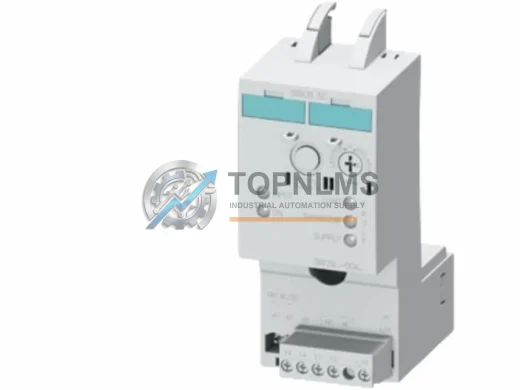
Siemens 3RF2950-0KA13 SIRIUS 3-phase solid state power controller, 50A 480V AC. Rugged, EMI-resistant, 12-month warranty. In stock — fast global shipping.
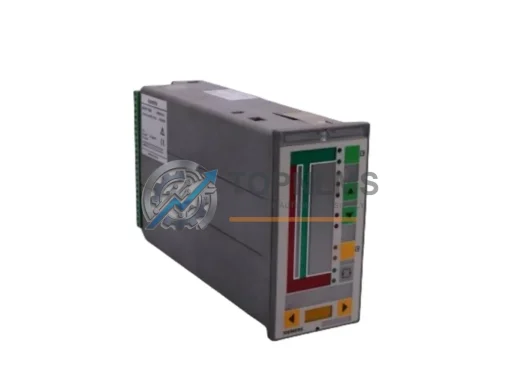
Buy SIEMENS 353A41NNETNNA4 original industrial spare. 353 Series single-loop Ethernet process controller. Fast shipping, 12-month warranty, B2B ready.
Buy original SIEMENS 6SL3351-6GE35-0AA1 SINAMICS S120 Control Interface Board. Tested, 12-month warranty, fast worldwide shipping. Industrial replacement spare.
Click Quote This Model and the Part Number field will auto-fill with RWD62.