
Siemens
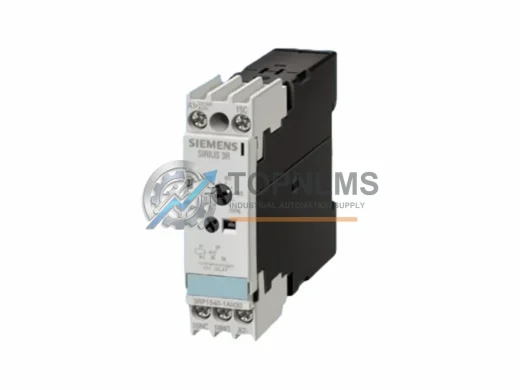
Siemens 3RP1540-1BN30 Replacement for SIRIUS Series
3RP1540-1BN30Siemens 3RP1540-1BN30 SIRIUS 8-function time relay replacement. 24–240V AC/DC, drop-in compatible, 12-month warranty. Fast shipping from stock.
Request availability, condition, lead time and export shipping details for 39RTMCAN 16207-61/10.
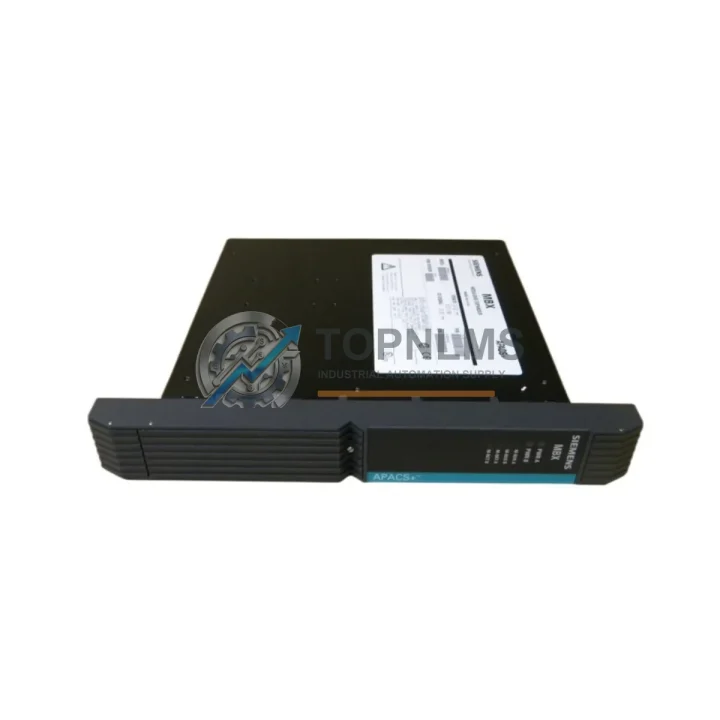
Send this exact part number, quantity and destination country. TOPNLMS will confirm availability, condition and export lead time before quotation.
The Siemens 39RTMCAN 16207-61/10 is an original RTM (Remote Temperature Module) engineered for CAN Bus-based industrial control architectures. As a precision multi-channel temperature acquisition module, it plays a mission-critical role in process monitoring, thermal management, and closed-loop control within SIMATIC and compatible DCS/PLC systems. For maintenance engineers managing aging control infrastructure, securing a verified original spare of this module is one of the highest-value decisions in any preventive maintenance program.
Whether you are responding to an unplanned shutdown, executing a scheduled overhaul, or building a strategic spare parts inventory, the 39RTMCAN 16207-61/10 delivers the electrical compatibility, firmware alignment, and mechanical fit required for seamless drop-in replacement — without the risk of signal drift, CAN Bus communication faults, or system reconfiguration that often accompanies non-original substitutes.
At TOPNLMS, every unit is sourced from verified supply channels, individually tested prior to dispatch, and backed by a 12-month warranty. We ship globally with full documentation support, making this module available to maintenance teams in chemical plants, power generation facilities, automotive assembly lines, water treatment stations, and discrete manufacturing environments.
| Parameter | Specification |
|---|---|
| Part Number | 39RTMCAN 16207-61/10 |
| Manufacturer | SIEMENS |
| Module Series | RTM — Remote Temperature Module |
| Communication Interface | CAN Bus |
| Function | Multi-channel temperature acquisition and CAN Bus transmission |
| Compatible Systems | SIMATIC S7-300, S7-400, TELEPERM, compatible DCS/PLC CAN Bus architectures |
| Input Type | Thermocouple / RTD (PT100 / PT1000, application-dependent) |
| Operating Temperature | 0°C to +60°C (standard industrial range) |
| Storage Temperature | −25°C to +70°C |
| Supply Voltage | 24 V DC (nominal, per system bus specification) |
| Country of Origin | Germany |
| Weight (packaged) | 1,900 g |
| Condition | Original — new or refurbished-to-spec (stated at order confirmation) |
| Installation | DIN rail / backplane slot mount, per system rack specification |
| Application Environment | Industrial control cabinets, process automation, power generation, chemical plants |
| Maintenance Recommendation | Inspect CAN Bus wiring, PSU voltage, and terminal blocks at time of replacement |
| Pre-Shipment Testing | Full functional verification on every unit — CAN Bus handshake, channel response, power check |
| Warranty | 12 Months — covers functional failure under normal operating conditions |
| Shipping | Worldwide — DHL, FedEx, EMS available with full export documentation |
Temperature monitoring failures rarely occur in isolation. When a 39RTMCAN 16207-61/10 module shows signs of degradation — intermittent CAN Bus communication errors, erratic temperature readings, or complete signal loss — experienced maintenance engineers treat it as a system-level event rather than a single-component fault. A thorough inspection of the surrounding control cabinet and associated subsystems is essential to prevent recurrence and protect uptime.
During a planned replacement of this RTM module, simultaneously inspect the CAN Bus communication cable harness connecting the module to the controller backplane. Insulation fatigue and connector oxidation are common contributors to intermittent faults in high-vibration or high-humidity environments. The 24 V DC power supply module feeding the RTM rack should also be load-tested — an aging PSU with voltage ripple exceeding specification will cause false temperature readings and accelerate module wear over time.
If your system uses a SIMATIC S7-300 CPU module (such as the 6ES7 315 or 6ES7 317 series) or an S7-400 CPU as the master controller, verify that the firmware version is compatible with the 39RTMCAN hardware revision. Mismatched firmware is a frequently overlooked root cause of CAN Bus timeout alarms. While the cabinet is open, inspect the SM321 digital input modules and SM322 digital output modules in adjacent backplane slots for signs of capacitor bulging or relay contact wear — these components share the same rack power bus and their degradation can indirectly stress the RTM module.
The terminal blocks and field wiring connectors on the temperature sensor side deserve close attention. Loose or corroded terminals introduce measurement offset errors that are difficult to distinguish from module failure during initial diagnostics. Replacing worn terminal blocks at the same time as the RTM module eliminates this ambiguity and reduces future troubleshooting time. For systems with extended sensor cable runs, inspect the signal isolator or signal conditioner modules in the measurement loop — these protect RTM input channels from ground loops and transient overvoltage, and their degradation directly impacts measurement accuracy.
Similarly, fuse modules and circuit protection assemblies within the control cabinet should be checked for continuity and rated current compliance. A partially blown fuse can cause subtle power instability that manifests as sporadic module resets. If your facility operates a Siemens TP700 or MP377 HMI panel connected to the same CAN Bus or PROFIBUS segment, verify that the HMI firmware and tag configuration correctly reflect the channel mapping of the replacement module — a mismatch here will cause the operator display to show incorrect process values even after a successful hardware swap.
Finally, if the system includes a communications gateway or CP 343-1 / CP 443-1 communications processor bridging CAN Bus to Ethernet or PROFINET, confirm that the gateway’s node address table is updated to recognize the replacement module’s hardware ID. Proactive spare parts planning for the 39RTMCAN 16207-61/10 should also account for compatible RTM module variants across the same plant floor, reducing mean time to repair (MTTR) from days to hours when the next fault occurs.
The 39RTMCAN 16207-61/10 addresses one of the most persistent challenges in industrial automation lifecycle management: maintaining operational continuity on control systems that are no longer in active production by the OEM. As Siemens transitions its portfolio toward newer SIMATIC ET 200SP and S7-1500 architectures, original spare modules for legacy RTM CAN Bus systems become progressively harder to source through standard distribution channels.
Sourcing a verified original 39RTMCAN 16207-61/10 from TOPNLMS allows maintenance teams to extend the operational life of existing control systems by 3–7 years without the capital expenditure and engineering risk of a full system migration. This is particularly valuable in process industries where a control system replacement requires extensive re-validation, safety certification, and production downtime that can cost multiples of the hardware investment.
Unlike generic third-party replacements, an original Siemens module preserves the exact electrical characteristics, CAN Bus protocol implementation, and diagnostic register structure that the host system expects. This eliminates the integration testing burden and ensures that existing PLC programs, HMI configurations, and alarm setpoints remain valid without modification — a critical advantage when operating under IEC 61511 or ISO 13849 safety compliance requirements.
For facilities managing a fleet of similar control cabinets across multiple production lines or plant sites, TOPNLMS offers volume procurement support, enabling standardized spare parts kits that reduce per-unit cost and simplify inventory management across maintenance departments. Combining the 39RTMCAN 16207-61/10 with compatible power supply modules, I/O expansion modules, and communication processors into a single procurement order is the most cost-effective approach to building a resilient spare parts program for legacy Siemens CAN Bus systems.
Q1: How do I verify that the 39RTMCAN 16207-61/10 is compatible with my existing CAN Bus system before installation?
Compatibility is determined by three factors: the CAN Bus baud rate configured in your host controller, the hardware revision of the module (visible on the nameplate label), and the firmware version of the master CPU. We recommend providing your system’s CPU part number and current firmware version when placing your order. Our technical team will cross-reference these against the module’s hardware revision to confirm compatibility before shipment — at no additional charge.
Q2: What does the 12-month warranty cover, and what is the claims process?
The 12-month warranty covers functional failure of the module under normal operating conditions — defined as operation within the specified voltage, temperature, and environmental ranges stated in the technical specs table above. It does not cover damage resulting from incorrect installation, overvoltage events, or physical impact. To initiate a warranty claim, contact [email protected] with your order number, a description of the fault, and any available diagnostic logs. We will arrange return shipping and either repair or replace the unit within the agreed service window.
Q3: Is the module tested before shipment, and what documentation is provided?
Yes. Every 39RTMCAN 16207-61/10 unit undergoes a full functional verification test prior to dispatch, including CAN Bus communication handshake, channel input response, and power consumption check. A test report is available upon request. Standard shipment documentation includes a packing list, certificate of origin (Germany), and commercial invoice. An inspection certificate or third-party test report can be arranged for orders requiring additional quality assurance documentation.
Q4: What is the recommended inventory strategy for this module in a multi-line plant environment?
For facilities operating five or more control cabinets using RTM CAN Bus temperature modules, we recommend maintaining a minimum buffer of two units per site. Given the lead time variability for legacy Siemens modules in the open market, a buffer stock eliminates the risk of extended downtime while sourcing a replacement after an unplanned failure. For plants with critical process lines where temperature monitoring is a safety-relevant function, a dedicated hot-spare kept in the control room is a best practice endorsed by most industrial maintenance standards, including ISA-55 and IEC 62443.
Siemens 3RP1540-1BN30 SIRIUS 8-function time relay replacement. 24–240V AC/DC, drop-in compatible, 12-month warranty. Fast shipping from stock.
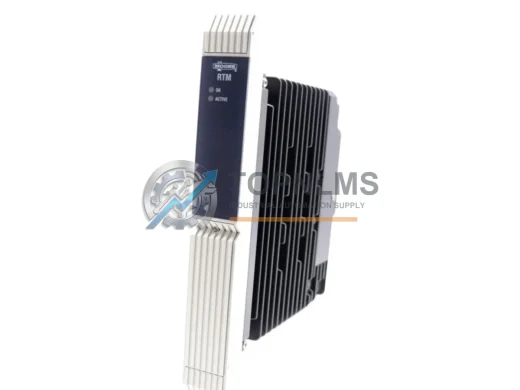
Siemens 39RTMCAN 16207-61/13 ruggedized RTM resistance temperature module for TELEPERM XS/XP DCS. Tested, 12-month warranty, fast global shipping.
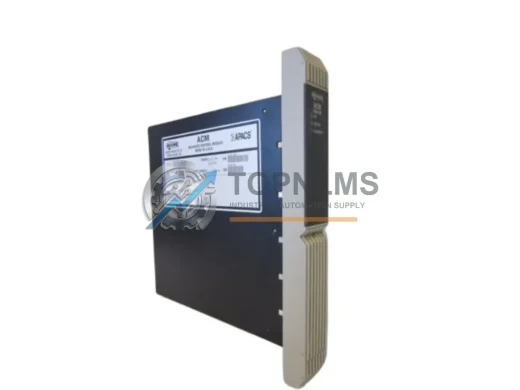
SIEMENS 39ACM24BEN 16139-215/1 ACM+ ruggedized control module. Harsh-environment rated, 12-month warranty, tested stock. Fast shipping from TOPNLMS.
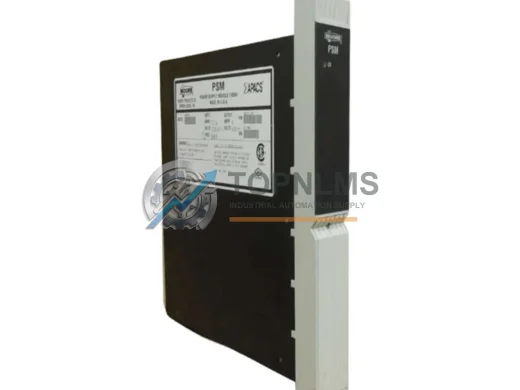
Siemens 39PSMNAN original industrial spare signal processing module. SIMATIC-compatible, fast replacement, 12-month warranty. Reduce downtime — order now.
Click Quote This Model and the Part Number field will auto-fill with 39RTMCAN 16207-61/10.