Product Overview
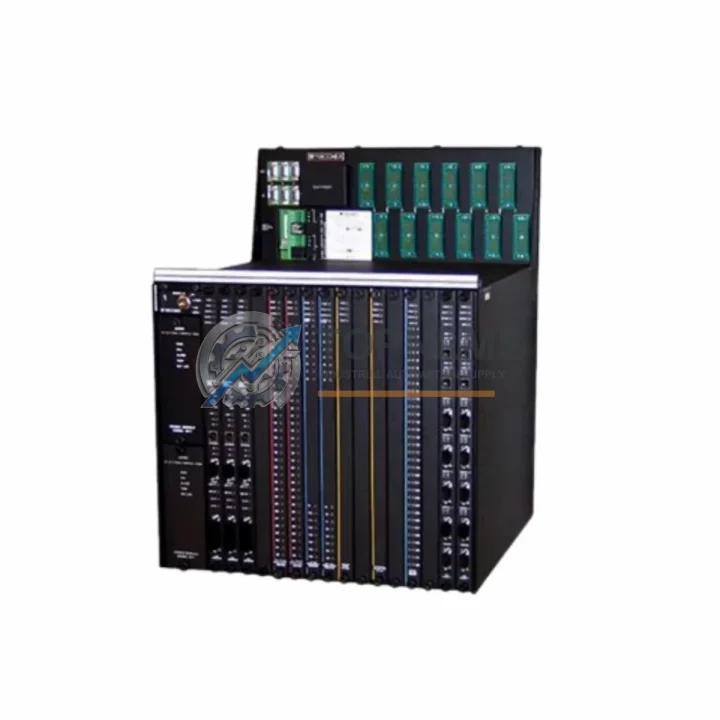
TRICONEX 8110 High Density Main Chassis: System Stability and Industrial Spare Maintenance Value
The TRICONEX 8110 High Density Main Chassis is the structural and electrical backbone of the Schneider Electric Tricon Triple Modular Redundant (TMR) safety controller platform. In process industries — oil & gas, petrochemical, power generation, and advanced manufacturing — the Tricon TMR architecture is deployed precisely because system availability cannot be compromised. The 8110 chassis houses the critical I/O and communication modules that sustain continuous, fault-tolerant operation. When this chassis fails or degrades, the entire safety instrumented system (SIS) is at risk. Sourcing a verified original spare before failure occurs is not optional — it is a fundamental pillar of any responsible preventive maintenance program.
At TOPNLMS, every TRICONEX 8110 unit is sourced from authorized supply channels, subjected to functional verification testing prior to dispatch, and backed by a 12-month warranty. Our industrial spare inventory is maintained to support emergency replacement, scheduled turnaround maintenance, and long-term lifecycle extension of legacy Tricon systems.
Critical Technical Specs
| Part Number |
8110 |
| Manufacturer |
Schneider Electric / TRICONEX |
| Platform |
Tricon TMR (Triple Modular Redundant) |
| Module Type |
High Density Main Chassis |
| Chassis Slots |
High-density configuration (supports full I/O and communication module population) |
| Compatibility |
Tricon v9/v10 series controllers; compatible with standard Tricon I/O, communication, and power modules |
| Backplane Communication |
Tricon proprietary TMR backplane bus |
| Power Input |
Accepts Tricon-series power supply modules (e.g., 8312, 8310) |
| Operating Temperature |
0°C to 60°C |
| Mounting |
Panel / rack mount; standard Tricon cabinet rail |
| Application Environment |
SIL 3 safety instrumented systems, process control cabinets, hazardous area control rooms |
| Maintenance Recommendation |
Inspect backplane connectors and chassis rails annually; replace on first sign of connector wear or thermal stress |
| Origin |
USA |
| Warranty |
12 Months — functional test verified before shipment |
Preventive Maintenance Strategy
A scheduled maintenance window for a Tricon TMR system is the optimal time to audit not just the 8110 chassis itself, but the full complement of modules and interconnects that depend on it. The chassis backplane integrity directly affects every module seated within it — a degraded connector or cracked rail can introduce intermittent faults that are notoriously difficult to diagnose under live process conditions.
During any chassis inspection or replacement, maintenance engineers should simultaneously verify the condition of the Tricon power supply modules (such as the 8310 or 8312) that feed the chassis bus. Power supply degradation is a leading cause of chassis-level instability in aging Tricon installations. If the power modules show signs of capacitor aging or output ripple, they should be replaced in the same maintenance cycle as the chassis.
The Tricon main processor modules (MP3008, MP3100 series) seated in the 8110 chassis should be inspected for firmware currency and connector wear. In TMR architecture, all three processor legs must communicate cleanly through the chassis backplane — any impedance mismatch introduced by a worn chassis connector will degrade the voting logic reliability over time.
I/O modules — including Tricon digital input modules (3501E, 3503E), digital output modules (3601E, 3603E), and analog input modules (3703E, 3706A) — should be logged for hours-in-service and flagged for replacement if they are approaching the manufacturer’s recommended service life. Replacing I/O modules during a planned chassis swap eliminates the risk of a secondary unplanned outage within the same maintenance interval.
Communication infrastructure is equally critical. The Tricon communication modules (4351B, 4352B, TCM 4329) that handle Modbus, TriStation, or peer-to-peer links should be tested for signal integrity. A chassis replacement that does not include a communication module audit risks leaving a latent fault in the network layer that will surface under production load.
Field wiring termination panels and terminal assembly modules connected to the chassis I/O should be inspected for corrosion, loose terminations, and insulation degradation — particularly in high-humidity or chemically aggressive environments. Replacing the chassis without addressing field-side termination issues will not resolve system instability caused by wiring faults.
Finally, the Tricon chassis interconnect cables and expansion cables (where multi-chassis configurations are used) should be replaced on a scheduled basis regardless of visible condition. These cables carry the TMR voting signals between chassis segments, and their failure mode is typically sudden rather than gradual — making proactive replacement the only reliable mitigation strategy.
Strategic Replacement Solutions
The TRICONEX 8110 has been in active deployment for decades, and many facilities are operating Tricon systems that are well past their original design life. Schneider Electric’s long-term support commitment to the Tricon platform means that original spare parts — including the 8110 chassis — remain available, but supply windows are narrowing as global inventory of legacy components tightens.
Facilities that delay chassis replacement until failure face two compounding risks: first, the direct cost and safety exposure of an unplanned SIS shutdown; second, the increasing difficulty of sourcing a verified original 8110 on short notice. Maintaining at least one spare 8110 chassis in the site’s critical spare inventory eliminates both risks simultaneously.
For sites managing the transition from older Tricon v9 configurations to v10 or evaluating migration to the Tricon CX platform, the 8110 chassis remains fully compatible with the current Tricon module ecosystem. This means that a chassis replacement does not require a full system upgrade — the existing processor, I/O, and communication modules can be reseated into a new 8110 chassis with no firmware changes, preserving the validated safety function and avoiding the cost and schedule risk of a full SIS re-validation.
TOPNLMS maintains stock of the 8110 and associated Tricon modules to support both emergency replacement and planned maintenance procurement. All units are tested, documented, and shipped with full traceability records to support your site’s maintenance management system requirements.
Support FAQ
Q1: Is the TRICONEX 8110 compatible with both Tricon v9 and v10 controller configurations?
Yes. The 8110 High Density Main Chassis is compatible with the Tricon v9 and v10 series platforms. It accepts the full range of current Tricon processor, I/O, power, and communication modules without modification. If you are unsure of your system version, provide your existing chassis part number and we will confirm compatibility before shipment.
Q2: What testing is performed before the 8110 is shipped?
Every TRICONEX 8110 unit dispatched by TOPNLMS undergoes functional verification testing, including backplane connector integrity checks and visual inspection for mechanical damage, corrosion, and component condition. A test report is available upon request. All units are covered by a 12-month warranty from the date of shipment.
Q3: How should I manage the 8110 chassis in my critical spare inventory?
We recommend maintaining a minimum of one 8110 chassis as a hot spare for any facility operating a Tricon TMR safety system. Given the lead times associated with sourcing legacy industrial components, a just-in-time procurement strategy introduces unacceptable risk for SIL 3 applications. Annual inventory audits should verify that the spare chassis is stored in a clean, dry environment within the manufacturer’s specified temperature and humidity range.
Q4: Can the 8110 be installed by site maintenance personnel, or is specialist support required?
The 8110 chassis replacement procedure is documented in the Schneider Electric Tricon maintenance manual and can be performed by qualified instrumentation and control technicians familiar with the Tricon platform. TOPNLMS recommends that the replacement be conducted during a planned shutdown window with the safety system in a safe state, and that post-installation functional testing be completed before returning the system to service. Contact us at [email protected] if you require technical guidance during the procurement or installation planning phase.
© 2026 TOPNLMS. All rights reserved.
Original Source: https://topnlms.com
Contact: [email protected] | +86 18359293191