Product Overview
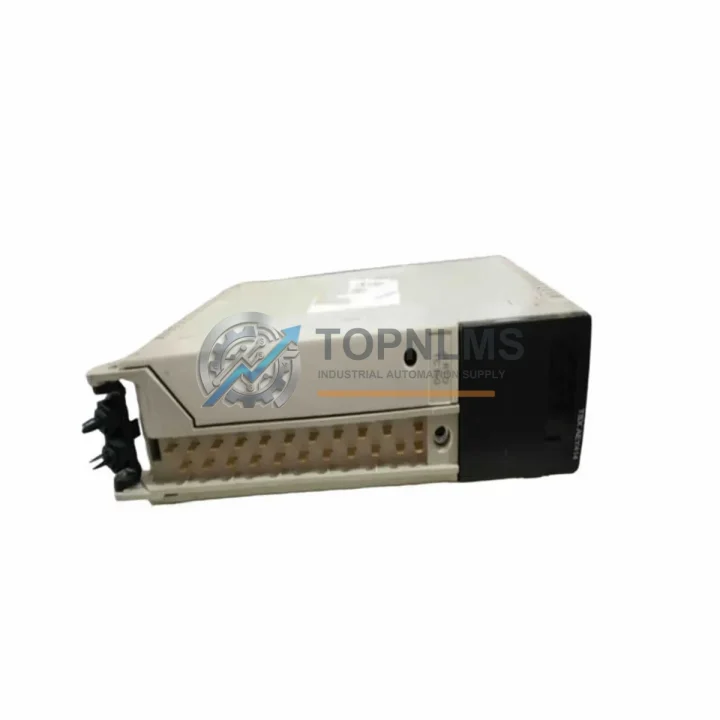
Schneider Electric TSXAEY414 Original Industrial Spare Premium: System Stability & Maintenance Value
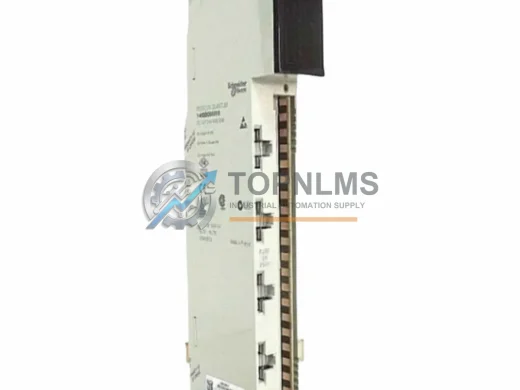
The Schneider Electric TSXAEY414 is a 4-channel analog input module engineered for the TSX Premium PLC platform — one of the most widely deployed programmable logic controller families in process automation, discrete manufacturing, and utility infrastructure worldwide. As industrial facilities extend the operational life of legacy TSX Premium systems, maintaining a verified stock of original spare modules such as the TSXAEY414 is a cornerstone of any credible preventive maintenance and business continuity strategy.
Whether you are managing a planned shutdown, responding to an unplanned fault, or building a strategic spare parts inventory for a multi-line production facility, the TSXAEY414 delivers the signal acquisition accuracy, rack compatibility, and firmware alignment that field engineers depend on. This is an original Schneider Electric component — not a third-party substitute — ensuring full compatibility with TSX Premium racks, Unity Pro / PL7 Pro programming environments, and existing I/O configurations without re-engineering.
Critical Technical Specs
| Parameter |
Specification |
| Part Number |
TSXAEY414 |
| Brand |
Schneider Electric |
| Series |
TSX Premium |
| Module Type |
Analog Input Module |
| Number of Channels |
4 Channels |
| Input Signal Types |
Voltage (±10V, 0–10V) / Current (0–20mA, 4–20mA) |
| Resolution |
12-bit + sign |
| Isolation |
Channel-to-bus isolation |
| Rack Compatibility |
TSX Premium racks (TSXRKY series) |
| Programming Environment |
Unity Pro / PL7 Pro |
| Power Supply |
Supplied via backplane (TSX Premium rack bus) |
| Operating Temperature |
0°C to +60°C |
| Storage Temperature |
-25°C to +70°C |
| Relative Humidity |
5% to 95% non-condensing |
| Protection Degree |
IP20 |
| Weight |
340 g |
| Country of Origin |
France |
| Compliance |
CE, IEC 61131-2 |
| Warranty |
12 Months from shipment date |
| Condition |
Original, tested before dispatch |
Preventive Maintenance Strategy
When a TSXAEY414 analog input module is flagged for replacement during a scheduled maintenance window or an emergency fault response, experienced maintenance engineers know that the module itself is rarely the only component requiring attention. The analog signal chain — from field sensor through terminal block, cable, module, and rack bus — must be evaluated holistically to prevent repeat failures and reduce mean time between interventions.
During a TSXAEY414 replacement, it is standard practice to simultaneously inspect the TSXAEY800 or TSXASY800 analog output modules installed in the same rack, as shared backplane faults or power supply degradation can affect multiple I/O modules simultaneously. The TSXPSY2600M or TSXPSY5000M power supply modules feeding the TSX Premium rack should be load-tested and their output voltage verified — a marginal power supply is a common root cause of intermittent analog channel errors that are often misdiagnosed as module failure.
Terminal blocks and field wiring connected to the TSXAEY414 deserve close inspection. Loose or corroded connections on TSXCDP053 or TSXCDP203 pre-wired cables and their associated terminal blocks are a frequent source of signal drift and channel noise. If the facility uses TSXDEY16D2 or TSXDEY32D2 digital input modules in adjacent slots, verifying their status during the same maintenance window avoids a second rack pull within the same quarter.
For facilities running mixed analog and digital I/O architectures, the TSXDMZ28DR or TSXDMZ64DTK discrete mixed I/O modules in the same control cabinet should be included in the inspection checklist. Communication integrity between the TSX Premium CPU — typically a TSXP57103M, TSXP57203M, or TSXP57303M processor module — and the I/O rack should be verified via Unity Pro diagnostics to confirm that the analog channel fault was isolated to the TSXAEY414 and has not propagated to the CPU’s I/O bus.
Where signal isolation is critical — particularly in high-noise industrial environments such as steel mills, chemical plants, or heavy press lines — pairing the replacement TSXAEY414 with a review of installed signal isolators or surge protection devices on the analog input wiring is a best practice that significantly extends module service life. Facilities that have experienced repeated analog module failures in the same slot should also evaluate whether the TSXRKY8EX or TSXRKY12EX expansion racks and their bus connectors are contributing to the fault pattern.
Strategic Replacement Solutions
The TSX Premium platform, while no longer in active development, remains operational in thousands of production facilities globally. Schneider Electric’s transition roadmap toward the Modicon M340 and M580 platforms means that original TSX Premium spare modules are increasingly difficult to source through standard distribution channels — making verified original stock from specialist suppliers a critical procurement priority.
The TSXAEY414 is a direct, plug-and-play replacement for any failed or degraded 4-channel analog input module in a TSX Premium rack. Because it is an original Schneider Electric component, it requires no firmware modification, no I/O address remapping, and no changes to existing Unity Pro or PL7 Pro application programs. This eliminates the engineering risk and validation overhead associated with third-party substitute modules, which may require hardware configuration changes or introduce signal accuracy deviations that affect process control quality.
For facilities managing aging TSX Premium infrastructure, maintaining a minimum stock of one to two TSXAEY414 modules per production line is a widely adopted strategy among maintenance managers seeking to reduce unplanned downtime exposure. The module’s 12-bit resolution and multi-range input capability (voltage and current) make it suitable for a broad range of sensor types — thermocouples via external transmitters, pressure transducers, flow meters, and level sensors — ensuring that a single spare covers multiple process measurement points.
When planning a phased migration from TSX Premium to a newer Modicon platform, the TSXAEY414 serves as a bridge component that maintains production continuity during the transition period, allowing engineering teams to migrate control logic incrementally without forcing a full system cutover under production pressure.
Support FAQ
Q1: Is the TSXAEY414 compatible with all TSX Premium rack sizes?
Yes. The TSXAEY414 is compatible with all standard TSX Premium racks in the TSXRKY series, including the TSXRKY4EX, TSXRKY6EX, TSXRKY8EX, and TSXRKY12EX. It occupies a single module slot and draws power from the rack backplane. No external power wiring is required for the module itself.
Q2: What testing is performed before shipment?
Every TSXAEY414 unit is powered on and functionally tested prior to dispatch. Key checks include backplane communication verification, channel input response across the supported voltage and current ranges, and visual inspection for physical damage. A 12-month warranty is provided from the shipment date, covering manufacturing defects and functional failures under normal operating conditions.
Q3: How do I verify compatibility with my existing PLC program before installation?
The TSXAEY414 is a standard Schneider Electric catalog module and is natively recognized by Unity Pro and PL7 Pro without requiring any library updates. In Unity Pro, navigate to the hardware configuration editor, confirm the rack slot assignment matches your existing I/O map, and verify that the channel configuration (input range, filter time constant) matches your application requirements. No program modifications are needed for a like-for-like replacement.
Q4: What is the recommended spare parts inventory strategy for TSX Premium analog modules?
For facilities with 10 or more TSX Premium racks, maintenance best practice recommends holding a minimum of 2–3 TSXAEY414 modules as on-site critical spares, supplemented by a supplier relationship that can deliver additional units within 3–5 business days. Given the declining availability of original TSX Premium modules through standard channels, early procurement and strategic stockpiling significantly reduces the risk of extended downtime caused by sourcing delays during an unplanned fault event.