
SAIA-Burgess
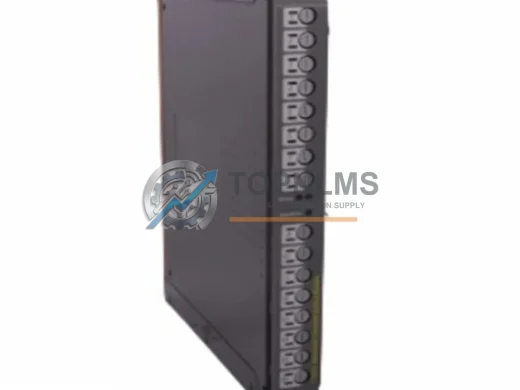
SAIA PCD3.W720 Original Industrial Spare PCD3 Compatible
PCD3.W720SAIA PCD3.W720 original industrial spare weighing module. PCD3 series gravimetric control, 12-month warranty, tested before shipment. Fast worldwide delivery.
Request availability, condition, lead time and export shipping details for PCD6.A4.
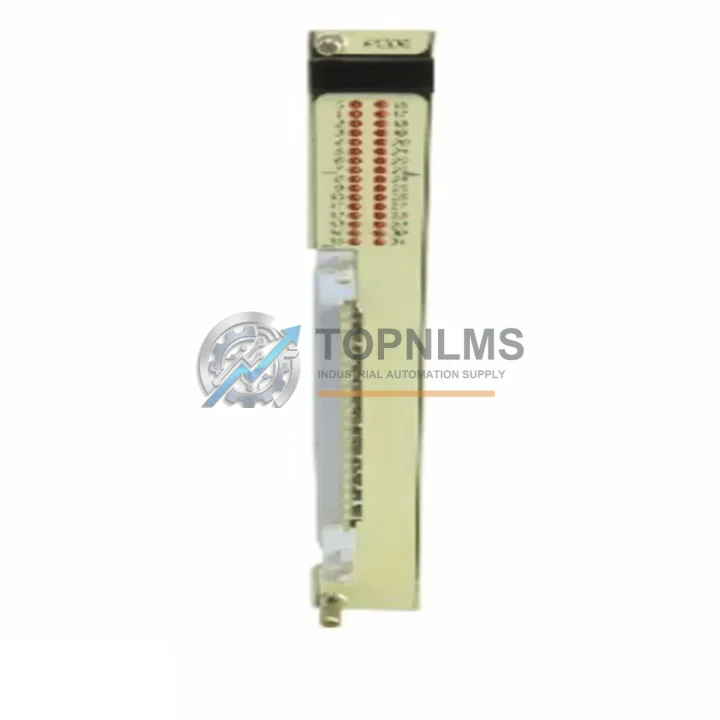
Send this exact part number, quantity and destination country. TOPNLMS will confirm availability, condition and export lead time before quotation.
The SAIA PCD6.A4 is a rack-mount CPU module designed for the SAIA PCD6 Series programmable logic controller platform. For facilities running aging PCD6-based control systems — including those built around discontinued predecessors such as the PCD4 or early PCD6 variants — migrating to or replacing with the PCD6.A4 offers a structured, low-risk path to system continuity. Whether your existing installation relies on SAIA’s S-Bus communication backbone, RS-232/RS-485 serial interfaces, or Ethernet-based supervisory links, the PCD6.A4 is engineered to integrate within the same rack architecture and control cabinet footprint, minimizing rewiring effort and reducing planned downtime to the shortest possible window.
Industrial sites that have operated SAIA PCD6 controllers for 10 to 20 years frequently encounter the challenge of sourcing CPU replacements when the original module fails or reaches end-of-service. The PCD6.A4 addresses this directly: it mounts into the standard PCD6 rack backplane, accepts the same I/O module population — including digital input/output cards, analog signal modules, and communication interface boards — and retains compatibility with programs developed in SAIA’s PG5 programming environment. This means existing ladder logic, function block diagrams, and structured text programs can be transferred or re-downloaded with minimal modification, preserving years of validated control logic.
During a retrofit or emergency replacement, field engineers typically need to account for several critical compatibility dimensions. Power supply requirements for the PCD6.A4 align with the standard PCD6 rack power modules, so existing 24 VDC or AC-fed power supply units already installed in the control cabinet do not require replacement. The module’s physical dimensions conform to the PCD6 rack slot standard, meaning no mechanical modifications to the cabinet enclosure or DIN rail arrangement are necessary. Communication protocol continuity is equally important: the PCD6.A4 supports SAIA S-Bus, Modbus RTU, and Modbus TCP, ensuring that upstream SCADA systems, HMI panels, and remote I/O nodes continue to communicate without gateway reconfiguration.
A complete migration from a failed or obsolete PCD6 CPU typically involves coordinating several related components. Terminal modules and wiring harnesses connected to the existing I/O cards remain in place. Communication modules handling Profibus DP or Ethernet links slot into the same backplane positions. Programming cables — specifically the SAIA PG5-compatible USB or serial programming interface — are used to download the restored or updated application program. If the site also operates SAIA PCD2 or PCD3 series controllers in adjacent panels, the S-Bus network topology allows the upgraded PCD6.A4 to participate in the same multi-master or master-slave communication architecture without protocol bridging.
For control systems that include SAIA HMI operator panels or third-party touchscreen displays communicating via Modbus TCP, the PCD6.A4’s onboard Ethernet port provides a direct connection point, eliminating the need for an additional communication gateway module. Sites integrating signal isolators between field sensors and the PLC’s analog input cards will find that the PCD6.A4’s analog I/O compatibility preserves existing signal conditioning arrangements. Similarly, installations using SAIA PCD6 expansion racks with additional I/O capacity can retain those racks and their associated bus extension cables without modification.
From a procurement and project planning perspective, the PCD6.A4 is available from stock, enabling rapid dispatch to minimize unplanned downtime. Each unit undergoes functional testing prior to shipment, covering power-on initialization, communication port verification, and I/O bus integrity checks. Units are shipped with appropriate anti-static and shock-protective packaging suitable for international freight. Standard lead time from order confirmation to dispatch is 1–3 business days for in-stock units, with express courier options available for emergency breakdown situations.
| Parameter | Legacy / Predecessor Models | SAIA PCD6.A4 (Replacement) |
|---|---|---|
| Platform Series | SAIA PCD4, PCD6 early variants | SAIA PCD6 Series |
| Rack Compatibility | PCD6 standard backplane | PCD6 standard backplane (direct fit) |
| Communication Protocols | S-Bus, RS-232, RS-485, Modbus RTU | S-Bus, Modbus RTU, Modbus TCP, Ethernet |
| Programming Environment | SAIA PG5 (legacy versions) | SAIA PG5 (current versions, backward compatible) |
| Power Supply | 24 VDC / AC via PCD6 rack PSU | 24 VDC / AC via PCD6 rack PSU (no change) |
| I/O Module Compatibility | PCD6 digital & analog I/O cards | Full PCD6 I/O module compatibility retained |
| Physical Installation | Rack-mount, PCD6 slot | Rack-mount, PCD6 slot (no cabinet modification) |
| Replacement Recommendation | Direct drop-in for failed PCD6 CPU | ✔ Confirmed direct replacement |
| Warranty | — | 12-Month Warranty included |
A successful PCD6.A4 migration typically involves coordinating several system components beyond the CPU module itself. The PCD6 rack power supply module must be verified for adequate current capacity when adding new I/O cards. SAIA PCD6 digital input modules and analog output modules already installed in the rack connect directly to the PCD6.A4 backplane without adapter boards. For sites requiring expanded remote I/O, SAIA PCD2 or PCD3 remote stations can be networked via S-Bus or Modbus RTU, extending the control architecture without replacing field wiring. Communication interface modules supporting Profibus DP or CANopen can be inserted into available PCD6 rack slots to bridge legacy field devices. Programming and commissioning requires a SAIA PG5-compatible programming cable — typically USB to serial — to establish a direct connection between the engineering workstation and the PCD6.A4 CPU port. HMI panels communicating via Modbus TCP connect directly to the CPU’s Ethernet port, while older operator terminals using RS-485 S-Bus links continue to function without modification. Signal isolators installed between field transmitters and analog input cards remain in service, as the PCD6.A4’s analog input specifications are compatible with standard 4–20 mA and 0–10 V signal ranges. For installations requiring UPS-backed control power, existing 24 VDC battery-backed power supplies feeding the PCD6 rack require no reconfiguration.
Q: Can I reuse existing field wiring when replacing the CPU?
A: Yes. The PCD6.A4 installs into the same rack slot as the original CPU. All I/O module wiring connected to terminal blocks on the I/O cards remains undisturbed. Only the CPU slot is affected.
Q: Do I need to rewrite my PLC program?
A: No. Programs developed in SAIA PG5 for the PCD6 platform are compatible with the PCD6.A4. A program backup from the original CPU (if available) can be downloaded directly. If the original program is unavailable, TOPNLMS can advise on recovery options.
Q: Are communication protocols preserved after replacement?
A: Yes. The PCD6.A4 supports S-Bus, Modbus RTU, and Modbus TCP natively. Existing SCADA, HMI, and remote I/O communication configurations do not require changes.
Q: Will the module fit in my existing control cabinet without modification?
A: Yes. The PCD6.A4 conforms to the standard PCD6 rack slot dimensions. No mechanical modification to the cabinet, DIN rail, or rack enclosure is required.
Q: What is the commissioning procedure after installation?
A: Connect the programming cable to the CPU’s programming port, power on the rack, download the application program via PG5, verify I/O mapping, and test communication links. Typical commissioning time for a direct replacement is 1–4 hours depending on system complexity.
Q: Can the PCD6.A4 communicate with third-party devices using Modbus?
A: Yes. Both Modbus RTU (via RS-485) and Modbus TCP (via Ethernet) are supported, enabling integration with third-party drives, meters, and remote I/O systems without additional gateways.
Every SAIA PCD6.A4 unit supplied by TOPNLMS is covered by a 12-month warranty from the date of shipment. Prior to dispatch, each module undergoes a structured pre-shipment inspection covering power-on functionality, communication port operation, and backplane interface integrity. Units that do not pass inspection are not shipped. In the event of a confirmed defect within the warranty period, TOPNLMS provides replacement dispatch or repair support with priority handling to minimize impact on your production schedule. Our after-sales response target is within 24 hours of a warranty claim submission. All units are shipped in anti-static, shock-protective packaging with appropriate documentation. For emergency breakdown procurement, express shipping options are available to most global destinations. Contact our technical sales team to confirm stock availability, lead time, and shipping terms before placing your order.
SAIA PCD3.W720 original industrial spare weighing module. PCD3 series gravimetric control, 12-month warranty, tested before shipment. Fast worldwide delivery.
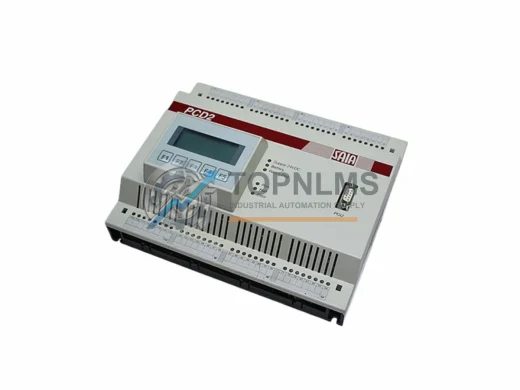
SAIA PCD2.M110 PLC CPU replacement & upgrade for PCD2 Series. Compatible wiring, protocols & rack. 12-month warranty. Fast global shipping from Xiamen.
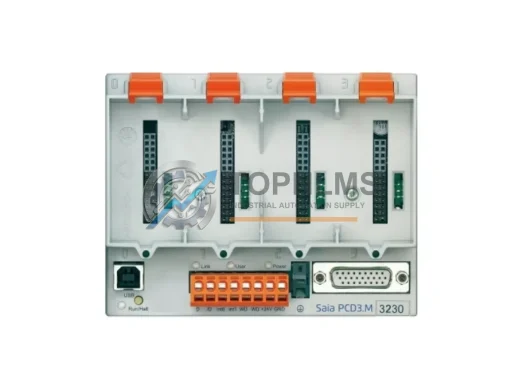
Drop-in replacement for SAIA BURGESS PCD3.M3230 PLC CPU Module. PCD3 Series compatible. Wiring, comms & rack upgrade support. 12-month warranty. Ships fast.
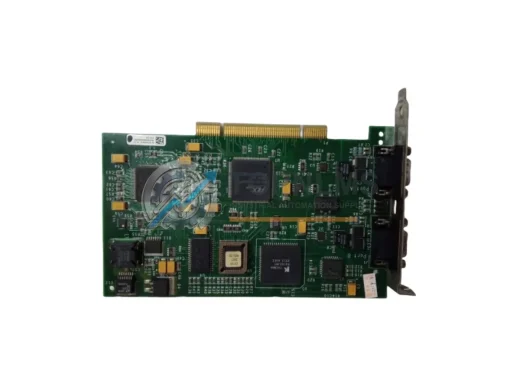
Schneider Electric 416NHM30032A Modicon Quantum PLC memory card. Rugged, reliable industrial automation component. In stock, tested, 12-month warranty. Fast shipping.
Click Quote This Model and the Part Number field will auto-fill with PCD6.A4.