
Tokyo Electron
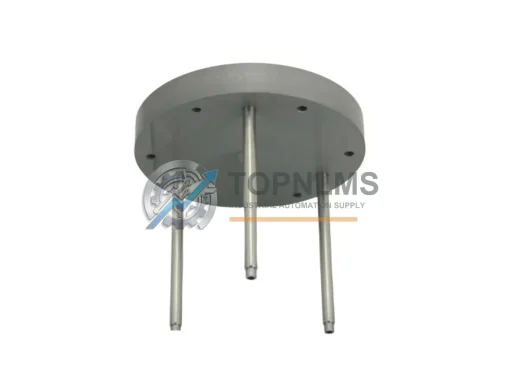
Tokyo Electron TF906276-001 Pin Base Assembly for TEL Trias
TF906276-001TF906276-001 replacement & upgrade for TEL Trias TMH-064 PM Chamber. Compatible with 414713-001, 0010-33417. 480×190mm. 12-month warranty. Fast global ship.
Request availability, condition, lead time and export shipping details for FV10105H-807HS-6460-BROOKS-MFC5964-AT200.
Send this exact part number, quantity and destination country. TOPNLMS will confirm availability, condition and export lead time before quotation.
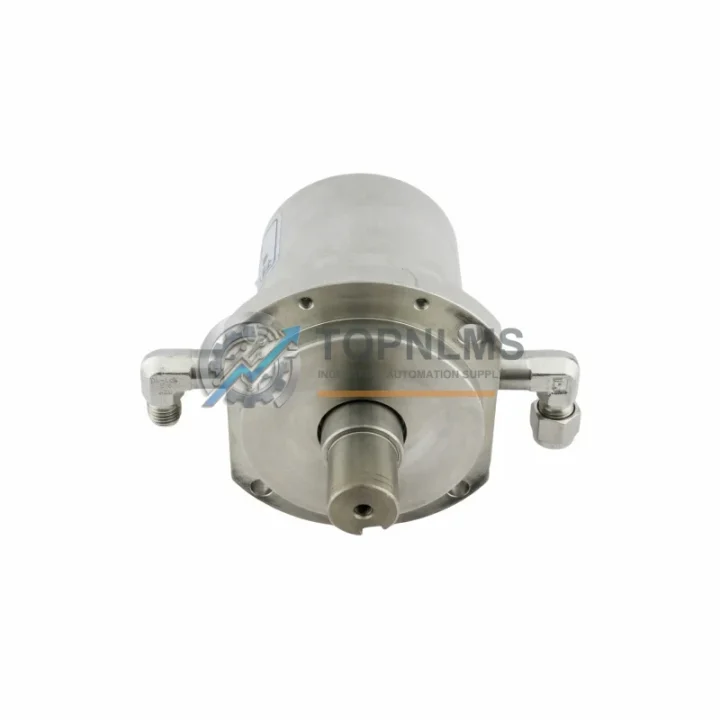
In high-precision analytical and semiconductor manufacturing environments, the integrity of ultra-high vacuum (UHV) motion feedthrough components is non-negotiable. The RIGAKU FV10105H-807HS-6460-BROOKS-MFC5964-AT200 is an original rotary motion feedthrough engineered for demanding XRD (X-ray Diffraction) and mass flow controller (MFC) system applications. Sourced directly from RIGAKU’s industrial spare parts supply chain, this component is designed to maintain the vacuum integrity and rotational precision that analytical instrumentation and process control systems depend on for continuous, reliable operation.
Unplanned downtime in XRD laboratories, semiconductor fabs, or thin-film deposition facilities carries significant operational and financial consequences. A failed or degraded rotary feedthrough can compromise vacuum levels, introduce measurement error, or halt production entirely. Stocking the FV10105H-807HS-6460-BROOKS-MFC5964-AT200 as a verified spare ensures your maintenance team can execute rapid, like-for-like replacement without waiting on extended lead times — a critical advantage in facilities operating on tight production schedules or regulatory inspection cycles.
| Parameter | Specification |
|---|---|
| Part Number / SKU | FV10105H-807HS-6460-BROOKS-MFC5964-AT200 |
| Brand | RIGAKU |
| Series | UHV (Ultra-High Vacuum) |
| Component Type | Rotary Motion Feedthrough |
| Compatible Systems | RIGAKU XRD Systems, BROOKS MFC5964, AT200 MFC Controllers |
| Vacuum Compatibility | Ultra-High Vacuum (UHV) rated |
| Motion Type | Rotary |
| Country of Origin | Japan |
| Application Environment | XRD analytical instruments, MFC-controlled process chambers, thin-film deposition, semiconductor fab |
| Installation | OEM-compatible, direct replacement for existing RIGAKU UHV feedthrough assemblies |
| Maintenance Recommendation | Inspect seals and rotational torque every 6–12 months; replace proactively during scheduled shutdowns |
| Warranty | 12 Months |
| Condition | Original / New |
A rotary feedthrough failure rarely occurs in isolation. In most XRD and MFC-integrated systems, the feedthrough operates as part of a tightly coupled vacuum and motion control assembly. A comprehensive preventive maintenance program should treat the FV10105H-807HS-6460-BROOKS-MFC5964-AT200 as one node in a broader inspection checklist.
During scheduled shutdowns or annual calibration cycles, maintenance engineers should simultaneously inspect the BROOKS MFC5964 mass flow controller for drift or contamination — MFC degradation often accelerates mechanical wear on connected feedthrough assemblies. The AT200 MFC controller unit should be verified for signal integrity and valve response time, as erratic control signals can impose abnormal torque loads on the rotary feedthrough mechanism.
Vacuum integrity upstream and downstream of the feedthrough depends heavily on the condition of KF/CF flange gaskets and copper crush seals. These consumables should be replaced as a matter of course whenever the feedthrough is serviced. Similarly, turbomolecular pump controllers and ion gauge controllers connected to the same chamber should be checked for baseline pressure anomalies that may indicate seal degradation before it becomes critical.
In XRD goniometer systems, the feedthrough interfaces with the goniometer drive motor assembly and associated encoder feedback modules. Worn feedthrough bearings can introduce angular positioning error that manifests as peak broadening or intensity inconsistency in diffraction data — symptoms often misattributed to sample preparation or X-ray source degradation. Proactive feedthrough replacement eliminates this variable from the diagnostic equation.
For facilities managing multiple RIGAKU instruments, it is advisable to maintain parallel spares for the RIGAKU X-ray tube shutter assembly, high-voltage power supply modules, and detector interface boards. These components share similar service intervals and are frequently replaced during the same maintenance window as motion feedthroughs. Coordinating procurement of these items reduces per-event logistics costs and minimizes the number of separate maintenance interventions required per year.
Where the system integrates with a BROOKS instrument rack or multi-channel MFC manifold, the associated pressure transducer modules and isolation valve actuators should be inspected for seal wear and actuator response. A single degraded isolation valve can allow atmospheric contamination into the UHV chamber, rendering a newly installed feedthrough ineffective within days of commissioning.
The FV10105H-807HS-6460-BROOKS-MFC5964-AT200 is positioned as a direct OEM-equivalent replacement for aging or failed rotary feedthrough assemblies in RIGAKU UHV systems. Unlike aftermarket alternatives, original RIGAKU feedthroughs are manufactured to the same dimensional and material tolerances as the units installed at the factory — ensuring that vacuum performance, rotational smoothness, and service life match the original system specification.
For facilities operating legacy RIGAKU XRD platforms that are no longer under manufacturer support contracts, sourcing original spare parts through verified industrial distributors is the most cost-effective strategy for extending system life. A single original feedthrough replacement can defer capital expenditure on instrument replacement by 3–5 years, particularly when combined with concurrent servicing of associated vacuum and motion control components.
Rapid replacement capability is a key operational advantage. With this part stocked on-site or available through a short-lead-time supplier, maintenance teams can restore instrument uptime within hours rather than days. This is especially critical in regulated environments — pharmaceutical QC labs, materials research facilities, and semiconductor fabs — where instrument downtime directly impacts batch release schedules, research timelines, or production yields.
The 12-month warranty provided with each unit covers manufacturing defects and ensures that procurement teams can justify the purchase within standard capital and maintenance budgeting frameworks. Each unit is tested prior to shipment to verify dimensional conformance and rotational performance, reducing the risk of infant failure upon installation.
Q1: Is this feedthrough compatible with all RIGAKU XRD systems, or only specific models?
The FV10105H-807HS-6460-BROOKS-MFC5964-AT200 is specifically designed for RIGAKU UHV series instruments integrated with BROOKS MFC5964 and AT200 mass flow control configurations. Compatibility with other RIGAKU XRD platforms should be verified against the instrument’s BOM or service manual before installation. Contact us with your instrument model number for confirmation.
Q2: What does the 12-month warranty cover, and how is it claimed?
The 12-month warranty covers manufacturing defects in materials and workmanship from the date of shipment. It does not cover damage resulting from improper installation, contamination, or operation outside specified vacuum and torque parameters. To initiate a warranty claim, contact [email protected] with your order number, installation date, and a description of the observed failure.
Q3: How should this part be tested after installation before returning the system to service?
After installation, perform a staged pump-down sequence and verify base pressure recovery to the system’s rated UHV specification before engaging rotary motion. Confirm rotational torque is within the OEM-specified range using a calibrated torque gauge. Run a short diffraction scan on a reference standard to verify angular positioning accuracy before resuming production or analytical work.
Q4: What is the recommended inventory strategy for this component?
For facilities operating a single RIGAKU UHV instrument, maintaining one on-site spare is recommended. Multi-instrument facilities or those with high-utilization schedules should consider a two-unit buffer to cover simultaneous failures or staggered maintenance windows. Given the component’s role in vacuum integrity and motion accuracy, the cost of a spare unit is negligible compared to the cost of unplanned downtime.
TF906276-001 replacement & upgrade for TEL Trias TMH-064 PM Chamber. Compatible with 414713-001, 0010-33417. 480×190mm. 12-month warranty. Fast global ship.
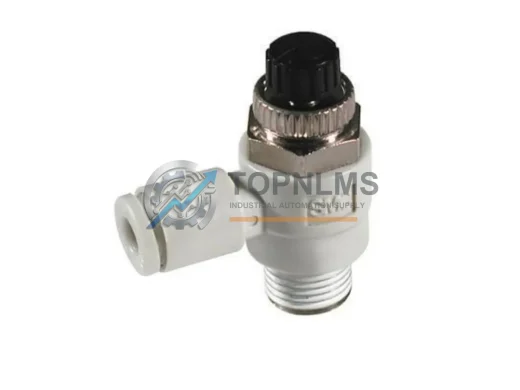
Semitool 900T0272-503 ruggedized chamber control block for HV-RP 810. In-stock, tested, 12-month warranty. Fast shipping. Contact topnlms.com.
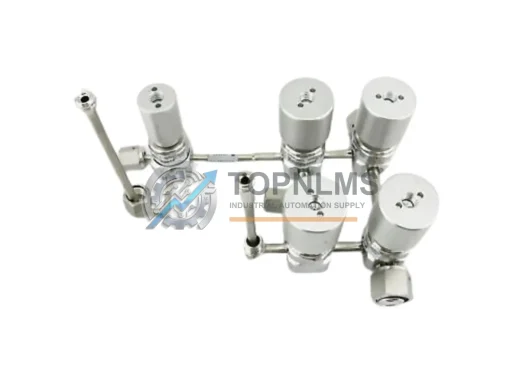
Original Swagelok 6LVV-P15961-DU-AA pneumatic valve assembly. 6LVV Series compatible, tested & ready to ship. 12-month warranty. Industrial replacement.
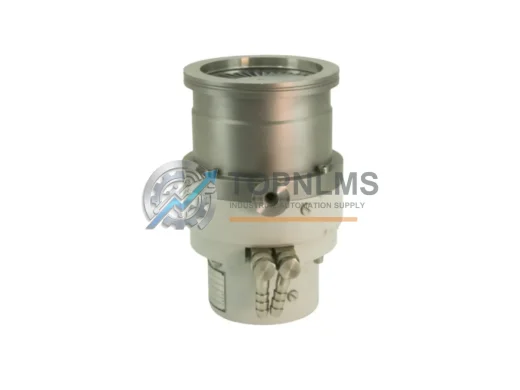
Original Pfeiffer Vacuum PM-P01-210NAH2964 TPH 170 turbomolecular pump spare. Compatible with PMC237 controller. Industrial replacement, 12-month warranty, worldwide shipping.
Click Quote This Model and the Part Number field will auto-fill with FV10105H-807HS-6460-BROOKS-MFC5964-AT200.