
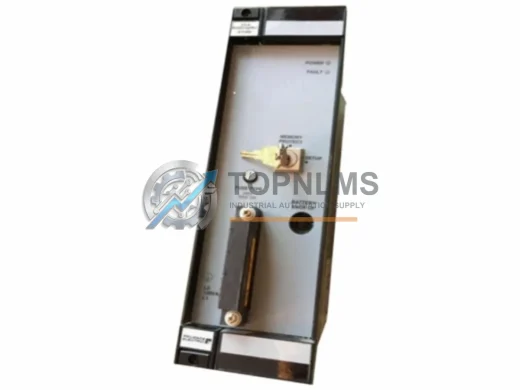
Reliance Electric
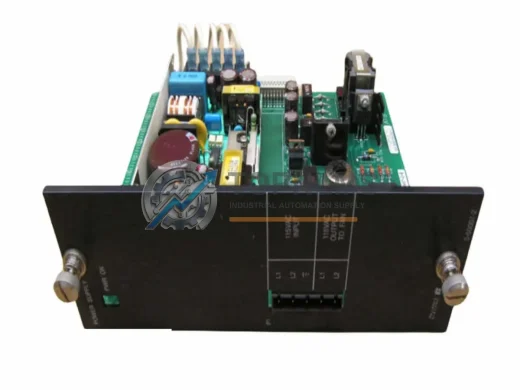
Reliance Electric 57C493 AUTOMAX Power Supply Replacement
57C493Reliance Electric 57C493 AUTOMAX Power Supply Module replacement & upgrade. Compatible wiring, rack, and comms. 12-month warranty. Ships from Xiamen.
Request availability, condition, lead time and export shipping details for PSM50 9101-3000E.
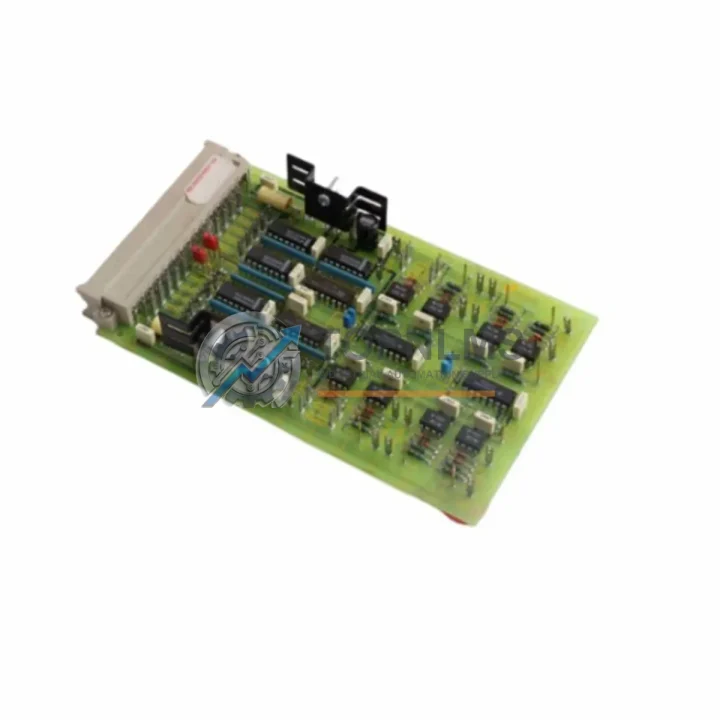
Send this exact part number, quantity and destination country. TOPNLMS will confirm availability, condition and export lead time before quotation.
The Reliance Electric PSM50 9101-3000E is an original drive power supply board engineered for the PSM Series variable frequency drive platform. In industrial environments where unplanned downtime translates directly into production loss and revenue impact, maintaining a verified spare of this board is a foundational element of any responsible preventive maintenance program. Whether you operate a continuous process line, a discrete manufacturing cell, or a legacy automation system built around Reliance Electric drives, the PSM50 9101-3000E delivers the electrical stability and compatibility your operation demands.
This board serves as the primary power conditioning and regulation stage within PSM Series drives, converting and distributing DC bus power to the drive’s control logic, gate driver circuits, and auxiliary outputs. Failure of this component typically manifests as drive fault codes, erratic output behavior, or complete loss of drive function — all scenarios that demand immediate corrective action. Having a pre-tested, original replacement on the shelf eliminates the critical delay between fault identification and system restoration.
| Parameter | Specification |
|---|---|
| Manufacturer | Reliance Electric (Rockwell Automation) |
| Part Number / SKU | PSM50 9101-3000E |
| Series | PSM50 / PSM Series Variable Frequency Drive |
| Component Type | Drive Power Supply Board |
| Function | DC bus power regulation, control logic supply, gate driver auxiliary power |
| Compatibility | Reliance Electric PSM Series drives; cross-compatible with select GV3000 and FlexPak 3000 control architectures |
| Origin | United States |
| Installation | Direct board-level replacement; OEM mounting footprint and connector layout |
| Application Environment | Industrial plant floor, control cabinet, HVAC drive panels, pump and fan drive systems |
| Maintenance Recommendation | Inspect every 12–24 months; replace proactively upon capacitor aging or thermal stress indicators |
| Pre-shipment Testing | Functional power-on test and output voltage verification performed before dispatch |
| Warranty | 12 Months from date of shipment |
A structured preventive maintenance approach for PSM Series drives extends well beyond the power supply board itself. When scheduling a planned inspection or responding to a drive fault, maintenance engineers should treat the PSM50 9101-3000E replacement as the starting point of a broader system health review — not the endpoint.
Begin with the DC bus capacitor bank and associated pre-charge resistor assembly. These components age in parallel with the power supply board and are frequent co-failure items in drives that have operated for five or more years. If the power supply board shows signs of thermal stress or electrolytic leakage, the capacitor bank warrants immediate inspection and proactive replacement.
Next, evaluate the Reliance Electric gate driver board (also referenced as the firing board or IGBT driver card in PSM Series documentation). The gate driver interfaces directly with the power supply board’s auxiliary outputs; a degraded power supply can induce latent damage in gate driver circuitry that only becomes apparent after the power supply is replaced. Stocking a spare gate driver board alongside the PSM50 9101-3000E is a widely adopted practice in facilities running multiple PSM Series drives.
The PSM Series control board — responsible for speed reference processing, PID loop execution, and fault logging — should be inspected for corrosion on edge connectors and ribbon cable terminations. In humid or chemically aggressive environments, connector oxidation is a leading cause of intermittent drive faults that are frequently misdiagnosed as power supply failures. Cleaning or replacing the ribbon cable assembly between the control board and power supply board is a low-cost step that prevents repeat failures.
For drives integrated into larger control architectures, verify the integrity of the communication interface module — whether DeviceNet, Profibus DP, or serial RS-485 adapter — since power supply instability can corrupt firmware states in communication adapters. A spare communication module appropriate to your network topology is a prudent addition to any PSM Series spare parts kit. Facilities running Reliance Electric drives alongside Allen-Bradley PLC-5 or SLC 500 controllers should also confirm that the remote I/O adapter card is functioning correctly, as communication faults at the drive level can cascade into PLC fault states.
At the cabinet level, inspect the input line reactor and EMC filter module. These upstream components protect the drive from line-side transients; a failed line reactor or degraded filter can accelerate wear on the power supply board and should be replaced on a coordinated schedule. Similarly, check the dynamic braking resistor and braking chopper module if your application involves frequent deceleration cycles — these components experience thermal cycling stress that correlates with power supply board service life.
Finally, review the terminal block and wiring harness condition within the drive cabinet. Loose or corroded terminals at the power input, motor output, and control wiring points are a common source of intermittent faults and can cause voltage spikes that stress the power supply board. Replacing worn terminal blocks and re-torquing all connections during a planned outage is a cost-effective measure that protects the entire drive investment. Where the PSM Series drive interfaces with an operator interface panel or HMI, confirm that the display and keypad assembly is reading drive status correctly — a faulty HMI can mask underlying drive faults and delay accurate diagnosis during a maintenance event.
The PSM50 9101-3000E addresses one of the most persistent challenges in legacy drive maintenance: sourcing original, specification-compliant replacement boards for drives that are no longer in active production. Reliance Electric’s PSM Series drives remain installed in a significant number of industrial facilities globally, particularly in applications where the cost and complexity of a full drive replacement — including motor re-sizing, cable re-routing, and control system re-commissioning — cannot be justified against the operational budget.
By replacing only the failed power supply board with an original PSM50 9101-3000E, maintenance teams restore full drive functionality without disturbing the surrounding control architecture. This approach preserves existing parameter configurations, eliminates the need for motor compatibility re-validation, and avoids the extended lead times associated with new drive procurement and installation. In facilities operating multiple PSM Series drives, a single spare board can serve as a rotating replacement asset across the fleet, reducing the total spare parts investment while maintaining system availability.
For facilities managing the transition from legacy Reliance Electric platforms toward modern Rockwell Automation PowerFlex or Allen-Bradley drive families, the PSM50 9101-3000E provides a cost-effective bridge strategy — keeping existing drives operational during the phased migration period without committing to premature capital expenditure on full drive replacements. This is particularly relevant in plants where the GV3000 series drive or FlexPak 3000 DC drive operates alongside PSM Series units within the same motor control center, allowing maintenance teams to standardize spare parts procurement and reduce the number of vendor relationships required to sustain the installed base.
Each unit supplied by TOPNLMS is sourced from verified supply channels, subjected to functional pre-shipment testing, and covered by a 12-month warranty from the date of shipment. Orders are processed promptly with global logistics support to minimize the time between purchase and installation.
Q1: What is the expected service life of the PSM50 9101-3000E, and when should I plan a proactive replacement?
The power supply board in PSM Series drives typically has a service life of 8–15 years under normal operating conditions, with electrolytic capacitors on the board being the primary life-limiting components. Proactive replacement is recommended when the drive is 10+ years old, when capacitor bulging or leakage is observed, or when the drive begins logging intermittent fault codes without a clear external cause. Maintaining one spare board per 3–5 installed drives is a common inventory strategy in facilities with continuous production requirements.
Q2: How do I verify compatibility before installation?
Confirm the drive model number from the nameplate on the drive chassis and cross-reference against the PSM50 series documentation. The 9101-3000E board uses a standardized OEM connector and mounting layout within the PSM50 family. If you are uncertain about compatibility with a specific drive revision, contact TOPNLMS with the full drive nameplate data and we will confirm applicability before shipment.
Q3: What pre-shipment testing is performed, and what does the 12-month warranty cover?
Every PSM50 9101-3000E unit undergoes a functional power-on test and output voltage verification prior to dispatch. The 12-month warranty covers defects in materials and workmanship under normal operating conditions. It does not cover damage resulting from incorrect installation, overvoltage events, or physical mishandling. Warranty claims are supported with direct technical assistance from TOPNLMS.
Q4: Can I use this board as a like-for-like field replacement without drive re-parameterization?
Yes. The PSM50 9101-3000E is a direct board-level replacement that does not store drive parameters. All speed references, PID settings, and fault history are retained on the control board, which remains in place during the power supply board swap. Standard installation requires only safe isolation of the drive, physical board replacement, and re-energization — no parameter re-entry is required in the majority of PSM Series applications.
Reliance Electric 57C493 AUTOMAX Power Supply Module replacement & upgrade. Compatible wiring, rack, and comms. 12-month warranty. Ships from Xiamen.
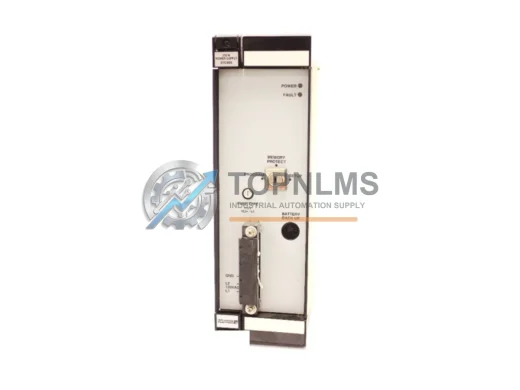
Buy Reliance Electric 57C493 ES371AMB original industrial power supply module. ES371 Series compatible spare, tested, 12-month warranty, fast worldwide shipping.
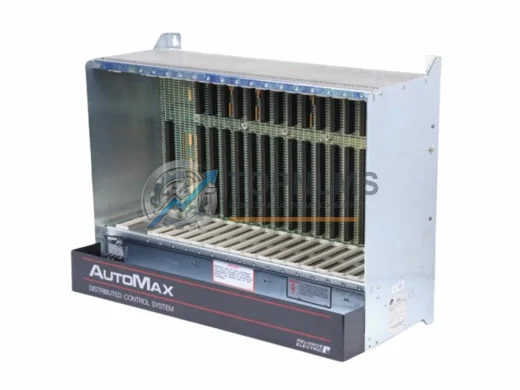
Reliance Electric 57C331 DC Power Supply Module replacement for GV3000 drives. Compatible upgrade solution. 12-month warranty. Fast global shipping from TOPNLMS.
RELIANCE 0-60007-2 original drive power supply module. Compatible with FlexPak & GP2000 series. Fast shipping, 12-month warranty. Industrial spare in stock.
Click Quote This Model and the Part Number field will auto-fill with PSM50 9101-3000E.