
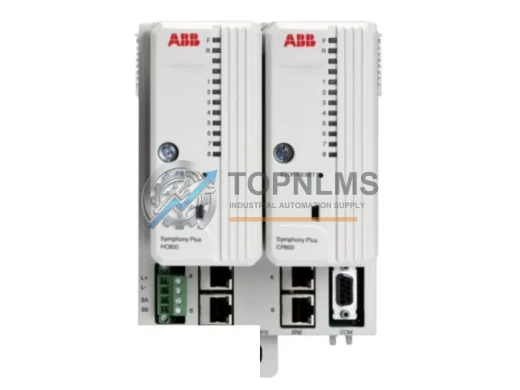
ABB
ABB CPM810 Original Industrial Spare AC800M Compatible
CPM810ABB CPM810 original industrial spare for AC800M DCS systems. Fast replacement, 12-month warranty, tested before shipment. Reduce downtime — order now.
Request availability, condition, lead time and export shipping details for SNAP-B3000-BRAIN.
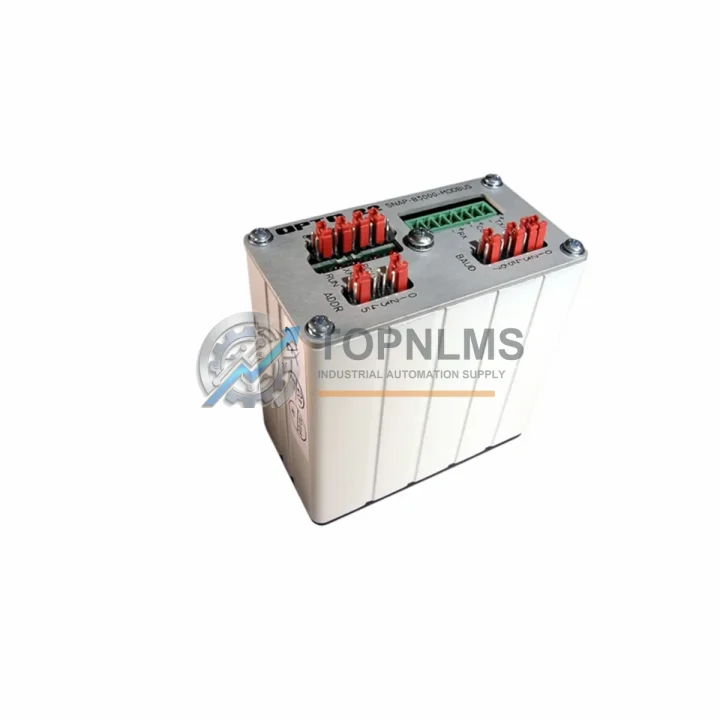
Send this exact part number, quantity and destination country. TOPNLMS will confirm availability, condition and export lead time before quotation.
When your OPTO 22 SNAP-B3000-BRAIN reaches end-of-life or fails unexpectedly on the production floor, every hour of unplanned downtime translates directly into lost output and escalating maintenance costs. The SNAP-B3000-BRAIN is the Ethernet-based brain module at the heart of the SNAP PAC System, responsible for coordinating I/O communication between the SNAP PAC rack, field devices, and the host controller or SNAP PAC R-series controller. TOPNLMS stocks verified replacement and upgrade units ready for immediate dispatch, allowing your engineering team to restore system integrity with minimal disruption to ongoing operations.
The SNAP-B3000-BRAIN connects directly to a standard SNAP mounting rack — the same mechanical footprint used across the SNAP PAC S-series and earlier SNAP Ultimate I/O platforms. Its 10/100 Mbps Ethernet port communicates natively using OPTO 22’s proprietary OptoMMP memory-mapped protocol, which means existing ladder logic, PAC Control strategy files, and host-side polling configurations require no modification when swapping in a replacement unit. Engineers migrating from older SNAP-LCSX or SNAP-LCNX brain modules will find that the SNAP-B3000-BRAIN’s memory-mapped architecture preserves address compatibility, dramatically reducing re-commissioning time on the plant floor.
For facilities running mixed SNAP PAC racks — combining analog input modules such as the SNAP-AIV or SNAP-AIMA alongside digital output modules like the SNAP-ODC5 or SNAP-OAC5 — the SNAP-B3000-BRAIN continues to serve as the central arbitration point for all module communication. Its internal firmware supports up to 64 I/O points per rack and handles both standard and high-density module configurations without requiring additional configuration bridges or protocol converters. This makes it an ideal drop-in replacement in control cabinets where rack space is constrained and adding supplementary hardware is not practical.
Facilities upgrading from legacy SNAP Ethernet brain modules to the SNAP-B3000-BRAIN as part of a broader DCS or SCADA modernization project will benefit from the module’s compatibility with PAC Control Pro and PAC Control Basic strategy environments. If your site currently uses a SNAP PAC R1 or SNAP PAC R2 controller as the primary rack controller, the SNAP-B3000-BRAIN can be deployed in remote standalone rack configurations, extending your distributed I/O architecture without requiring a full controller replacement. This is particularly valuable in multi-zone manufacturing environments where individual process cells need independent brain modules while remaining networked to a central SNAP PAC controller.
Wiring compatibility is a critical consideration during any brain module replacement. The SNAP-B3000-BRAIN uses a standard RJ-45 Ethernet interface and draws power directly from the SNAP power supply module installed in the rack — typically a SNAP-PS5 or SNAP-PS24 unit. No additional power wiring is required at the brain module level, and the existing rack backplane handles all inter-module communication. This means field wiring to individual I/O modules, including thermocouple inputs, 4–20 mA analog loops, and discrete 24 VDC digital signals, remains completely undisturbed during the brain module swap.
For sites that also operate SNAP serial communication modules — such as the SNAP-SCM-232 or SNAP-SCM-485 — alongside the SNAP-B3000-BRAIN, serial device connectivity to legacy instruments, drives, or HMI panels is preserved through the rack’s backplane without any protocol gateway reconfiguration. This is a significant advantage when the control cabinet also houses third-party variable frequency drives or legacy serial HMI terminals that cannot be easily re-addressed.
TOPNLMS performs functional verification on all SNAP-B3000-BRAIN units prior to shipment, including Ethernet port integrity checks, firmware version confirmation, and rack communication handshake testing. Units are shipped in anti-static packaging with full documentation. Standard lead time from our Xiamen warehouse is 3–7 business days for international destinations, with expedited options available for urgent plant shutdowns or scheduled maintenance windows.
| Parameter | Legacy (SNAP-LCSX / SNAP-LCNX) | SNAP-B3000-BRAIN (Replacement) |
|---|---|---|
| Communication Interface | 10 Mbps Ethernet / Serial | 10/100 Mbps Ethernet (RJ-45) |
| Protocol | OptoMMP / Proprietary Serial | OptoMMP (Memory-Mapped) |
| Rack Compatibility | SNAP Ultimate I/O Racks | SNAP PAC S-series & Legacy SNAP Racks |
| Max I/O Points per Rack | Up to 32 (legacy) | Up to 64 |
| Power Source | Rack-mounted power supply | Rack-mounted power supply (SNAP-PS5 / SNAP-PS24) |
| PAC Control Compatibility | Limited / Requires upgrade | Full (PAC Control Pro & Basic) |
| Physical Footprint | Standard SNAP module width | Standard SNAP module width (drop-in) |
| Firmware Update | Serial / Legacy tool | Over Ethernet via PAC Manager |
| Replacement Recommendation | End-of-Life / Discontinued | Direct replacement — no rewiring required |
| Warranty | N/A (legacy) | 12-Month Warranty (TOPNLMS) |
A successful SNAP-B3000-BRAIN replacement rarely occurs in isolation. In most retrofit projects, the brain module swap is accompanied by a review of adjacent rack components. If the existing SNAP power supply module — such as a SNAP-PS5 providing 5 VDC rack power — shows signs of aging or voltage instability, replacing it concurrently with the brain module eliminates a secondary failure risk during the post-swap commissioning phase. Similarly, if the rack houses older SNAP analog input modules like the SNAP-AIMA (4-channel milliamp input) or SNAP-AIV (4-channel voltage input), verifying their firmware compatibility with the new brain module’s OptoMMP implementation is a recommended pre-commissioning step.
Sites migrating from a fully serial-based SNAP architecture may also need to evaluate their SNAP serial communication modules. The SNAP-SCM-485 and SNAP-SCM-232 modules continue to operate normally in racks managed by the SNAP-B3000-BRAIN, but if the migration goal includes eliminating legacy serial dependencies entirely, this is an appropriate moment to transition those serial device connections to Ethernet-based alternatives within the SNAP PAC ecosystem. For control cabinets that also include a SNAP PAC R1 or SNAP PAC R2 rack-mounted controller, the SNAP-B3000-BRAIN can be deployed in a subordinate remote rack role, with the R-series controller handling strategy execution while the brain module manages local I/O arbitration.
Digital output modules such as the SNAP-ODC5 (5 VDC/TTL output) and SNAP-OAC5 (AC output) are fully supported in racks managed by the SNAP-B3000-BRAIN without any module-level reconfiguration. If the retrofit also involves upgrading the operator interface, OPTO 22 groov HMI panels or third-party HMI terminals communicating via Modbus TCP or OPC-UA can be integrated directly through the brain module’s Ethernet port, leveraging the OptoMMP-to-Modbus gateway capability built into the SNAP-B3000-BRAIN firmware.
Q: Do I need to rewire field devices when replacing the brain module?
No. The SNAP-B3000-BRAIN installs into the same rack slot as the legacy brain module. All field wiring connects to individual I/O modules on the rack backplane and is completely unaffected by the brain module replacement.
Q: Will my existing PAC Control strategy files work without modification?
Yes, in most cases. The SNAP-B3000-BRAIN uses the same OptoMMP memory-mapped protocol as previous SNAP Ethernet brain modules. Existing strategy files targeting the same I/O point addresses will communicate correctly with the replacement unit after the IP address is configured to match the original module’s network settings.
Q: How do I configure the IP address on the replacement unit?
IP address assignment is performed using OPTO 22’s PAC Manager utility, which communicates with the brain module over Ethernet. The replacement unit ships in factory-default state and must be assigned the same IP address as the original module before the control strategy resumes normal operation.
Q: Is the SNAP-B3000-BRAIN compatible with both SNAP PAC S-series and older SNAP Ultimate I/O racks?
Yes. The module is mechanically and electrically compatible with both rack families. However, older SNAP Ultimate I/O racks may require a firmware review to confirm full OptoMMP feature parity with the replacement unit.
Q: What is the physical installation space requirement?
The SNAP-B3000-BRAIN occupies a single brain module slot on the left end of any standard SNAP mounting rack. No additional DIN rail space or cabinet modifications are required.
Q: Can this module communicate with Modbus TCP devices directly?
Yes. The SNAP-B3000-BRAIN firmware includes a Modbus TCP server capability, allowing third-party SCADA systems, HMI panels, and data historians to poll I/O data directly without requiring a separate protocol gateway.
Every SNAP-B3000-BRAIN unit shipped by TOPNLMS is covered by a 12-month warranty from the date of delivery. Prior to dispatch, each unit undergoes a multi-point functional verification process: Ethernet port continuity, rack backplane communication handshake, firmware version confirmation, and power-on self-test. Units that do not pass all verification checkpoints are quarantined and not offered for sale.
In the event of a warranty claim, TOPNLMS provides a replacement unit dispatch within 5 business days of claim confirmation, with no requirement to return the defective unit before the replacement is shipped for urgent production-critical situations. Our after-sales response team is reachable via email at [email protected] and by phone at +86 18359293191 during business hours (UTC+8). Purchasing documentation including invoice, packing list, and test report is provided with every shipment to support your internal procurement and asset management records.
For bulk procurement inquiries, scheduled maintenance stock programs, or expedited shipping requirements, please contact our sales team directly. TOPNLMS maintains standing inventory of SNAP PAC Series components to support planned outage windows and emergency replacement scenarios across global industrial facilities.
ABB CPM810 original industrial spare for AC800M DCS systems. Fast replacement, 12-month warranty, tested before shipment. Reduce downtime — order now.
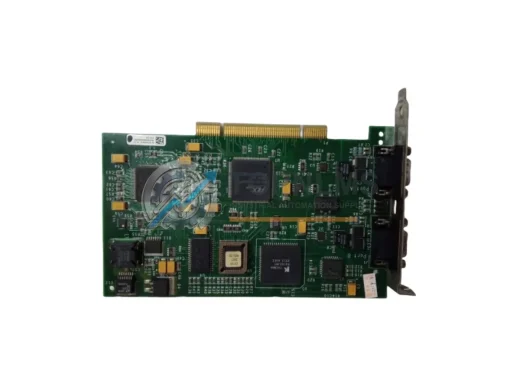
Schneider Electric 416NHM30032A Modicon Quantum PLC memory card. Rugged, reliable industrial automation component. In stock, tested, 12-month warranty. Fast shipping.
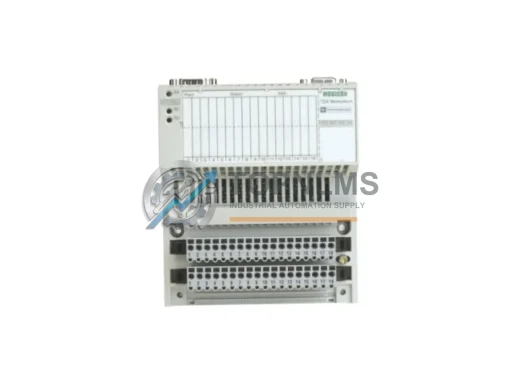
Schneider Electric 170INT11000 original Modicon Momentum Interbus communication adapter. Industrial replacement, 12-month warranty, fast shipping. topnlms.com
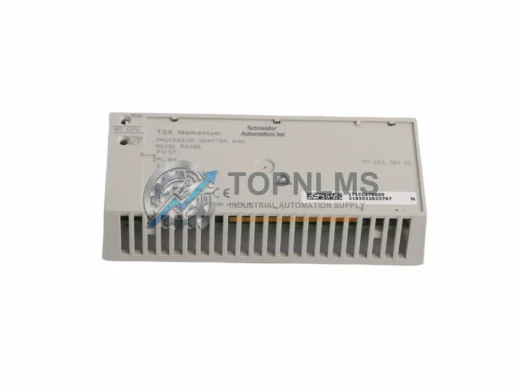
Original Schneider Electric 171CCS78000 Modicon Quantum PLC Processor Adaptor. Industrial spare for system replacement. 12-month warranty. Fast worldwide shipping.
Click Quote This Model and the Part Number field will auto-fill with SNAP-B3000-BRAIN.