
Omron
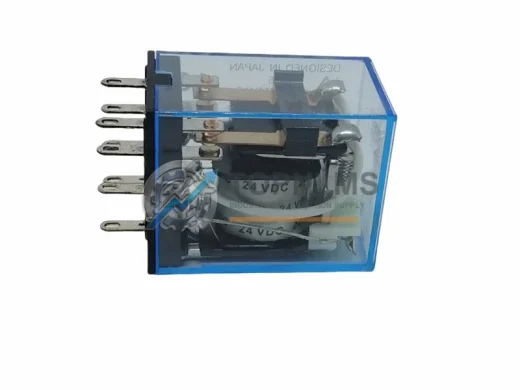
OMRON MY2N-J Ruggedized Power Relay for Harsh Environments
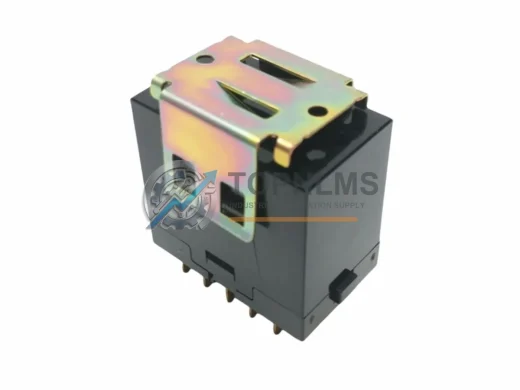
MY2N-JOMRON MY2N-J 2PDT 8-Pin 10A 250VAC ruggedized power relay. Reliable safety-grade switching for harsh industrial environments. In stock, 12-month warranty.
Request availability, condition, lead time and export shipping details for MY4NJ.
Send this exact part number, quantity and destination country. TOPNLMS will confirm availability, condition and export lead time before quotation.
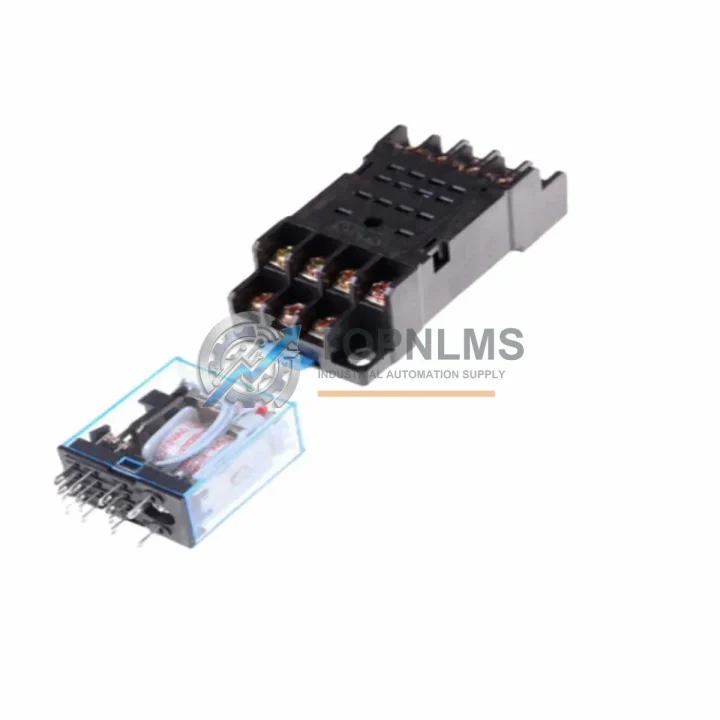
The OMRON MY4NJ is a 4PDT (4-pole double-throw) general-purpose power relay rated for 14-pin plug-in mounting, engineered to deliver consistent switching performance across a wide range of industrial control applications. As a core component in relay control panels, PLC output circuits, and machine automation cabinets, the MY4NJ is one of the most widely deployed relay models in Asian and global manufacturing facilities. Maintaining an adequate stock of this relay is a fundamental element of any responsible preventive maintenance program.
In factory environments where production continuity is paramount, an unexpected relay failure can cascade into extended downtime, missed production targets, and costly emergency procurement. The MY4NJ’s robust contact design, standardized 14-pin footprint, and broad coil voltage availability make it an ideal candidate for on-shelf spare parts inventory — enabling maintenance teams to execute rapid field replacements without waiting for lead times from distributors.
| Parameter | Specification |
|---|---|
| Model | MY4NJ |
| Brand | OMRON |
| Series | MY Series |
| Contact Configuration | 4PDT (4-Pole Double Throw) |
| Pin Configuration | 14-Pin Plug-In |
| Rated Load (Resistive) | 5A 250VAC / 5A 30VDC |
| Coil Voltage Options | AC 6V–240V / DC 6V–110V (specify on order) |
| Insulation Resistance | 1,000 MΩ min. (500VDC) |
| Dielectric Strength | 2,000 VAC (50/60 Hz, 1 min) |
| Mechanical Life | 50,000,000 operations min. |
| Electrical Life | 500,000 operations min. (rated load) |
| Ambient Temperature | -40°C to +70°C (operating) |
| Mounting | Plug-in socket (PYF14A / PYF14T compatible) |
| Indicator / Diode | LED indicator + surge suppressor (NJ suffix) |
| Origin | Japan |
| Compatibility | Direct replacement for MY4N, MY4NJ, MY4Z series sockets |
| Application Environment | Control panels, PLC output circuits, machine automation, HVAC, conveyor systems |
| Warranty | 12 Months from date of shipment |
When scheduling a relay inspection or replacement cycle for the OMRON MY4NJ, experienced maintenance engineers treat it as an opportunity to audit the entire relay control circuit and surrounding components. A relay does not fail in isolation — its performance is directly influenced by the quality of the socket, the integrity of the terminal connections, and the stability of the coil supply voltage.
Begin by inspecting the PYF14A or PYF14T relay socket, which is the plug-in base for the MY4NJ. Worn or corroded socket contacts are a leading cause of intermittent relay faults that are difficult to diagnose without physical inspection. Replace the socket whenever the relay is changed as a matter of best practice. Next, verify the coil supply voltage at the terminal block — fluctuations beyond ±10% of rated voltage accelerate coil degradation and shorten relay service life. If the control panel uses a OMRON S8VS or S8VK series DIN-rail power supply, confirm output voltage stability under load before reinstalling the relay.
For panels with high relay density, also inspect the terminal blocks (e.g., OMRON XW5T or Phoenix Contact PTFIX series) for signs of thermal discoloration, loose screws, or oxidized conductors. Loose terminals cause voltage drops that mimic relay coil faults. While the cabinet is open, it is also advisable to check any OMRON G2R or G3PA solid-state relay modules in adjacent circuits — these are often used in parallel with electromechanical relays for high-cycle or heat-sensitive switching tasks and share the same control voltage bus.
If the MY4NJ is part of a OMRON CJ2M, CP1H, or CP1E PLC output circuit, verify that the PLC output module (such as the CJ1W-OC211 or CJ1W-OD211) is not showing output LED faults, which can indicate a failed transistor or relay output channel rather than the external relay itself. Replacing the MY4NJ without diagnosing the PLC output module may result in repeat failures. Similarly, if the system uses an OMRON NX1P2 or NJ301 controller with EtherCAT I/O expansion, check the corresponding NX-OD3256 or NX-OC2633 output units for channel-level diagnostics before concluding the relay is the root cause.
For facilities running older control systems, the MY4NJ is frequently found alongside OMRON H3CR or H3Y timer relays in sequential control circuits. During a planned shutdown, inspect these timers for contact wear and verify their set-point accuracy — timer drift in aging units can cause the MY4NJ to switch at incorrect intervals, leading to process anomalies that are misdiagnosed as relay failures. Stocking a small buffer of H3CR-A8 or H3Y-2 timers alongside MY4NJ relays ensures that a single maintenance visit can address the most common failure points in the circuit.
Finally, review the fuse modules (e.g., OMRON G9SB safety relay or Phoenix Contact PTFIX fuse terminal blocks) protecting the relay coil supply. A blown fuse is often the first symptom of a shorted relay coil, and replacing the relay without checking the fuse circuit leaves the root cause unresolved. A comprehensive spare parts kit for a MY4NJ-based control panel should therefore include: replacement sockets, terminal block spares, coil supply fuses, and at minimum two MY4NJ relays per panel to support immediate swap-out during unplanned downtime.
The OMRON MY4NJ is a direct plug-in replacement for the earlier MY4N and MY4Z models, sharing the same 14-pin socket footprint and contact ratings. This backward compatibility is a significant advantage for facilities managing aging control infrastructure — maintenance teams can upgrade to the NJ-suffix variant (which includes a built-in LED indicator and surge suppressor) without any wiring modifications or socket changes.
For systems originally designed around discontinued relay models from other manufacturers, the MY4NJ’s standardized IEC footprint and broad coil voltage range make it a viable cross-brand replacement in many applications. When substituting relays across brands, always verify coil voltage, contact current rating, and pin assignment against the original wiring diagram before energizing the circuit.
Procurement teams managing multi-site facilities benefit from consolidating relay specifications around a single platform such as the OMRON MY Series. Standardization reduces the number of unique part numbers held in inventory, simplifies technician training, and enables volume purchasing agreements that lower per-unit cost. The MY4NJ’s long production history and OMRON’s global distribution network ensure long-term parts availability — a critical consideration when planning the lifecycle extension of legacy control systems beyond their original design horizon.
Each unit shipped from TOPNLMS undergoes pre-shipment functional verification including coil continuity check, contact resistance measurement, and insulation integrity test. Units are packaged in anti-static protective packaging with original manufacturer labeling. A 12-month warranty covers all units against manufacturing defects under normal operating conditions.
Q1: Is the MY4NJ compatible with existing MY4N sockets already installed in my panel?
Yes. The MY4NJ uses the same 14-pin plug-in footprint as the MY4N and is fully compatible with OMRON PYF14A and PYF14T sockets. No wiring or mechanical modifications are required. The NJ suffix adds an LED indicator and built-in surge suppressor, which are passive additions that do not affect socket compatibility.
Q2: What coil voltage should I specify when ordering?
The MY4NJ is available in multiple coil voltages including AC 24V, AC 110V, AC 220V, DC 12V, DC 24V, and DC 48V among others. Always confirm the control voltage at the relay socket terminals in your panel before ordering. If you are unsure, our technical team can assist with identification based on your panel wiring diagram or existing relay label.
Q3: How does TOPNLMS verify authenticity before shipment?
All MY4NJ units are sourced through verified supply channels and undergo pre-shipment inspection including coil resistance measurement, contact continuity test, and visual inspection of manufacturer markings and date codes. Units that do not pass inspection are not shipped. A 12-month warranty is provided from the date of shipment, covering defects under normal operating conditions.
Q4: What is the recommended inventory quantity for a facility with 20+ MY4NJ relays in service?
Industry best practice for high-density relay installations is to maintain a minimum buffer of 10–15% of installed quantity as on-shelf spares, with a minimum of 2 units regardless of installation count. For facilities with critical processes where downtime cost is high, a buffer of 20% is recommended. Given the MY4NJ’s role in PLC output circuits and sequential control panels, having spares immediately available eliminates procurement lead time as a factor in mean-time-to-repair calculations.
OMRON MY2N-J 2PDT 8-Pin 10A 250VAC ruggedized power relay. Reliable safety-grade switching for harsh industrial environments. In stock, 12-month warranty.
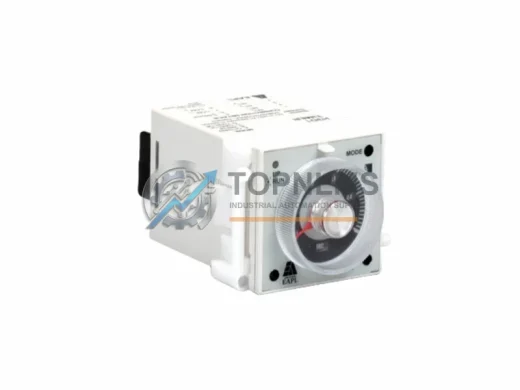
OMRON H3CT-8H multi-range on-delay timer relay. 8-pin DIN rail, 100–240VAC/DC. Ruggedized for harsh industrial environments. In stock, tested, 12-month warranty.
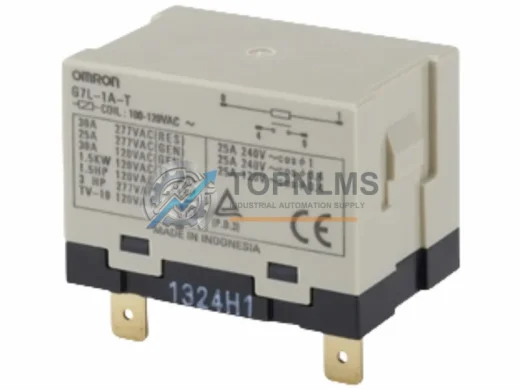
OMRON G7L-2A-B original 2NO AC coil high-load power relay. G7L Series industrial spare, 12-month warranty, tested before shipment. Fast worldwide delivery.
Replace OMRON G4J-2242T 3-Phase SSR 42A 200-480VAC. Compatible G4J Series upgrade. Original spare, tested, 12-month warranty. Fast worldwide shipping.
Click Quote This Model and the Part Number field will auto-fill with MY4NJ.