Product Overview
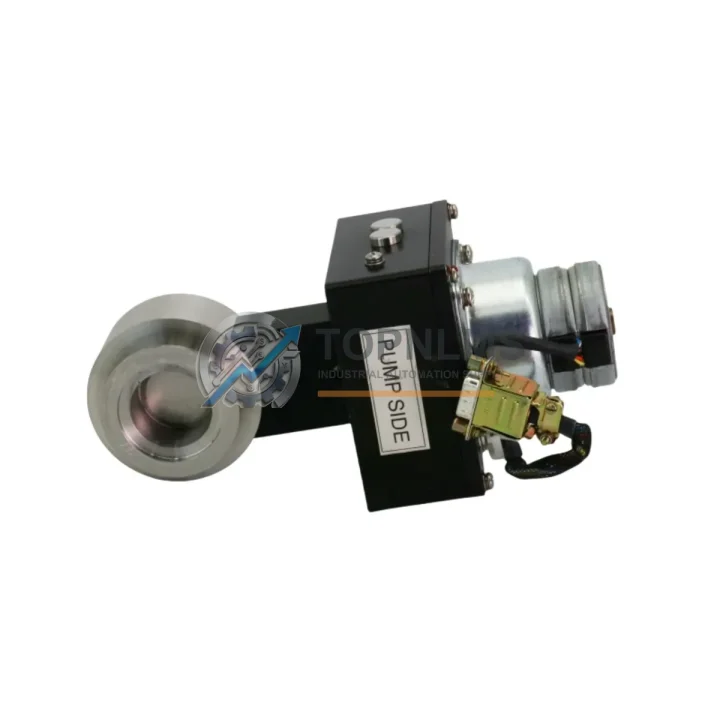
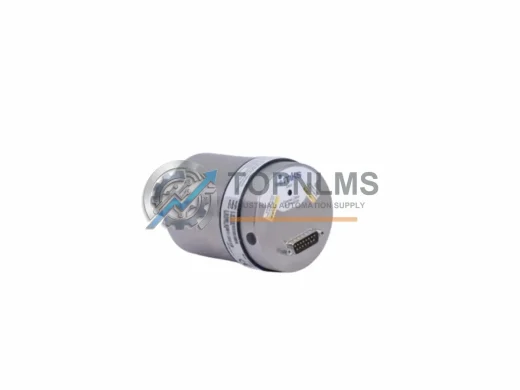
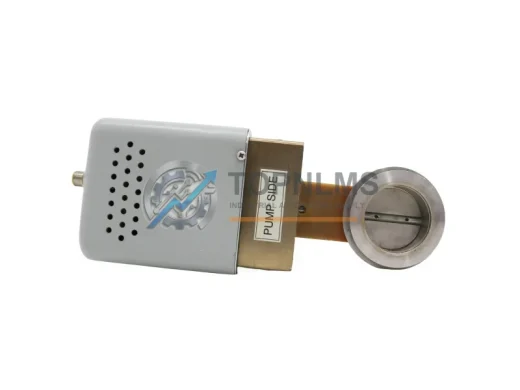
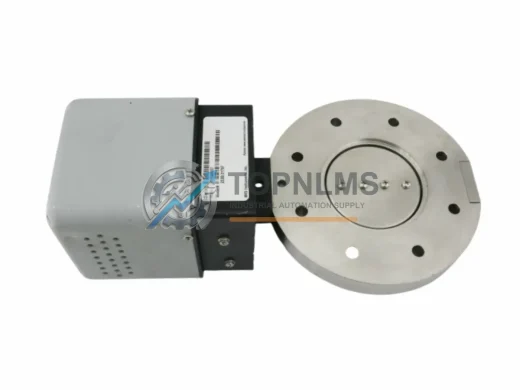
MKS 253B-23958 Original Industrial Spare 253B Compatible: Sustaining System Stability in Critical Process Environments
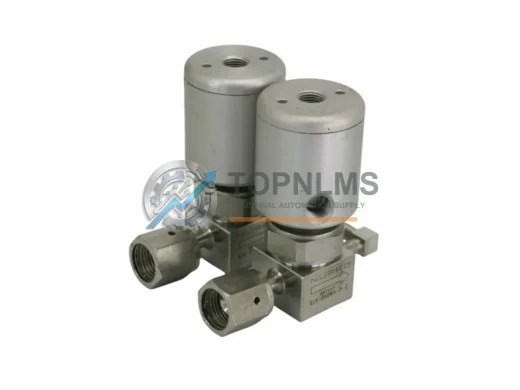
The MKS 253B-23958 is an original normally closed exhaust throttle valve from MKS Instruments’ proven 253B Series, engineered for precision flow control in semiconductor fabrication, vacuum process systems, and industrial gas management applications. Carrying part references 80046 and 043926, this valve operates within a working pressure range of 0.39–0.59 MPa and is designed to deliver consistent, repeatable performance across demanding production environments where unplanned downtime carries significant operational cost.
In high-throughput manufacturing facilities, the exhaust throttle valve is a critical interface between the process chamber and the vacuum pumping system. A degraded or failed 253B-23958 can disrupt pressure regulation, compromise process recipe repeatability, and trigger unplanned shutdowns. Sourcing an original MKS spare — rather than an unverified substitute — ensures dimensional compatibility, seal integrity, and actuator response characteristics that match the original equipment specification.
Critical Technical Specs
| Parameter |
Specification |
| Part Number |
253B-23958 |
| Reference Numbers |
80046 / 043926 |
| Series |
MKS 253B Series |
| Valve Type |
Normally Closed (N.C.) Exhaust Throttle Valve |
| Operating Pressure |
0.39 – 0.59 MPa |
| Actuation |
Pneumatic |
| Fail-Safe Position |
Normally Closed (closes on loss of actuating pressure) |
| Compatibility |
MKS 253B Series process exhaust and vacuum throttle systems |
| Typical Applications |
Semiconductor CVD/Etch chambers, vacuum process exhaust lines, industrial gas flow control |
| Origin |
United States (MKS Instruments OEM) |
| Installation |
Direct OEM replacement; no modification required for 253B Series installations |
| Operating Environment |
Clean-room compatible; suitable for corrosive gas exhaust service with appropriate upstream conditioning |
| Maintenance Interval |
Inspect every 6–12 months or per process PM schedule; replace seals and actuator diaphragm as indicated |
| Warranty |
12 Months from date of shipment |
Preventive Maintenance Strategy
The 253B-23958 exhaust throttle valve does not operate in isolation. It is one node in a broader vacuum and gas management circuit, and its long-term reliability depends on the condition of the surrounding components. When scheduling a planned maintenance window or responding to a process alarm, maintenance engineers should treat the valve replacement as an opportunity to audit the full exhaust circuit.
Begin upstream: inspect the MKS 253B Series upstream isolation valve and the associated pneumatic actuator solenoid valve (typically a 3/2-way or 5/2-way type) that drives the 253B-23958. A worn solenoid with slow response time will cause the throttle valve to open and close sluggishly, introducing pressure transients that affect process repeatability even when the throttle valve body itself is in good condition. Replace the solenoid and its inline pneumatic filter-regulator unit if the supply air quality is suspect or if the regulator has not been serviced within 18 months.
Move to the downstream side: the vacuum pump inlet isolation valve and the foreline trap or exhaust scrubber inlet valve should be inspected for particulate buildup and seal degradation. In CVD and etch environments, by-product deposition accumulates in the exhaust path and can migrate back toward the throttle valve seat if the foreline trap — such as an MKS 153 Series or compatible cold trap assembly — is not serviced on schedule. A blocked or saturated trap increases backpressure on the 253B-23958, accelerating seat wear and shortening service life.
Electrical and signal integrity should also be verified during the same PM window. The pressure transducer or Baratron capacitance manometer that provides feedback to the pressure controller governing the 253B-23958 should be zero-checked and span-verified. An out-of-calibration transducer — for example, an MKS 627D or 628B Series Baratron — will cause the controller to drive the throttle valve to incorrect positions, masking the true process pressure and potentially causing the valve to hunt or oscillate. Replacing the throttle valve without verifying transducer accuracy is a common source of recurring process instability.
At the control level, confirm that the MKS 651C or 252A Series pressure controller (or equivalent OEM controller) has current firmware and that its PID parameters are tuned for the current process recipe. A controller with degraded analog output circuitry can send erratic drive signals to the throttle valve actuator, causing premature wear on the valve stem and seat. If the controller is more than five years old and has not been recalibrated, include it in the spare parts review cycle.
Finally, inspect the exhaust line flexible bellows connector and the KF/NW flange clamps and centering rings on either side of the 253B-23958. Cracked bellows or loose clamps are a common source of virtual leaks that are misdiagnosed as valve leakage. Keeping a stock of KF25 and KF40 centering rings with O-rings and a set of stainless steel clamps ensures that a full exhaust circuit restoration can be completed in a single maintenance shift without waiting for additional parts.
Strategic Replacement Solutions
The MKS 253B-23958 is a direct OEM replacement for any installation currently running a 253B Series normally closed exhaust throttle valve at the 0.39–0.59 MPa operating pressure specification. Facilities that have been operating legacy semiconductor equipment for more than a decade frequently encounter situations where the original valve has been discontinued from local distributor stock, forcing maintenance teams to either accept long lead times or qualify an unverified alternative.
Sourcing the 253B-23958 as an original MKS spare eliminates the qualification burden. The valve ships with OEM dimensional tolerances, original actuator spring rates, and factory-tested seat leakage specifications, meaning it can be installed directly into the existing process equipment without re-qualification of the pressure control loop. This is particularly valuable in regulated semiconductor fabs where any component substitution may trigger a formal change control process.
For facilities managing aging equipment fleets, the 253B-23958 also supports a proactive inventory strategy. Rather than waiting for a valve failure to trigger an emergency procurement — with the associated premium freight costs and production loss — maintenance planners can hold one or two units as critical spares. Given the valve’s role in exhaust pressure control, a single unplanned failure can idle a process chamber for 24–72 hours while a replacement is sourced. The carrying cost of a spare unit is negligible compared to the revenue impact of an unplanned chamber outage.
For systems where the 253B Series has been partially upgraded, the 253B-23958 maintains backward compatibility with the original pneumatic and electrical interfaces, allowing mixed-generation installations to be maintained without redesigning the exhaust circuit. This makes it an effective bridge component for facilities executing phased equipment upgrades over multi-year capital cycles.
Support FAQ
Q1: Is the MKS 253B-23958 compatible with all 253B Series installations?
The 253B-23958 is designed for 253B Series normally closed exhaust throttle valve applications operating at 0.39–0.59 MPa pneumatic actuation pressure. Verify your existing valve’s part number, flange size, and actuator pressure specification before ordering. If your installation uses a different pressure range or a normally open configuration, contact us with your full equipment model number for compatibility confirmation.
Q2: What pre-shipment testing is performed on the 253B-23958?
Each unit undergoes functional actuation testing, seat leakage verification, and dimensional inspection prior to shipment. Units are packaged in anti-static, moisture-resistant packaging suitable for long-term storage. A test report is available upon request for regulated facility procurement processes.
Q3: What does the 12-month warranty cover?
The 12-month warranty covers manufacturing defects, premature seal failure under normal operating conditions, and actuator mechanism defects. It does not cover damage resulting from installation errors, operation outside the specified pressure range, or exposure to incompatible process chemistries. Warranty claims are processed with photographic documentation and a brief failure description.
Q4: How should the 253B-23958 be stored if purchased as a critical spare?
Store in original packaging in a clean, dry environment at 15–30°C with relative humidity below 70%. Avoid storage near strong oxidizers or corrosive gases. Inspect the valve annually if held in long-term storage, and verify actuator function before installation. Shelf life under recommended storage conditions is a minimum of 3 years.