
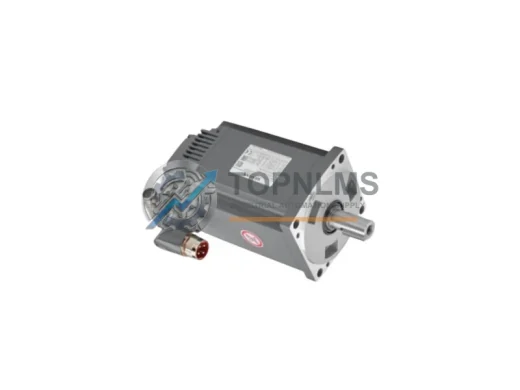
KUKA
KUKA 71-050-783 Original Industrial Spare RV320E-185 Compatible
71-050-783Buy KUKA 71-050-783 RV320E-185 original robot joint gearbox for KR30 & KR60. Direct axis replacement spare, pre-shipment tested, 12-month warranty.
Request availability, condition, lead time and export shipping details for RV-410F-236.
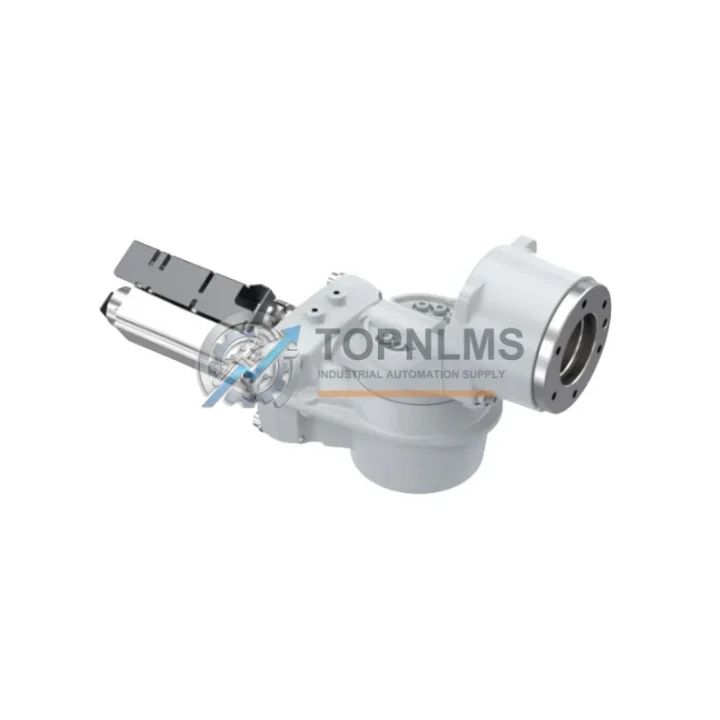
Send this exact part number, quantity and destination country. TOPNLMS will confirm availability, condition and export lead time before quotation.
In high-cycle robotic manufacturing environments, the integrity of every joint reducer directly determines the uptime and precision of your entire production line. The KUKA RV-410F-236 (Part Numbers: 00-170-819 / 00-187-547 / 00-176-109) is an original KUKA robot joint reducer engineered for the RV-410F series, delivering the torque capacity, backlash control, and thermal stability that demanding industrial applications require. Whether you are managing a scheduled overhaul, responding to an unplanned axis failure, or building a strategic spare parts inventory, sourcing a verified original reducer is the single most important decision in your maintenance workflow.
KUKA RV-series reducers are the mechanical heart of KR-series articulated robots. When axis 1, 2, or 3 exhibits abnormal vibration, positioning drift, or increased backlash beyond tolerance, the RV-410F-236 is the confirmed replacement unit. Stocking this component eliminates the most common cause of extended robot downtime in automotive body shops, foundry automation, palletizing lines, and heavy-payload welding cells.
| Parameter | Specification |
|---|---|
| Part Number (Primary) | 00-170-819 |
| Cross-Reference SKUs | 00-187-547 / 00-176-109 |
| Model Designation | RV-410F-236 |
| Series | KUKA RV-410F |
| Reducer Type | RV (Rotary Vector) Cycloidal Gear Reducer |
| Rated Reduction Ratio | 236:1 |
| Applicable Robot Models | KUKA KR 500, KR 600, KR 700 PA, KR FORTEC series (Axis 1/2/3) |
| Rated Output Torque | Refer to KUKA KR series mechanical data sheet |
| Backlash | ≤1 arc-min (original specification) |
| Lubrication | KUKA Spezialfett (grease-lubricated, sealed) |
| Operating Temperature | -10°C to +60°C ambient |
| Country of Origin | Germany (DE) |
| Condition | Original New / Genuine OEM |
| Pre-shipment Testing | Functional rotation, backlash, and torque verification |
| Warranty | 12 Months from date of delivery |
| Shipping | Worldwide — secure industrial packaging |
A joint reducer replacement is rarely an isolated event. In practice, when a KUKA robot is taken offline for axis reducer service, experienced maintenance engineers treat the intervention as a full mechanical and electrical audit of the robot cell. The RV-410F-236 reducer sits at the intersection of mechanical load transfer and servo control precision — meaning its condition directly affects the performance of adjacent components throughout the kinematic chain.
During a planned reducer replacement on a KR 500 or KR 600 robot, the maintenance window should also include inspection of the KUKA KSD 1-48 servo drive module powering the affected axis, since reducer drag and bearing wear can mask early-stage drive overcurrent faults. Simultaneously, verify the condition of the KUKA KPS 600/20 power supply unit — voltage ripple under load is a leading indicator of capacitor degradation that accelerates after mechanical stress events.
The motor-to-reducer coupling interface should be inspected for fretting corrosion, and the KUKA motor connector cable assembly (motor power and resolver feedback cables) should be checked for insulation cracking at the bend radius near the axis housing. In high-cycle environments, these cables are consumables with a finite flex life. Replacing the motor brake resistor module at the same service interval is a low-cost step that prevents nuisance E-Stop faults caused by thermal drift in the braking circuit.
On the control cabinet side, a reducer replacement is the right moment to inspect the KUKA KRC4 controller main board (CCU) for dust accumulation on heat sink fins, and to verify that the EtherCAT communication module or PROFIBUS DP interface card — whichever fieldbus your cell uses — shows no CRC error accumulation in the system log. Fieldbus errors that appear intermittently during high-load axis moves are frequently misdiagnosed as software issues when the root cause is mechanical vibration coupling into the communication backplane.
For facilities running multiple KUKA robots on the same production line, a strategic spare parts inventory should include at minimum: one RV-410F-236 reducer per robot model variant, a set of KUKA axis-specific motor units (particularly for axes 1 and 2 which carry the highest dynamic loads), a spare KRC4 smartPAD teach pendant with cable, and a set of KUKA safety interface board (SIB) modules. The SIB is a frequently overlooked spare that, when it fails, causes a complete robot safety stop with no mechanical warning — making it a high-priority item for any facility with zero-downtime production targets.
Grease replenishment is mandatory after reducer installation. Use only KUKA-specified grease type and quantity per the robot’s maintenance manual. Incorrect grease volume is the leading cause of premature RV reducer failure in the field — a detail that is often missed when non-OEM reducers are installed without the accompanying OEM documentation.
The KUKA RV-410F-236 (00-170-819) is a direct OEM replacement for legacy part numbers 00-187-547 and 00-176-109, which appeared in earlier KR FORTEC and KR 500 production batches. All three part numbers are mechanically and dimensionally interchangeable within the RV-410F-236 specification. This cross-reference compatibility means that facilities maintaining older robot generations can standardize on a single stock unit, simplifying procurement and reducing the number of unique SKUs in the spare parts room.
For facilities transitioning from third-party or remanufactured reducers back to OEM specification, the RV-410F-236 restores the original backlash tolerance and rated output torque that the robot’s motion controller was calibrated to expect. After installation, a full mastering procedure using the KUKA EMT (Electronic Mastering Tool) or dial gauge mastering method is required to re-establish axis zero positions — a step that is documented in the KUKA KR C4 operating manual and should be performed by a qualified KUKA system integrator or certified maintenance technician.
Stocking this reducer as a ready-to-install spare reduces mean time to repair (MTTR) from the industry average of 3–7 days (lead time for emergency procurement) to under 4 hours for a trained maintenance team. In automotive and electronics manufacturing environments where robot downtime costs can exceed USD 10,000 per hour, the inventory carrying cost of a single spare reducer is recovered within minutes of the first unplanned failure event it prevents.
Q1: Is the RV-410F-236 (00-170-819) compatible with my KUKA KR 500 robot?
Yes. The RV-410F-236 is the OEM-specified reducer for KUKA KR 500, KR 600, KR 700 PA, and KR FORTEC series robots on axes 1, 2, and 3. Cross-reference part numbers 00-187-547 and 00-176-109 are fully interchangeable. Always confirm the axis number and robot serial number against the KUKA spare parts catalog (KUKA Part Finder) before installation.
Q2: What pre-shipment testing is performed on this unit?
Each RV-410F-236 unit undergoes functional rotation testing, backlash measurement verification, and visual inspection for housing integrity before dispatch. Units are packed in anti-static, shock-absorbing industrial packaging with a test record. A 12-month warranty from the date of delivery covers manufacturing defects and functional failure under normal operating conditions.
Q3: How should I manage spare reducer inventory for a multi-robot production line?
For lines with 5 or more KUKA robots of the same model, the recommended minimum stock is 1 reducer per 5 robots, with a reorder trigger set at 1 unit remaining. For critical 24/7 production environments, a 1:3 ratio (one spare per three robots) is the industry best practice. Pair the reducer stock with motor brake cables, servo drive modules, and a spare teach pendant to cover the most common failure modes in a single maintenance kit.
Q4: Can I install this reducer without a KUKA service technician?
Mechanical installation can be performed by a qualified industrial maintenance technician familiar with KUKA robot disassembly procedures. However, post-installation axis mastering and load data verification must be completed using KUKA WorkVisual or the KRC4 smartHMI interface. Incorrect mastering will result in positioning errors and potential collision faults. TOPNLMS recommends engaging a KUKA-certified integrator for the commissioning step if in-house expertise is not available.
Buy KUKA 71-050-783 RV320E-185 original robot joint gearbox for KR30 & KR60. Direct axis replacement spare, pre-shipment tested, 12-month warranty.
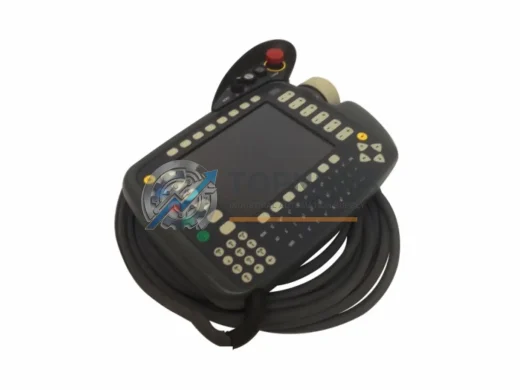
KUKA KRC4RDC 00-200-655 ruggedized robot drive controller card. KRC4 series, EMI-resistant, 12-month warranty. In stock — fast global shipping from TOPNLMS.
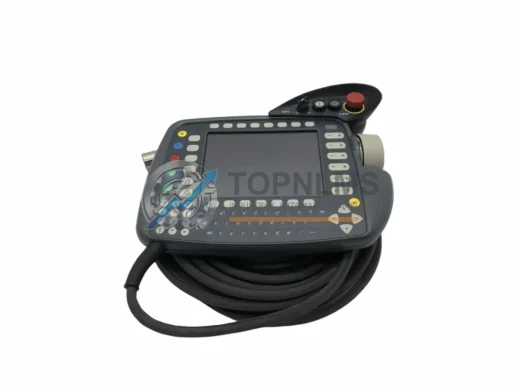
KUKA KRC2-00-130-547 teach pendant replacement & upgrade for KRC2 series robots. Compatible wiring, protocol & mounting. 12-month warranty. Ships from Xiamen.
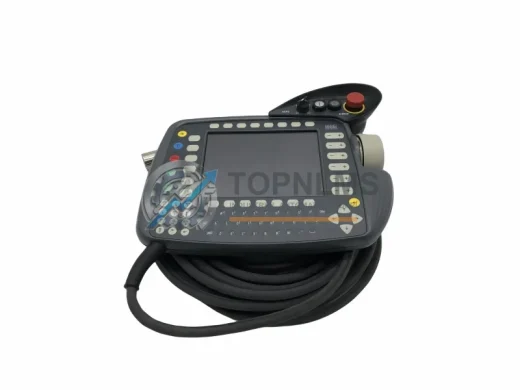
KUKA 69-000-398 KRC1 teach pendant replacement. Compatible upgrade for KRC1 robot controllers. 12-month warranty, fast shipping, in-stock. Contact: [email protected]
Click Quote This Model and the Part Number field will auto-fill with RV-410F-236.