
KONGSBERG
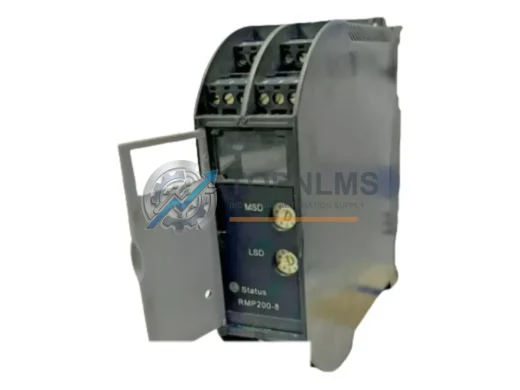
KONGSBERG RMP200-8 Replacement/Upgrade for RMP200
RMP200-8KONGSBERG RMP200-8 8-ch multi-purpose I/O module. Drop-in replacement & upgrade solution for RMP200 Series. Compatibility verified, 12-month warranty, fast ship.
Request availability, condition, lead time and export shipping details for RAIC400.
Send this exact part number, quantity and destination country. TOPNLMS will confirm availability, condition and export lead time before quotation.
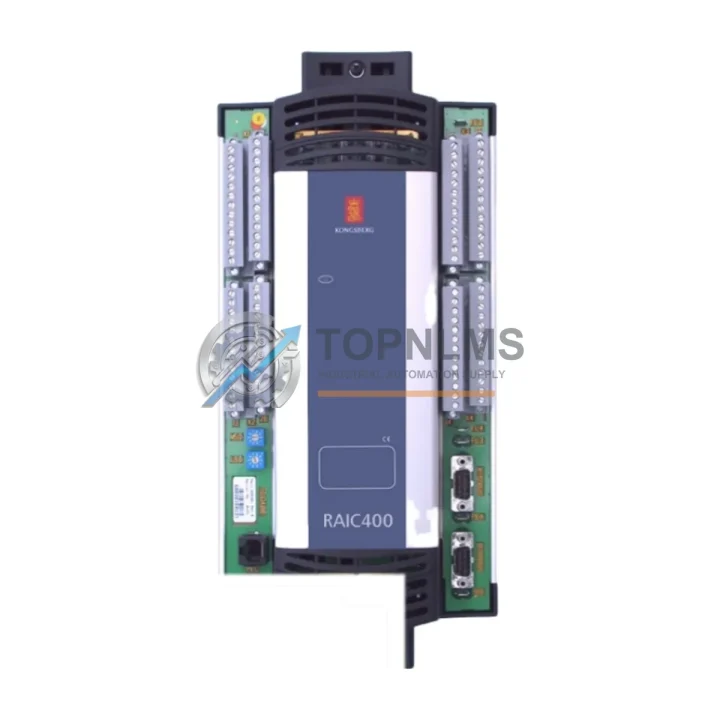
The KONGSBERG RAIC400 is an original analogue input module engineered for the K-Chief Integrated Automation System (IAS), widely deployed across marine vessels, offshore platforms, and industrial process control installations. As a genuine OEM spare part, the RAIC400 plays a critical role in maintaining the signal acquisition integrity of the K-Chief control architecture — converting analogue field signals from sensors, transmitters, and transducers into digital data processed by the central control system. Sourcing an authentic RAIC400 is not merely a procurement decision; it is a system stability investment that directly impacts operational uptime, alarm reliability, and regulatory compliance.
In demanding marine and industrial environments, analogue input modules are among the highest-wear components in any IAS cabinet. Exposure to vibration, humidity, temperature cycling, and continuous electrical load accelerates degradation. A failing RAIC400 manifests as erratic sensor readings, spurious alarms, loss of monitoring channels, or complete blackout of an analogue input group — all of which can trigger unplanned shutdowns or, in critical applications, safety system interventions. Maintaining a certified replacement unit on board or in the maintenance warehouse is the single most effective measure to reduce mean time to repair (MTTR) when an input module fault is diagnosed.
| Parameter | Specification |
|---|---|
| Part Number | RAIC400 |
| Brand / OEM | KONGSBERG |
| Series | K-Chief Integrated Automation System (IAS) |
| Module Type | Analogue Input Module |
| Signal Types | 4–20 mA, 0–10 V (standard analogue field signals) |
| Input Channels | Multi-channel (per K-Chief IAS architecture) |
| Communication Interface | K-Chief internal backplane / IAS fieldbus |
| Mounting | DIN rail / IAS cabinet rack-mount |
| Operating Temperature | 0°C to +55°C (marine/industrial grade) |
| Humidity Tolerance | Up to 95% RH non-condensing |
| Country of Origin | Norway |
| Compatibility | KONGSBERG K-Chief 500 / K-Chief 600 IAS platforms |
| Condition | Original, tested, ready to ship |
| Warranty | 12 Months |
A structured preventive maintenance programme for any K-Chief IAS installation should treat the RAIC400 not in isolation, but as part of a coordinated inspection of the entire analogue signal chain and control cabinet ecosystem. When scheduling a planned maintenance window — whether during dry-dock, port call, or scheduled shutdown — technicians should simultaneously inspect and, where necessary, replace the following components to maximise the value of each maintenance intervention.
The RDIO400 digital input/output module shares the same IAS cabinet backplane as the RAIC400 and is subject to identical environmental stresses. A cabinet inspection that uncovers a degraded RAIC400 should always include a functional check of adjacent RDIO400 modules, as mixed analogue-digital faults are common in aged IAS installations. Similarly, the RAOC400 analogue output module — responsible for driving control signals to actuators and final control elements — should be verified for output accuracy and channel isolation integrity during the same maintenance cycle.
Power supply modules feeding the IAS cabinet, such as the KONGSBERG PSU units compatible with the K-Chief rack, are a frequent root cause of intermittent analogue input errors. Voltage ripple or supply instability can produce false readings across all RAIC400 channels simultaneously, a symptom often misdiagnosed as a module fault. Inspecting and load-testing the cabinet power supply during any RAIC400 replacement is strongly recommended. Likewise, the communication gateway or network interface module connecting the IAS to the vessel’s integrated bridge system should be checked for firmware currency and connector integrity.
At the field level, the 4–20 mA signal cables and shielded twisted-pair wiring connecting sensors to the RAIC400 terminal blocks are a common source of signal degradation. Corroded terminals, damaged cable shields, and loose connections at the marshalling panel can produce symptoms indistinguishable from a module fault. A thorough inspection of terminal blocks, cable glands, and junction boxes — particularly in engine room and cargo hold environments — should accompany every analogue input module replacement. Signal isolators and loop-powered transmitter barriers in the signal path should also be tested for correct operation.
For installations running legacy K-Chief 500 platforms, the operator interface panel and HMI display units should be assessed for screen degradation and touchscreen calibration drift during the same maintenance window. Replacing a functional RAIC400 while leaving a failing HMI in service defeats the purpose of the maintenance intervention. Finally, the IAS system’s UPS battery backup and surge protection modules should be tested for capacity and response time — power quality events are a leading cause of premature module failure across all K-Chief IAS hardware.
The KONGSBERG RAIC400 has been in service across K-Chief IAS installations for over two decades, and many vessels and facilities are operating with original modules that are well beyond their recommended service life. KONGSBERG’s own end-of-life and obsolescence advisories for legacy K-Chief 500 hardware make proactive replacement planning essential for operators who cannot afford unplanned downtime.
Sourcing a genuine RAIC400 from TOPNLMS provides a direct, like-for-like replacement that requires no firmware reconfiguration, no backplane adapter, and no re-engineering of the existing signal wiring. The module slots directly into the original IAS cabinet position, restoring full channel functionality within the time it takes to complete a standard hot-swap procedure — typically under 30 minutes for a trained IAS technician. This is in sharp contrast to third-party or refurbished alternatives, which may require additional configuration steps, carry compatibility risks, or lack the traceability documentation required by classification societies such as DNV, Lloyd’s Register, or Bureau Veritas.
For operators managing fleets or multi-site installations, stocking one or two RAIC400 units per vessel class or facility significantly reduces the risk of extended downtime caused by supply chain delays. Lead times for OEM spare parts from the original manufacturer can extend to 8–16 weeks for legacy modules; having a pre-tested, warehouse-ready unit available on site compresses repair time from weeks to hours. TOPNLMS ships all RAIC400 units with full functional test documentation, ensuring that the replacement module is verified operational before it reaches the maintenance team.
Q1: Is the RAIC400 compatible with both K-Chief 500 and K-Chief 600 systems?
The RAIC400 is designed for the K-Chief IAS platform. Compatibility with specific K-Chief 500 or K-Chief 600 sub-variants depends on the cabinet configuration and backplane revision. We recommend providing your vessel’s IAS cabinet drawing or module list when ordering to confirm direct compatibility. Our technical team can assist with cross-referencing.
Q2: What testing is performed before shipment?
Every RAIC400 unit is functionally tested prior to dispatch. Testing covers channel continuity, signal accuracy across the 4–20 mA input range, backplane connector integrity, and power consumption within specification. A test report is available upon request and can be provided to classification society surveyors as part of maintenance documentation.
Q3: What does the 12-month warranty cover?
The 12-month warranty covers manufacturing defects and functional failures under normal operating conditions. It does not cover damage resulting from incorrect installation, overvoltage events, or physical mishandling. Warranty claims are processed with priority turnaround to minimise vessel or facility downtime.
Q4: How should I manage RAIC400 inventory for a fleet of vessels?
For fleet operators, we recommend a minimum stock of one RAIC400 per vessel class, held either on board or at a regional shore-based spare parts depot. For vessels operating in remote routes with limited port access, two units per vessel is advisable. Bulk procurement orders receive priority allocation and can be staged for delivery to multiple ports or warehouses on a scheduled basis.
KONGSBERG RMP200-8 8-ch multi-purpose I/O module. Drop-in replacement & upgrade solution for RMP200 Series. Compatibility verified, 12-month warranty, fast ship.
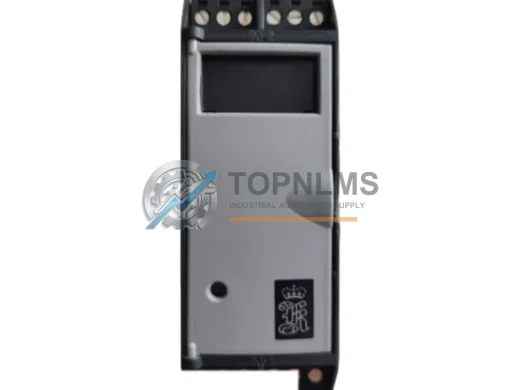
KONGSBERG RMP201-8 8-Ch Multi-Purpose I/O Module. Rugged, EMI-resistant, 12-month warranty. In stock — fast shipping from Xiamen. Contact for price.
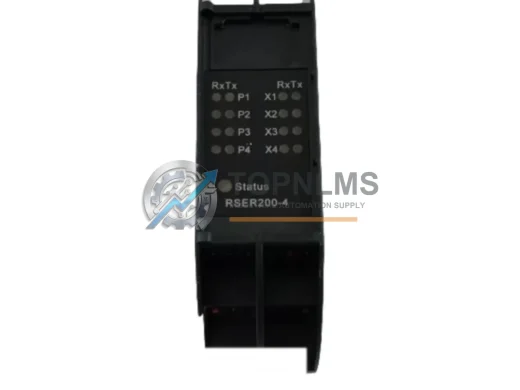
KONGSBERG RSER200-4 original remote serial digital I/O module. RSER200 Series compatible. 12-month warranty, tested before shipment. Industrial replacement.
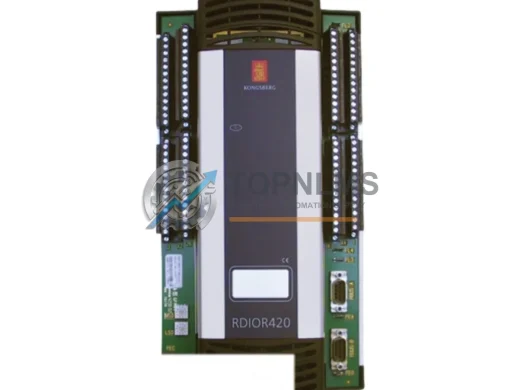
KONGSBERG RDIOR420 ruggedized remote digital input module for K-Chief series. Harsh environment rated, 12-month warranty. In stock at TOPNLMS.
Click Quote This Model and the Part Number field will auto-fill with RAIC400.