
Honeywell
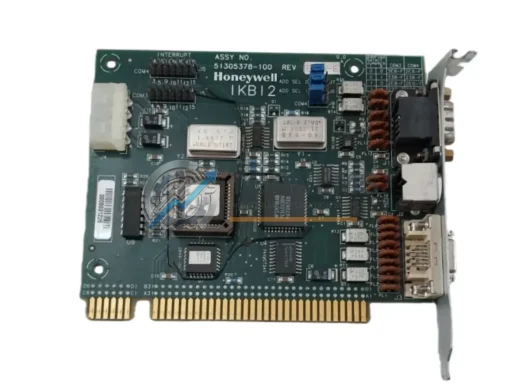
Honeywell 51305378-100 IKBI2 Replacement for TDC 3000
51305378-100Honeywell 51305378-100 IKBI2 Printer Interface Board replacement for TDC 3000 DCS. Original spare, 12-month warranty, fast global shipping. Upgrade legacy systems now.
Request availability, condition, lead time and export shipping details for U2-1010S-PF.
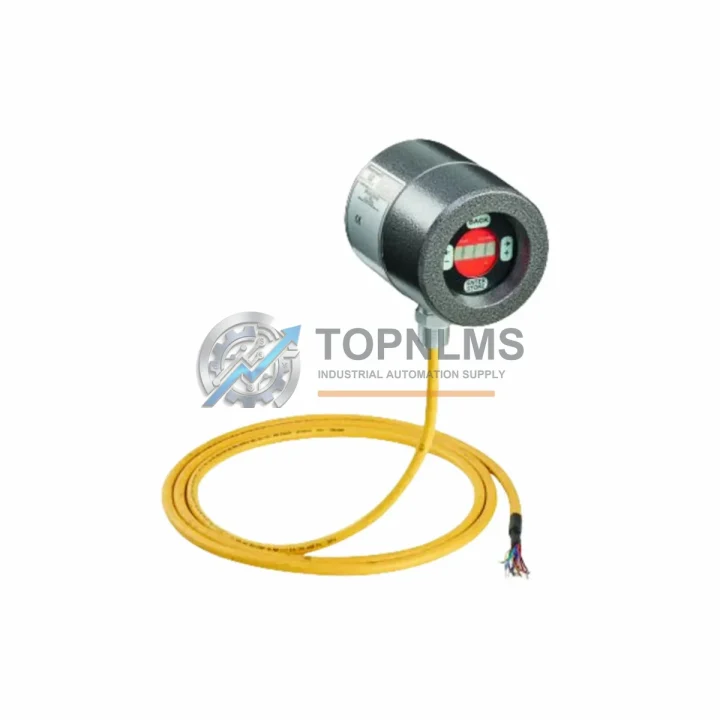
Send this exact part number, quantity and destination country. TOPNLMS will confirm availability, condition and export lead time before quotation.
Upgrading or replacing a legacy Honeywell UDC Series signal processor is one of the most critical steps in any industrial control system modernization project. The Honeywell U2-1010S-PF is a UDC-platform signal processor widely deployed in process industries including petrochemical, power generation, pharmaceutical manufacturing, and food & beverage. As original equipment reaches end-of-life or becomes difficult to source, plant engineers and procurement teams increasingly seek verified replacement and upgrade solutions that preserve existing wiring infrastructure, communication architecture, and control logic without requiring a full system overhaul.
At TOPNLMS, we specialize in sourcing, testing, and dispatching hard-to-find and discontinued Honeywell UDC components. Our U2-1010S-PF inventory is drawn from verified supply channels, inspected against factory specifications, and shipped with a 12-month replacement warranty. Whether you are executing a like-for-like swap of a failed unit or planning a phased migration from an older UDC controller platform to a current-generation architecture, this guide covers everything your engineering and procurement team needs to make an informed decision.
| Parameter | Legacy / Predecessor Models | U2-1010S-PF (This Unit) |
|---|---|---|
| Series Platform | Honeywell UDC 2000 / UDC 3000 / UDC 5000 | Honeywell UDC Series (U2 Platform) |
| Module Function | Analog Signal Conditioning / Process Input | Universal Signal Processor (PF variant) |
| Input Signal Types | Thermocouple, RTD, mV, mA (model-dependent) | Universal: TC / RTD / mV / V / mA |
| Output Interface | Analog 4–20 mA / relay (model-dependent) | 4–20 mA analog output, compatible relay interface |
| Communication Protocol | RS-485 Modbus RTU (older variants) | RS-485 Modbus RTU compatible |
| Wiring Compatibility | Standard UDC terminal block layout | Direct terminal-compatible; no rewiring required in most installations |
| Mounting / Form Factor | Panel-mount DIN rail / rack slot | Panel-mount; same footprint as UDC predecessor units |
| Power Supply | 85–264 VAC universal input | 85–264 VAC universal input |
| Installation Space | Standard 1/4 DIN panel cutout | 1/4 DIN panel cutout; no cabinet modification required |
| Replacement Recommendation | Direct drop-in for U2-1010S series variants | ✔ Verified compatible replacement |
| Warranty | — | 12-Month Replacement Warranty |
A successful migration from a legacy UDC-based control loop to a modernized architecture rarely involves replacing a single component in isolation. In practice, the U2-1010S-PF signal processor sits within a broader system that may include a Honeywell UDC 3200 or UDC 3500 controller as the primary loop controller, with the signal processor handling input conditioning before the PID algorithm executes. When the signal processor is replaced, engineers should simultaneously audit the UDC Series output relay module and any associated analog input/output terminal blocks for wear or compatibility drift.
In installations where the UDC platform communicates upstream to a DCS or SCADA system via RS-485 Modbus RTU, the replacement U2-1010S-PF maintains full protocol compatibility, eliminating the need to reconfigure the Honeywell Experion PKS communication gateway or reprogram the host system’s polling table. For sites that are simultaneously upgrading their communication backbone from RS-485 to Ethernet-based protocols, a Modbus RTU-to-Modbus TCP gateway module can be inserted between the UDC signal processor and the network switch without altering the field wiring.
On the power supply side, many aging UDC control cabinets rely on a 24 VDC rail-mount power supply module that may be approaching its rated service life. Replacing the power supply in the same maintenance window as the U2-1010S-PF signal processor reduces the risk of a secondary failure shortly after the primary repair. Similarly, if the installation uses a Honeywell UDC Series programming cable or configuration tool (such as the HC900 configuration software interface), verify that the cable driver and software version are compatible with the replacement unit before commissioning.
For plants executing a broader I/O modernization, the U2-1010S-PF can serve as a bridge component while the site transitions from legacy Honeywell TDC 3000 or HC900 I/O modules to a current-generation distributed I/O architecture. In such scenarios, signal isolators and loop-powered signal conditioners are frequently added to the signal chain to protect the new I/O cards from legacy field device noise. A DIN rail terminal block assembly with integrated surge protection is also recommended when the field wiring runs exceed 50 meters or pass through electrically noisy environments such as motor control centers.
Finally, if the site HMI is a legacy Honeywell Panel Station or a third-party operator panel communicating with the UDC controller via RS-485, the replacement U2-1010S-PF requires no HMI reconfiguration, as the Modbus register map and device address settings are preserved from the original unit configuration.
Q: Can I replace the U2-1010S-PF without rewiring the field terminals?
A: In the majority of UDC Series installations, yes. The U2-1010S-PF uses the same terminal block layout as its predecessor variants. Verify the terminal assignment against your existing loop drawing before powering up the replacement unit. If the original unit used a plug-in terminal block, the connector can typically be transferred directly to the replacement module.
Q: Will my existing Modbus RTU configuration work with the replacement unit?
A: Yes. The U2-1010S-PF supports RS-485 Modbus RTU at standard baud rates (typically 9600 or 19200 bps). The device address and communication parameters are configured via the front panel or configuration software and should be set to match the original unit’s settings before reconnecting to the network.
Q: Do I need to reprogram the PID parameters after replacement?
A: PID tuning parameters (proportional band, integral time, derivative time, setpoint) are stored in the controller, not the signal processor. However, if the U2-1010S-PF is being replaced as part of a controller upgrade, document all loop parameters from the existing unit before removal and re-enter them during commissioning of the replacement system.
Q: Is the physical footprint identical to the original unit?
A: The U2-1010S-PF uses a standard 1/4 DIN panel cutout (92 × 92 mm). If your existing panel was cut for a UDC 2000 or UDC 3000 series unit, the replacement will fit without modification. Confirm panel depth clearance for the connector and wiring harness.
Q: What communication protocols are supported for upstream SCADA integration?
A: The U2-1010S-PF natively supports RS-485 Modbus RTU. For Ethernet-based SCADA integration, a protocol converter or gateway device is required. This is a common addition during UDC-to-DCS migration projects and does not require changes to the field wiring or the signal processor configuration.
Q: How do I verify the unit is functioning correctly after installation?
A: Apply a known reference signal (e.g., a calibrated thermocouple simulator or 4–20 mA source) to the input terminals and verify the displayed process value matches the expected reading. Check the analog output with a calibrated loop calibrator. Confirm Modbus communication by polling the device address from the host system before returning the loop to automatic control.
Every U2-1010S-PF unit dispatched by TOPNLMS is covered by a 12-month replacement warranty from the date of shipment. Prior to dispatch, each unit undergoes a functional inspection that includes power-on verification, input signal response testing, and communication port validation. Units that do not meet factory performance specifications are quarantined and not offered for sale.
In the event of a warranty claim, TOPNLMS will arrange a replacement unit shipment upon receipt and inspection of the returned module. Our standard warranty response time is 3–5 business days for replacement dispatch. Expedited replacement is available for critical process applications — contact our sales team to discuss priority support arrangements.
For procurement teams requiring documentation, we can provide a test report, packing list, and certificate of conformance upon request. All units are shipped in anti-static packaging with appropriate cushioning for international freight. Export documentation including commercial invoice and packing list is prepared in compliance with Chinese customs regulations for smooth cross-border clearance.
Stock availability is updated regularly. We recommend confirming availability and lead time with our sales team before raising a purchase order, particularly for urgent plant maintenance requirements.
Honeywell 51305378-100 IKBI2 Printer Interface Board replacement for TDC 3000 DCS. Original spare, 12-month warranty, fast global shipping. Upgrade legacy systems now.
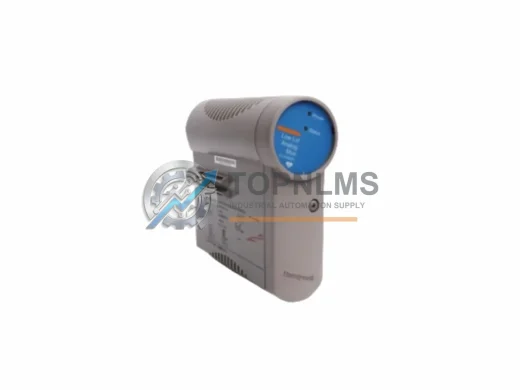
Honeywell 2MLI-D21D-CC FSC NOR Logic Controller Module. SIL2-rated, ruggedized for harsh industrial environments. In stock, tested, 12-month warranty. Fast global shipping.
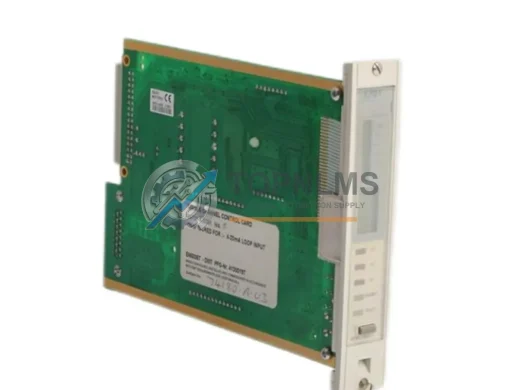
Honeywell 05436400 (Measurex 054364-00) Logic Termination Board. Rugged, field-proven, 12-month warranty. In stock — fast global shipping from TOPNLMS.
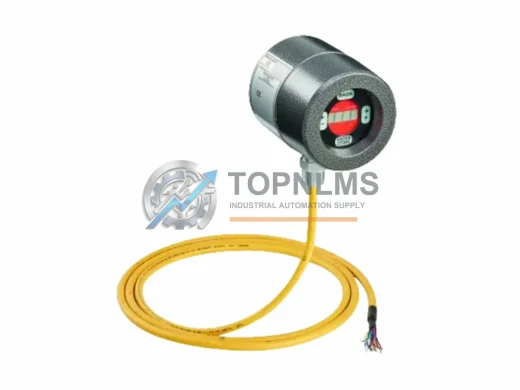
Honeywell U2-1018S-PF ruggedized universal signal processor module. UDC series. EMI-resistant, 12-month warranty. In stock — fast global shipping from TOPNLMS.
Click Quote This Model and the Part Number field will auto-fill with U2-1010S-PF.