
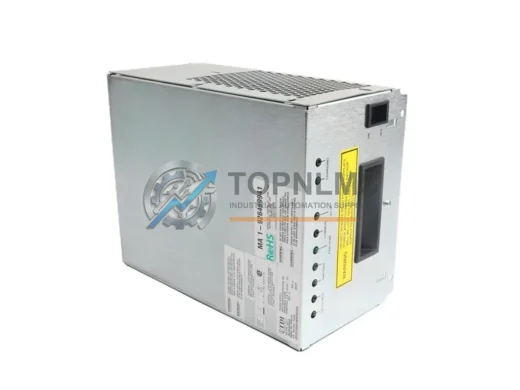
Honeywell
Honeywell 51198651-100 Ruggedized Power Supply Module for Harsh Environments
51198651-100Honeywell 51198651-100 UCN Power Supply Module for TDC-3000 DCS. In-stock, tested, 12-month warranty. Fast global shipping from TOPNLMS.
Request availability, condition, lead time and export shipping details for SPS5710 51198685-100.
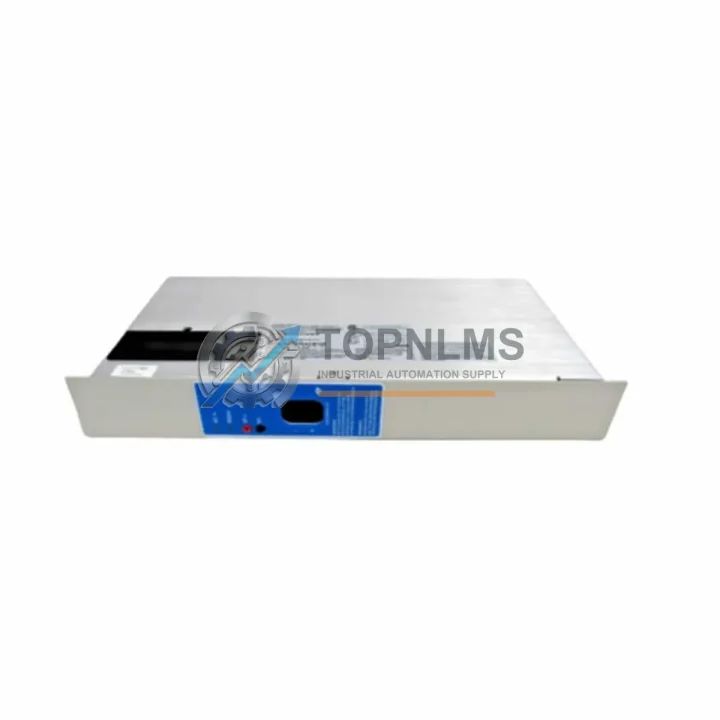
Send this exact part number, quantity and destination country. TOPNLMS will confirm availability, condition and export lead time before quotation.
The Honeywell SPS5710 (P/N 51198685-100) is an original power supply module engineered for the Honeywell Safety Manager (SM) series — one of the most widely deployed safety instrumented systems (SIS) in petrochemical, oil & gas, power generation, and heavy manufacturing facilities worldwide. As the backbone of the SM controller chassis, this power supply module delivers regulated, conditioned DC power to the processor, I/O modules, and communication backplane, making it a mission-critical component whose reliability directly determines system uptime and functional safety integrity.
For maintenance engineers and reliability teams managing aging DCS/SIS infrastructure, sourcing a verified original SPS5710 spare is not merely a procurement decision — it is a risk management imperative. A degraded or failed power supply is among the leading causes of unplanned safety system shutdowns, spurious trips, and SIL certification lapses. Stocking a qualified replacement ensures that when the time comes — whether during a planned turnaround or an emergency callout — your team can restore the system to full operational status within hours, not days.
| Parameter | Specification |
|---|---|
| Part Number | SPS5710 / 51198685-100 |
| Brand | Honeywell Process Solutions |
| Series | Safety Manager (SM) Series |
| Module Type | Power Supply Module |
| Output Voltage | 24 VDC regulated (nominal) |
| Input Voltage Range | 85–264 VAC / 100–370 VDC (wide-range universal input) |
| Output Power | Rated for full SM chassis load (processor + I/O backplane) |
| Redundancy Support | Hot-standby redundant PSU configuration supported |
| Chassis Compatibility | Honeywell Safety Manager SM controller chassis (SM-series rack) |
| Functional Safety | Designed for use in SIL 1–3 certified safety loops |
| Operating Temperature | 0°C to +60°C |
| Humidity | 5%–95% RH, non-condensing |
| Mounting | Dedicated PSU slot in SM chassis backplane |
| Indicators | Power OK LED, Fault LED |
| Certifications | TÜV-certified, IEC 61508 compliant (as part of SM system) |
| Country of Origin | United States |
| Condition | Original, new or refurbished-to-spec |
| Warranty | 12-Month Warranty |
A power supply module failure in a Safety Manager system rarely occurs in isolation. In most field cases, PSU degradation is accompanied by — or accelerates — stress on adjacent components sharing the same chassis and electrical circuit. A disciplined preventive maintenance program should treat the SPS5710 replacement as the trigger for a comprehensive cabinet inspection, not a standalone swap.
When replacing or inspecting the SPS5710, maintenance teams should simultaneously audit the SM processor module (e.g., SM-series CPU card) for firmware currency and capacitor aging, as processor modules in the same chassis share the regulated bus and are equally susceptible to voltage ripple damage over time. The SM I/O modules — including digital input modules, digital output modules, and analog input modules — should be checked for contact oxidation, loose field wiring terminations, and LED fault indicators that may have been masked by a marginal power supply.
The SM chassis backplane itself warrants inspection for connector pin corrosion and mechanical seating integrity, particularly in high-humidity or coastal environments. Alongside the backplane, the communication module (e.g., Honeywell SM Ethernet or Modbus gateway card) should be verified for link status and configuration integrity, as communication faults are frequently misdiagnosed as network issues when the root cause is an unstable power rail.
Field experience consistently shows that terminal blocks and field wiring connectors on the I/O side of the cabinet deteriorate at a similar rate to the PSU. Loose or corroded terminals introduce resistance that mimics sensor faults and can trigger nuisance trips. Replacing or re-torquing terminal connections during the same maintenance window eliminates a common source of spurious alarms.
For facilities running redundant Safety Manager configurations, the redundant power supply module (second SPS5710 unit) should be tested under load during the same outage window. A redundant PSU that has never been exercised in failover mode may have developed latent faults that only manifest under switchover conditions — exactly the scenario where reliability is most critical.
The 24 VDC field power distribution fuse modules feeding field instruments and solenoid valves from the same cabinet should be inspected and load-tested. Blown or degraded fuses in the field power circuit are a frequent companion fault to PSU stress events. Similarly, signal isolators and barriers protecting intrinsically safe field loops should be checked for drift, as power supply transients during PSU degradation can shift isolator calibration.
Finally, if the facility operates an HMI or operator workstation connected to the Safety Manager via the supervisory network, this is an appropriate time to verify communication health, alarm historian continuity, and backup configuration file currency — ensuring that a full system restore can be executed from a known-good baseline if needed.
The Honeywell SPS5710 (51198685-100) addresses one of the most persistent challenges in industrial safety system lifecycle management: maintaining operational continuity for SM-series installations that may be 10–20 years into their service life, in facilities where a full DCS/SIS migration is not yet economically or operationally feasible.
Unlike generic aftermarket alternatives, an original SPS5710 unit preserves the TÜV certification boundary of the Safety Manager system. Substituting a non-original power supply — even one with matching electrical specifications — can invalidate the SIL certification of the safety loop, creating regulatory exposure and voiding the system integrator’s functional safety documentation. Sourcing an original spare eliminates this risk entirely.
For facilities managing multiple SM chassis across a plant, establishing a minimum stock level of one SPS5710 per two chassis is a widely adopted best practice. This ratio balances inventory carrying cost against the statistical probability of concurrent PSU failures during extended production campaigns. Given typical lead times for original Honeywell SM spare parts through standard distribution channels, maintaining on-site stock is the only reliable strategy for achieving same-day or next-day restoration after an unplanned failure.
The SPS5710 is a direct form-fit-function replacement for units installed in SM chassis from the initial SM product generation through current production variants. No firmware update, configuration change, or backplane modification is required for installation — the module is plug-and-play within the SM chassis slot, with automatic power-OK handshake to the processor upon insertion.
All units supplied by TOPNLMS are pre-tested under load prior to shipment, with functional verification of output voltage regulation, fault detection circuitry, and LED indicator operation. Each unit ships with a test report and is covered by a 12-month warranty from the date of delivery.
Q1: Is the SPS5710 (51198685-100) compatible with all Safety Manager chassis variants?
A: The SPS5710 is designed for the Honeywell Safety Manager SM-series chassis. It is compatible with standard SM controller racks that accept the dedicated PSU slot form factor. If you are uncertain about compatibility with a specific chassis revision or project-specific configuration, please contact us with your chassis part number and we will confirm compatibility before shipment.
Q2: What is the recommended spare parts lifecycle strategy for the SPS5710?
A: Honeywell recommends a proactive replacement interval of 7–10 years for power supply modules in continuous-duty SIS applications, or earlier if output voltage ripple, thermal performance, or fault indicator behavior shows degradation. For facilities with SM systems approaching or exceeding 10 years of service, stocking at least one SPS5710 spare per site is strongly advisable to avoid extended lead-time exposure during an unplanned failure event.
Q3: How is the unit tested before shipment, and what does the 12-month warranty cover?
A: Every SPS5710 unit supplied by TOPNLMS undergoes pre-shipment functional testing including output voltage verification under rated load, fault relay operation check, and LED indicator validation. The 12-month warranty covers manufacturing defects and functional failures under normal operating conditions. It does not cover damage resulting from incorrect installation, overvoltage events, or operation outside specified environmental limits.
Q4: Can the SPS5710 be installed while the Safety Manager system is online (hot-swap)?
A: In redundant PSU configurations, the SPS5710 supports hot-swap replacement — the standby unit maintains chassis power while the degraded unit is removed and replaced. In single-PSU configurations, a controlled shutdown of the SM chassis is required prior to module replacement. Always follow the applicable Honeywell Safety Manager installation and maintenance procedures and your site’s Management of Change (MOC) process before performing any hardware replacement in a live safety system.
Honeywell 51198651-100 UCN Power Supply Module for TDC-3000 DCS. In-stock, tested, 12-month warranty. Fast global shipping from TOPNLMS.
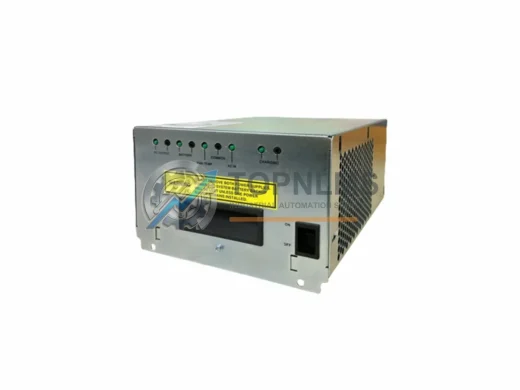
Honeywell 51109684-100 TPS DCS Power Supply Module. Ruggedized for harsh environments. In stock, tested, 12-month warranty. Fast global shipping from TOPNLMS.
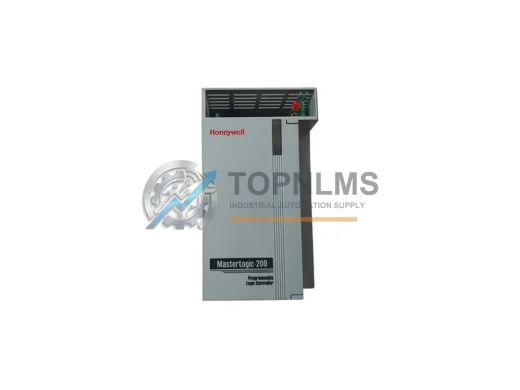
Honeywell 2MLR-DC42-CC DC Power Supply Module replacement for Experion PKS MLR rack. Verified compatibility, 12-month warranty, fast global shipping.
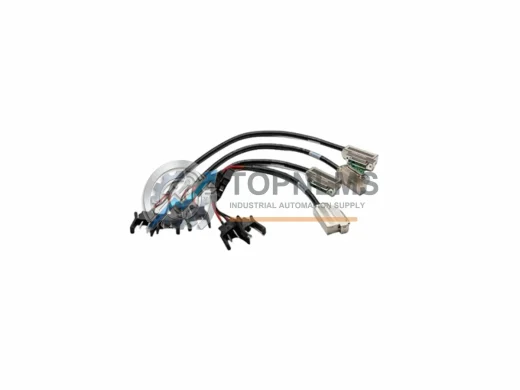
Honeywell FS-PDC-IOSET FS Series I/O power distribution module. Rugged, EMI-resistant, 12-month warranty. In stock — fast shipping from TOPNLMS.
Click Quote This Model and the Part Number field will auto-fill with SPS5710 51198685-100.