
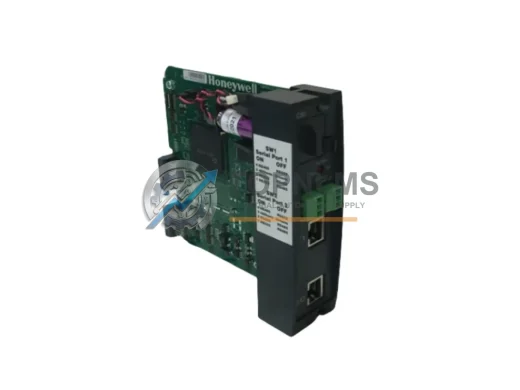
Honeywell
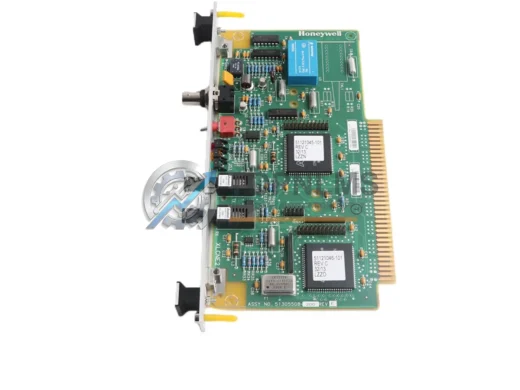
Honeywell 51305980-848 Original Industrial Spare TDC 3000 Compatible
51305980-848Honeywell 51305980-848 Fieldbus Interface Module for TDC 3000 DCS. Original spare, 12-month warranty, tested before shipment. Fast worldwide delivery.
Request availability, condition, lead time and export shipping details for MU-TSIM12 51303932-426.
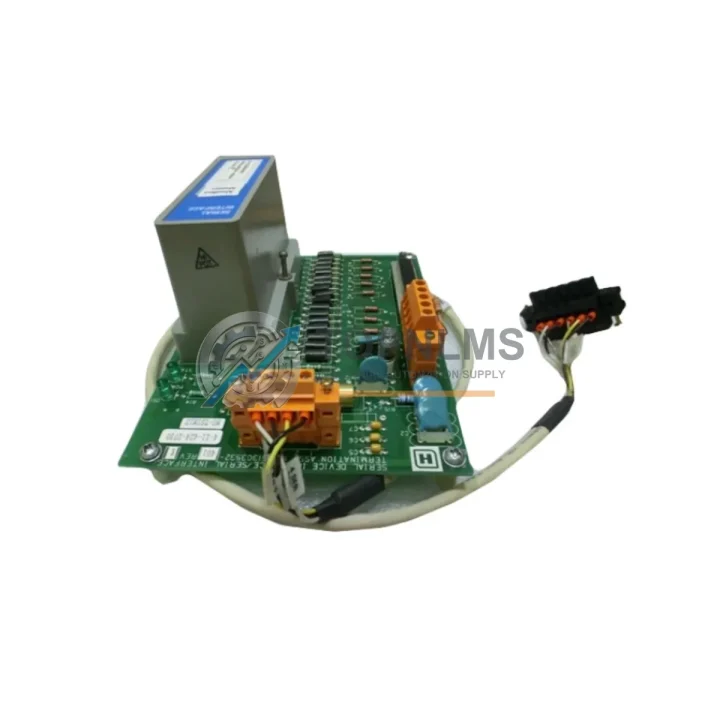
Send this exact part number, quantity and destination country. TOPNLMS will confirm availability, condition and export lead time before quotation.
The Honeywell MU-TSIM12 (P/N 51303932-426) is an original Serial Interface Processor Module designed for the TotalPlant Solution (TPS) Distributed Control System platform — one of the most widely deployed DCS architectures in refining, petrochemical, power generation, and continuous process industries. As aging TPS installations continue to operate well beyond their original design life, maintaining a reliable inventory of verified original spare modules like the MU-TSIM12 is not a luxury — it is a core pillar of any credible maintenance strategy.
When a serial interface processor fails in a live TPS cabinet, the consequences extend far beyond a single I/O point. Communication between the Universal Control Network (UCN) and field devices can be disrupted, operator visibility is compromised, and unplanned downtime accumulates rapidly. Having a tested, ready-to-install MU-TSIM12 on the shelf is the single most effective way to compress mean time to repair (MTTR) and restore process control with confidence.
| Parameter | Specification |
|---|---|
| Manufacturer | Honeywell Process Solutions |
| Part Number | MU-TSIM12 |
| Reference Number | 51303932-426 |
| Module Type | Serial Interface Processor Module |
| Platform | TotalPlant Solution (TPS) DCS |
| Communication Interface | Serial (RS-232 / RS-422 / RS-485 compatible) |
| Backplane Compatibility | TPS Universal Control Network (UCN) Cabinet |
| Power Supply | Supplied via TPS backplane (24 VDC nominal) |
| Operating Temperature | 0°C to 60°C (32°F to 140°F) |
| Humidity | 5% to 95% RH, non-condensing |
| Mounting | DIN rail / TPS module rack slot |
| Country of Origin | United States |
| Condition | Original, tested before shipment |
| Warranty | 12 Months from date of shipment |
A structured preventive maintenance program for a TPS-based control system goes well beyond replacing individual modules on failure. Experienced maintenance engineers treat the MU-TSIM12 replacement as a trigger point for a broader cabinet inspection — because serial interface faults rarely occur in isolation. When scheduling a planned replacement of the MU-TSIM12, it is best practice to simultaneously inspect and, where appropriate, pre-stage spares for the following components that share the same cabinet environment and electrical load path:
The Honeywell MU-SMCA01 / MU-SMCA11 UCN Node Interface Module operates in close proximity to the serial interface processor and handles UCN network arbitration. A degraded node interface can cause intermittent communication errors that are frequently misdiagnosed as serial interface faults — inspecting both simultaneously eliminates ambiguity. Similarly, the MU-PLAM02 Power Line Adapter Module and associated MU-PSIM11 Power Supply Interface Module should be checked for output voltage stability, since under-voltage conditions accelerate processor module wear and can cause the MU-TSIM12 to report spurious communication errors.
Within the same I/O subsystem, the Honeywell MU-GAIX12 / MU-GAOX12 Analog Input and Output Modules and MU-GDIC12 / MU-GDOC12 Digital I/O Modules share the backplane data bus with the serial interface processor. Any backplane connector oxidation or slot damage identified during MU-TSIM12 removal should prompt inspection of adjacent I/O module connectors. Stocking a small buffer of these I/O modules alongside the MU-TSIM12 is a cost-effective hedge against cascade failures during a single maintenance window.
For plants running serial-connected field instruments — flow computers, analyzers, or third-party RTUs — the terminal blocks and field wiring marshalling panels connected to the MU-TSIM12’s serial ports should be inspected for loose terminations, corrosion, and insulation degradation. Replacing worn terminal blocks during a planned module swap adds minimal labor cost but significantly reduces the risk of a repeat fault. Additionally, the Honeywell MU-CBAM02 / MU-CBAM12 Communication Bus Adapter Modules used in expanded TPS configurations should be verified for firmware compatibility whenever a serial interface module is replaced, as mismatched firmware revisions can cause silent data integrity issues.
Finally, for sites operating legacy TPS alongside newer Experion PKS infrastructure, the Honeywell CC-PCNT01 / CC-PAIX01 Experion interface cards and associated C300 Controller modules may be part of the same maintenance scope. Coordinating spare inventory across both the TPS and Experion layers ensures that a migration or hybrid-operation scenario does not expose the plant to a single-point-of-failure risk on either platform.
The MU-TSIM12 (51303932-426) is a direct drop-in replacement for earlier TPS serial interface revisions, maintaining full backward compatibility with existing UCN cabinet wiring, backplane slot assignments, and DCS configuration databases. This means maintenance teams can execute a hot-swap replacement during a planned shutdown without requiring any engineering change order, re-commissioning procedure, or software modification — a critical advantage in regulated industries where change management documentation adds significant time and cost to every hardware intervention.
For plants managing end-of-life TPS systems where Honeywell factory support has been reduced or discontinued, sourcing verified original MU-TSIM12 modules from a specialist industrial spare parts supplier is the most pragmatic path to system longevity. Refurbished or counterfeit alternatives introduce unacceptable risk in safety-instrumented environments. Every MU-TSIM12 unit shipped from TOPNLMS is tested for electrical integrity and communication functionality prior to dispatch, with full traceability documentation available on request.
Bulk procurement of 2–3 units per site is recommended for facilities with multiple TPS cabinets or high-criticality serial-connected devices. This inventory posture eliminates lead-time risk during emergency shutdowns and supports a rotate-and-test maintenance cycle that keeps all installed modules within their verified service life.
Q1: Is the MU-TSIM12 51303932-426 compatible with all TPS DCS cabinet configurations?
A: Yes. The MU-TSIM12 is designed for the Honeywell TotalPlant Solution (TPS) platform and is compatible with standard UCN cabinet backplane slots. It supports RS-232, RS-422, and RS-485 serial communication modes as configured in the DCS software. No hardware modification is required for direct replacement of earlier MU-TSIM revisions.
Q2: What pre-shipment testing is performed on each unit?
A: Every MU-TSIM12 unit undergoes electrical continuity testing, backplane connector inspection, and functional communication verification before shipment. Units that do not meet original Honeywell performance specifications are rejected. A test report is available upon request for quality-critical procurement processes.
Q3: What does the 12-month warranty cover?
A: The 12-month warranty covers manufacturing defects and functional failures under normal operating conditions from the date of shipment. It does not cover damage resulting from incorrect installation, overvoltage events, or physical mishandling. Warranty claims are processed with priority turnaround to minimize site downtime.
Q4: How should we manage MU-TSIM12 inventory for a multi-cabinet TPS installation?
A: For sites with 3 or more TPS cabinets containing serial interface processors, we recommend maintaining a minimum of 2 MU-TSIM12 units in on-site cold storage. Modules should be rotated on a 3–5 year cycle, with removed units returned for refurbishment testing. This strategy ensures that emergency replacement stock is always within its verified service window and eliminates the risk of installing a degraded spare during a critical shutdown.
Honeywell 51305980-848 Fieldbus Interface Module for TDC 3000 DCS. Original spare, 12-month warranty, tested before shipment. Fast worldwide delivery.
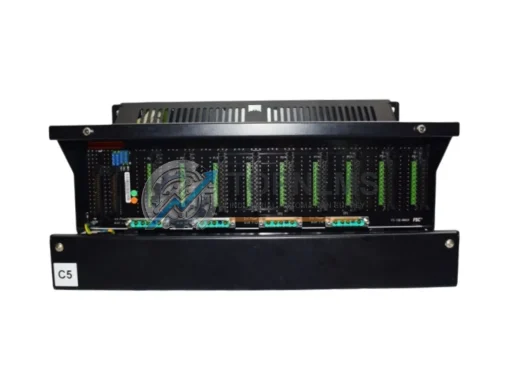
Original Honeywell 51305980-260 Fieldbus Interface Module for TDC 3000 & Experion PKS DCS. Genuine industrial spare, fast shipping, 12-month warranty.
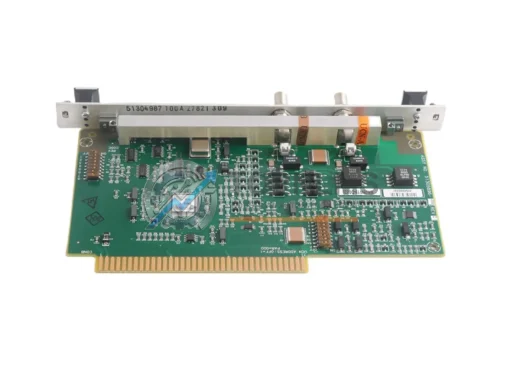
Honeywell 51305896-200 NIM Modem Board for TDC 3000 DCS. Original industrial spare, fast shipping, 12-month warranty. Verified compatible replacement.
Honeywell 51305508-200 XLCNE2 Experion PKS fiber network module. Drop-in replacement, 12-month warranty, fast global shipping from Xiamen.
Click Quote This Model and the Part Number field will auto-fill with MU-TSIM12 51303932-426.