
Honeywell
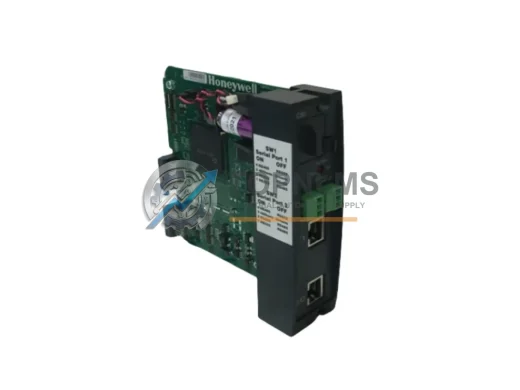
Honeywell 51305980-848 Original Industrial Spare TDC 3000 Compatible
51305980-848Honeywell 51305980-848 Fieldbus Interface Module for TDC 3000 DCS. Original spare, 12-month warranty, tested before shipment. Fast worldwide delivery.
Request availability, condition, lead time and export shipping details for K2LCN-8 51401551-801.
Send this exact part number, quantity and destination country. TOPNLMS will confirm availability, condition and export lead time before quotation.
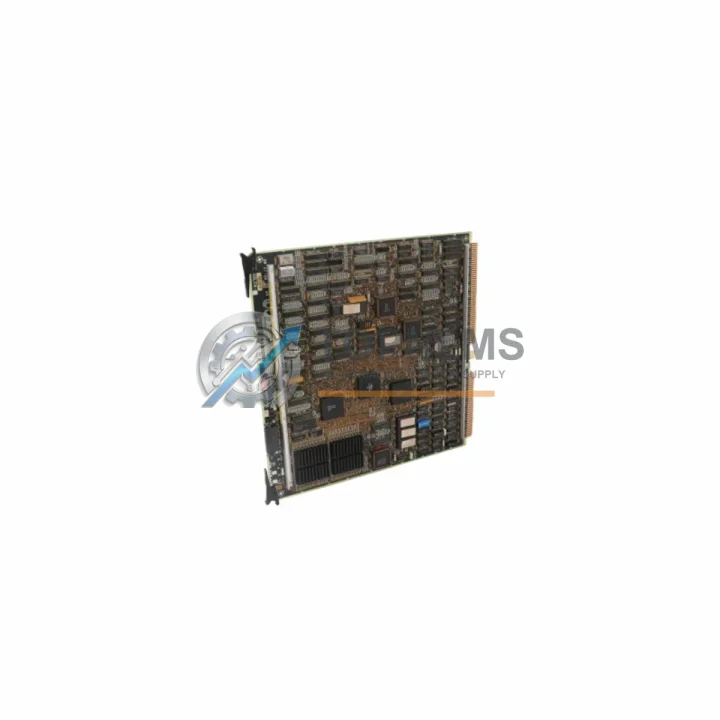
The Honeywell K2LCN-8 (part number 51401551-801) is a Local Control Network (LCN) Communication Module designed for the Honeywell TDC 3000 Distributed Control System. As a critical node in the LCN backbone, this module manages high-speed peer-to-peer communication between controllers, operator stations, and process managers within the TDC 3000 architecture. In aging process plants — refineries, chemical facilities, power generation sites, and pulp and paper mills — the K2LCN-8 remains an irreplaceable component for facilities that have chosen to extend the operational life of their TDC 3000 infrastructure rather than undertake a full DCS migration.
Sourcing a verified original K2LCN-8 51401551-801 is one of the most impactful decisions a maintenance team can make to protect system uptime. Communication failures at the LCN level can cascade rapidly, causing loss of visibility across multiple process units simultaneously. Having a tested, ready-to-install spare on the shelf eliminates the most dangerous variable in an unplanned shutdown scenario: lead time.
| Part Number | K2LCN-8 / 51401551-801 |
| Manufacturer | Honeywell Process Solutions |
| Series / Platform | TDC 3000 / Local Control Network (LCN) |
| Module Function | LCN Communication Module — peer-to-peer network node |
| Network Type | Local Control Network (LCN), coaxial-based high-speed bus |
| Compatibility | TDC 3000 AM, HPM, NIM, UCN, US, GUS, APP Node environments |
| Form Factor | Card/module for TDC 3000 card cage / chassis |
| Operating Environment | Industrial control room; temperature and humidity per TDC 3000 specs |
| Power Supply | Supplied via TDC 3000 card cage backplane |
| Origin | USA (Original Honeywell manufacture) |
| Condition | Original spare; tested prior to shipment |
| Warranty | 12-Month Warranty |
| Shipping | Worldwide; ESD-safe packaging; expedited options available |
| Maintenance Note | Inspect LCN coaxial connectors and termination resistors during replacement |
When a K2LCN-8 communication module is flagged for replacement — whether due to intermittent LCN faults, node dropout events, or a scheduled preventive maintenance cycle — experienced maintenance engineers treat the intervention as an opportunity to audit the broader LCN and TDC 3000 infrastructure. A single card swap rarely tells the full story of a system’s health.
Begin with the LCN coaxial cable plant. Degraded coaxial connectors, cracked termination resistors, or corroded BNC fittings are frequently the root cause of communication errors that appear to originate from the K2LCN-8 itself. While the card cage is open, inspect the LCN Extender Module (K2LCN-4) if present, as it shares the same communication bus and can introduce noise that masks the true fault source.
The Honeywell HPM (High-Performance Process Manager) modules in the same cabinet should be checked for firmware revision compatibility and for any logged communication retries that may indicate early LCN degradation. Similarly, the AM (Application Module) and NIM (Network Interface Module) cards that depend on LCN connectivity for historian and supervisory data transfer should be verified for clean communication status after the K2LCN-8 is replaced.
Power integrity is a silent contributor to LCN instability. Inspect the TDC 3000 Power Supply Module serving the affected card cage — voltage ripple and marginal output under load can cause intermittent communication faults that are difficult to reproduce during bench testing. If the power supply is original and has been in service for more than a decade, scheduling a proactive replacement alongside the K2LCN-8 is sound maintenance economics.
For facilities running Universal Control Network (UCN) segments alongside the LCN, the UCN Interface Module and associated UCN Coaxial Tap assemblies should be inspected during the same maintenance window. UCN and LCN faults often co-occur in aging TDC 3000 installations because both networks share the same physical infrastructure vintage and environmental exposure history.
Operator interface continuity is equally important. The Honeywell GUS (Global User Station) and US (Universal Station) workstations that rely on LCN connectivity for real-time process data should be tested for display refresh and alarm response latency after the module swap. If response times remain elevated, the issue may lie with the History Module (HM) or the Application Module (AM) rather than the communication layer itself.
Finally, document the replacement in your CMMS and update the spare parts register. Facilities that maintain a minimum of two K2LCN-8 units on the shelf — one installed spare and one cold standby — consistently report shorter mean-time-to-repair (MTTR) for LCN-related incidents. Given the long lead times and limited availability of original TDC 3000 components, proactive inventory management is not optional; it is a core element of system life extension strategy.
The K2LCN-8 51401551-801 is a direct replacement for earlier LCN communication card revisions used across the TDC 3000 platform. Facilities migrating from older card revisions benefit from the K2LCN-8’s compatibility with the full range of TDC 3000 node types, eliminating the need for firmware patches or configuration changes in most standard installations.
For plants operating mixed-vintage TDC 3000 systems — a common scenario in facilities that have expanded incrementally over decades — the K2LCN-8 provides a stable, tested baseline that avoids the compatibility risks associated with third-party or refurbished alternatives. Original Honeywell manufacture ensures that the module meets the electrical and timing specifications required for reliable LCN arbitration, which is particularly critical in high-node-count networks where communication collisions must be managed precisely.
Replacing a failed or marginal K2LCN-8 with a tested original unit typically restores full LCN performance within a single maintenance shift, avoiding the extended troubleshooting cycles that accompany unverified replacement parts. For facilities operating under tight turnaround constraints — particularly those in continuous process industries where unplanned shutdowns carry significant production cost — the value of a pre-tested, warrantied original spare is measured directly in avoided downtime hours.
TOPNLMS inspects and function-tests each K2LCN-8 unit prior to shipment. Units are packed in ESD-safe materials with appropriate cushioning for international freight. Expedited shipping options are available for emergency maintenance situations.
Q1: Is the K2LCN-8 51401551-801 compatible with all TDC 3000 node types?
The K2LCN-8 is designed for use across the TDC 3000 LCN architecture and is compatible with AM, HPM, NIM, UCN, US, GUS, and APP Node environments. Always verify your specific system revision and card cage configuration before installation. Our technical team can assist with compatibility verification prior to purchase.
Q2: What testing is performed before shipment?
Each K2LCN-8 unit undergoes functional inspection and electrical testing prior to shipment. Units that do not meet performance criteria are not offered for sale. A 12-month warranty is included with every unit, covering defects in materials and workmanship under normal operating conditions.
Q3: How should I manage TDC 3000 spare parts inventory given limited market availability?
Given the discontinuation of many TDC 3000 components by Honeywell, maintaining a strategic buffer stock of critical modules — including K2LCN-8 communication cards, power supply modules, and HPM cards — is strongly recommended. A minimum of one cold standby unit per critical node type is a widely adopted industry practice for life-extended DCS systems. Contact us for volume pricing on multi-unit orders.
Q4: Can the K2LCN-8 be installed without a full system shutdown?
In most TDC 3000 configurations, LCN module replacement requires taking the affected node offline, which may or may not require a full process shutdown depending on system redundancy design. Consult your TDC 3000 system documentation and site safety procedures before performing any card replacement. TOPNLMS can provide technical guidance to support your maintenance planning.
Honeywell 51305980-848 Fieldbus Interface Module for TDC 3000 DCS. Original spare, 12-month warranty, tested before shipment. Fast worldwide delivery.
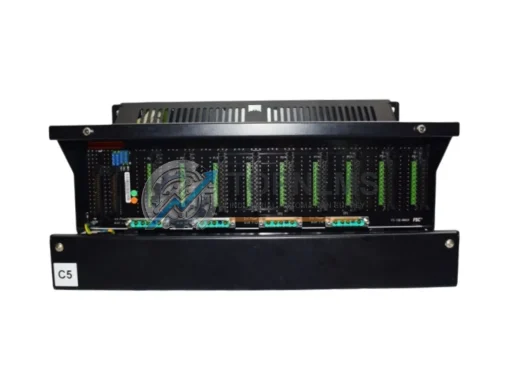
Original Honeywell 51305980-260 Fieldbus Interface Module for TDC 3000 & Experion PKS DCS. Genuine industrial spare, fast shipping, 12-month warranty.
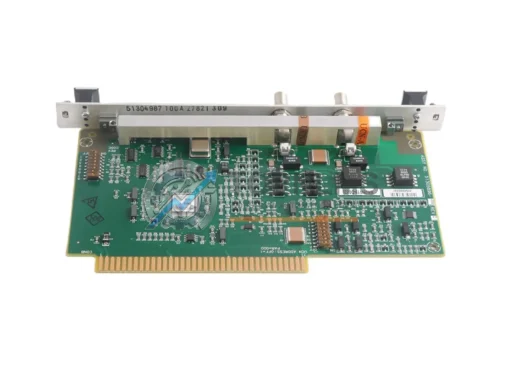
Honeywell 51305896-200 NIM Modem Board for TDC 3000 DCS. Original industrial spare, fast shipping, 12-month warranty. Verified compatible replacement.
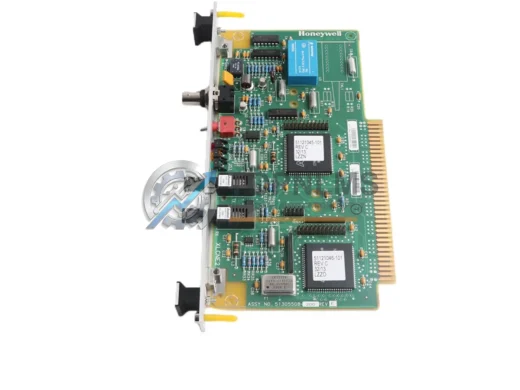
Honeywell 51305508-200 XLCNE2 Experion PKS fiber network module. Drop-in replacement, 12-month warranty, fast global shipping from Xiamen.
Click Quote This Model and the Part Number field will auto-fill with K2LCN-8 51401551-801.