
Honeywell
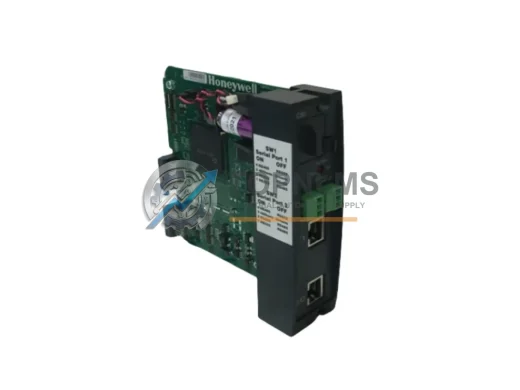
Honeywell 51305980-848 Original Industrial Spare TDC 3000 Compatible
51305980-848Honeywell 51305980-848 Fieldbus Interface Module for TDC 3000 DCS. Original spare, 12-month warranty, tested before shipment. Fast worldwide delivery.
Request availability, condition, lead time and export shipping details for HC-PBUTV3-ESD.
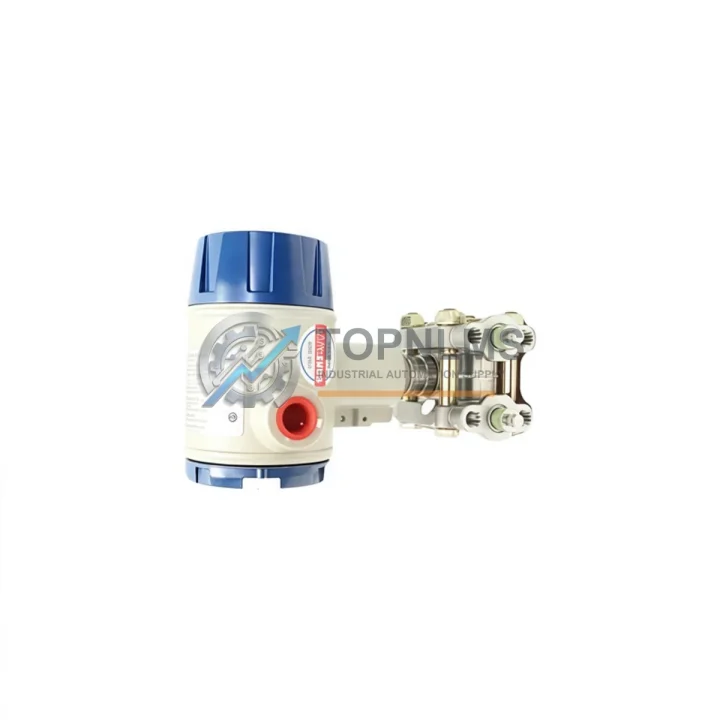
Send this exact part number, quantity and destination country. TOPNLMS will confirm availability, condition and export lead time before quotation.
The Honeywell HC-PBUTV3-ESD is an original ESD (Emergency Shutdown) Push Button Interface Module designed for use within the Honeywell Experion PKS (Process Knowledge System) distributed control and safety system architecture. In process industries — including oil & gas, petrochemical, power generation, and chemical manufacturing — the integrity of the ESD layer is non-negotiable. A failed or degraded push button interface module can compromise the entire safety instrumented system (SIS), leading to unplanned shutdowns, regulatory non-compliance, or, in worst-case scenarios, hazardous process conditions.
Sourced as an original Honeywell spare, the HC-PBUTV3-ESD is engineered to integrate seamlessly into existing Experion PKS control cabinets without requiring firmware reconfiguration or hardware adaptation. For maintenance engineers managing aging DCS/SIS infrastructure, having a verified replacement unit on the shelf is the single most effective strategy for minimizing mean time to repair (MTTR) and protecting production continuity.
| Parameter | Specification |
|---|---|
| Part Number | HC-PBUTV3-ESD |
| Manufacturer | Honeywell |
| Series / Platform | Experion PKS — Safety Manager / ESD Layer |
| Module Type | ESD Push Button Interface Module |
| Version | V3 |
| Application | Emergency Shutdown (ESD) operator interface, SIS panel integration |
| Compatibility | Honeywell Experion PKS, Safety Manager, C300 controller environments |
| Installation | DIN rail / control cabinet panel mount |
| Operating Temperature | 0°C to 60°C (typical industrial cabinet range) |
| Communication | Integrated with Experion PKS FTE (Fault Tolerant Ethernet) backbone |
| Condition | Original, new or refurbished-tested (clearly stated at order) |
| Pre-shipment Testing | Full functional verification prior to dispatch |
| Warranty | 12 Months from date of shipment |
| Origin | USA |
| Lead Time | In-stock units ship within 3–5 business days |
When a maintenance team schedules a planned shutdown or responds to an ESD system alarm, the HC-PBUTV3-ESD is rarely the only component under scrutiny. The Experion PKS ESD architecture is a tightly integrated system, and experienced maintenance engineers know that replacing a single module without inspecting adjacent components is a missed opportunity — and a potential liability.
During any ESD panel inspection or corrective maintenance event involving the HC-PBUTV3-ESD, it is strongly recommended to simultaneously audit the Honeywell HC-TDIL16S digital input module and HC-TDOL8S digital output module, which handle the I/O signals that the push button interface depends on. A degraded I/O module can cause intermittent ESD trigger failures that are difficult to diagnose without a spare on hand for swap testing.
The Honeywell CC-PAIX01 analog input module and CC-PDOB01 digital output module from the C300 series are commonly co-located in the same control cabinet and should be visually inspected for signs of overheating, connector wear, or firmware version mismatch. Maintaining a small buffer stock of these modules — even one unit each — dramatically reduces the risk of extended downtime when multiple faults occur simultaneously.
Power integrity is equally critical. The Honeywell HC-PWRSUPP1 power supply module feeds the ESD subsystem, and any voltage ripple or supply degradation will manifest as erratic behavior in the push button interface. Pairing a replacement HC-PBUTV3-ESD with a verified spare power supply module is a best practice in high-availability SIS environments.
Communication continuity must also be verified. The Honeywell HC-SCMXXX series communication modules and the FTE network switch infrastructure connecting the Safety Manager to the Experion PKS server should be checked for port integrity and cable condition. A loose FTE connection can cause the push button interface to appear offline even when the module itself is fully functional — a common misdiagnosis that leads to unnecessary module replacement.
For facilities running legacy Experion PKS R400 or R500 environments, it is also advisable to maintain spares for the Honeywell SM-SCM Safety Manager Communication Module and the HC-ADADP analog signal conditioner, both of which are frequently co-located in ESD control cabinets and share the same maintenance window. Proactive stocking of these components, alongside the HC-PBUTV3-ESD, forms the backbone of a resilient spare parts inventory strategy for any safety-critical process facility.
Many facilities operating Honeywell Experion PKS systems installed in the 2000s and early 2010s face a common challenge: the original equipment manufacturer has discontinued or limited availability of certain legacy modules, while the control system itself remains deeply embedded in the plant’s operational infrastructure. Replacing the entire DCS/SIS platform is a multi-year, multi-million-dollar undertaking — one that most facilities defer as long as the existing system can be maintained reliably.
The HC-PBUTV3-ESD addresses this challenge directly. As an original Honeywell module, it provides a drop-in replacement for aging or failed units without requiring any changes to the existing system configuration, I/O mapping, or safety logic. There is no need for re-engineering, re-validation, or extended commissioning — the module is installed, verified, and the system is returned to service. This is the core value proposition of maintaining a curated spare parts inventory: the ability to execute a controlled, documented replacement in hours rather than days.
For facilities transitioning from older Honeywell TDC 3000 or FSC (Fail-Safe Controller) platforms toward Experion PKS, the HC-PBUTV3-ESD also serves as a validated interface point, ensuring that operator ESD actions are correctly captured and transmitted within the new architecture. This makes it a strategic component not only for maintenance but also for phased system migration projects.
All units supplied by TOPNLMS undergo pre-shipment functional testing. Documentation including test reports and, where available, original manufacturer certificates of conformance, is provided upon request. This supports your site’s change management and MOC (Management of Change) documentation requirements.
Q1: Is the HC-PBUTV3-ESD compatible with all versions of Honeywell Experion PKS?
The HC-PBUTV3-ESD V3 is designed for Experion PKS environments running Safety Manager integration. Compatibility is confirmed for R400, R500, and R510 releases. For R600 and later, please contact our technical team to verify firmware and hardware revision compatibility before ordering.
Q2: What does the 12-month warranty cover?
The 12-month warranty covers manufacturing defects and functional failures under normal operating conditions from the date of shipment. Each unit is tested prior to dispatch. In the event of a warranty claim, we provide a replacement unit or full refund, subject to inspection of the returned module.
Q3: How quickly can the HC-PBUTV3-ESD be installed as a field replacement?
For a trained instrumentation or DCS engineer, the physical swap typically takes under 30 minutes. The module is hot-swap capable in supported Experion PKS configurations, meaning the replacement can often be performed without a full system shutdown. Always verify your specific system configuration and safety procedures before performing any live maintenance.
Q4: How should I manage spare parts inventory for ESD systems to avoid extended downtime?
Industry best practice for SIS/ESD spare parts management recommends maintaining at least one replacement unit for any module with a mean time between failures (MTBF) of less than 10 years, or any module that is on the manufacturer’s end-of-life list. For critical ESD interface modules like the HC-PBUTV3-ESD, a minimum stock of one unit per control cabinet — with a reorder trigger when the spare is consumed — is a practical and cost-effective strategy. TOPNLMS can support blanket purchase orders and scheduled replenishment programs for facilities with multiple ESD panels.
Honeywell 51305980-848 Fieldbus Interface Module for TDC 3000 DCS. Original spare, 12-month warranty, tested before shipment. Fast worldwide delivery.
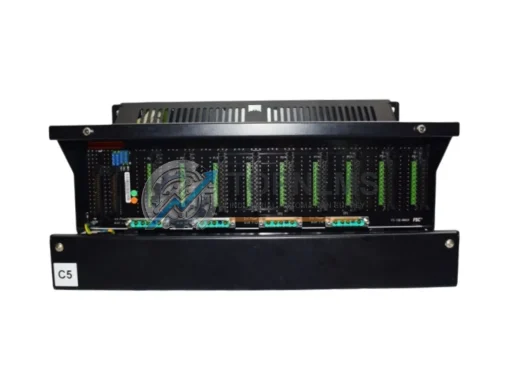
Original Honeywell 51305980-260 Fieldbus Interface Module for TDC 3000 & Experion PKS DCS. Genuine industrial spare, fast shipping, 12-month warranty.
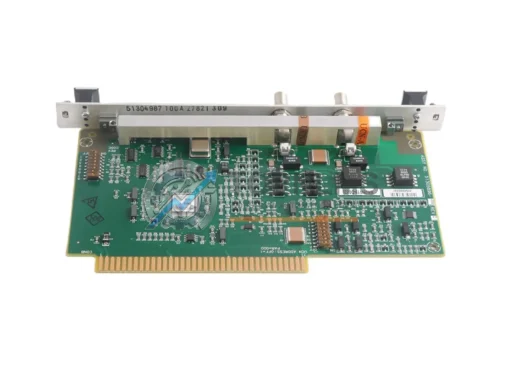
Honeywell 51305896-200 NIM Modem Board for TDC 3000 DCS. Original industrial spare, fast shipping, 12-month warranty. Verified compatible replacement.
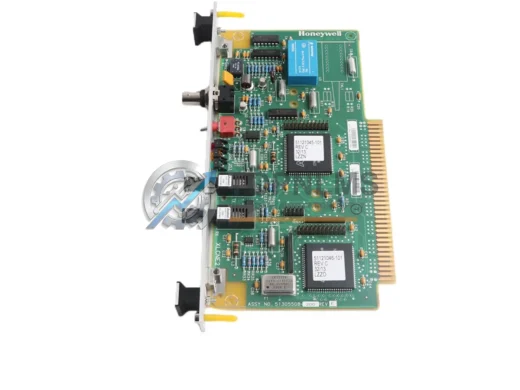
Honeywell 51305508-200 XLCNE2 Experion PKS fiber network module. Drop-in replacement, 12-month warranty, fast global shipping from Xiamen.
Click Quote This Model and the Part Number field will auto-fill with HC-PBUTV3-ESD.