
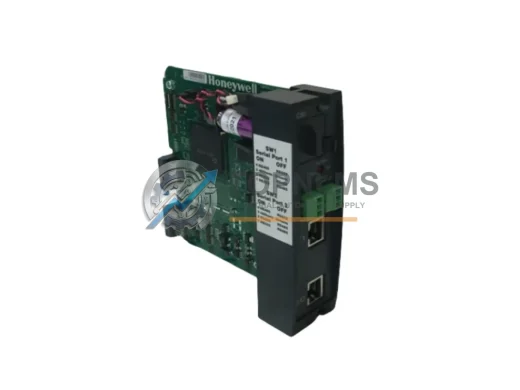
Honeywell
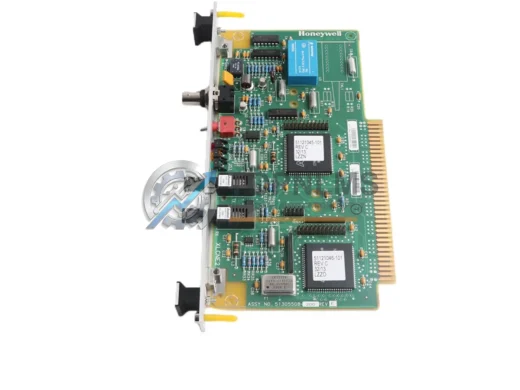
Honeywell 51305980-848 Original Industrial Spare TDC 3000 Compatible
51305980-848Honeywell 51305980-848 Fieldbus Interface Module for TDC 3000 DCS. Original spare, 12-month warranty, tested before shipment. Fast worldwide delivery.
Request availability, condition, lead time and export shipping details for 10004/I/I.
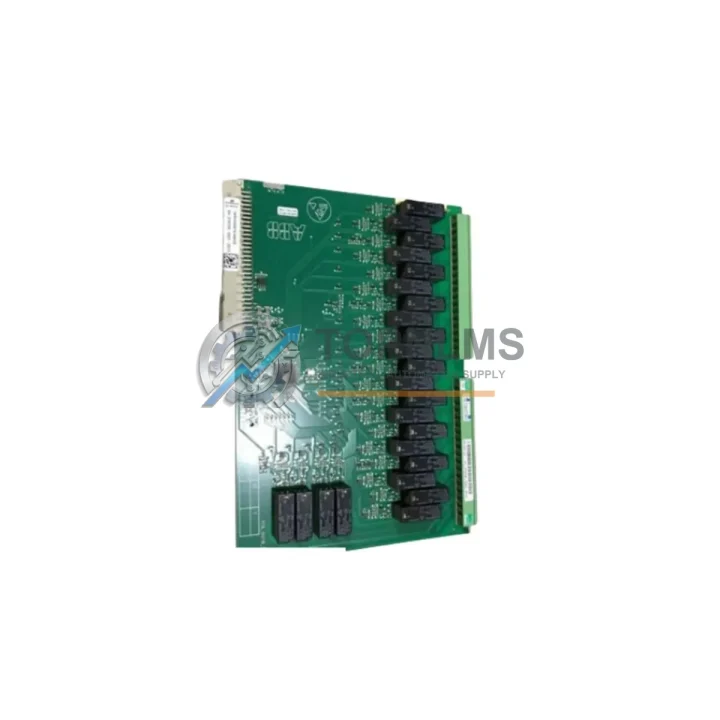
Send this exact part number, quantity and destination country. TOPNLMS will confirm availability, condition and export lead time before quotation.
The Honeywell 10004/I/I is a high-integrity DCS Communication Interface Module engineered for the TDC 3000 distributed control system platform — one of the most widely deployed process automation architectures in the global petrochemical, power generation, and heavy manufacturing industries. Designed to operate continuously in demanding industrial environments, this module delivers stable, low-latency data communication between field devices and the central control network, even under conditions of elevated temperature, high humidity, airborne particulates, mechanical vibration, and electromagnetic interference (EMI).
In continuous production environments — oil refineries, gas processing plants, pulp and paper mills, water treatment facilities, and metallurgical operations — communication integrity is not optional. A single point of failure in the DCS communication backbone can cascade into unplanned shutdowns, safety incidents, and significant financial loss. The Honeywell 10004/I/I is purpose-built to prevent exactly that scenario, providing deterministic, fault-tolerant communication that keeps your process running safely and efficiently around the clock.
| Parameter | Specification |
|---|---|
| Part Number / SKU | 10004/I/I |
| Manufacturer | Honeywell |
| Series / Platform | TDC 3000 Distributed Control System |
| Module Type | DCS Communication Interface Module |
| Communication Protocol | Honeywell Local Control Network (LCN) / Data Hiway |
| Operating Temperature | 0°C to +60°C (32°F to 140°F) |
| Storage Temperature | -40°C to +85°C |
| Humidity Tolerance | 5% to 95% RH, non-condensing |
| EMI/RFI Protection | Designed to IEC 61000 industrial EMC standards |
| Vibration Resistance | Suitable for panel-mount installation in vibration-prone environments |
| Enclosure / Form Factor | Card-cage module, standard TDC 3000 chassis compatible |
| Power Supply Compatibility | TDC 3000 standard backplane power |
| Application Sectors | Oil & Gas, Power Generation, Chemical Processing, Water Treatment, Metallurgy |
| Condition | New / Refurbished (tested and certified) |
| Origin | USA (Honeywell Industrial Automation Division) |
| Warranty | 12 Months from date of shipment |
| Availability | In Stock — Ready to Ship |
The Honeywell 10004/I/I does not operate in isolation — it is a critical node within a broader TDC 3000 control architecture. In a typical high-availability process plant, this communication interface module works in concert with the Honeywell 10006/I/I Highway Gateway Module to bridge the Local Control Network (LCN) with the Universal Control Network (UCN), ensuring seamless data flow between distributed field controllers and the operator workstations. Alongside it, the Honeywell 51304485-100 Power Supply Module provides stable, conditioned power to the card cage, protecting all resident modules — including the 10004/I/I — from voltage transients and power quality issues common in heavy industrial substations.
For I/O integration, the Honeywell 51401544-150 Analog Input Module and Honeywell 51304453-100 Digital Output Module feed real-time process data into the communication backbone managed by the 10004/I/I. In safety-critical zones, the Honeywell FSC (Fail-Safe Controller) safety module series interfaces with the TDC 3000 platform via dedicated safety communication channels, where the integrity of the 10004/I/I’s data path is paramount to maintaining SIL-rated protection functions.
In control cabinet configurations, the 10004/I/I is typically installed alongside Honeywell TDC 3000 AM (Application Module) and NIM (Network Interface Module) cards, forming a redundant communication spine. Terminal modules and marshalling panels — such as the Honeywell 51196694-100 series — provide the field wiring interface, while industrial-grade DIN rail power supplies ensure the entire cabinet maintains operational continuity even during grid fluctuations. For plants running mixed automation architectures, the 10004/I/I’s compatibility with Honeywell’s broader Experion PKS migration pathway also makes it a strategic asset for phased modernization projects, reducing the risk of full system replacement.
In oil and gas upstream and midstream operations, the Honeywell 10004/I/I is deployed in wellhead control panels, compressor stations, and pipeline SCADA integration points where communication reliability directly impacts production uptime and personnel safety. The module’s tolerance for wide temperature swings and its robust EMI shielding make it well-suited for offshore platform control rooms and onshore processing facilities where diesel generators and high-power electrical equipment create persistent electromagnetic noise.
In coal-fired and gas-fired power generation plants, the TDC 3000 platform — anchored by communication modules like the 10004/I/I — manages boiler control, turbine sequencing, and emissions monitoring systems. Any interruption in the communication layer can trigger turbine trips or force manual override of automated safety interlocks, making the availability of tested, certified spare modules a non-negotiable operational requirement.
Mining and metallurgical operations present some of the harshest environments for control system hardware: extreme dust loading, corrosive atmospheres, and continuous mechanical vibration from crushers, conveyors, and smelting equipment. The Honeywell 10004/I/I’s industrial-grade construction ensures it maintains communication integrity in these conditions, supporting blast furnace automation, ore processing control, and tailings management systems.
In municipal and industrial water treatment facilities, where 24/7 uninterrupted operation is mandated by public health regulations, the 10004/I/I supports SCADA-integrated DCS architectures managing pump stations, chemical dosing systems, and filtration process control. Having a verified spare module in inventory is a standard risk mitigation practice for plant engineers responsible for maintaining continuous compliance with environmental discharge standards.
Q1: What does the 12-month warranty cover for the Honeywell 10004/I/I?
The 12-month warranty covers all hardware defects and functional failures under normal operating conditions from the date of shipment. If the module fails to perform to its published specifications within the warranty period, we will provide a replacement or full refund. The warranty applies to both new and certified-refurbished units and is supported by our in-house technical team.
Q2: How is each unit tested before shipment?
Every Honeywell 10004/I/I unit undergoes a multi-stage pre-shipment inspection: visual inspection for physical damage, power-on functional testing, communication protocol verification, and burn-in testing under load conditions. Units that do not pass all test stages are quarantined and not offered for sale. A test report is available upon request for quality-critical procurement processes.
Q3: Is the Honeywell 10004/I/I compatible with my existing TDC 3000 chassis and firmware version?
The 10004/I/I is designed for direct drop-in compatibility with standard TDC 3000 card-cage chassis configurations. It is compatible across the major TDC 3000 firmware revisions deployed in the field. If you have a specific chassis model or firmware version requirement, please contact our technical team with your system configuration details and we will confirm compatibility before shipment.
Q4: Can you support long-term or repeat supply of the Honeywell 10004/I/I for ongoing maintenance programs?
Yes. We maintain standing inventory of the Honeywell 10004/I/I and related TDC 3000 spare modules to support planned maintenance schedules, emergency replacements, and multi-site procurement programs. We can provide blanket purchase order arrangements, reserved stock agreements, and advance shipment notifications to ensure your maintenance team always has critical spares available without lead-time risk.
Honeywell 51305980-848 Fieldbus Interface Module for TDC 3000 DCS. Original spare, 12-month warranty, tested before shipment. Fast worldwide delivery.
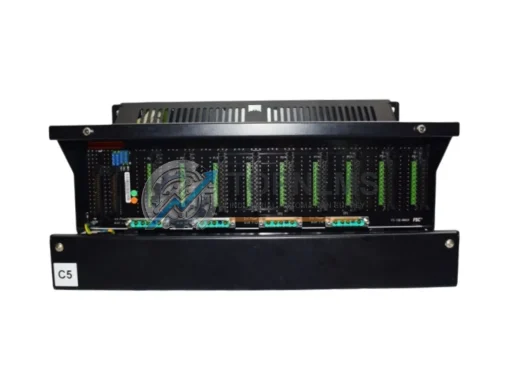
Original Honeywell 51305980-260 Fieldbus Interface Module for TDC 3000 & Experion PKS DCS. Genuine industrial spare, fast shipping, 12-month warranty.
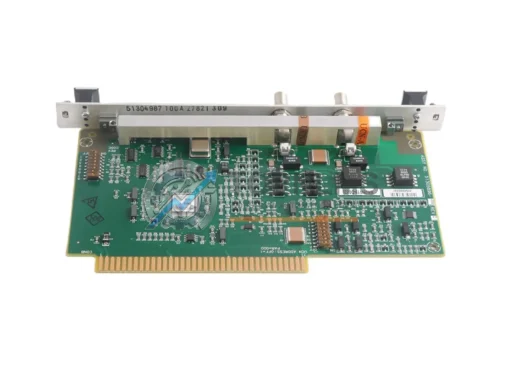
Honeywell 51305896-200 NIM Modem Board for TDC 3000 DCS. Original industrial spare, fast shipping, 12-month warranty. Verified compatible replacement.
Honeywell 51305508-200 XLCNE2 Experion PKS fiber network module. Drop-in replacement, 12-month warranty, fast global shipping from Xiamen.
Click Quote This Model and the Part Number field will auto-fill with 10004/I/I.