
ABB
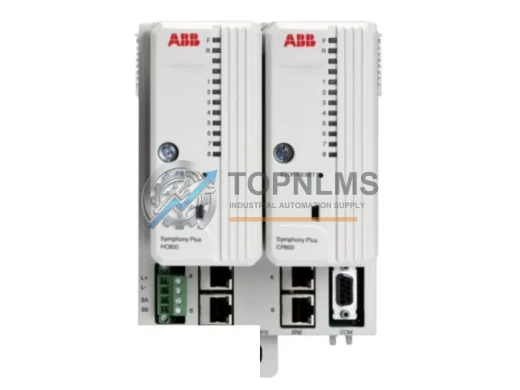
ABB CPM810 Original Industrial Spare AC800M Compatible
CPM810ABB CPM810 original industrial spare for AC800M DCS systems. Fast replacement, 12-month warranty, tested before shipment. Reduce downtime — order now.
Request availability, condition, lead time and export shipping details for 1756-WS.
Send this exact part number, quantity and destination country. TOPNLMS will confirm availability, condition and export lead time before quotation.
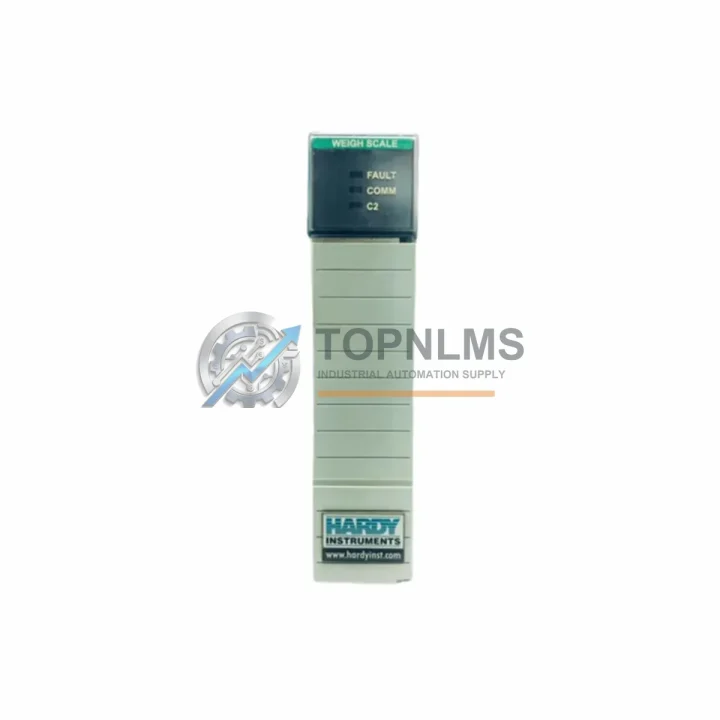
The HARDY 1756-WS is a ControlLogix-platform Weigh Scale Module designed for precision weight measurement and process control in demanding industrial environments. As legacy HARDY weigh scale systems—including older Hardy HI 1756 series predecessors and standalone weigh controllers—reach end-of-life or become increasingly difficult to source, the 1756-WS provides a direct, rack-native upgrade path that preserves your existing wiring infrastructure, control logic architecture, and process calibration data with minimal disruption to production.
Whether you are migrating from a standalone Hardy HI 4050 or HI 4060 weigh controller, retiring a third-party analog weight transmitter, or consolidating a distributed weigh station into a unified Allen-Bradley ControlLogix 1756 chassis, the 1756-WS integrates directly into your existing 1756 backplane. It communicates natively over the ControlLogix backplane bus, eliminating the need for external serial or analog signal conditioning that older weigh systems required. This dramatically reduces panel wiring complexity and frees up valuable control cabinet space.
For facilities running Allen-Bradley ControlLogix L6x or L7x controllers—such as the 1756-L61, 1756-L71, or 1756-L75—the 1756-WS slots directly into any available 1756 chassis slot, including the 1756-A4, 1756-A7, 1756-A10, and 1756-A17 rack configurations. No additional backplane adapters or communication bridges are required. The module is powered directly from the 1756 chassis power supply, such as the 1756-PA72 or 1756-PB72, simplifying your power distribution design and reducing the number of discrete 24 VDC or 120 VAC weigh controller power feeds previously routed through the control cabinet.
From a wiring compatibility standpoint, the 1756-WS accepts standard load cell inputs using a 6-wire (excitation+, excitation−, sense+, sense−, signal+, signal−) configuration, which is fully compatible with the majority of existing NEMA-rated junction boxes and load cell summing cards already installed in your facility. In most retrofit scenarios, field wiring from the load cell network can be reconnected directly to the 1756-WS terminal block without re-pulling cable, significantly reducing installation labor and downtime during the cutover window.
On the software side, migration from a legacy standalone weigh controller to the 1756-WS is supported through Rockwell Automation’s Studio 5000 Logix Designer environment. The module’s Add-On Profile (AOP) is available through the Rockwell Automation Product Compatibility and Download Center (PCDC), enabling seamless tag-based integration into your existing ControlLogix program. Engineers migrating from older RSLogix 5000 projects can import existing ladder logic routines and remap weigh data tags to the 1756-WS module’s structured data types with minimal rework. Calibration parameters—including zero, span, and filter settings—are configured directly within the module’s AOP properties, replacing the front-panel calibration procedures required on legacy HI-series controllers.
For multi-axis or multi-hopper weigh systems, multiple 1756-WS modules can be installed in the same 1756 chassis alongside other I/O modules such as the 1756-IB16 digital input module, 1756-OB16E digital output module, and 1756-IF8 analog input module, enabling a fully integrated batching, blending, or filling control system within a single ControlLogix rack. This consolidation eliminates the need for separate weigh controller enclosures, reduces the number of Ethernet or serial communication nodes on your plant network, and simplifies your overall system architecture.
Communication protocol compatibility is a key advantage of the 1756-WS migration path. Unlike legacy serial-based weigh controllers that relied on RS-232 or RS-485 Modbus RTU links to the PLC, the 1756-WS communicates directly over the ControlLogix backplane, making weight data available to the controller scan cycle at full PLC scan rate. For facilities that also use EtherNet/IP-based SCADA or MES systems, weight data from the 1756-WS is accessible via the ControlLogix controller’s EtherNet/IP port—using modules such as the 1756-EN2T or 1756-EN3TR—without any additional protocol conversion hardware or OPC gateway configuration.
| Parameter | Legacy System (Typical) | HARDY 1756-WS |
|---|---|---|
| Form Factor | Standalone DIN-rail or panel-mount controller | 1756 ControlLogix rack-mount module |
| Communication | RS-232 / RS-485 Modbus RTU or analog 4–20 mA | Native ControlLogix backplane (EtherNet/IP via controller) |
| Load Cell Input | 4-wire or 6-wire (varies by model) | 6-wire load cell (excitation, sense, signal) |
| Power Supply | Dedicated 24 VDC or 120 VAC external PSU | Powered from 1756 chassis PSU (e.g., 1756-PA72) |
| Programming Environment | Proprietary front-panel or PC software | Studio 5000 Logix Designer with AOP |
| Rack Compatibility | N/A (standalone) | 1756-A4, 1756-A7, 1756-A10, 1756-A17 |
| Controller Compatibility | N/A or proprietary | 1756-L61, 1756-L71, 1756-L75 and compatible L6x/L7x |
| Wiring Retrofit | Requires signal conditioning or rewiring | Direct load cell reconnection in most installations |
| Calibration Method | Front-panel keypad or proprietary software | AOP-based calibration in Studio 5000 |
| Replacement SKU | Legacy HI 4050, HI 4060, or third-party weigh controller | 1756-WS |
| Warranty | Varies / often expired on legacy units | 12-Month Warranty |
A complete migration to the HARDY 1756-WS typically involves coordinating several complementary ControlLogix components to ensure a smooth cutover. The 1756-WS installs into any available slot in a 1756-A7 or 1756-A10 chassis alongside your existing 1756-L71 or 1756-L75 controller. If your current chassis is fully populated, a chassis expansion using an additional 1756-A4 rack connected via a 1756-SB serial backplane bridge or a second ControlLogix chassis linked through a 1756-EN2T EtherNet/IP communication module provides the additional slot capacity needed without requiring a full system redesign.
For facilities where the legacy weigh controller also handled discrete I/O functions—such as hopper gate control, conveyor interlocks, or alarm outputs—these signals can be migrated to a 1756-OB16E digital output module or a 1756-IB16 digital input module installed in the same chassis, consolidating all weigh station I/O into the ControlLogix platform. Analog process signals such as temperature or pressure that were previously wired to the standalone weigh controller can be redirected to a 1756-IF8 analog input module, maintaining full process visibility within the same Studio 5000 program.
Where the legacy system used a dedicated operator interface for weight display and setpoint entry, an Allen-Bradley PanelView Plus 7 HMI connected via EtherNet/IP provides a modern replacement that reads weight data directly from the 1756-WS tags in the ControlLogix controller, eliminating the serial HMI link that older weigh systems required. For facilities that need to retain a local weight display at the weigh station, a Hardy HI 6300 series remote weight indicator can be connected directly to the 1756-WS load cell input circuit in parallel, providing local readout without interrupting the module’s primary measurement function.
Power infrastructure for the upgraded system is simplified by using a 1756-PA72 AC power supply or 1756-PB72 DC power supply to feed the entire 1756 chassis, replacing the multiple discrete power feeds that standalone weigh controllers required. For installations in hazardous or electrically noisy environments, a signal isolator or surge protection device installed at the load cell junction box protects the 1756-WS input circuit and ensures measurement accuracy in high-EMI plant areas.
Q: Can I reuse my existing load cell wiring when migrating to the 1756-WS?
A: In most cases, yes. The 1756-WS uses a standard 6-wire load cell interface. If your existing installation uses a 6-wire summing junction box, field cables can typically be reconnected directly to the 1756-WS terminal block without re-pulling cable. 4-wire installations may require the addition of sense wire jumpers at the junction box.
Q: Do I need to rewrite my PLC program to use the 1756-WS?
A: The 1756-WS uses an Add-On Profile (AOP) in Studio 5000 Logix Designer. Existing ladder logic that read weight data from a serial or analog interface will need to be remapped to the 1756-WS structured data tags, but the core process logic—batching sequences, alarm rungs, interlocks—can be retained with minimal modification.
Q: Is the 1756-WS compatible with my existing ControlLogix chassis and controller?
A: The 1756-WS is compatible with the full range of 1756 ControlLogix chassis (1756-A4, A7, A10, A17) and L6x/L7x series controllers. It occupies a single chassis slot and draws power from the chassis backplane supply.
Q: How do I handle calibration during the cutover?
A: Calibration is performed through the AOP in Studio 5000 using a known test weight. Zero and span calibration procedures replace the front-panel calibration steps used on legacy HI-series controllers. It is recommended to perform calibration with the process at a stable, known load condition to minimize production impact.
Q: What communication protocols does the 1756-WS support for SCADA integration?
A: The 1756-WS communicates over the ControlLogix backplane. Weight data is accessible to SCADA and MES systems via the ControlLogix controller’s EtherNet/IP port using standard CIP messaging, replacing the Modbus RTU or OPC serial gateway configurations used with legacy weigh controllers.
Q: How much panel space does the 1756-WS require compared to a standalone weigh controller?
A: The 1756-WS occupies a single 1756 chassis slot (approximately 45 mm wide), compared to a standalone weigh controller that typically requires a dedicated DIN-rail enclosure or panel cutout. For facilities consolidating multiple weigh stations, the space savings are significant.
Every HARDY 1756-WS unit supplied by TOPNLMS is covered by a 12-month warranty from the date of shipment. Prior to dispatch, each module undergoes a functional verification check to confirm backplane communication, load cell input circuit integrity, and firmware version compatibility with current Studio 5000 AOP releases. Units that do not pass pre-shipment testing are not dispatched.
In the event of a confirmed module fault within the warranty period, TOPNLMS provides replacement support with priority processing to minimize your production downtime. Our technical team is available to assist with installation verification, AOP configuration questions, and calibration guidance during the commissioning phase. We maintain stock of the 1756-WS and related ControlLogix components to support rapid order fulfillment for both planned migration projects and emergency replacement requirements.
Orders are processed and shipped from Xiamen, China, with express international freight options available for time-critical requirements. Detailed packing lists, test records, and country-of-origin documentation are provided with each shipment to support your incoming inspection and procurement compliance processes.
ABB CPM810 original industrial spare for AC800M DCS systems. Fast replacement, 12-month warranty, tested before shipment. Reduce downtime — order now.
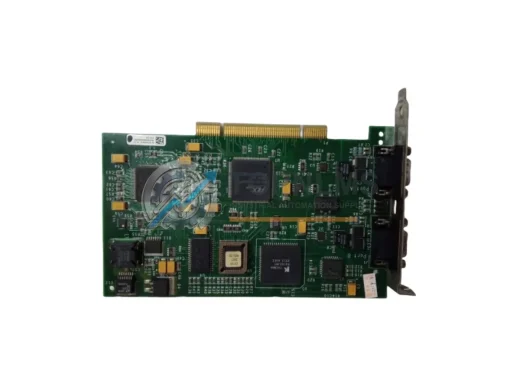
Schneider Electric 416NHM30032A Modicon Quantum PLC memory card. Rugged, reliable industrial automation component. In stock, tested, 12-month warranty. Fast shipping.
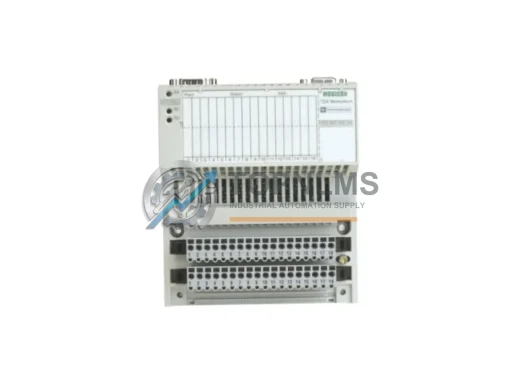
Schneider Electric 170INT11000 original Modicon Momentum Interbus communication adapter. Industrial replacement, 12-month warranty, fast shipping. topnlms.com
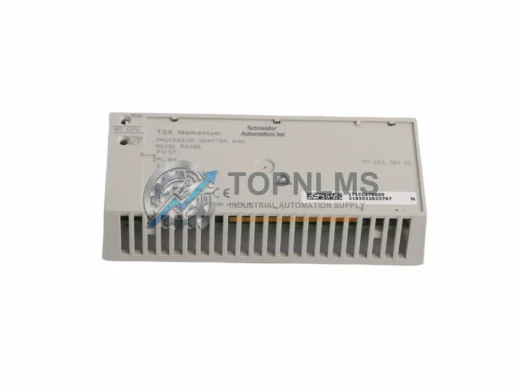
Original Schneider Electric 171CCS78000 Modicon Quantum PLC Processor Adaptor. Industrial spare for system replacement. 12-month warranty. Fast worldwide shipping.
Click Quote This Model and the Part Number field will auto-fill with 1756-WS.