
GE
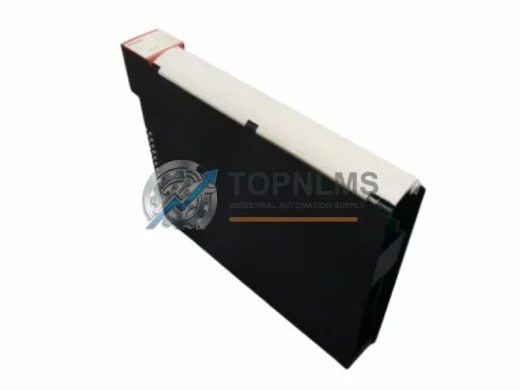
GE TGT-AIOV-8-0 Ruggedized Analog Voltage I/O Module
TGT-AIOV-8-0GE TGT-AIOV-8-0 Triconex TMR 8-channel analog voltage safety I/O module. Ruggedized for harsh environments. In stock, tested, 12-month warranty. Fast shipping.
Request availability, condition, lead time and export shipping details for VMIVME-7614-132.
Send this exact part number, quantity and destination country. TOPNLMS will confirm availability, condition and export lead time before quotation.
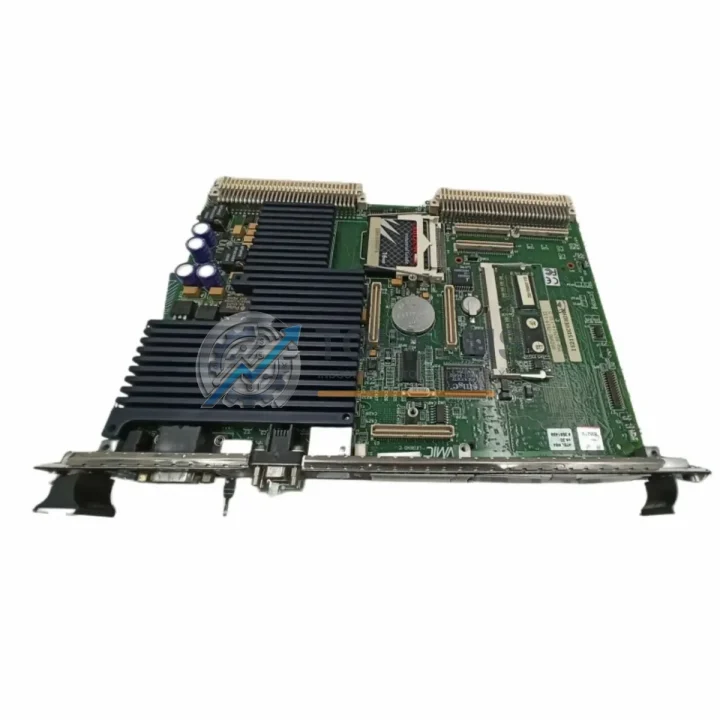
The GE VMIVME-7614-132 is an original RTD (Resistance Temperature Detector) analog input card designed for the GE Speedtronic Mark VI turbine control platform operating on the VMEbus backplane architecture. In power generation, oil & gas, and heavy industrial environments where turbine control systems must maintain continuous uptime, having a verified original spare of this module on hand is a fundamental pillar of any sound preventive maintenance strategy. This card handles precision temperature signal acquisition from RTD sensors distributed across turbine hot-gas paths, exhaust sections, bearing housings, and generator windings — making it a mission-critical component whose failure can trigger unplanned shutdowns and costly production losses.
At TOPNLMS, every VMIVME-7614-132 unit is sourced from verified original channels, subjected to pre-shipment functional testing, and dispatched with a 12-month quality warranty. Our global logistics network supports urgent spare part requirements with expedited shipping options to minimize your mean time to repair (MTTR).
| Parameter | Specification |
|---|---|
| Part Number | VMIVME-7614-132 |
| Manufacturer | General Electric (GE Energy / GE Fanuc) |
| Series / Platform | Speedtronic Mark VI — VMEbus |
| Module Type | RTD Analog Input Card |
| Input Channels | Up to 16 RTD input channels (3-wire / 4-wire configuration) |
| RTD Sensor Compatibility | PT100, PT200, PT500, PT1000 (IEC 60751 compliant) |
| Measurement Range | -200°C to +850°C (sensor dependent) |
| Resolution | 16-bit ADC |
| Bus Interface | VMEbus (IEEE 1014-1987) |
| Power Supply | +5 VDC via VMEbus backplane |
| Operating Temperature | 0°C to +60°C |
| Storage Temperature | -40°C to +85°C |
| Form Factor | 6U VMEbus single-slot card |
| Weight | Approx. 400 g |
| Country of Origin | United States |
| Compatibility | GE Mark VI, Mark VIe (VMEbus rack), Speedtronic turbine control cabinets |
| Application Environment | Power generation, gas turbines, steam turbines, compressor trains, oil & gas |
| Maintenance Recommendation | Inspect every 12–18 months; replace on first sign of signal drift or channel fault |
| Warranty | 12 Months — TOPNLMS Quality Guarantee |
A turbine control cabinet housing the VMIVME-7614-132 RTD input card is rarely a single-module environment. The Mark VI platform integrates a tightly coupled ecosystem of I/O modules, communication cards, power supplies, and controller boards — all of which age together and are subject to the same thermal cycling, vibration, and electrical stress. When scheduling a planned outage or responding to an unplanned shutdown, maintenance engineers should treat the inspection of the VMIVME-7614-132 as the starting point of a broader cabinet health assessment.
During the same maintenance window, it is strongly advisable to inspect and verify the condition of the VMIVME-7750 analog output module, which works in tandem with RTD input data to drive actuator control loops. Signal integrity issues on the input side are frequently mirrored by degraded output response. Similarly, the VMIVME-7613 thermocouple analog input card — often installed in the same rack alongside the 7614 — should be checked for channel drift and cold-junction compensation accuracy.
The VMEbus backplane itself, along with the VMIVME-7700 series digital I/O modules, should be visually inspected for connector oxidation, bent pins, and PCB discoloration. Backplane connector degradation is a leading cause of intermittent channel faults that are frequently misdiagnosed as module failures. While the RTD card is removed for bench testing, this is the ideal moment to clean and re-seat all adjacent modules.
Power integrity is equally critical. The IS200EPCTG1A power conditioning terminal board and associated IS200PSCCG1A power supply module in the Mark VI cabinet should be load-tested during any planned outage. A marginal power supply that passes light-load checks may still cause ADC reference voltage instability under full I/O load, producing subtle RTD reading errors that are difficult to trace without proper instrumentation.
Communication continuity between the Mark VI controller and the plant DCS or historian should also be validated. The IS200VCMIH2C VME communication interface module and any associated Ethernet or IONET communication cards should be checked for firmware version alignment and network fault logs. Stale or corrupted communication buffers can cause the SCADA system to display false temperature alarms even when the VMIVME-7614-132 is functioning correctly.
For facilities running extended maintenance intervals, it is prudent to maintain a minimum buffer stock of one spare VMIVME-7614-132, one spare thermocouple input card, and one spare digital output module per turbine train. This three-module buffer covers the most statistically frequent failure modes in Mark VI VMEbus racks and enables same-shift replacement without waiting for international logistics.
The GE VMIVME-7614-132 was originally manufactured for the Speedtronic Mark VI platform, which remains in active service across hundreds of power plants and industrial facilities worldwide despite being a mature-generation control system. GE’s transition toward the Mark VIe and ControlST software environment has created a growing challenge: OEM support for legacy VMEbus hardware is increasingly limited, lead times from authorized channels have extended significantly, and some part numbers have been formally discontinued.
TOPNLMS addresses this gap by maintaining verified original stock of the VMIVME-7614-132 and related Mark VI VMEbus modules, enabling facilities to extend the operational life of their existing control systems without committing to a full platform migration. A direct drop-in replacement of the VMIVME-7614-132 requires no firmware changes, no re-engineering of the VMEbus rack, and no reconfiguration of the ToolboxST application — the module is recognized by the Mark VI controller immediately upon installation, provided the replacement unit carries the correct revision suffix (-132) matching the original hardware configuration.
For facilities that have already begun a phased migration toward Mark VIe, maintaining a stock of original VMEbus spare parts for the legacy racks that remain in service is a cost-effective bridge strategy. It avoids the capital expenditure of a full cutover while ensuring that aging hardware does not become the single point of failure in an otherwise modernized plant. The VMIVME-7614-132, combined with a documented spare parts register and a defined replacement threshold (e.g., replace on first channel fault or after 15 years of service), forms the backbone of a defensible asset management plan for legacy turbine control infrastructure.
Q1: Is the VMIVME-7614-132 compatible with all Mark VI VMEbus rack configurations?
The VMIVME-7614-132 is designed for the GE Speedtronic Mark VI platform using the standard 6U VMEbus backplane. Compatibility depends on the rack slot assignment defined in your ToolboxST configuration. The -132 revision suffix indicates a specific hardware variant; always verify the revision suffix of your installed unit before ordering a replacement to ensure a direct match.
Q2: What pre-shipment testing does TOPNLMS perform on this module?
Every VMIVME-7614-132 unit undergoes functional verification prior to dispatch, including power-on self-test validation, channel continuity checks across all RTD input terminals, and VMEbus interface integrity testing. Units that do not pass all test criteria are not shipped. A test report is available upon request for critical procurement requirements.
Q3: How should I manage spare parts inventory for a Mark VI system with multiple RTD input cards?
For facilities with two or more VMIVME-7614-132 cards installed across multiple turbine trains, the recommended inventory strategy is to maintain at least one spare unit per site, regardless of the number of installed cards. Given the extended lead times for legacy VMEbus hardware, a single spare provides adequate coverage for the most common single-card failure scenario while minimizing carrying cost. Facilities with three or more turbine trains should consider a two-unit buffer.
Q4: What is covered under the 12-month warranty, and what is the claims process?
The 12-month TOPNLMS warranty covers manufacturing defects and functional failures under normal operating conditions. It does not cover damage resulting from incorrect installation, overvoltage events, or physical mishandling. To initiate a warranty claim, contact our technical support team at [email protected] with your order number, a description of the fault symptom, and any available diagnostic logs from the Mark VI controller. Replacement or repair will be processed within 5 business days of fault confirmation.
GE TGT-AIOV-8-0 Triconex TMR 8-channel analog voltage safety I/O module. Ruggedized for harsh environments. In stock, tested, 12-month warranty. Fast shipping.
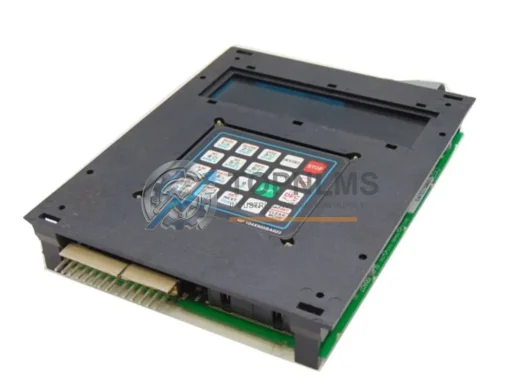
GE NP 104X905BA603 ruggedized membrane keypad panel for Mark IV/V turbine control. EMI-resistant, industrial-grade. In stock, tested, 12-month warranty.
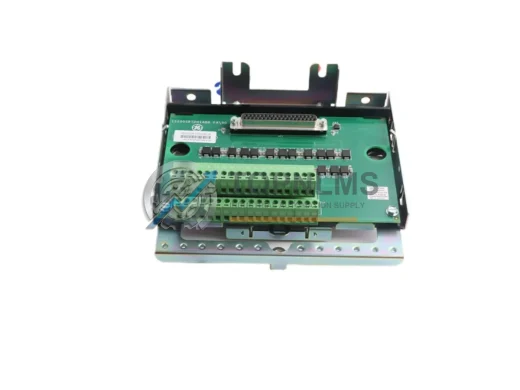
GE IS230SNRTH2A RTD Input Module for Mark VI turbine control. Drop-in replacement for IS200SRTDH2ACB. 12-month warranty, fast global shipping from TOPNLMS.
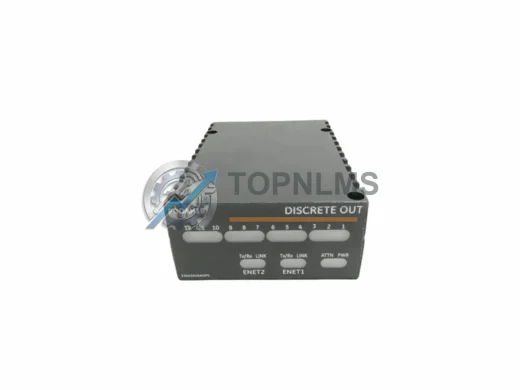
GE IS220YSILS1B ruggedized discrete output module for Mark VI Speedtronic. In stock, tested, 12-month warranty. Fast shipping from TOPNLMS.
Click Quote This Model and the Part Number field will auto-fill with VMIVME-7614-132.